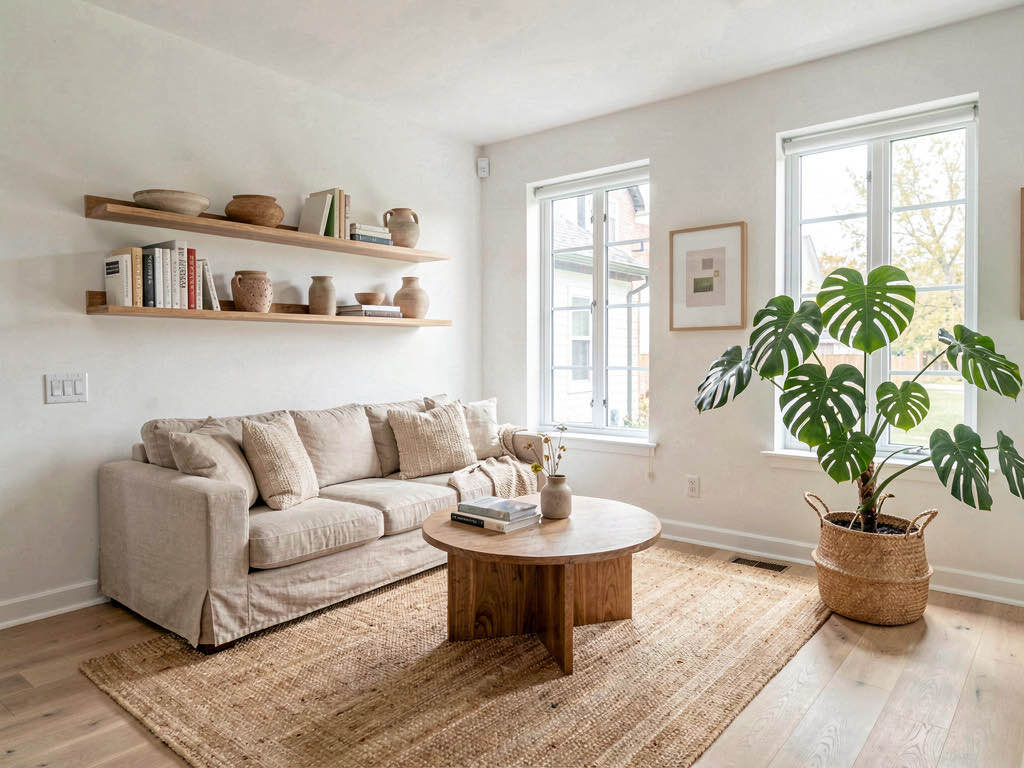
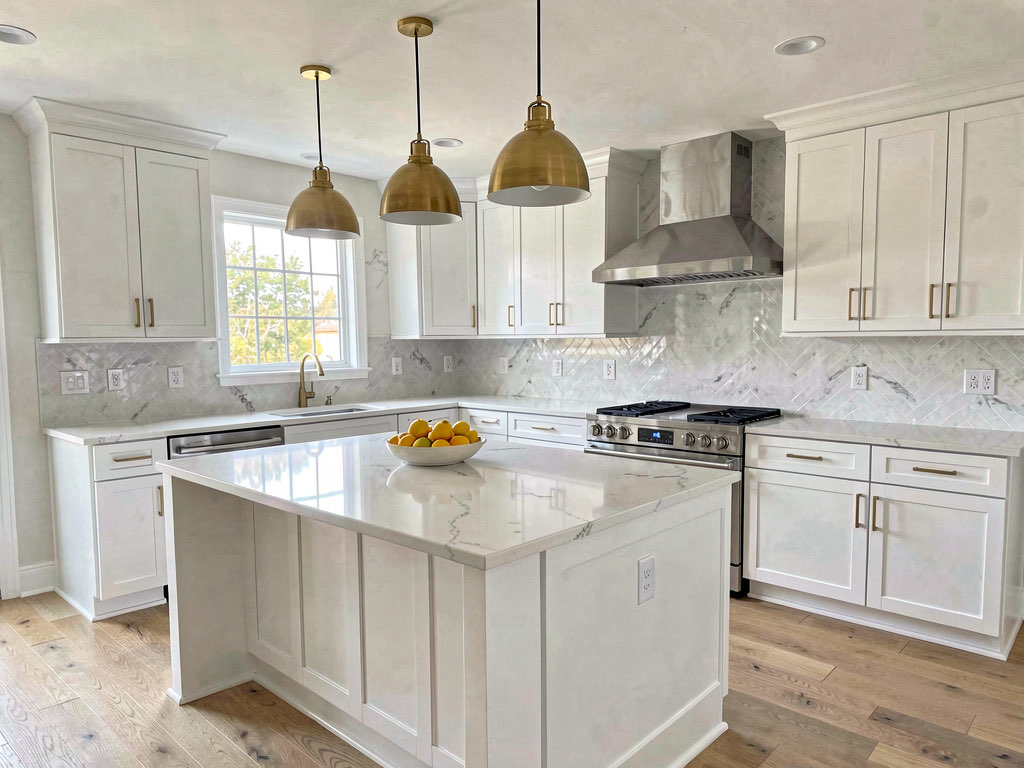
Apartment renovation ideas: 12 upgrades renters and owners can do
12 apartment renovation ideas — 6 renter-friendly (no landlord permission needed) and 6 for owners. From $100 peel-and-stick tile to $15K kitchen remodel.

Ryan H.
Founder of Remodel AI · April 28, 2026 · 11 min read
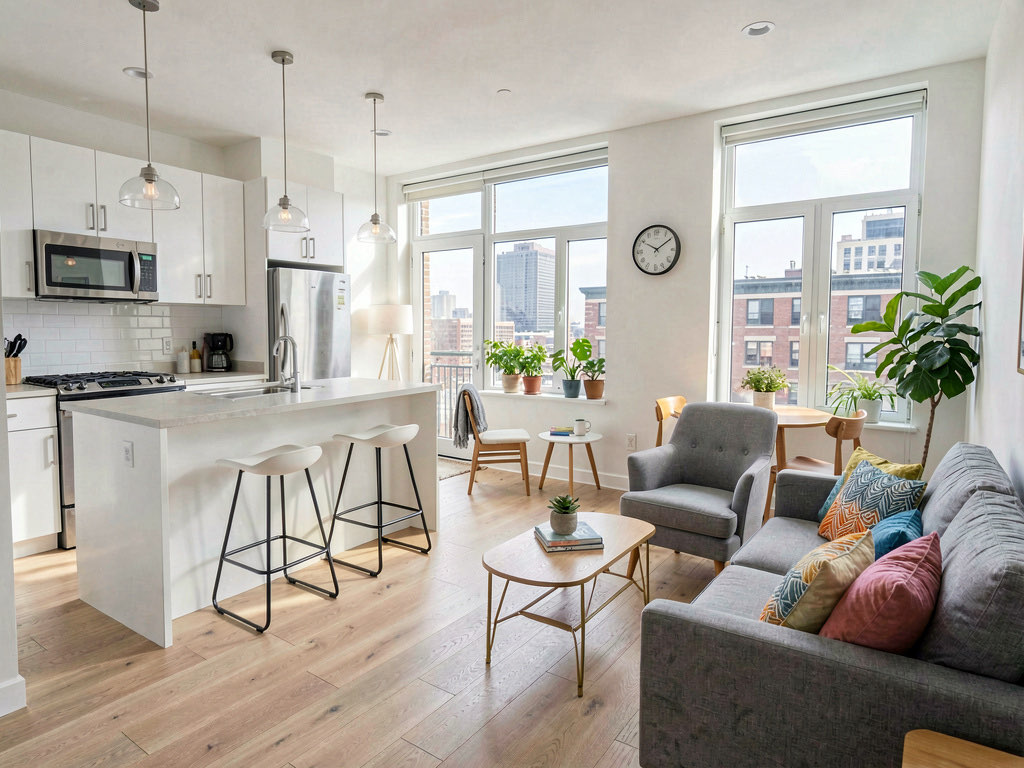
These 12 apartment renovation ideas split into two categories: 6 renter-friendly upgrades you can do without landlord permission ($100-$500 each) and 6 owner upgrades worth the investment ($1,000-$15,000). Preview any of them on your actual apartment with Remodel AI — 3 free designs, no credit card.
Apartment renovation is a different game from house renovation. You are working with less space, shared walls, building restrictions, and — if you are renting — the constraint that everything needs to be reversible. That does not mean you are stuck with what you have. It means you need to be strategic about which upgrades give you the biggest visual impact per dollar spent.
The ideas below are ranked by visual impact within each category. Start at the top of whichever list applies to you and work down. Most people find that the first two or three upgrades transform the feel of their apartment enough that they do not need to do the rest.
Renter-friendly upgrades (removable, no permission needed)
These six upgrades are designed to be fully reversible. When you move out, you remove them, and the apartment looks exactly as it did when you moved in. No security deposit at risk.
1. Peel-and-stick backsplash ($80-$200)
A peel-and-stick backsplash is the single highest-impact renter-friendly upgrade. Kitchen backsplashes are typically the most dated-looking surface in an apartment, and replacing that look changes how the entire kitchen feels.
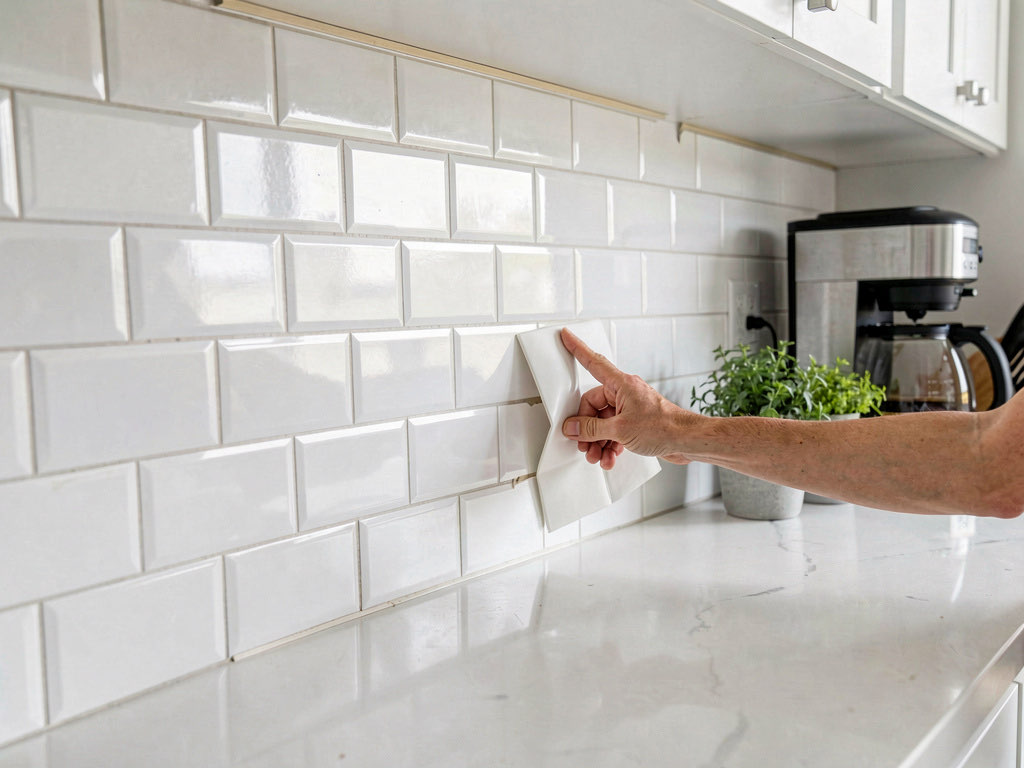
Modern peel-and-stick tiles have improved dramatically. The best options from brands like Tic Tac Tiles, Art3d, and Smart Tiles have a dimensional quality that looks convincingly like real tile from normal viewing distance. They go up in an afternoon, come down cleanly when you leave, and cost $80-$200 for a typical apartment kitchen backsplash.
Choose white subway tile for a classic look that makes any kitchen feel cleaner and more modern. Or go with a hexagonal pattern or marble-look option if you want something with more personality. Avoid busy patterns — they date quickly and make small kitchens feel cluttered.
2. Removable wallpaper accent wall ($60-$150)
One accent wall in removable wallpaper transforms a bedroom or living room from generic apartment to designed space. The key word is "one" — covering all four walls in bold wallpaper makes a small room feel smaller. A single accent wall (typically behind the bed or behind the sofa) adds character without overwhelming the space.
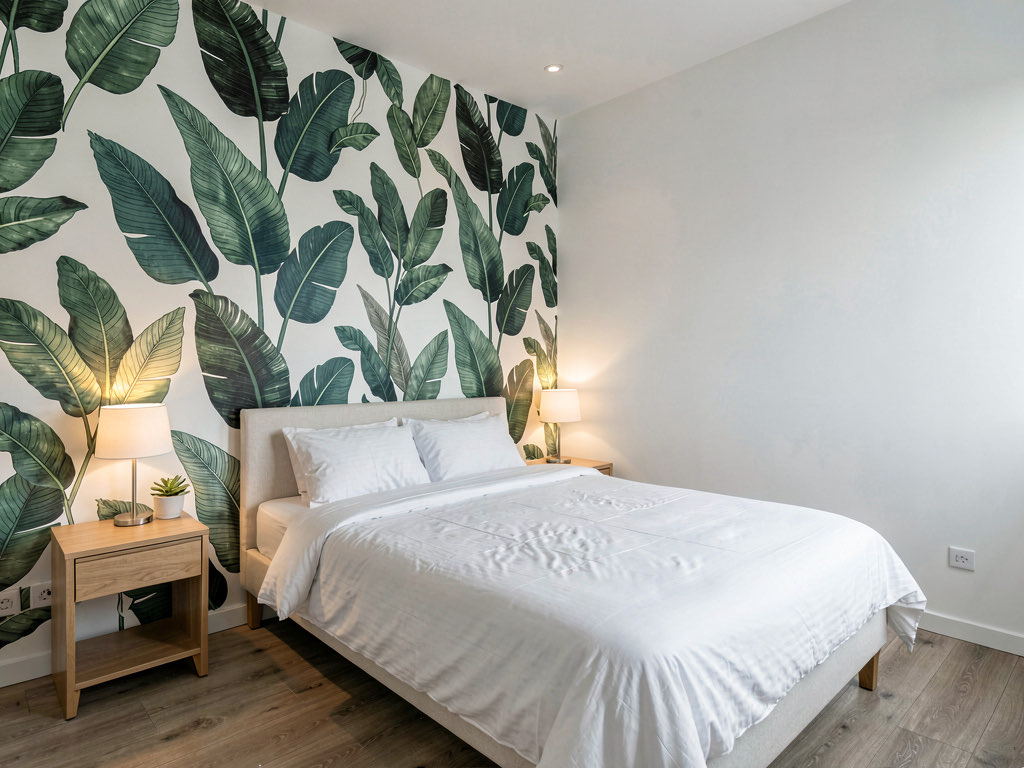
Large-scale botanical prints, geometric patterns, and subtle textures all work well. According to Apartment Therapy, removable wallpaper has become the most popular renter-friendly upgrade because it delivers designer-level impact for under $150.
For small apartments, choose lighter patterns on white or cream backgrounds. Dark wallpapers work in bedrooms where a cozy feeling is welcome, but avoid them in living rooms or kitchens where they can make the space feel cramped.
3. New hardware and fixtures ($50-$200)
Replacing cabinet pulls, drawer knobs, and bathroom fixtures is the fastest way to make an apartment feel updated. Most apartments come with the cheapest builder-grade hardware available — small, shiny, and forgettable.
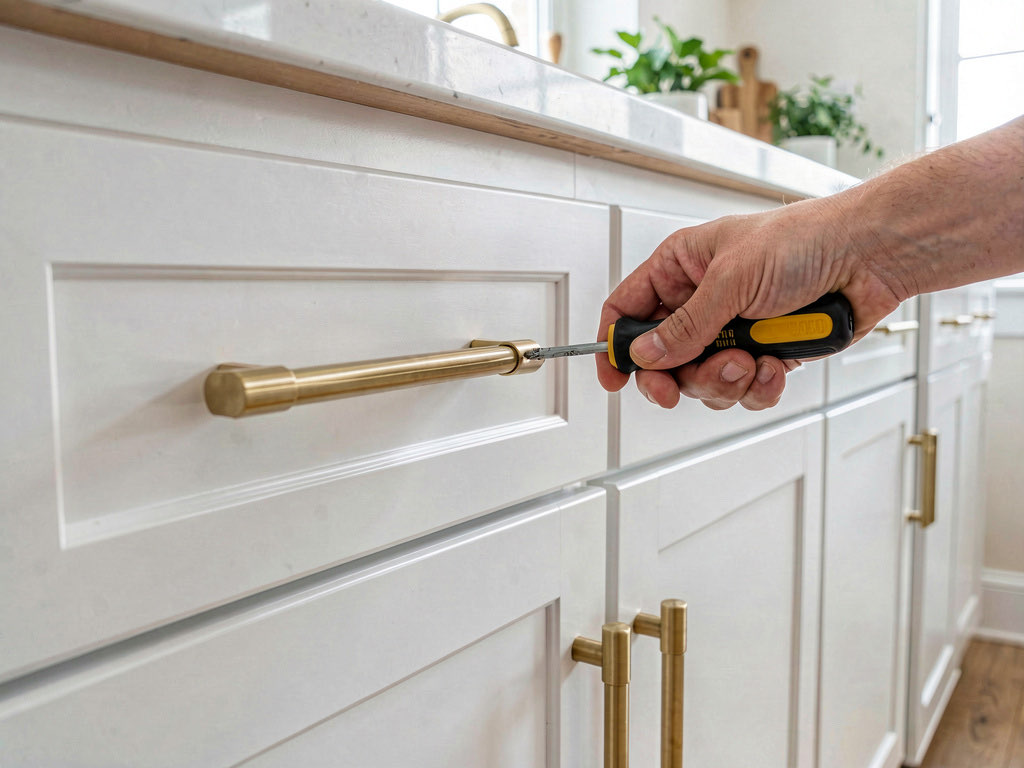
Swap kitchen cabinet pulls for brushed brass, matte black, or brushed nickel in a modern bar or arch style. Replace bathroom towel bars and toilet paper holders with matching finishes. Total cost for a one-bedroom apartment is $50-$200 depending on how many pieces you replace.
Save the original hardware in a labeled bag so you can reinstall it when you move out. This is a 30-minute project per room that makes the entire space feel like it was finished to a higher standard.
4. Plug-in lighting ($100-$300)
Apartment overhead lighting is almost universally terrible — a single flush-mount dome light in the center of the ceiling that casts flat, unflattering light everywhere. You cannot replace the fixture without your landlord's permission, but you can supplement it.
Add a plug-in pendant light over the dining area. Put table lamps on side tables. Use LED strip lights behind a bookshelf or TV. Add a floor lamp with a warm-toned bulb in the corner of the living room. Layer three or four light sources in each room and turn off the overhead light entirely.
The transformation is dramatic. A room lit by multiple warm sources at different heights feels like a designed interior. A room lit by a single overhead fixture feels like a dental office. Budget $100-$300 for a full apartment.
5. Rugs and textiles ($150-$500)
Area rugs, throw pillows, and curtains are the most traditional apartment upgrade, and they still work. A large area rug in the living room (8x10 feet minimum) anchors the furniture grouping and defines the space. Matching throw pillows on the sofa tie the color scheme together. New curtains (even over existing blinds) soften the windows and add warmth.
The trick is cohesion. Pick a color palette of 2-3 colors and carry it through the rug, pillows, throws, and curtains. Random accessories from different shopping trips create visual noise. A coordinated set creates a designed room. For apartment-specific color inspiration, see our guide on living room color ideas.
6. Furniture rearrangement ($0)
Before spending any money, try rearranging what you already have. Most apartment furniture is pushed against walls by default, which actually makes rooms feel smaller, not larger. According to Architectural Digest, floating furniture away from walls — even by 6-12 inches — creates the illusion of more space.
Try angling the sofa to create a conversation area. Move the bed to a different wall. Turn a bookshelf perpendicular to the wall to create a room divider. Use Remodel AI to preview different arrangement ideas on your actual space before moving heavy furniture.
Owner upgrades (investment-grade improvements)
If you own your apartment or condo, these six upgrades offer the best return on investment. Each one increases both the livability and the resale value of your unit.
7. Paint kitchen cabinets ($300-$800)
Painting kitchen cabinets is the single highest-ROI kitchen upgrade for apartment owners. Most apartment kitchens come with builder-grade oak or laminate cabinets that look dated within five years. A fresh coat of paint in white, sage green, navy, or charcoal transforms the kitchen completely.
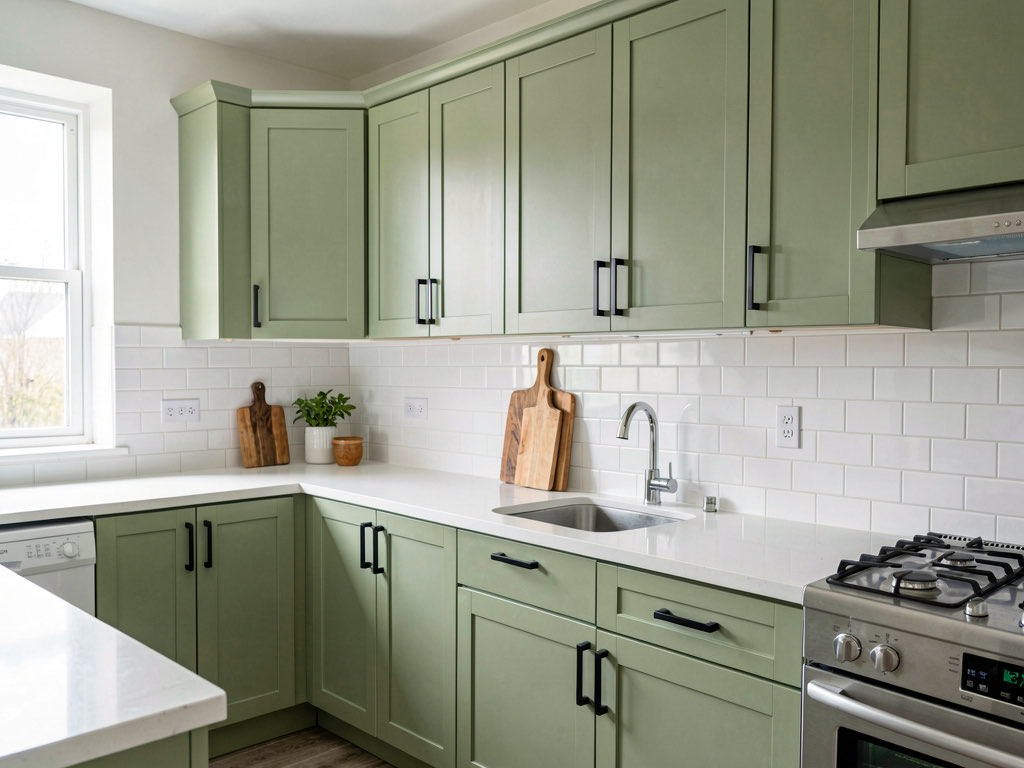
The process requires proper preparation — clean, sand, prime, then two coats of cabinet-grade paint. It takes a weekend for a small apartment kitchen. Use a cabinet-specific paint like Benjamin Moore Advance or Sherwin-Williams Emerald Urethane for a factory-smooth finish.
Combine cabinet paint with new hardware (idea #3 above) and a peel-and-stick backsplash (idea #1) for a complete kitchen transformation under $1,000. That combination is the best value renovation in any apartment.
8. Bathroom tile refresh ($1,500-$4,000)
Apartment bathrooms are small, which is actually an advantage — there is less tile to replace, making a full re-tile more affordable than in a house. New floor tile and a fresh shower surround change a bathroom from the most dated room in the apartment to one of the best.
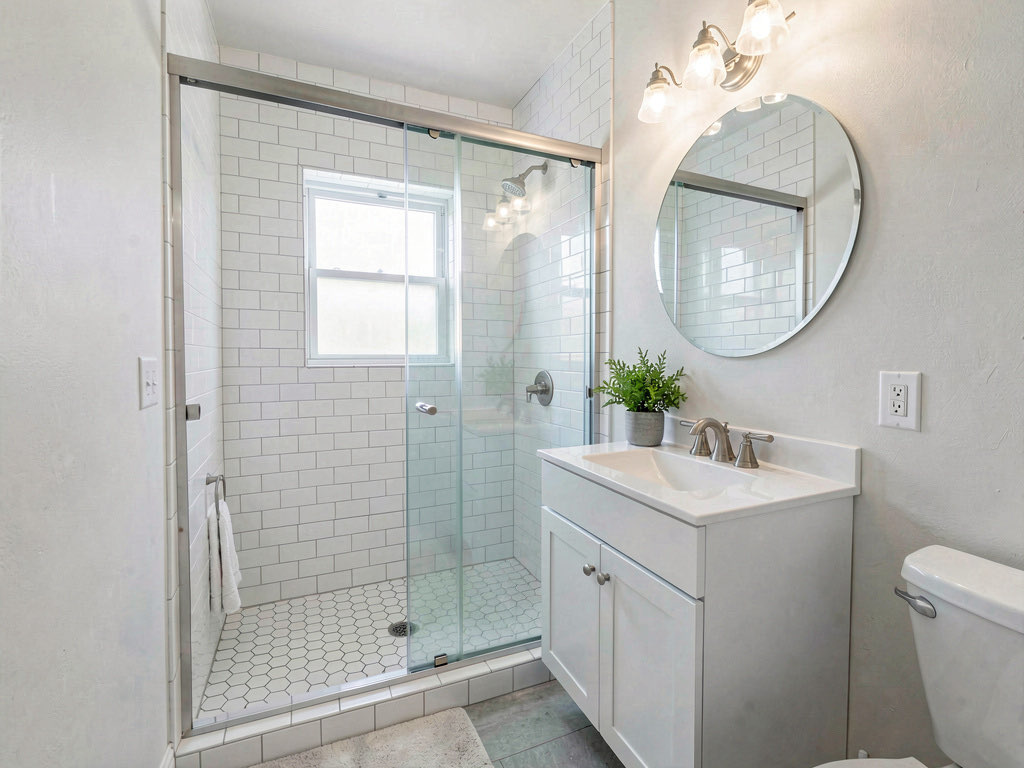
White hexagon floor tile with dark grout is a classic choice that feels both timeless and current. Subway tile in the shower keeps costs down and looks clean. Budget $1,500-$4,000 depending on your apartment's bathroom size and whether you hire a tile installer or do it yourself.
See Your Room Redesigned
Download Remodel AI and transform any room in 30 seconds. 3 free designs, no signup.


If a full re-tile is beyond budget, reglazing the existing tub and tile costs $400-$800 and makes old tile look new for 5-7 years.
9. New flooring ($2,000-$6,000)
Flooring makes or breaks an apartment. Old carpet, damaged hardwood, or cheap vinyl immediately signals "dated" regardless of what else is in the room. New flooring makes everything else look better.
Luxury vinyl plank (LVP) is the best choice for apartments. It is waterproof, scratch-resistant, quiet underfoot, and installs over existing flooring without the mess of a tear-out. A one-bedroom apartment runs $2,000-$4,000 for materials and professional installation. A two-bedroom is $3,000-$6,000.
Choose a light or medium oak look for small apartments — dark floors make small spaces feel smaller. Run the same flooring through every room for a cohesive feel that makes the apartment seem larger.
For style exploration, see our best free AI interior design apps guide to preview how new flooring would look in your space.
10. Open shelving in the kitchen ($200-$600)
Replacing one section of upper cabinets with open floating shelves makes a small kitchen feel dramatically more open. Upper cabinets in small kitchens create a visual wall that makes the room feel cramped. Open shelves remove that wall while still providing storage.
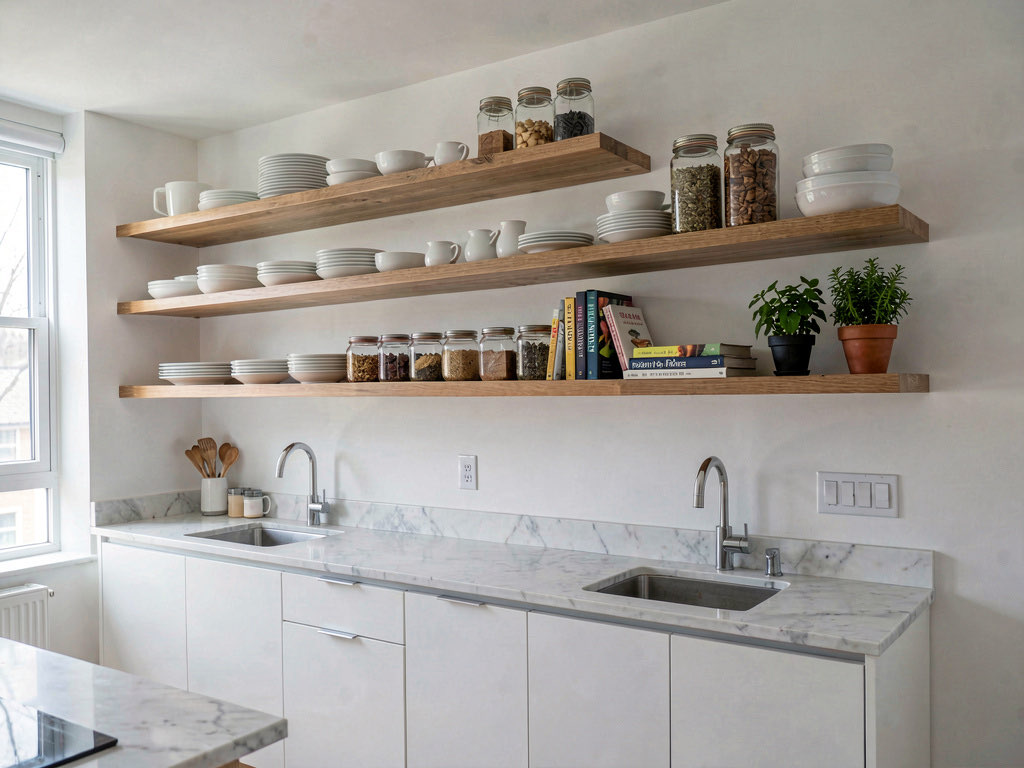
Install two or three floating shelves in natural wood or painted white. Display everyday dishes, clear glass jars with dry goods, a few cookbooks, and a small herb plant. Keep it edited — the point is openness, not maximum storage.
Budget $200-$600 for materials and installation. This is a half-day project for someone comfortable with a drill and a level, or a two-hour job for a handyperson.
11. Built-in storage ($500-$3,000)
Apartments never have enough storage. Built-in solutions — a closet organizer system, a window seat with storage underneath, or a custom entryway bench with shoe storage — solve practical problems while adding architectural character.
The most impactful built-in for most apartments is a custom closet system in the bedroom. A reach-in closet with a simple organizer (double hanging rods, a few shelves, a drawer unit) costs $500-$1,500 and doubles the functional storage of the standard single-rod-and-shelf setup.
For entryways, a narrow bench with hooks above and shoe storage below turns an empty wall into a functional mudroom-style zone. This is especially valuable in apartments where the front door opens directly into the living room.
12. Accent wall ($100-$500)
A painted accent wall is the owner version of the removable wallpaper idea. Because you own the unit, you can use regular paint or real wallpaper for a more permanent and higher-quality finish.
Deep greens, warm terracottas, and soft blues are the accent colors that work best in apartments right now. Paint the wall behind the headboard in the bedroom or the wall behind the sofa in the living room. Use a matte or eggshell finish for a sophisticated look.
Pair the accent wall with matching textiles and keep the other three walls white or off-white. The contrast makes the room feel designed and intentional rather than randomly colorful.
Apartment-specific tips that apply to every upgrade
Light colors make small spaces feel larger
This is the number one rule of apartment design. Light walls, light floors, and light furniture reflect natural light and create a sense of openness. Dark colors absorb light and make walls feel closer. Save dark colors for accents — a single wall, throw pillows, a rug border.
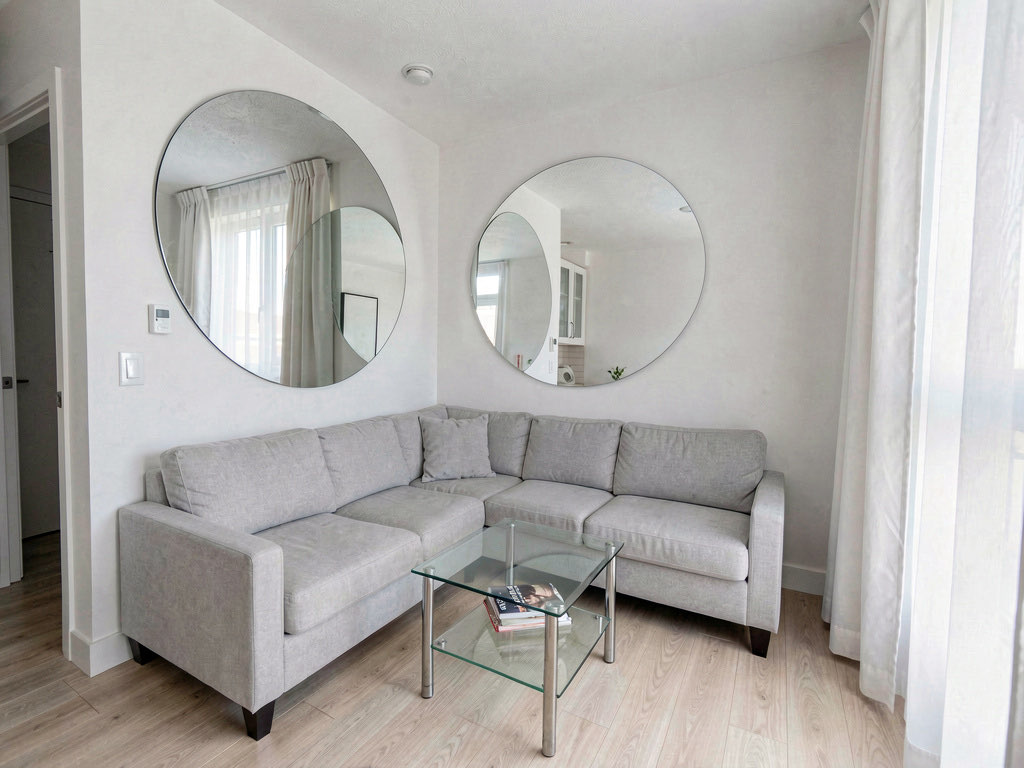
Mirrors double the perceived space
A large mirror on the wall opposite a window reflects natural light and the view, making the room feel twice as large. This is not a subtle effect — it is the most dramatic space-expanding trick available, and it costs $50-$200 for a large mirror from IKEA or Target.
Dual-purpose furniture saves square footage
In a small apartment, every piece of furniture should do two jobs. A storage ottoman is a coffee table, extra seating, and a blanket chest. A dining table is a desk. A daybed in the office is a sofa and a guest bed. Think function-per-square-foot, not room-by-room.
Vertical storage beats horizontal storage
In apartments, floor space is the scarcest resource. Go vertical. Tall bookshelves, wall-mounted shelves, over-door organizers, and hanging pot racks use wall and ceiling space that would otherwise contribute nothing. Every item you move off the floor makes the apartment feel larger.
Preview before you commit
This is where AI design tools earn their value. Before spending $300 on cabinet paint or $3,000 on new tile, upload a photo of your apartment to Remodel AI and see the transformation applied to your actual space. The 3 free designs are enough to preview your biggest planned change and confirm it is the right direction.
For more small-space design ideas, see our small living room ideas guide and our interior design styles guide.
Frequently asked questions
What apartment renovations can I do without landlord permission?
Any change that is fully reversible — peel-and-stick tile, removable wallpaper, plug-in lighting, new hardware (save the originals), rugs, curtains, and furniture rearrangement. If it leaves no trace when removed, most leases allow it. Always check your specific lease for restrictions, especially regarding adhesives on walls.
What is the cheapest apartment renovation with the biggest impact?
Rearranging furniture (free) and adding layered lighting ($100-$300) create the most noticeable change for the least money. If you have a small budget, start there. The next highest-impact upgrade is a peel-and-stick backsplash ($80-$200) if your kitchen backsplash is dated.
How much does a full apartment renovation cost?
A full renovation of a one-bedroom apartment (new flooring, kitchen cabinets painted, bathroom tile, fresh paint throughout) runs $8,000-$20,000 depending on your city, the apartment's condition, and whether you DIY or hire contractors. In high-cost cities like New York or San Francisco, add 30-50% to those numbers.
Can I use AI to plan my apartment renovation?
Yes. Remodel AI lets you upload a photo of any room in your apartment and see it transformed in 30+ styles. This helps you decide on a direction before spending money. Try 3-5 styles on your space — the one that looks best might surprise you. AI Designer is another option for quick style exploration.
What apartment upgrades increase resale value the most?
For condo owners, the three highest-ROI upgrades are kitchen cabinet refinishing, bathroom updates, and new flooring — in that order. These are the three surfaces buyers evaluate most critically during a showing. Fresh, modern versions of all three can add 5-10% to your unit's appraised value, according to the National Association of Realtors Remodeling Impact Report.
Ready to Try AI Interior Design?
Upload a photo and redesign any room in seconds. 3 free designs, no signup required.