Rustic interior design: bring warmth to any room
A room-by-room guide to rustic interior design — the materials, colors, and ideas that make a space feel warm, grounded, and lived-in.

Ryan H.
Founder of Remodel AI · April 2, 2026 · 10 min read
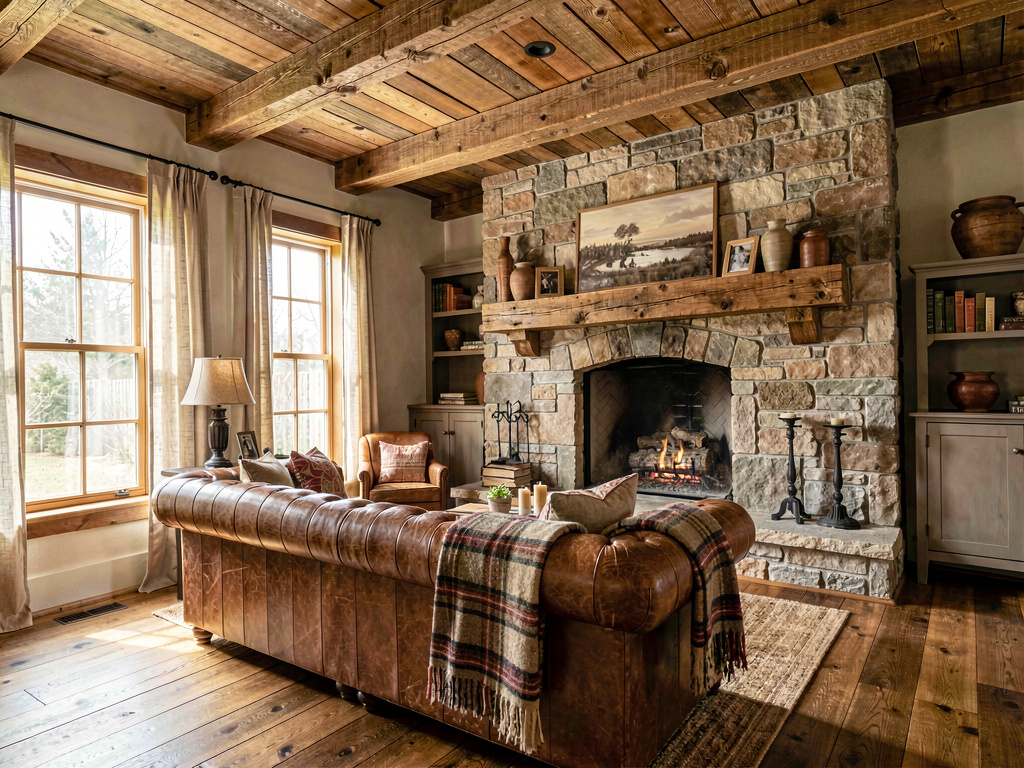
Rustic interior design is built on one idea: let the materials do the talking. Reclaimed wood, natural stone, wrought iron, and raw textiles carry the style. There's no need for ornament when the surface itself has character — grain patterns in old barn wood, the uneven texture of stacked stone, the patina on a hammered iron latch. The style works in mountain cabins, suburban homes, and city apartments. It just needs natural materials and warm lighting to land.
People often confuse rustic with farmhouse, but they're different. Farmhouse leans clean, white, and curated (think shiplap and mason jars). Rustic is rougher, darker, and heavier. It's closer to a lodge than a Pinterest board. Here's how rustic interior design works room by room, what it costs, and how to try it yourself.
Rustic living room
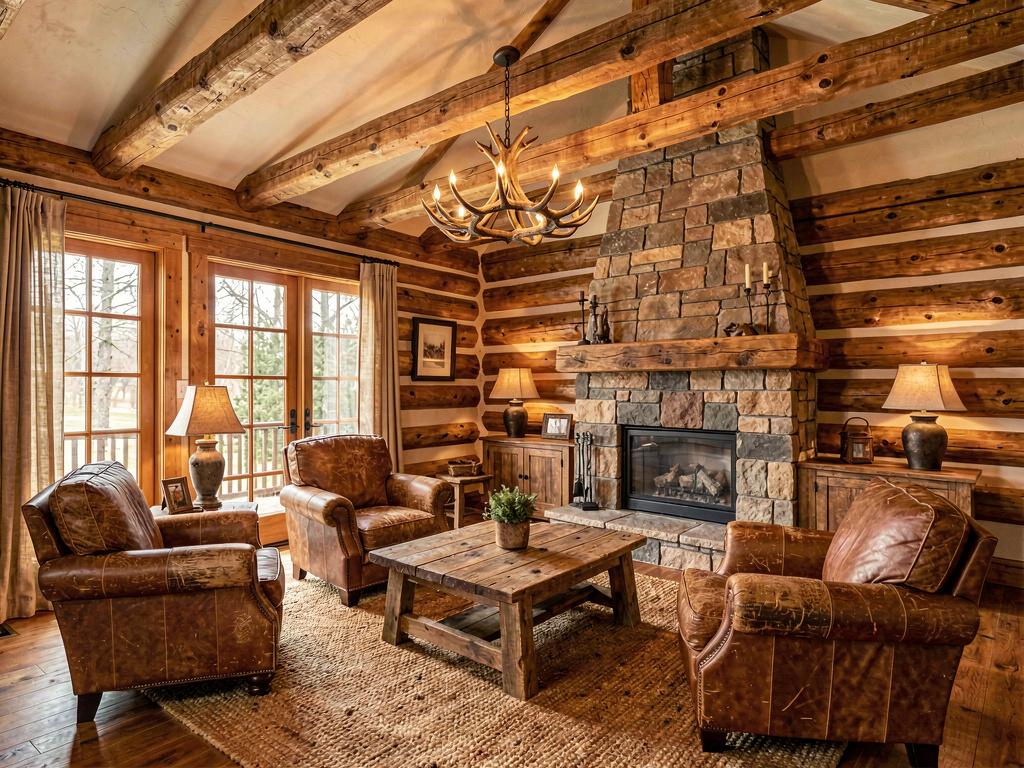
Exposed wood ceiling beams run the length of the room. A floor-to-ceiling stacked stone fireplace anchors the far wall. Distressed leather armchairs face each other across a reclaimed barn wood coffee table. A woven jute rug covers the wide plank floor. An antler chandelier hangs overhead. Iron table lamps sit on rough-hewn side tables.
The living room is where rustic design hits hardest. The fireplace and the ceiling are the two elements that set the tone for everything else. If you have exposed beams, you're already halfway there. If you don't, faux wood beams ($15-$30 per linear foot installed) are convincing enough that most people can't tell the difference from across the room.
Leather furniture ages well in rustic spaces. A good leather sofa or pair of armchairs will develop a patina that actually improves the look over time. Fabric alternatives work too — look for heavy woven textiles in earth tones, nothing shiny or synthetic.
Rustic bedroom
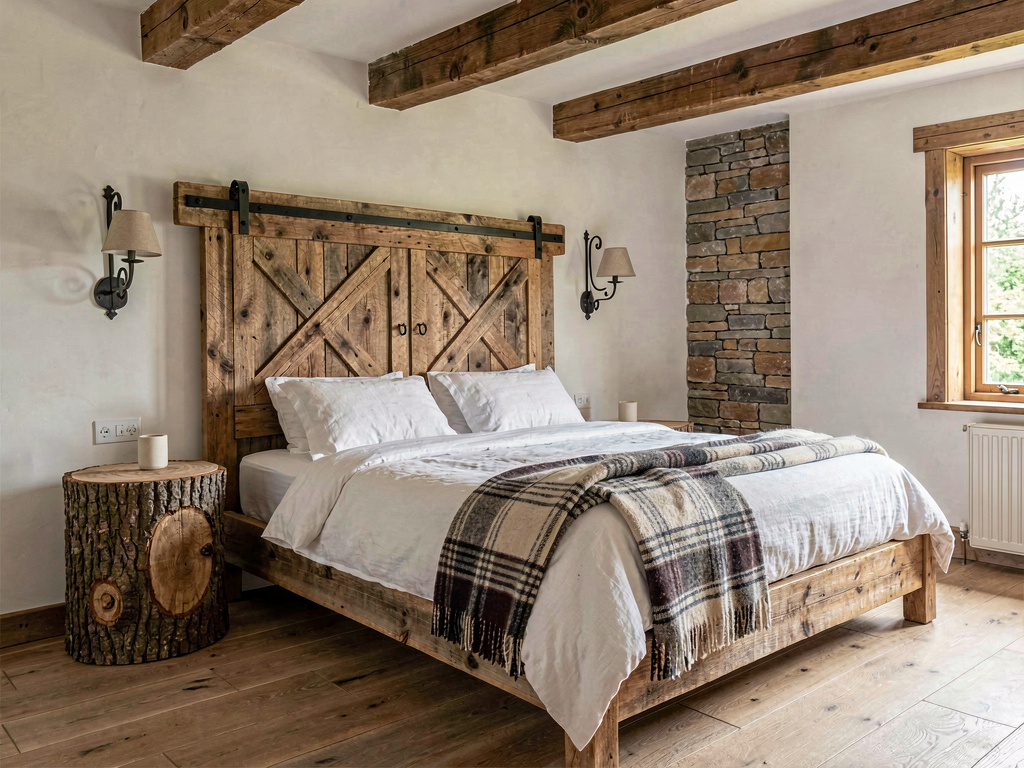
A reclaimed wood bed frame with a headboard made from old barn doors. White linen bedding contrasts with a wool plaid blanket at the foot. Bedside tables are thick slices of tree trunk, sanded smooth on top. Wrought iron wall sconces provide warm light. Exposed wood beams cross the ceiling. A small stone accent wall sits behind the bed.
Rustic bedrooms work best when they balance rough and soft. The wood and stone bring the texture, but the bedding needs to be light and comfortable — white or cream linen, soft wool throws, down pillows. Without that contrast, the room feels like a cave. The master bedroom ideas guide covers more ways to strike this balance.
The headboard is the statement piece. A reclaimed wood headboard — either bought ($300-$800) or built from salvaged planks ($50-$150 in materials) — is the single most effective way to make a bedroom feel rustic.
Rustic kitchen
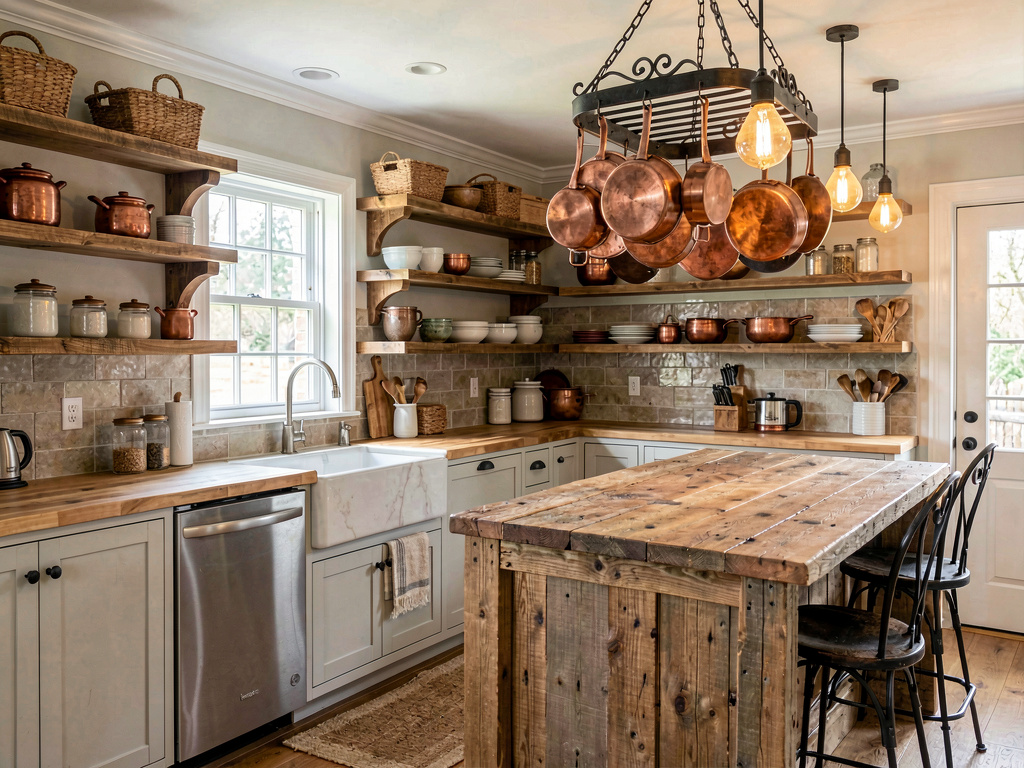
Open wood shelving lines the walls where upper cabinets would normally go. Butcher block countertops run across the lower cabinets. A large cast iron pot rack hangs from the ceiling, holding copper pots and pans. A deep apron-front farmhouse sink sits under the window. Stone tile covers the backsplash. A reclaimed wood island with wrought iron bar stools fills the center. Pendant lights with Edison bulbs hang above.
Open shelving is the move that separates rustic kitchens from standard ones. It's also cheaper than upper cabinets. According to HomeAdvisor, removing upper cabinets and installing open shelving saves $1,000-$3,000 compared to new cabinet installation. The trade-off is that everything on the shelves is visible, so you need decent-looking dishes and consistent containers.
Butcher block counters run $40-$65 per square foot installed, making them one of the more affordable countertop options. They scratch and stain over time, but in a rustic kitchen, that's a feature.
Rustic bathroom
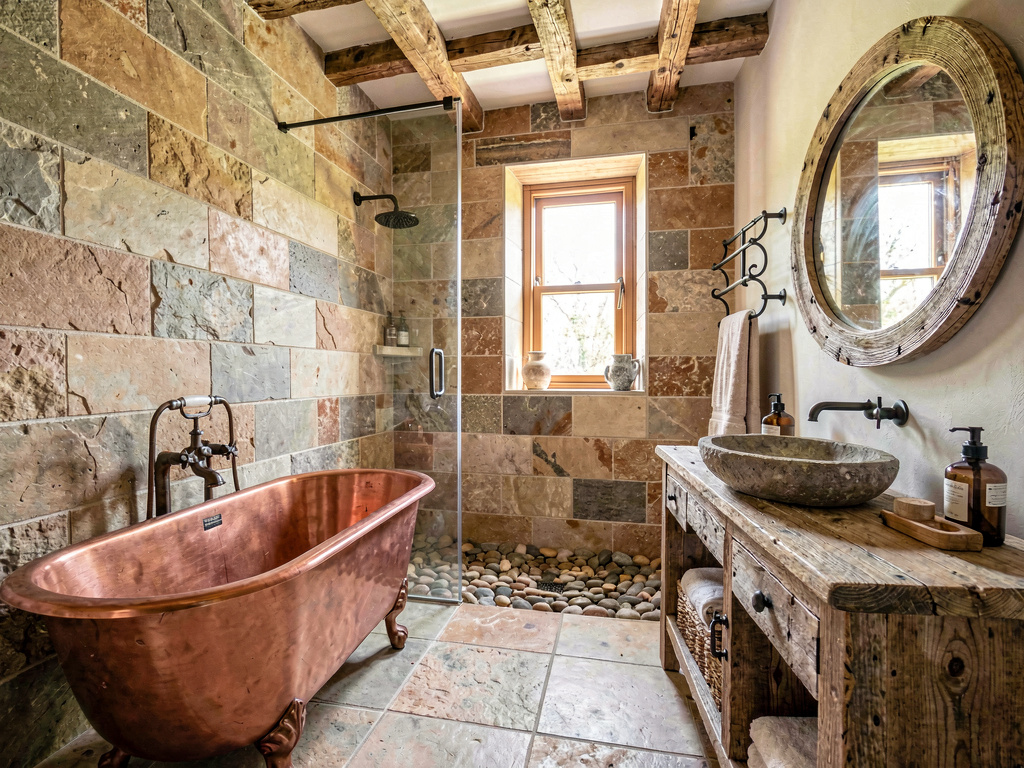
Natural stone tile covers the walls. A freestanding copper bathtub sits under a window. A reclaimed wood vanity holds a vessel stone sink. A wrought iron towel rack mounts to the wall. River rock covers the shower floor. Exposed wood beams cross the ceiling. A round mirror with a distressed wood frame hangs above the vanity.
Rustic bathrooms work best in smaller spaces where the materials can surround you. The stone tile and wood vanity create an immediate atmosphere. According to Houzz, a mid-range bathroom remodel runs $15,000-$35,000, but a rustic approach can cost less because the aesthetic actually benefits from imperfection. A slightly uneven stone tile or a vanity with visible wear adds character rather than looking like a mistake.
River rock shower floors ($8-$15 per square foot) are a signature rustic bathroom detail. They feel good underfoot and drain well if installed correctly.
Rustic dining room
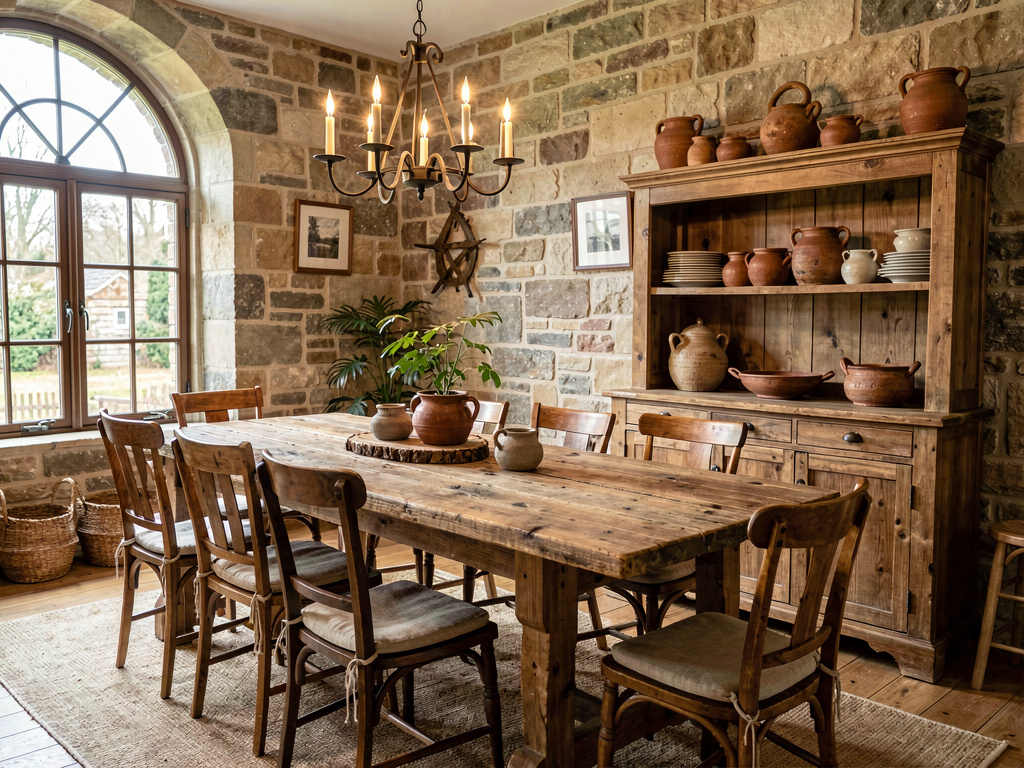
A long harvest table made from thick reclaimed planks seats eight comfortably. Mismatched wooden chairs with linen seat cushions line both sides. A wrought iron chandelier with candle-style lights hangs above the center of the table. A stone accent wall runs behind a wooden hutch displaying stoneware pottery. A large arched window lets in natural afternoon light.
The harvest table is the heart of a rustic dining room. These tables are heavy, long, and imperfect — and that's the appeal. You can buy one for $800-$2,500, or build one from reclaimed lumber for $200-$500 in materials if you have basic woodworking skills. The table will have knots, cracks, and color variations. In any other style, those would be defects. In rustic, they're the whole point.
Mismatched chairs work better than matching sets in rustic dining rooms. Different wood tones and slightly different shapes feel collected over time rather than bought at once from a catalog.
Rustic cabin style
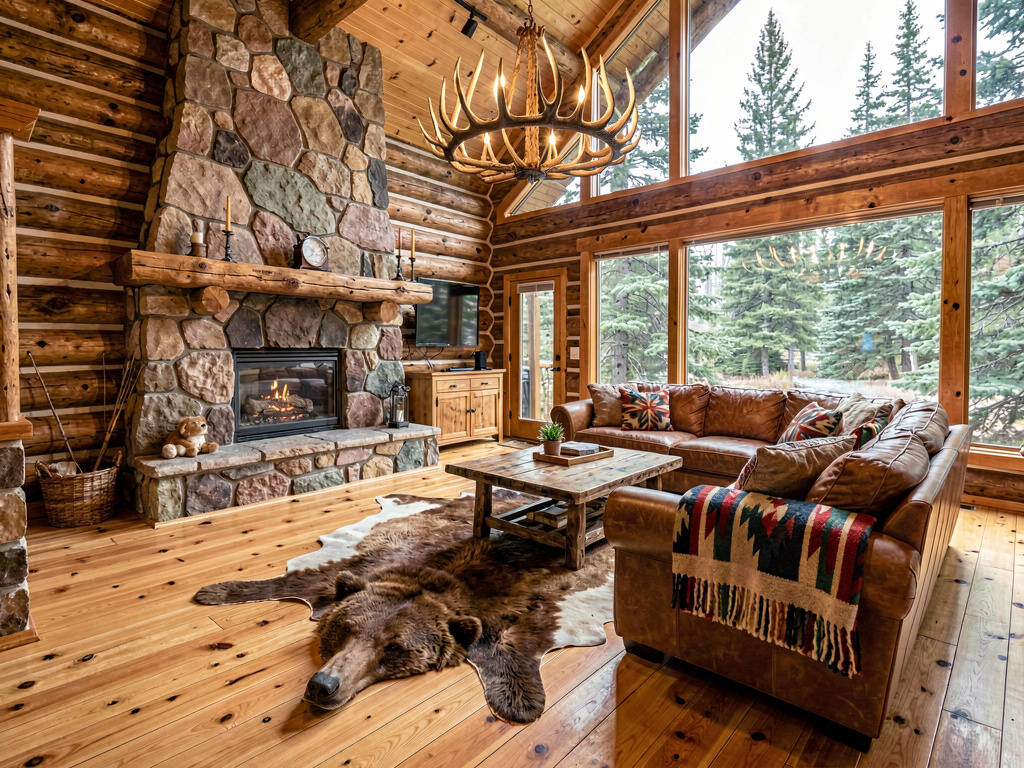
Full log walls surround the room. A massive river rock fireplace climbs to the vaulted ceiling. An oversized leather sectional faces the fire, draped with Pendleton wool blankets. An elk antler chandelier hangs from the peak of the ceiling. A bear skin rug covers wide plank pine floors. Large picture windows frame a view of pine trees outside.
This is rustic at full volume. Cabin-style rustic doesn't hold back — it uses whole logs, full-size stone fireplaces, and oversized furniture scaled to match the architecture. It's the version of rustic that most people picture first, though it's not the only way to do it.
If you're working with a regular suburban home, you can borrow cabin elements without going all the way. A single wood accent wall, a stone-veneer fireplace surround ($1,500-$4,000 installed), and leather furniture get you most of the cabin atmosphere without rebuilding your house.
Modern rustic: the updated version
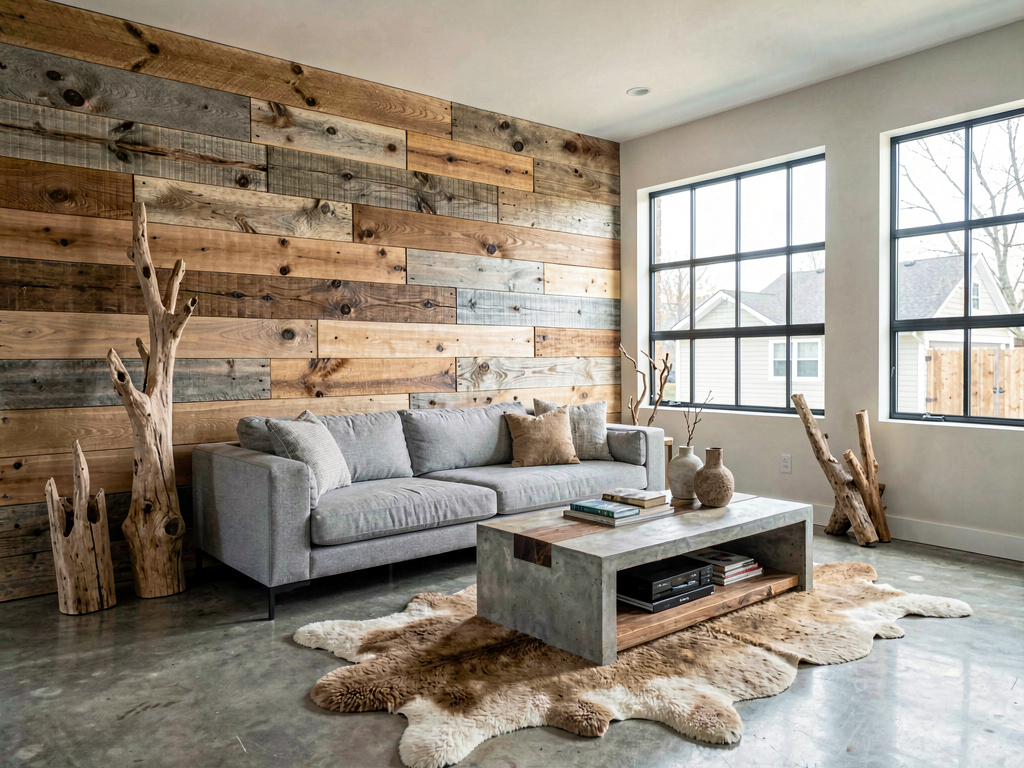
A clean-lined gray sofa sits against a reclaimed wood accent wall. A concrete and wood coffee table splits the difference between modern and rustic. Black steel-frame windows let in bright natural light. The floor is polished concrete with a natural sheepskin rug. Decor is minimal — a few raw wood sculptures, one large plant, nothing fussy.
See Your Room Redesigned
Download Remodel AI and transform any room in 30 seconds. 3 free designs, no signup.


Modern rustic strips the style down to its essence: natural materials in clean settings. It drops the heavy iron chandeliers and plaid fabrics and keeps the wood, stone, and leather. The result feels current without losing the warmth that makes rustic appealing in the first place.
This version works especially well in open-plan spaces and urban apartments where full cabin rustic would feel out of place. A single reclaimed wood wall ($10-$25 per square foot for peel-and-stick panels) transforms a modern room instantly. Pair it with warm lighting and a few natural-texture accessories and the style reads clearly.
The materials that define rustic design
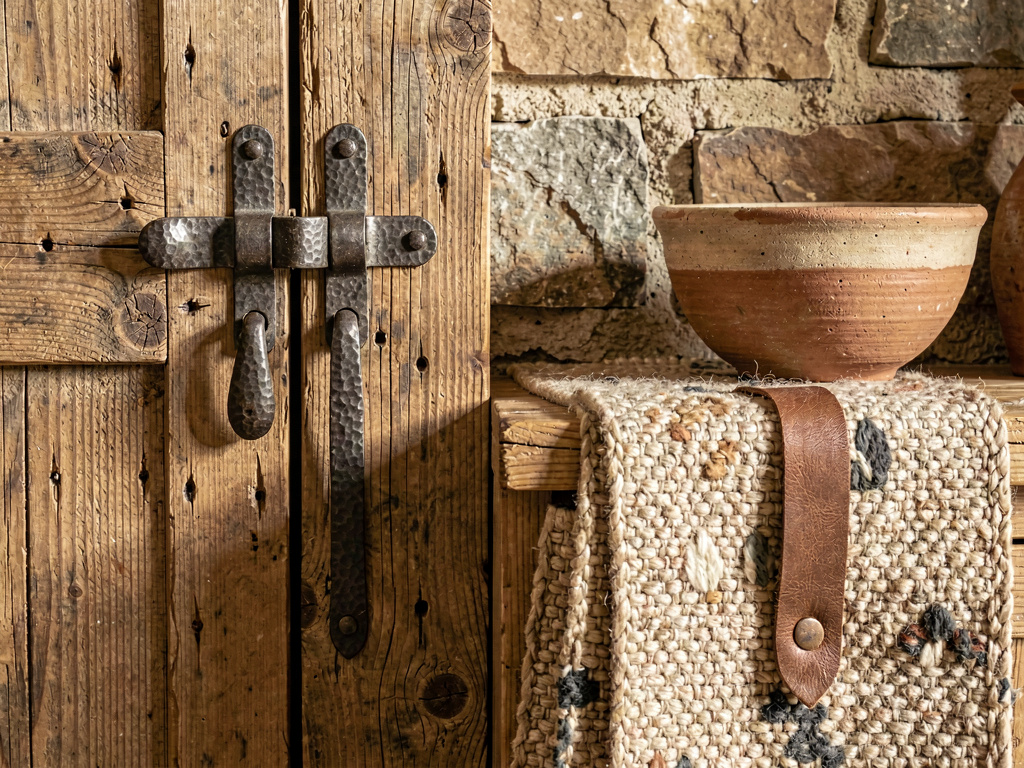
Reclaimed barn wood with visible nail holes and weathering. Rough-hewn stone with natural color variation. Hammered iron door hardware with a matte black finish. A hand-thrown pottery bowl with an uneven rim. Woven wool textile in earth tones. A thick leather strap hinge on a cabinet door. These are the textures that define rustic.
Rustic interior design is a materials-first style. The four pillars are:
- Reclaimed wood — barn wood, salvaged planks, driftwood, rough-cut lumber. The wood should look like it had a life before your house.
- Natural stone — stacked stone, river rock, slate, fieldstone. Unpolished and irregular.
- Wrought iron — hardware, light fixtures, pot racks, curtain rods. Matte black or oil-rubbed bronze.
- Natural textiles — wool, linen, leather, jute, burlap. Nothing synthetic, nothing shiny.
Rustic entryway
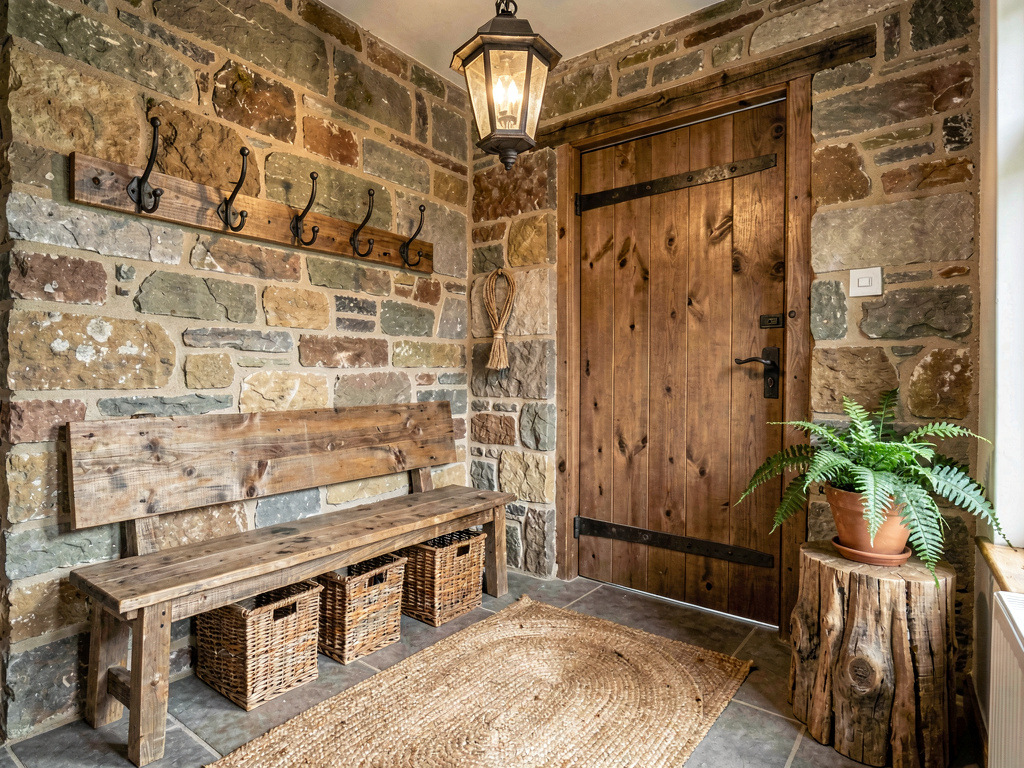
A reclaimed wood bench sits below wrought iron coat hooks mounted on a rough stone wall. A braided jute runner rug leads from the front door. A vintage lantern-style pendant light hangs from the ceiling. The wooden door has iron strap hinges. Wicker baskets tuck under the bench for storage. A small potted fern sits on a tree stump side table.
The entryway sets expectations for the rest of the house. A rustic entryway tells visitors what's coming. The key pieces are a wood bench (functional and atmospheric), iron hooks (they hold more weight than decorative hooks), and natural flooring (jute, slate, or brick). If you have a concrete or tile entry, a heavy braided rug is enough to set the tone.
What rustic interior design costs
The good news: rustic is one of the more budget-friendly design styles because imperfection is part of the aesthetic. You don't need everything to be new or perfect.
Budget approach ($300-$1,000): Reclaimed wood accent wall (peel-and-stick planks), iron hardware swap on cabinets, a jute rug, wool throw blankets, and Edison bulb light fixtures. This gets you the feeling without any construction.
Mid-range ($1,500-$5,000): Butcher block counters or a reclaimed wood dining table, stone veneer on a fireplace surround, open shelving in the kitchen, leather furniture. According to Fixr, a single-room interior design project averages $2,000-$5,000 depending on materials.
Full commitment ($5,000-$20,000+): Stone tile bathroom, faux wood beams throughout, custom reclaimed wood furniture, full stone fireplace surround, copper fixtures. This is lodge-level rustic.
How to try rustic design in your own space
Want to see what rustic interior design looks like in your actual rooms before spending anything?
Step 1: Take a photo of any room — living room, bedroom, kitchen, bathroom.
Step 2: Upload it to Remodel AI (free on iOS, Android, and web).
Step 3: Select "Rustic" as the style. In about 30 seconds, you'll see your room transformed with wood, stone, and warm earth tones.
Step 4: Compare it against other styles. Try modern farmhouse or Scandinavian to see which direction feels right.
3 free designs. No credit card required.
Is rustic the same as farmhouse?
No. Farmhouse is cleaner, lighter, and more curated — white paint, shiplap, vintage signs, and light wood. Rustic is heavier, darker, and rougher — reclaimed wood, stone, iron, and leather. Farmhouse is the polished cousin. Rustic is the one who actually works with their hands. For a detailed comparison, see our interior design styles guide.
Does rustic work in a modern home?
Yes. Modern rustic is one of the most popular design directions right now. Use one or two rustic elements — a reclaimed wood accent wall, a stone fireplace surround, a leather chair — in an otherwise clean modern space. The contrast between rough natural materials and smooth modern surfaces is what makes it work.
What colors go with rustic design?
Earth tones: warm browns, deep greens, burnt orange, cream, charcoal, and muted reds. The palette comes from the materials themselves — the brown of wood, the gray of stone, the black of iron. Avoid bright or saturated colors. If you're looking for more color guidance, our living room color ideas post has specific palette recommendations.
Can rustic design work in a small space?
Absolutely. A small living room with a single wood accent wall, a leather chair, and warm lighting feels cozy rather than cramped. The key is choosing fewer, larger rustic elements rather than filling the space with small accessories. One statement piece beats ten small ones.
What's the easiest way to start with rustic design?
Swap your light fixtures. Replace chrome or brushed nickel with wrought iron or oil-rubbed bronze. It's the cheapest, fastest change you can make, and it shifts the entire feel of a room. After that, add a wool or jute rug and a wood accent piece — a reclaimed shelf, a barn wood frame, or a live-edge side table.
Rustic interior design works because it connects a room to something real. The materials have weight, texture, and history. A reclaimed wood wall was once the side of a barn. A stone fireplace is made from rocks pulled out of the ground. In a world full of smooth plastic surfaces and flat-pack furniture, that kind of authenticity is worth something.
Try Remodel AI free at www.remodelai.io/app — available on iOS, Android, and web.
Ready to Try AI Interior Design?
Upload a photo and redesign any room in seconds. 3 free designs, no signup required.