Traditional interior design: timeless style guide
A complete guide to traditional interior design — the architectural details, furniture shapes, fabrics, color palettes, and room-by-room ideas that define this enduring style.

Ryan H.
Founder of Remodel AI · April 7, 2026 · 13 min read
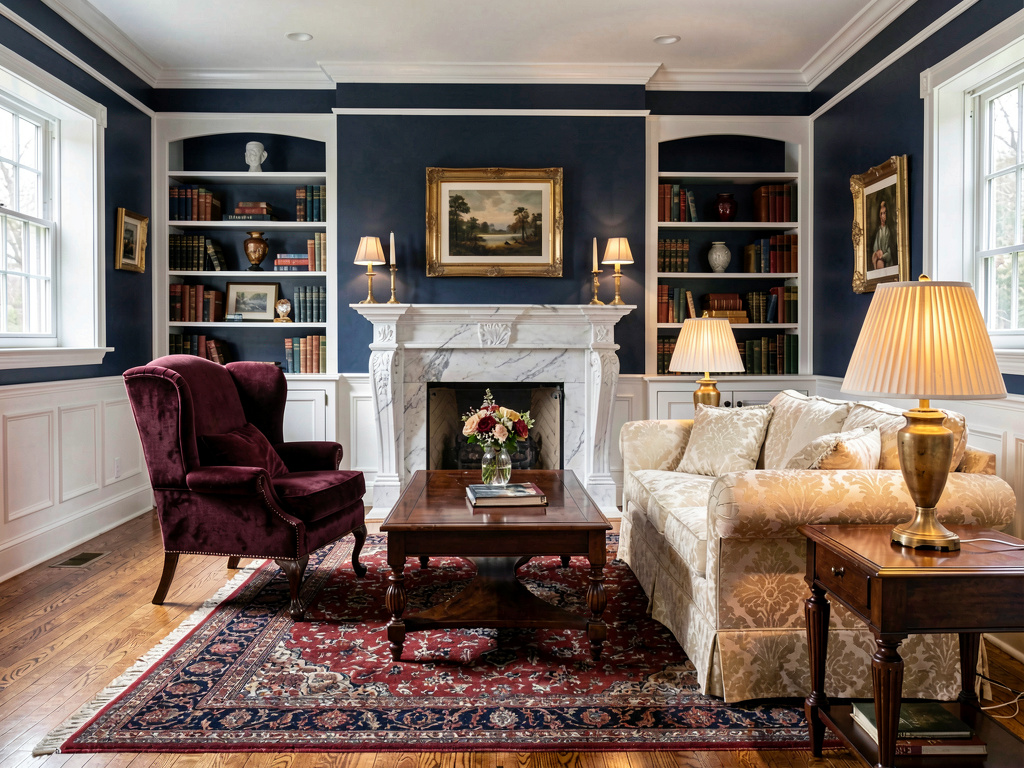
Traditional interior design is the style your grandparents had, except done on purpose. It pulls from 18th and 19th century European design — English, French, and American colonial — and it prioritizes symmetry, rich materials, and architectural detail over trends. While other styles come and go (remember when everyone was painting everything gray?), traditional rooms age well. A properly done traditional living room looks as good in 2026 as it did in 1996. That durability is the whole point.
The style has a reputation for being stuffy, and sometimes it earns it. But modern traditional design keeps the bones — the molding, the symmetry, the quality furniture — and loosens up the formality. Here is how it works, room by room, and what it actually costs.
The traditional color palette
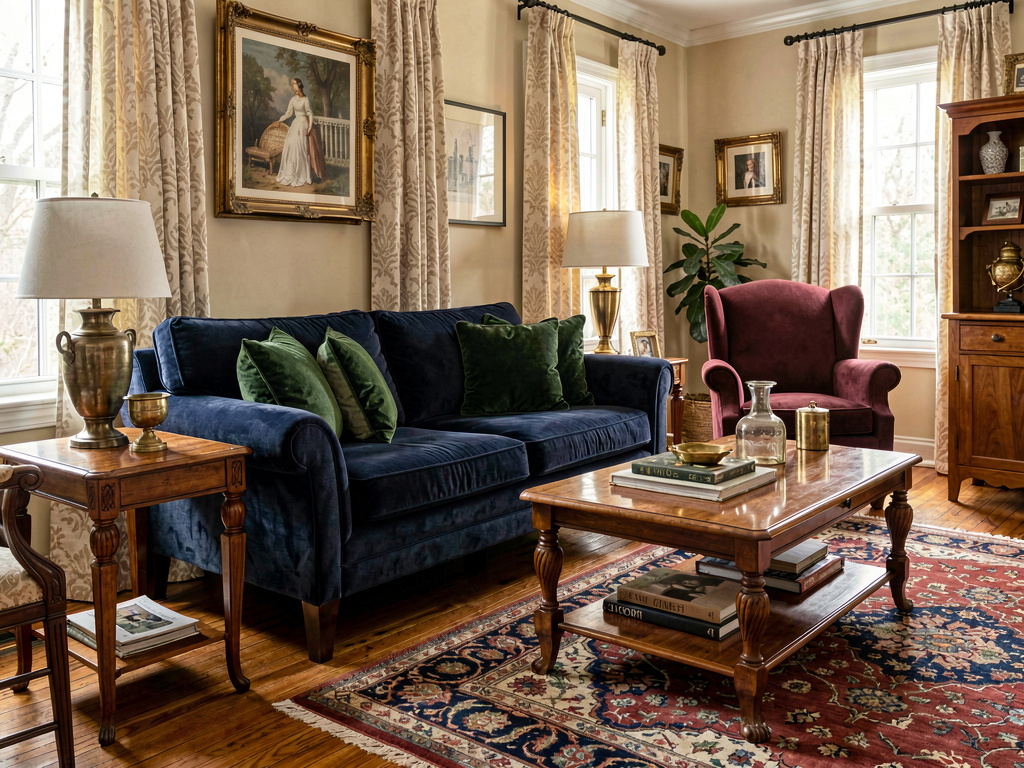
A navy blue velvet sofa anchors the room. A burgundy wingback chair sits at an angle nearby. Forest green throw pillows add a third deep tone. Cream damask curtains soften the window. Cherry wood furniture provides warmth at every surface. Brass accessories catch the light. A Persian rug on warm hardwood floors ties every color together.
Traditional rooms run on deep, saturated colors balanced by warm neutrals. The core palette is navy blue, burgundy, forest green, and hunter green for the dominant tones, with cream, ivory, warm beige, and soft gold as the supporting cast. Wood tones — cherry, mahogany, walnut — function as a third layer. Brass and polished gold provide metallic accents.
This is not a white-wall style. Traditional rooms use color with confidence, especially on walls. A navy blue dining room or a forest green study is a signature traditional move. If you are coming from a neutral space and want to ease in, start with a single painted room — the dining room is the classic choice — and keep the rest in warm cream.
Architectural details that define the style
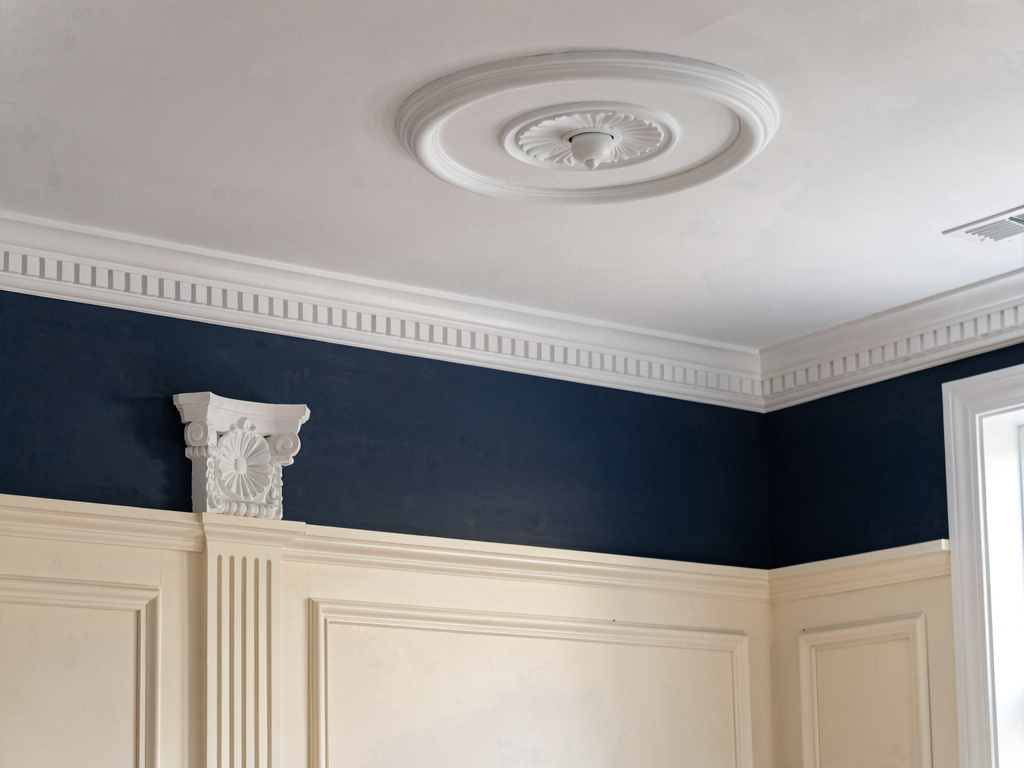
White crown molding with dentil trim lines the ceiling. Raised-panel wainscoting covers the lower half of the wall, painted in cream. A ceiling medallion marks where the chandelier hangs. Fluted door casing with rosette blocks frames the doorway. Chair rail runs at waist height. Deep baseboard molding grounds the wall. Everything is crisp white against navy blue walls.
Architectural molding is the single biggest difference between a traditional room and a room with traditional furniture. Without molding, you have a modern room with old-fashioned chairs. With it, you have a traditional room even before any furniture arrives.
The key elements, in order of impact:
- Crown molding — the junction of wall and ceiling. Standard 3.5" profiles cost $3-$6 per linear foot for materials. More elaborate profiles with dentil or egg-and-dart run $8-$15 per linear foot.
- Baseboards — 5.25" to 7.25" tall for a traditional look (vs. 3" for modern). Materials run $2-$5 per linear foot.
- Wainscoting or raised paneling — covers the lower third to half of the wall. Raised-panel kits start at $10-$20 per square foot installed.
- Chair rail — a single horizontal molding at 32-36 inches from the floor. Simple and effective at $2-$4 per linear foot.
- Ceiling medallion — surrounds the chandelier mount. $30-$200 depending on size and detail.
According to This Old House, adding crown molding to a standard 12x14 room costs $300-$800 installed. For the visual impact it delivers, that is one of the best investments in home design.
Traditional living room
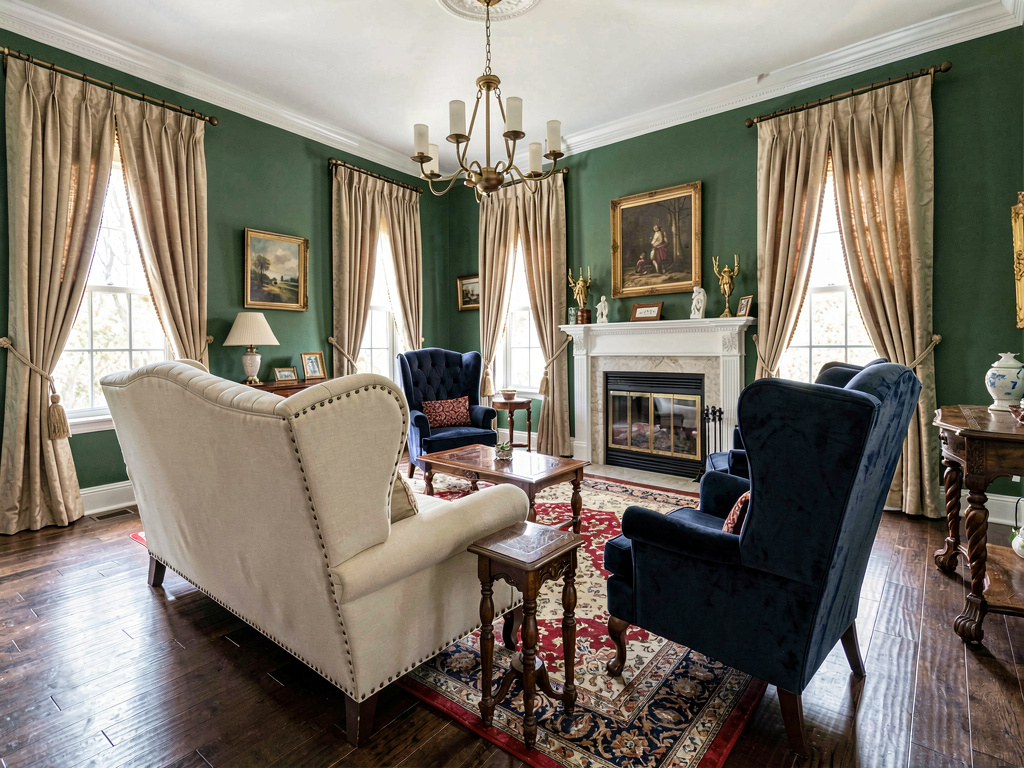
Forest green walls and white crown molding set the frame. A camelback sofa in cream with rolled arms and nailhead trim sits facing the fireplace. Two wingback chairs in navy blue velvet flank the hearth. An oriental rug in red, cream, and blue anchors the seating area on dark hardwood floors. A brass chandelier hangs from the ceiling. Heavy silk curtains with tassel tiebacks frame tall windows. Antique side tables with turned legs hold brass lamps.
The traditional living room is built around the fireplace — or where a fireplace would be. Seating faces the focal wall. Matching pairs of chairs, tables, and lamps create symmetry. The sofa is a camelback or Lawson style with rolled arms, and the wingback chair is the single most traditional piece of furniture you can own. If you buy one piece to anchor a traditional room, make it a wingback.
Furniture placement in traditional rooms follows rules. The sofa faces the fireplace. Chairs flank the fireplace or face the sofa. End tables match. Lamps match. This deliberate symmetry is the visual rhythm of the style. If your living room feels traditional but something is off, check whether you broke the symmetry somewhere.
For other living room directions, our cozy living room ideas guide covers several approaches that layer well with traditional elements.
Traditional dining room
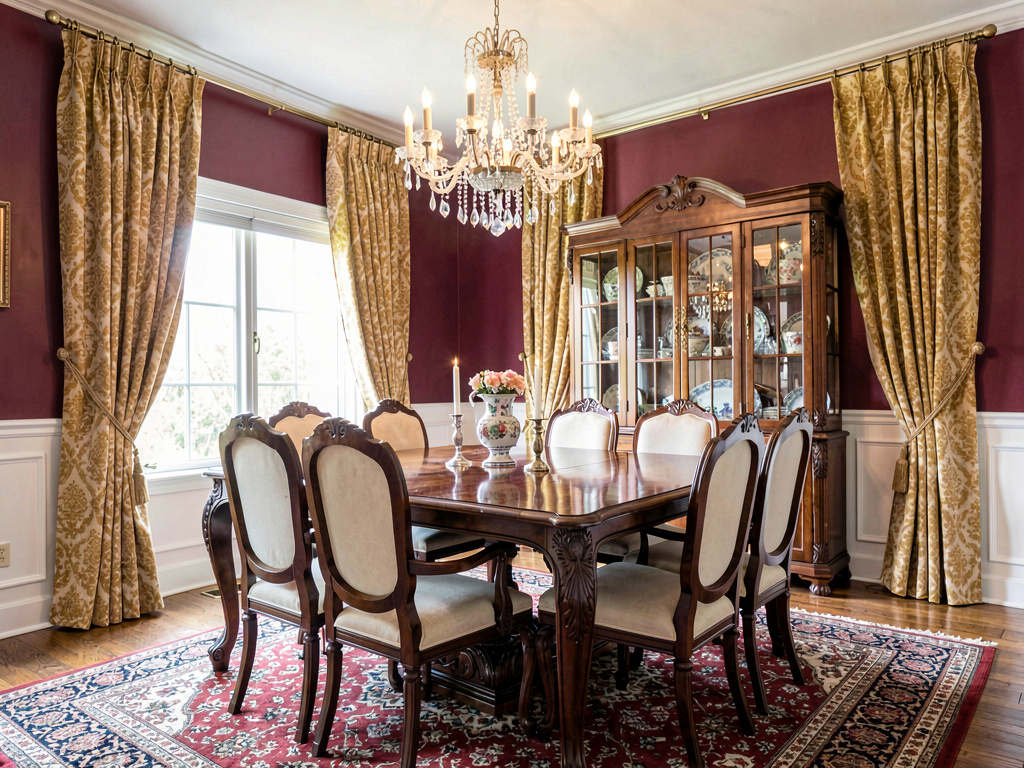
A rectangular mahogany dining table with carved legs seats eight. Upholstered dining chairs in cream fabric with dark wood frames surround it in even spacing. A china cabinet with glass doors displays fine porcelain against the far wall. A crystal chandelier hangs directly over the table center. Burgundy walls with white chair rail and wainscoting below create a formal atmosphere. Heavy drapes in gold damask fabric cover the windows. A Persian runner extends under the table.
The dining room is where traditional design was born. Before open-concept floor plans, the dining room was a separate, formal space — and traditional style still treats it that way. This is the room where you go all in on color (burgundy, navy, or dark green on the walls), pattern (damask or toile curtains), and furniture quality.
The three essentials: a solid wood dining table with turned or carved legs, upholstered chairs (not metal, not bentwood), and a chandelier. A china cabinet or buffet is the fourth if you have the space. These four pieces, in good materials, make the room.
Traditional bedroom
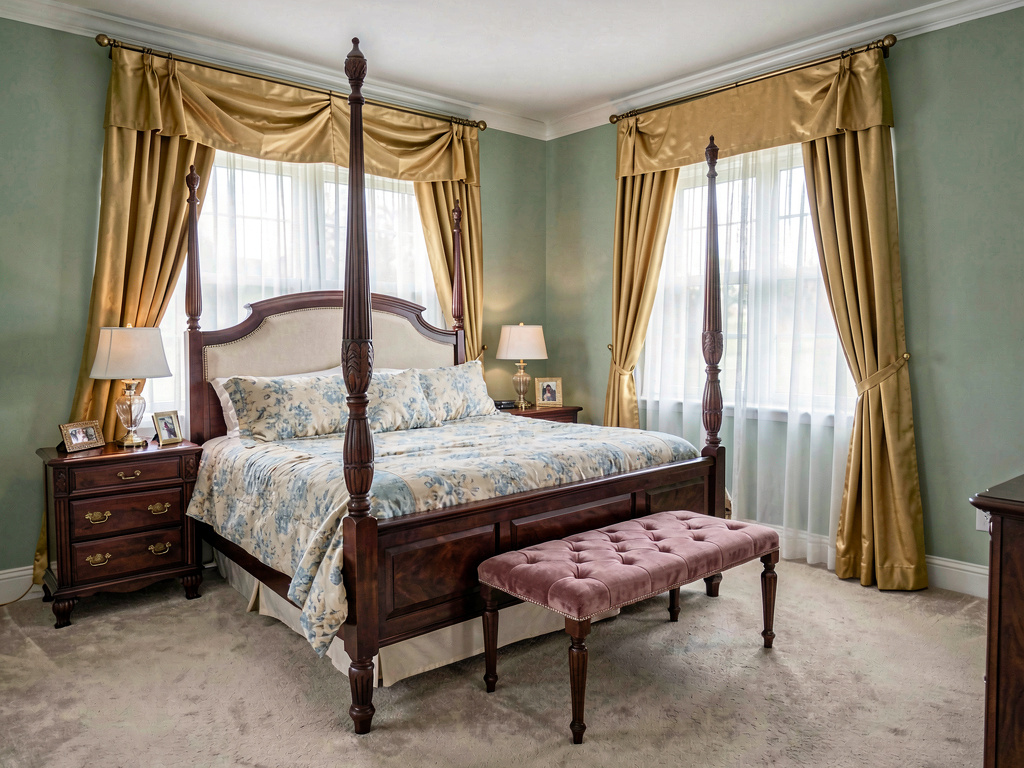
A four-poster bed in dark cherry wood commands the room. A cream upholstered headboard softens the solid frame. Floral bedding in soft blue and cream tones layers across the mattress. Matching nightstands with turned legs and brass pulls flank both sides. A tufted bench in dusty rose velvet sits at the foot of the bed. Layered curtains dress the windows — sheer white underneath for light, heavy gold silk drapes on top for warmth. Soft green walls with white crown molding complete the picture.
The bed is the room. In traditional bedrooms, the bed frame is the statement — a four-poster, a sleigh bed, or a tall upholstered headboard. The rest of the room supports it. Matching nightstands are non-negotiable. A bench or trunk at the foot of the bed adds a layer. And the curtains need to be substantial — no bare windows or flimsy sheers alone.
For more bedroom inspiration, our master bedroom ideas guide covers traditional alongside several other styles.
Traditional kitchen
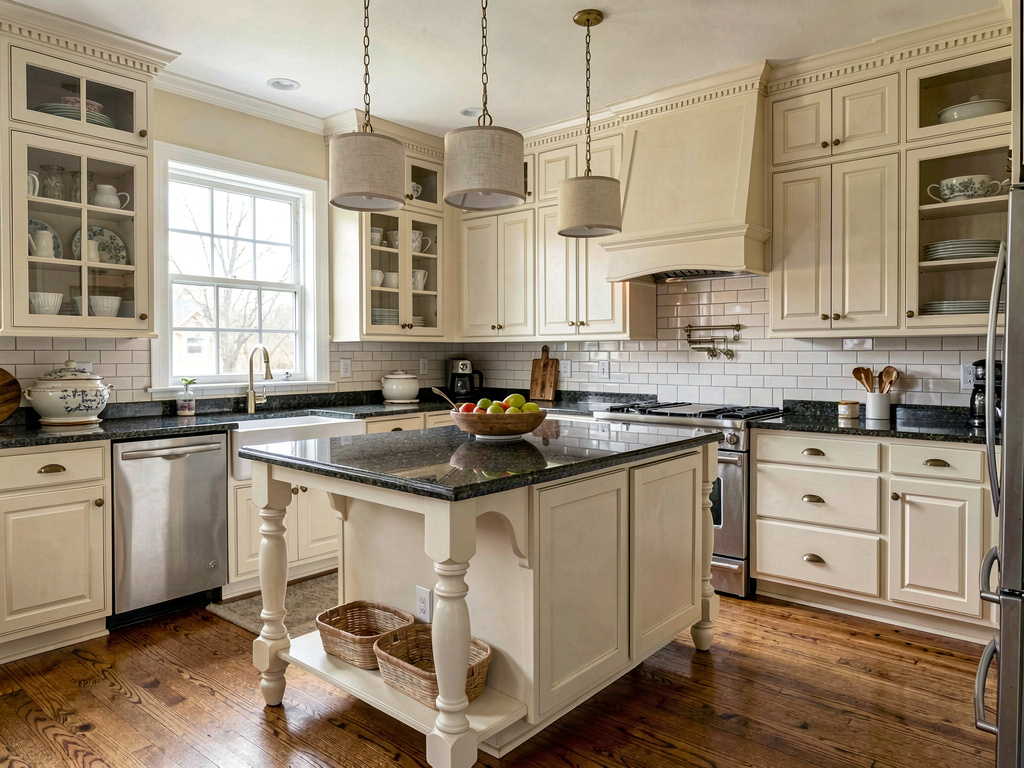
Raised-panel cream cabinets with ornate crown molding and antique brass hardware line both walls. Dark granite countertops on a large center island with turned legs and corbels provide contrast and workspace. A farmhouse apron-front sink sits under the window. Glass-front upper cabinets display dishes and glassware. Pendant lights with fabric shades hang over the island. Warm hardwood floors run throughout. A classic subway tile backsplash in white completes the look.
Traditional kitchens were historically closed-off rooms, but the modern version adapts the style to open layouts. The signature is raised-panel cabinetry — the door profile with a raised center panel and beveled edges. Flat-panel (shaker) cabinets read as transitional, not traditional. The cabinet choice is the biggest single decision in a traditional kitchen.
Other traditional kitchen markers: turned legs on the island (making it look more like furniture than cabinetry), glass-front uppers, corbels and crown molding on the cabinetry, and a decorative range hood. Hardware is typically oil-rubbed bronze or antique brass — not the minimalist bar pulls you see in modern kitchens.
Traditional fabrics and patterns
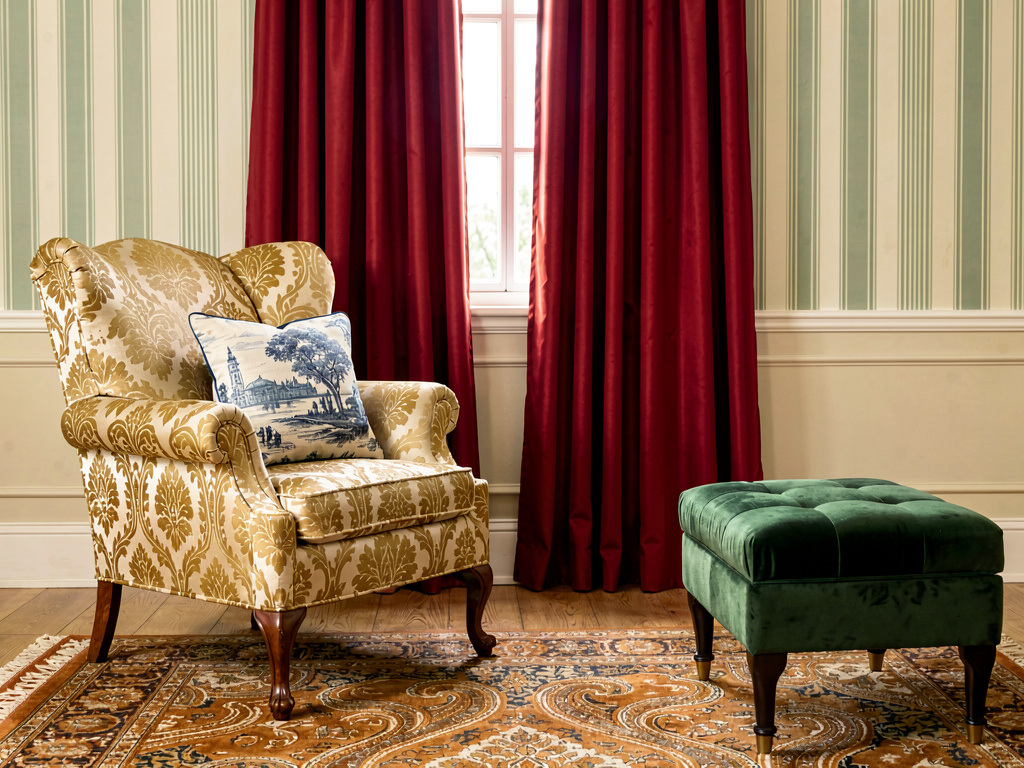
A damask-patterned armchair in gold and cream. Silk taffeta curtains in deep red. A toile throw pillow in blue and white. A paisley area rug in warm tones. A velvet ottoman in forest green. Striped wallpaper in cream and sage. Each textile shows its distinct weave and texture up close.
Fabric is how traditional rooms build warmth and depth. The style uses more textile variety than any other — sometimes five or six different fabrics in one room. The key patterns and materials:
- Damask: woven fabric with a tone-on-tone pattern. The classic traditional textile for upholstery and curtains.
- Toile: scenic printed fabric, usually in one color on a white or cream background. Common on pillows, bed skirts, and accent chairs.
- Velvet: used for accent chairs, ottomans, and throw pillows. Adds richness and depth.
- Silk and taffeta: for curtains and formal upholstery. The sheen catches light beautifully.
- Paisley: for rugs, throw pillows, and accessories. Adds organic pattern to balance geometric molding.
- Chintz: glazed cotton with a floral print. Once considered outdated, now making a comeback in modern traditional rooms.
The rule with traditional fabrics is layering. A traditional sofa in solid cream needs patterned throw pillows. Solid curtains work with a patterned rug. Mix scales — a large-scale damask sofa with small-scale paisley pillows — and keep the colors within your palette.
Traditional home office
See Your Room Redesigned
Download Remodel AI and transform any room in 30 seconds. 3 free designs, no signup.


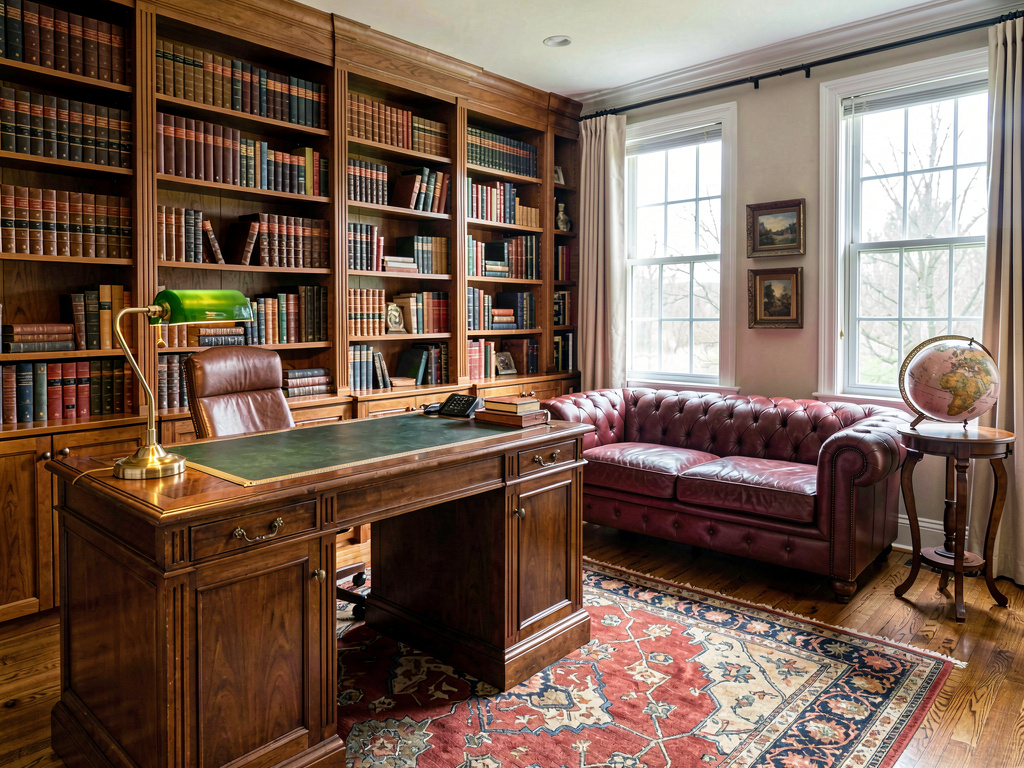
Floor-to-ceiling built-in mahogany bookshelves filled with leather-bound books line one wall. A large partners desk in dark wood with a green leather writing surface anchors the room. A tufted leather Chesterfield sofa in oxblood red sits against the opposite wall. A brass desk lamp with a green glass shade illuminates the work surface. An oriental rug warms the hardwood floor. A globe on a wooden stand sits in the corner. Framed architectural prints hang in gold frames.
The traditional home office is the library. Built-in bookshelves, a substantial desk, and a leather chair or sofa define the space. This is one of the most satisfying traditional rooms to create because the style suits focused, quiet work. Dark walls (forest green, navy, or deep brown) make the room feel like a cocoon.
A Chesterfield sofa or a tufted leather chair is the signature piece. A quality leather Chesterfield starts at $1,500 and lasts decades. The desk should be real wood — not laminate veneer — with enough surface area to spread out. Partners desks and executive desks in traditional styles run $800-$3,000 depending on materials.
Traditional bathroom
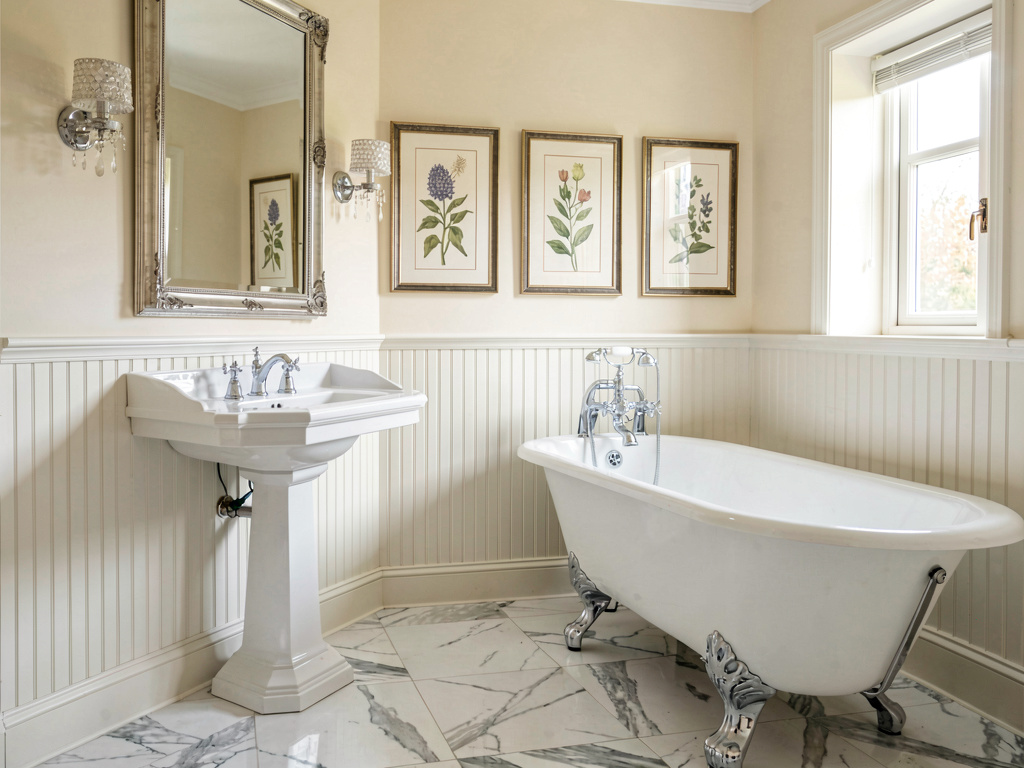
Marble floor tile in classic white with gray veining covers the floor. A pedestal sink with an ornate base and cross-handle faucets in polished chrome serves as the focal point. A clawfoot bathtub in white with chrome feet sits against the wall. Beadboard wainscoting on the lower walls is painted white. Framed botanical prints hang above the beadboard. Crystal sconces flanking a large framed mirror provide warm light. A cream and white color scheme keeps everything fresh.
Traditional bathrooms are lighter than traditional living spaces. Where the living room goes navy and burgundy, the bathroom stays in cream, white, and soft gray. The signature pieces are a pedestal sink (or furniture-style vanity with turned legs), a clawfoot tub, and cross-handle faucets. Beadboard wainscoting on the walls is the traditional bathroom equivalent of paneling in the living room.
If you are remodeling a bathroom in traditional style, our bathroom remodel ideas post covers additional layout and fixture options.
Traditional vs. transitional: what is the difference?
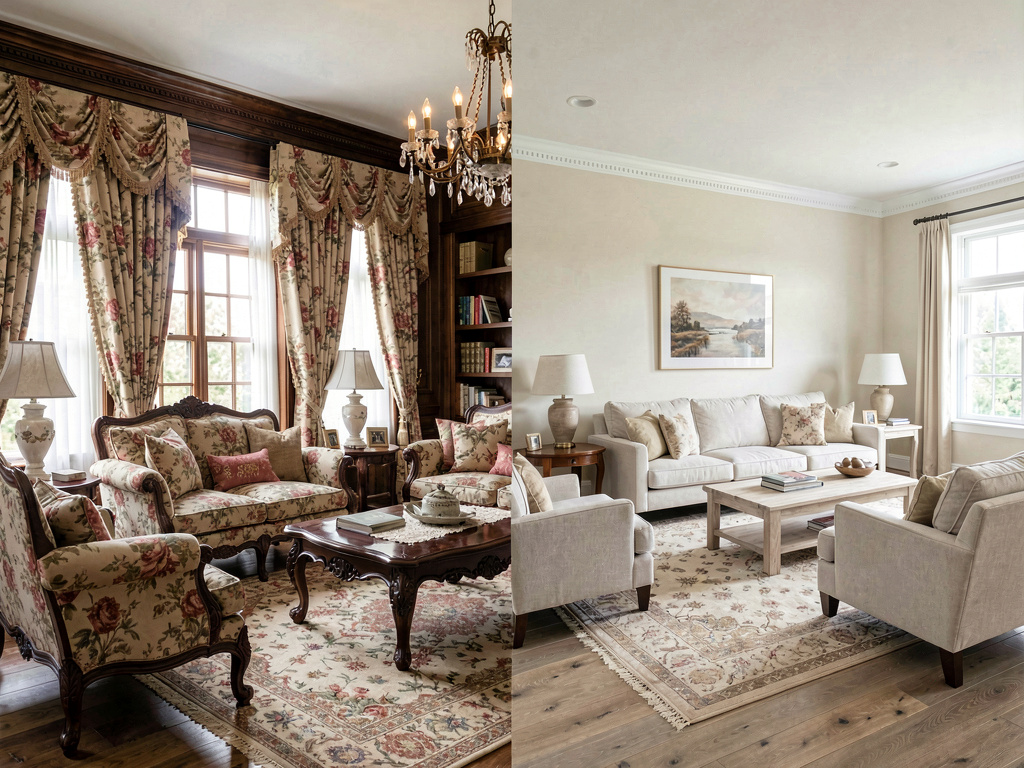
Two living rooms side by side. The left is fully traditional: ornate carved furniture, heavy drapes in damask, floral patterns, dark wood in every piece. The right is transitional: cleaner lines, lighter colors, simpler furniture shapes, but still with crown molding and a classic rug on the floor. Both are elegant, but the transitional room breathes more.
Transitional design is the bridge between traditional and modern. It keeps some traditional elements — molding, symmetry, rich materials — but simplifies the furniture and lightens the color palette. Here is how to tell them apart:
Traditional: ornate carved details, heavy fabrics, dark woods, bold wall colors, pattern mixing, formal furniture placement, visible hardware and trim.
Transitional: clean lines with some traditional details, lighter wood tones, neutral color palette, fewer patterns, more relaxed furniture placement, minimal ornamentation.
If full traditional feels too formal for your taste, transitional is the compromise. You get the quality and warmth without the strictness. Our interior design styles guide covers both in more detail alongside other popular directions.
What traditional interior design costs
Traditional design is not cheap, because the style depends on quality materials. Here is the breakdown:
Budget approach ($1,000-$3,000 per room): Add crown molding, paint the walls a deep color, swap hardware to brass, add a traditional rug. Keep existing furniture and layer in throw pillows in damask or velvet.
Mid-range ($3,000-$10,000 per room): Wingback chair or camelback sofa, matching side tables and lamps, wainscoting or paneling on one wall, quality curtains with hardware. According to Architectural Digest, a quality wingback chair runs $800-$2,500, and it is the most impactful single purchase for a traditional room.
Full commitment ($10,000-$30,000+ per room): Built-in bookshelves, custom upholstered furniture, silk curtains, hardwood floor refinishing, full-room paneling, antique or heirloom-quality pieces.
The good news is that traditional furniture holds its value. A well-made mahogany dining table or leather Chesterfield sofa lasts 30-50 years. The per-year cost of quality traditional furniture is often lower than replacing cheaper modern pieces every 5-10 years.
How to try traditional design in your space
Want to see what your room looks like in traditional style before buying anything?
Step 1: Take a photo of any room — living room, bedroom, dining room, kitchen.
Step 2: Upload it to Remodel AI (free on iOS, Android, and web).
Step 3: Select "Traditional" as the style. In about 30 seconds, you will see your actual room transformed with molding, rich colors, and classic furniture.
Step 4: Compare it against other styles. Try Scandinavian for maximum contrast or modern farmhouse for something in between.
3 free designs. No credit card required.
Is traditional interior design outdated?
No. Traditional design has stayed relevant for centuries because it is based on proportions, symmetry, and material quality rather than trends. What does look outdated is 1990s traditional — the heavy matching furniture sets in honey oak with country rooster motifs. Modern traditional keeps the bones (molding, rich fabrics, quality wood) and drops the matching sets and overly themed accessories. Done well, a traditional room feels timeless, not dated.
What furniture styles are considered traditional?
Wingback chairs, camelback sofas, Chesterfields, four-poster and sleigh beds, pedestal dining tables, secretary desks, and china cabinets. The common thread is turned or carved wood legs, rolled or tufted upholstery, and visible craftsmanship in the joinery and details. If the furniture looks like it was made by hand from solid wood, it reads as traditional.
Can I mix traditional with modern?
Yes, and it often works better than going all-in on either direction. The 70/30 rule is useful: 70% traditional (the architecture, the rug, the key furniture) and 30% modern (a contemporary light fixture, abstract art, a clean-lined accent chair). The modern pieces keep the room from feeling like a period reproduction. Our mid-century modern living room guide has ideas for mixing eras effectively.
What is the most important piece in a traditional room?
The seating. A wingback chair or a well-made sofa with rolled arms and nailhead trim defines the traditional look more than any other single purchase. If you have $1,000 to start, spend it on one good chair rather than spreading it across a dozen accessories. The chair sets the standard, and everything else follows.
How is traditional different from farmhouse style?
Traditional pulls from European formal design — think English manor houses and French salons. Farmhouse pulls from American rural design — think barn doors, shiplap, and distressed finishes. Traditional uses polished dark wood; farmhouse uses raw or whitewashed wood. Traditional uses silk, damask, and velvet; farmhouse uses cotton, linen, and burlap. They share a love of warm tones and natural materials but express it very differently. See our modern farmhouse interior guide for a deeper comparison.
Traditional interior design has outlasted every trend of the last century because it is built on principles — symmetry, proportion, quality materials — rather than fashion. If you want a room that still looks good in twenty years, traditional is a safe bet. Start with crown molding and a wingback chair, and build from there.
Try Remodel AI free at www.remodelai.io/app — available on iOS, Android, and web.
Ready to Try AI Interior Design?
Upload a photo and redesign any room in seconds. 3 free designs, no signup required.