Scandinavian interior design: the complete guide
How Scandinavian interior design actually works — the materials, colors, furniture, and room-by-room ideas that make it the most popular style in the world.

Ryan H.
Founder of Remodel AI · March 23, 2026 · 10 min read
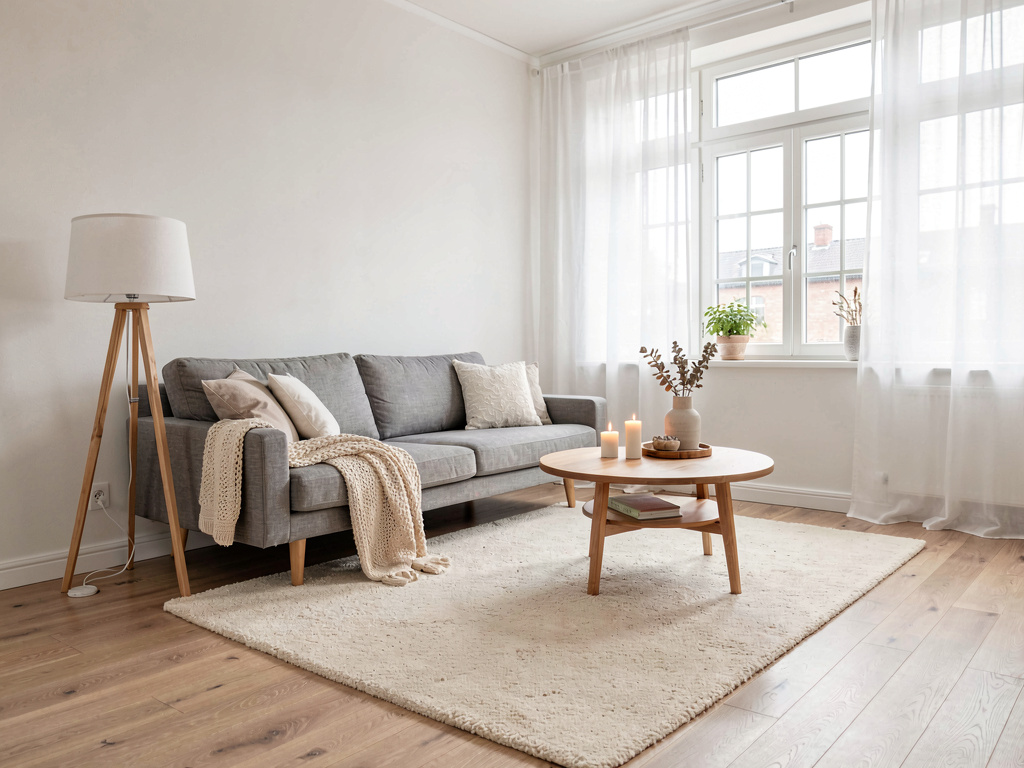
Scandinavian interior design has been the default "good taste" style for about fifteen years now, and there's a reason for that. The whole philosophy was built around small apartments in dark climates — rooms that needed to feel open, bright, and warm despite limited space and limited daylight. Those constraints produced a style that happens to work almost everywhere: clean lines, natural materials, neutral palettes, and nothing in the room that doesn't earn its place.
But Scandinavian design is also the most misunderstood style. People think it means "white and empty." It doesn't. The best Scandinavian rooms are warm, layered, and full of texture. The white walls are just the canvas. Here's how the style actually works, room by room.
The Scandinavian color palette
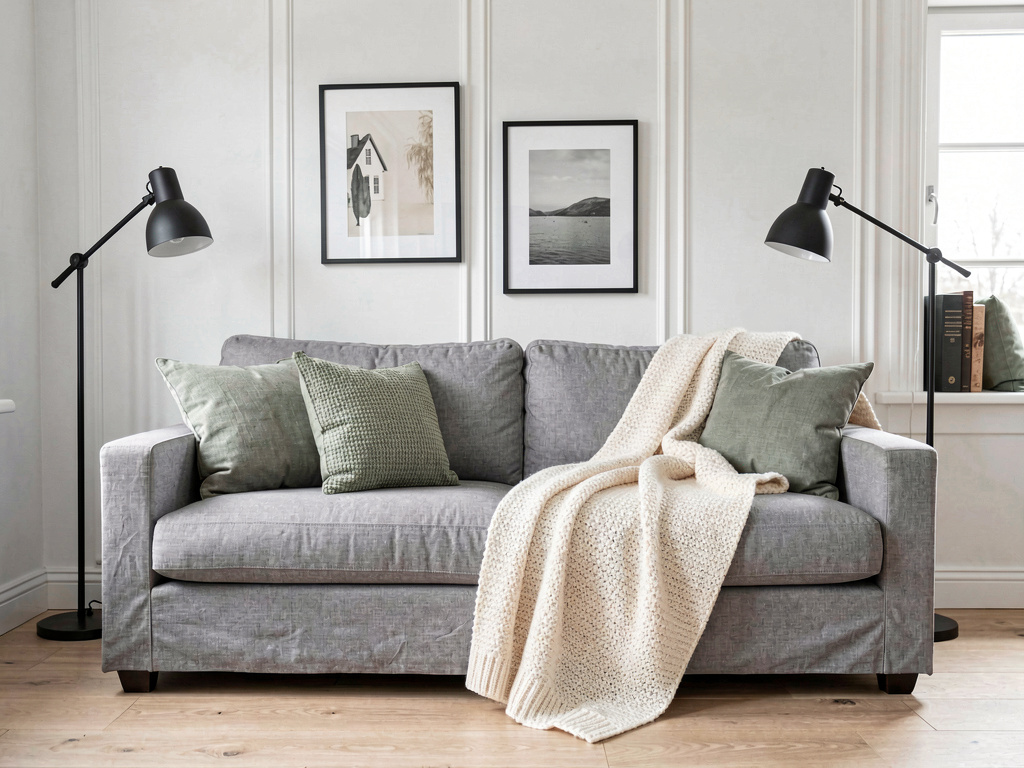
White painted walls stretch to the ceiling. A light oak floor runs throughout. A sofa in soft gray linen sits against the wall. Muted sage green cushions and a cream wool throw add subtle color. A few matte black accents — a lamp, a picture frame, shelf brackets — provide contrast. Everything reads as calm, warm, and deliberate.
The Scandinavian palette is white + warm wood + one or two muted tones. White walls reflect whatever daylight exists. Light oak or birch floors add warmth without heaviness. Then you layer in soft grays, muted greens, dusty pinks, or warm taupes through textiles and accessories. Black appears as an accent — never dominant. The key difference from generic "minimalist white" is the wood. Without warm wood tones, Scandinavian rooms feel sterile. With them, they feel like home.
Scandinavian living room
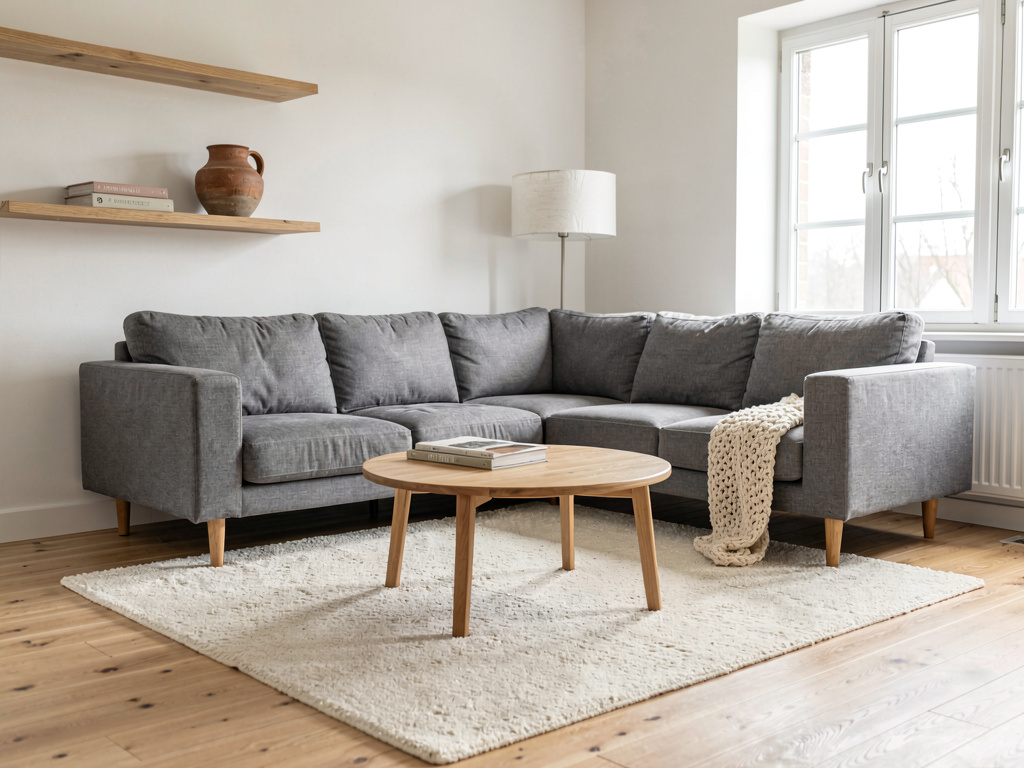
A low-profile gray linen sofa with wooden legs faces a simple oak coffee table. A cream wool rug covers the floor beneath. A floor lamp with a white linen shade stands in the corner. Open shelving holds a few books and a small ceramic vase. A large window lets in soft light. A knitted throw drapes over the sofa arm. The room has maybe ten objects in it, and none of them compete for attention.
The Scandinavian living room is the most imitated room in interior design. The formula is straightforward: neutral sofa, wooden coffee table, one good rug, one good lamp, and restraint with everything else. The restraint is the hard part. Every piece needs to justify its presence. If you're coming from a cozy living room style with lots of layered textiles and accessories, Scandinavian asks you to edit down to the essentials. What's left should be high quality.
A quality linen sofa runs $1,200-$3,000. An oak coffee table is $200-$800. The rug — wool or jute — is $150-$400. These three pieces are the room. Everything else is optional.
Scandinavian bedroom
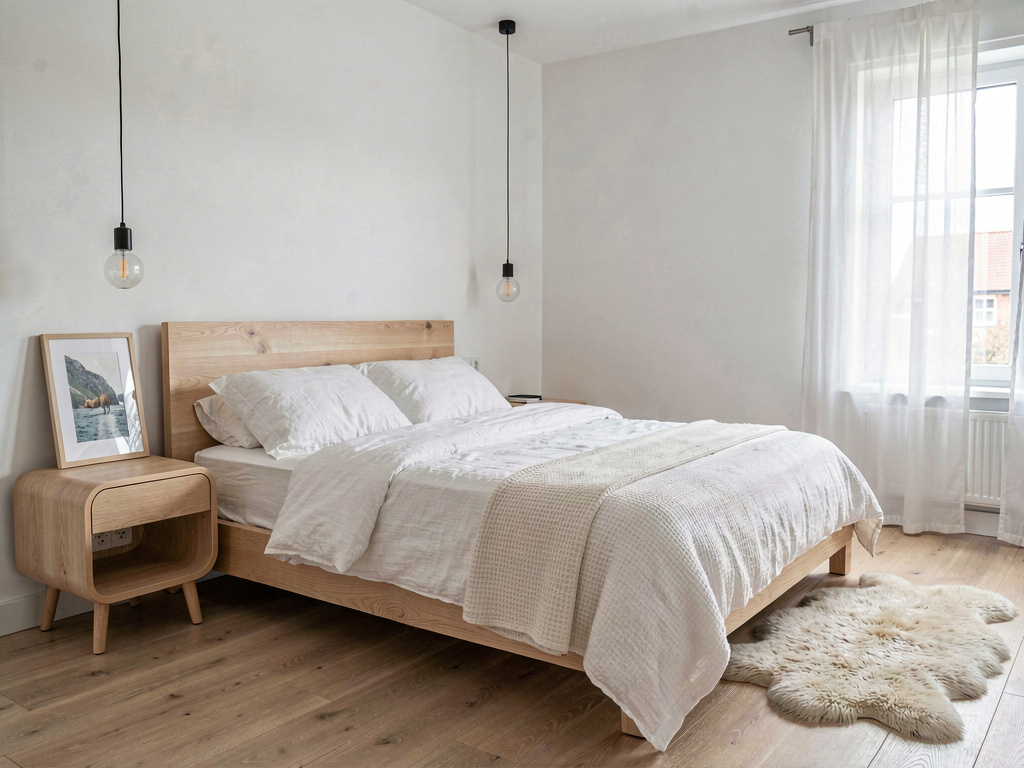
A low platform bed in light ash with simple lines. White linen bedding with a textured waffle-knit blanket folded at the foot. Light wood nightstands with round edges. A single pendant light hangs from the ceiling instead of bedside lamps. Sheer white curtains filter daylight. A single framed print leans against the wall on the nightstand. The floor is bare except for a sheepskin rug beside the bed.
Scandinavian bedrooms are about creating a room that feels calm the moment you walk in. No visual clutter, no bold patterns, no competing elements. The bed dominates the room, and the linen bedding is the biggest quality investment ($150-$400 for a good set). White linen looks better with age and wrinkles — it's supposed to look lived-in, not ironed. The pendant light instead of bedside lamps is a classic Scandinavian move that frees up nightstand space and adds a sculptural element.
Scandinavian kitchen
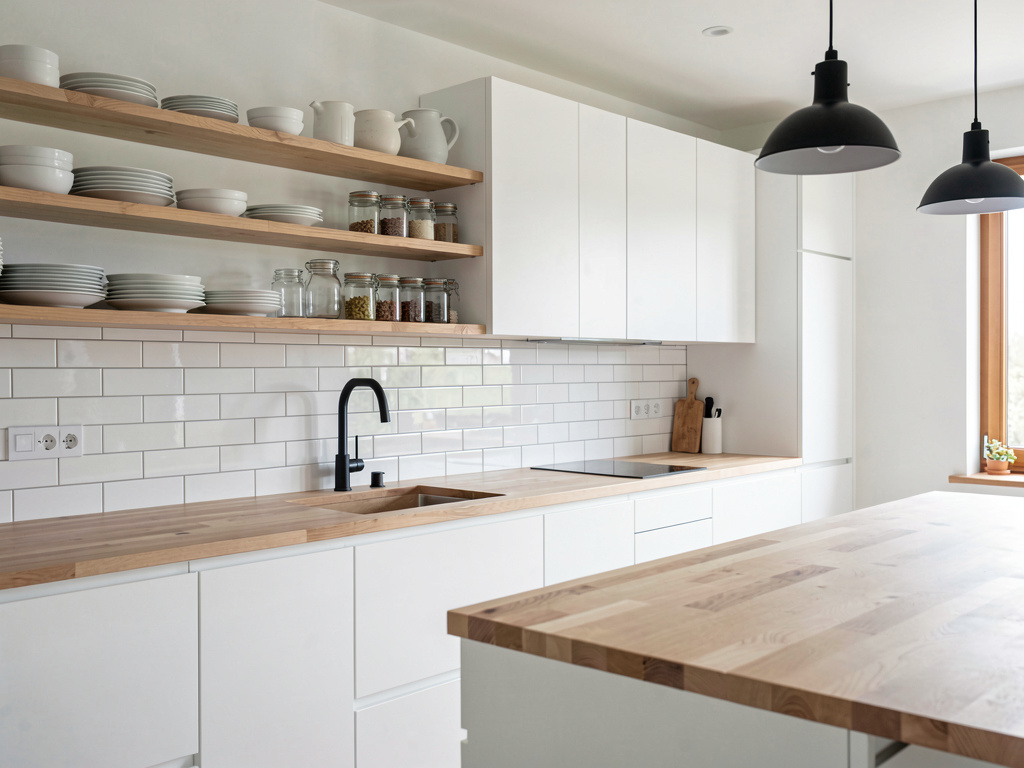
Flat-panel white cabinets with no visible hardware — just push-to-open. A light birch butcher block countertop. Open shelving above the counter holds white ceramic dishes and clear glass jars. A simple white tile backsplash in a stacked bond pattern. Matte black faucet. A single pendant light over the island. A few cutting boards lean against the backsplash. The counter is almost empty.
Scandinavian kitchens are the easiest to achieve on a budget because the style avoids expensive materials. White flat-panel cabinets (the cheapest cabinet style at most retailers), a butcher block countertop ($40-$80 per linear foot from IKEA), and no hardware. That's it. The open shelving ($15-$40 per shelf) replaces upper cabinets and forces you to keep only what you use. According to Apartment Therapy, open shelving is the most searched kitchen feature in Scandinavian design.
The key detail is keeping countertops clear. In Scandinavian kitchens, appliances go inside cabinets. The counter holds a cutting board, maybe a kettle, and nothing else.
Scandinavian bathroom
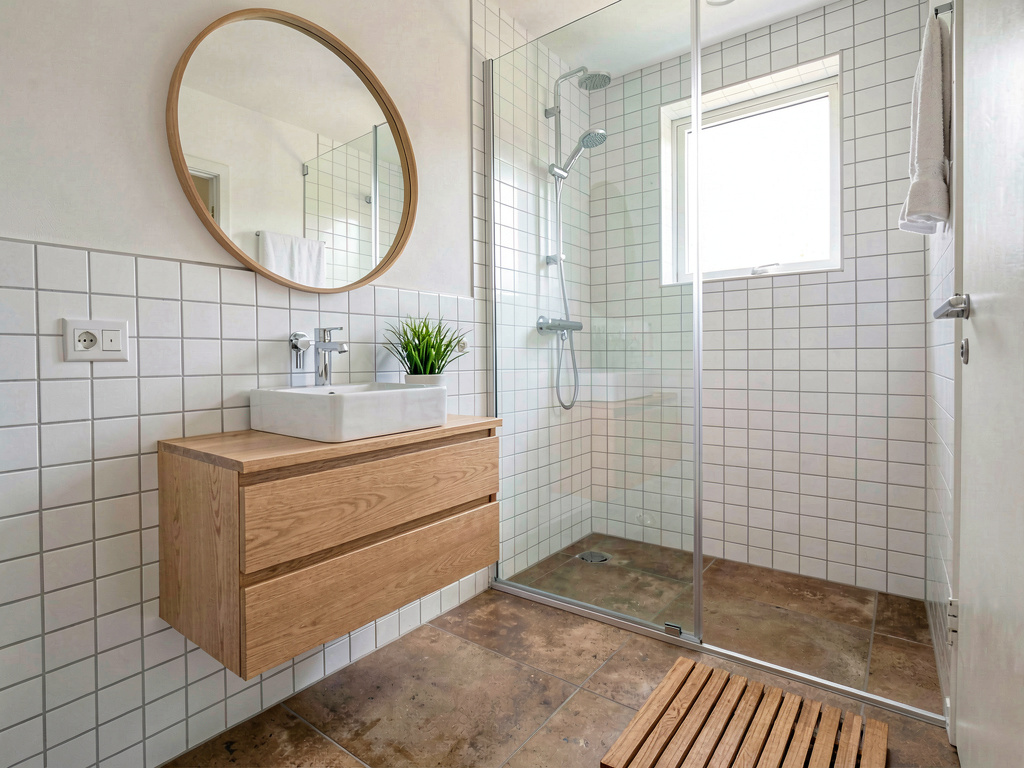
A wall-mounted vanity in light oak with a white ceramic basin. A round mirror with a thin oak frame. White square wall tiles with white grout — the lines almost disappear. A walk-in shower with a glass panel, no door. Warm concrete-look floor tiles. A wooden bath mat. One small green plant on the vanity. Chrome fixtures throughout.
Scandinavian bathrooms strip everything back to surfaces and light. The palette is white tile, warm wood, and one or two organic elements (a plant, a wooden bath mat). The round mirror is a signature — it softens the geometry of all the straight lines in a bathroom. A good round mirror with a wood frame runs $50-$150. If you're planning a bathroom remodel, Scandinavian is one of the most affordable styles to execute because it relies on basic materials done well rather than expensive finishes.
Scandinavian dining room
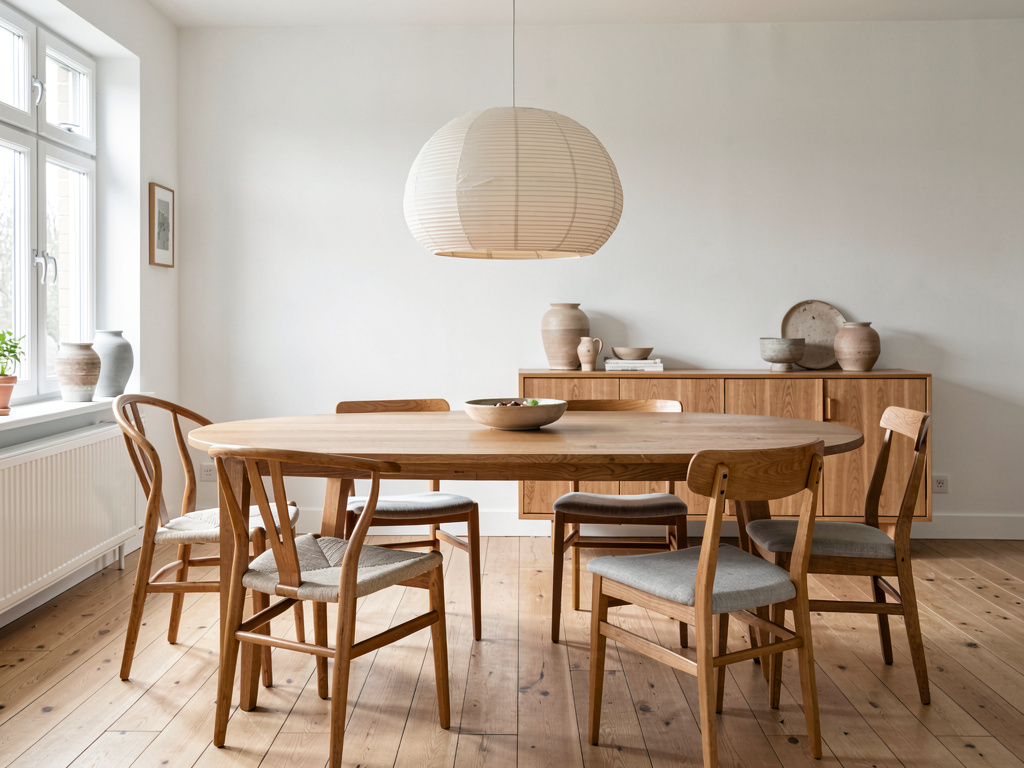
An oval oak dining table seats six. The chairs are a mix — two Wegner-style wishbone chairs, two simple wooden chairs, and two with upholstered seats in light gray. A large paper pendant lamp hangs low over the table. A simple sideboard against the wall holds a few ceramics. White walls, wood floor, natural light. The table is the center of the room in every sense.
Scandinavian dining rooms are built around the table as a gathering point. The mixed chairs are intentional — in Denmark and Sweden, dining chairs have always been collected over time rather than bought as a matching set. A quality oak dining table is $500-$1,500. The wishbone chair ($100-$400 depending on whether you buy original or reproduction) is the most iconic Scandinavian dining chair. The paper pendant lamp ($20-$80) is one of the cheapest high-impact pieces in Scandinavian design.
Scandinavian home office
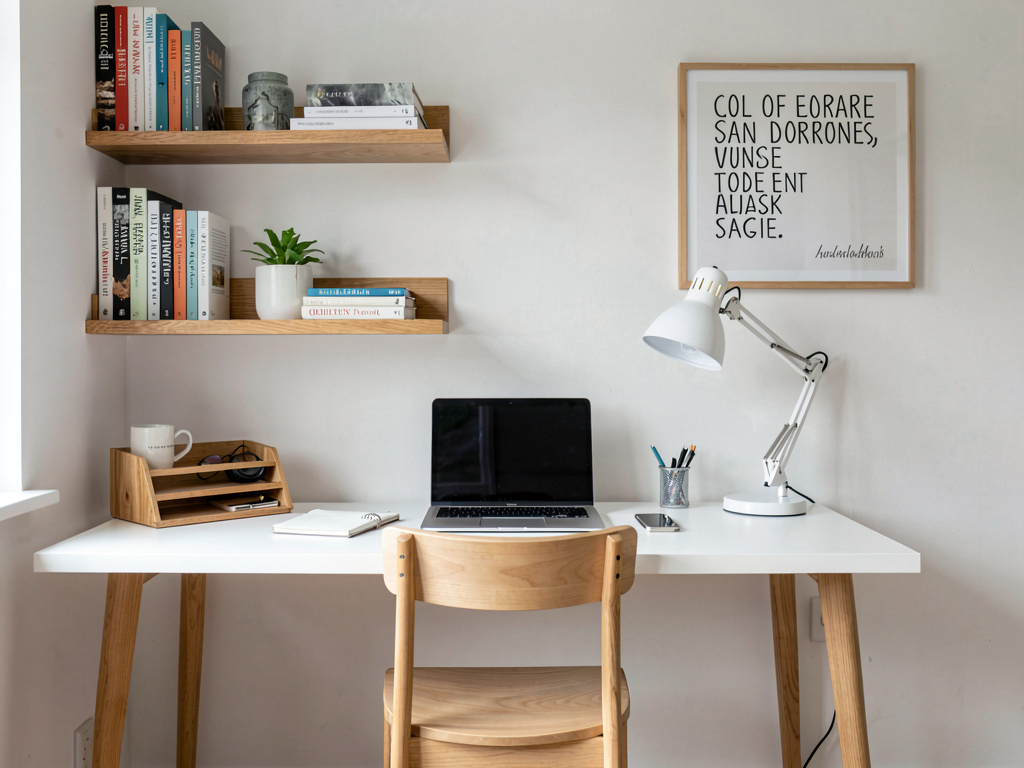
A simple white desk with oak legs against the wall. Oak wall-mounted shelving holds books and a few objects. A classic task lamp in white or black. A wooden desk organizer holds pens. The chair is either a simple wooden chair or an upholstered office chair in gray fabric. The wall above the desk has one print or nothing at all. The desk surface has the laptop, the lamp, and not much else.
Scandinavian design works especially well for home offices because the style naturally eliminates distraction. Everything is either functional or gone. A clean desk isn't just an aesthetic choice here — it's the point. The Scandinavian approach to workspace design comes from the same philosophy that created IKEA's functional furniture: every object should serve a purpose, and purpose is the best decoration.
See Your Room Redesigned
Download Remodel AI and transform any room in 30 seconds. 3 free designs, no signup.


Hygge: the missing ingredient
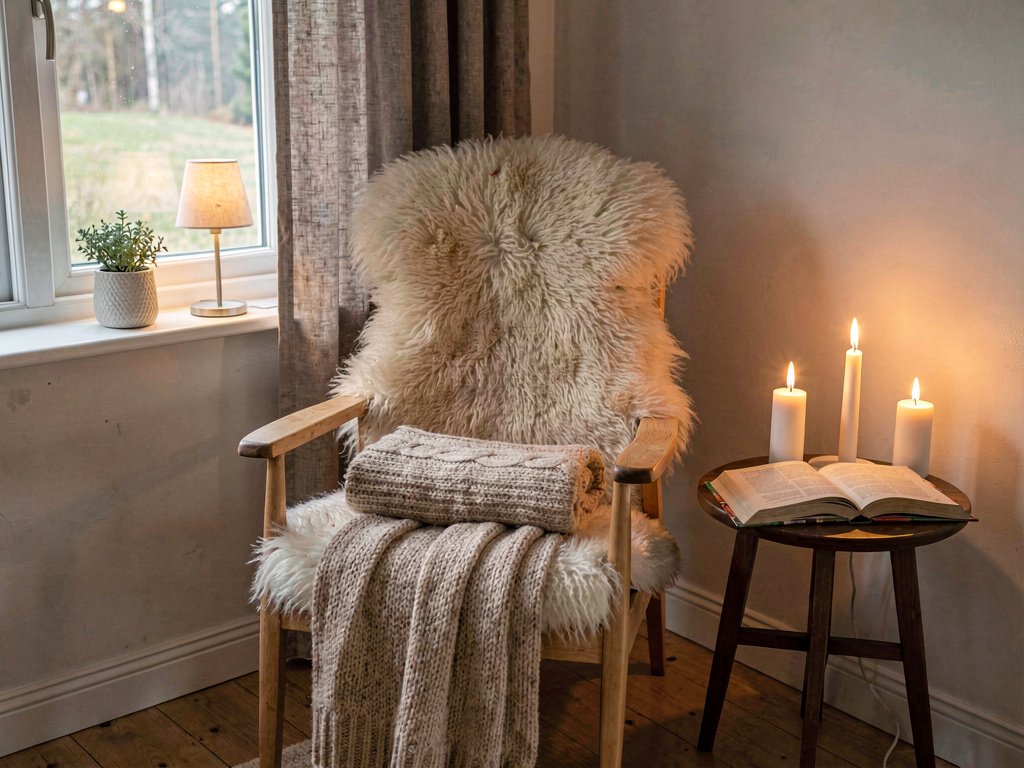
A wooden armchair with a sheepskin draped over the back. A knitted blanket folded on the seat. Three candles of different heights sit on a small side table. A book lies open beside them. Warm light comes from the candles and a small table lamp. The corner is tucked against a window with the curtains half drawn. It looks like someone was just sitting there reading.
Hygge (roughly "hoo-gah") is the Danish concept of cozy contentment, and it's what separates good Scandinavian interiors from cold minimalist ones. Hygge is candles, blankets, warm lighting, and spaces that invite you to sit down and stay. Every Scandinavian room should have at least one hygge moment — a reading corner, a window seat with cushions, a dining table set for a meal. Without it, you have a showroom. With it, you have a home.
Candles are non-negotiable. Denmark burns more candles per capita than any other country in the world. A few pillar candles on a tray ($10-$20) do more for the mood of a room than any single piece of furniture.
Materials that define Scandinavian design
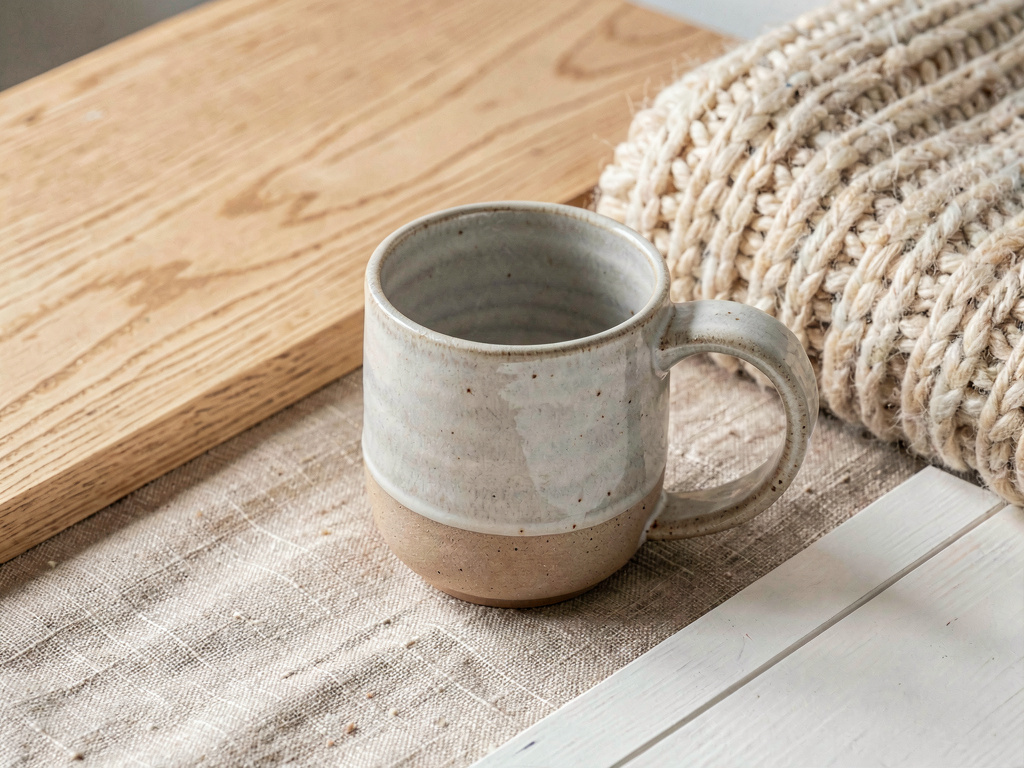
Close-up details of the core Scandinavian materials. Light oak wood grain, the weave of natural linen fabric, a handmade ceramic mug with a matte glaze, the texture of a wool throw blanket, and the smooth surface of white painted wood. These are the textures that define the style — all natural, all tactile.
The materials palette in Scandinavian design is narrow on purpose:
- Light wood — oak, birch, ash, and pine. Always light-toned, never dark stained. The wood grain should be visible.
- Natural textiles — linen, wool, cotton, and sheepskin. Nothing synthetic. The texture matters more than the pattern.
- Ceramics — handmade, matte-glazed, imperfect. Mugs, vases, bowls. The Japanese concept of wabi-sabi (beauty in imperfection) runs through Scandinavian ceramics.
- White paint — warm white, not blue-white. Benjamin Moore "White Dove" or "Simply White" are the standard recommendations for Scandinavian-style walls.
What Scandinavian design costs
Scandinavian design can be surprisingly affordable because it uses fewer pieces and simpler materials:
Budget approach ($500-$1,500): Declutter aggressively, paint walls white, add a good wool rug and linen cushions. Replace any dark wood with light-toned alternatives. Add candles.
Mid-range ($2,000-$5,000): Linen sofa or sofa cover, oak coffee table, pendant lighting, sheepskin rug, and a few quality ceramics. Replace overhead lighting with pendants and floor lamps.
Full commitment ($5,000-$15,000+): New light wood flooring, custom flat-panel cabinetry, quality Scandinavian furniture (HAY, Muuto, Fritz Hansen), and curated artwork.
How to try Scandinavian design in your space
Want to see what your room looks like with Scandinavian styling before you commit?
Step 1: Take a photo of any room.
Step 2: Upload it to Remodel AI (free on iOS, Android, and web).
Step 3: Select "Scandinavian" as the style. In about 30 seconds, you'll see your room transformed.
Step 4: Compare it against other styles. Try mid-century modern or modern farmhouse to see the contrast.
3 free designs. No credit card required.
Is Scandinavian design just minimalism?
No. Minimalism is about having less. Scandinavian design is about having enough — and making sure what you have is warm, functional, and well-made. A minimalist room can feel cold and austere. A Scandinavian room should feel warm and inviting. The wood tones, textiles, and candles are what make the difference.
Does Scandinavian design work in warm climates?
Yes. The style was designed for dark, cold climates, but the principles — clean lines, natural materials, uncluttered spaces — work everywhere. In warm climates, swap the heavy wool throws for lighter linen and cotton, use more plants, and lean into the airiness. The light wood and white palette actually feels cooler in hot weather than dark, heavy interiors.
How do I avoid making it look like an IKEA showroom?
Three things: texture, imperfection, and personal objects. IKEA showrooms are smooth, uniform, and generic. A real Scandinavian home has a handmade ceramic that's slightly lopsided, a vintage chair mixed with new furniture, and worn-in textiles that show their age. Mix eras, mix sources, and let things get slightly messy. That's hygge.
What's the difference between Scandinavian and Japanese minimalism?
Both value simplicity and natural materials, but the mood is different. Japanese minimalism leans toward stillness and formality — think zen gardens and tatami rooms. Scandinavian design leans toward warmth and sociability — think dinner parties and reading by candlelight. Both are beautiful. Scandinavian is more likely to feel immediately comfortable.
Scandinavian interior design works because it's built on good bones rather than trends. Clean lines don't go out of style. Natural materials age well. And a room with nothing unnecessary in it always feels better than one with too much. If your current space feels cluttered or heavy, try removing things before adding things. What's left might already be the room you want.
Try Remodel AI free at www.remodelai.io/app — available on iOS, Android, and web.
Ready to Try AI Interior Design?
Upload a photo and redesign any room in seconds. 3 free designs, no signup required.