Small bedroom ideas: 12 smart layouts
Small bedroom ideas that actually work — 12 layouts for rooms under 120 sq ft. Murphy beds, loft beds, storage tricks, and color strategies to make tiny rooms feel spacious.

Ryan H.
Founder of Remodel AI · April 4, 2026 · 11 min read
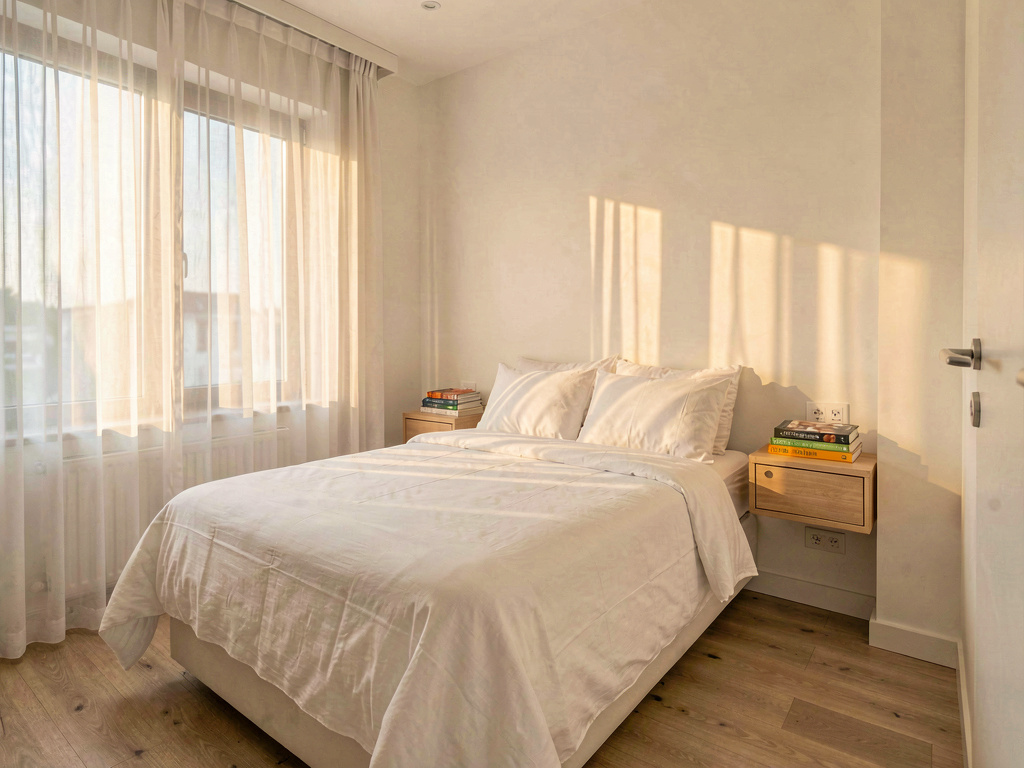
A small bedroom doesn't need to feel small. Most bedrooms in U.S. apartments and older homes fall between 80 and 120 square feet, and plenty of people sleep perfectly well in rooms that size. The issue is when the room feels stuffed — when you're stepping over things, when the dresser blocks the closet door, when there's nowhere to set a glass of water. That's a layout problem, not a size problem.
These are 12 small bedroom ideas that solve real space problems. Each one works in rooms under 120 square feet, and most of them cost less than you'd spend on a weekend brunch habit. The trick isn't buying smaller things. It's buying smarter things and putting them in the right place.
1. The Murphy bed flip
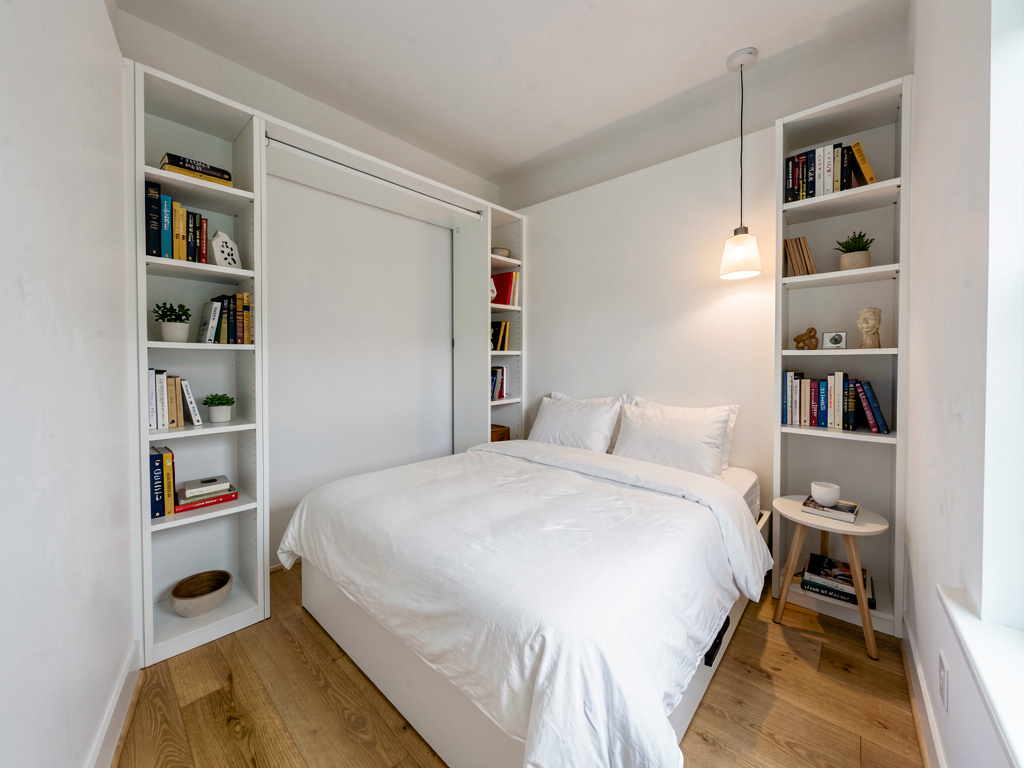
A modern Murphy bed folds down from the wall with built-in shelving on both sides. When it's up, you have a home office or yoga space. When it's down, you have a queen bed with reading lights already mounted at the right height. The shelves stay accessible either way.
Murphy beds have come a long way from the creaky spring-loaded contraptions your grandparents had. Modern hydraulic systems from brands like Bestar and Lori Wall Beds run $1,200 to $3,500 installed, according to HomeAdvisor. For a 90-square-foot bedroom that doubles as a home office, this is the single highest-impact change you can make. During the day, you get back 35 to 40 square feet of usable floor space.
2. Loft bed for adults
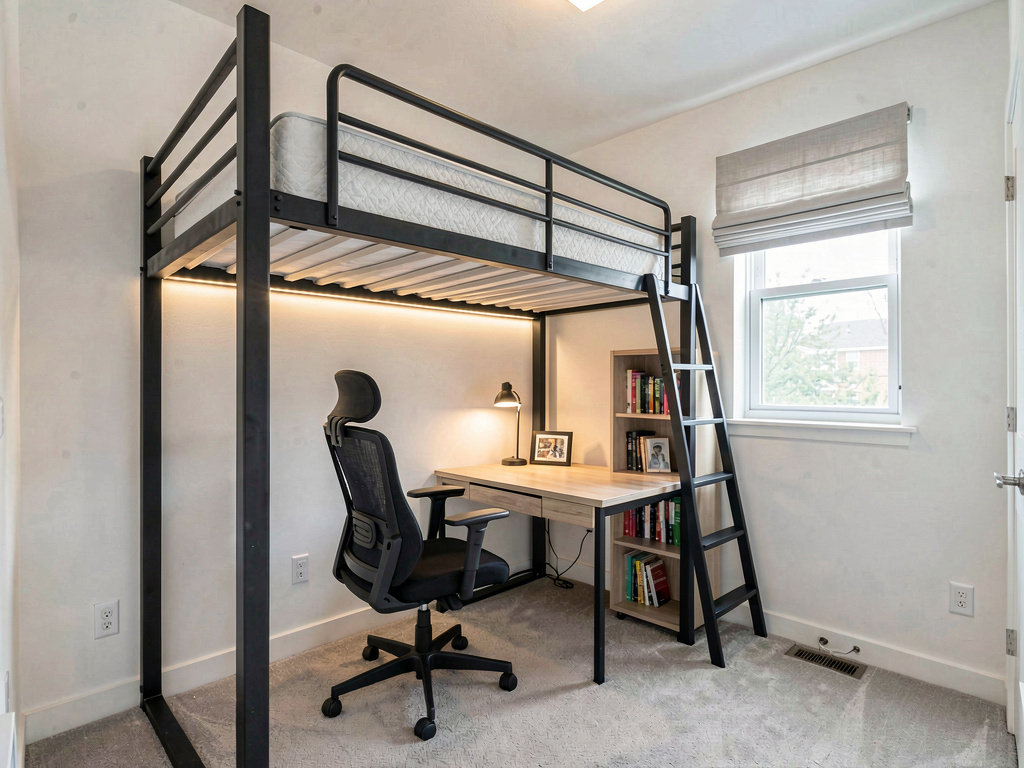
A matte black metal loft bed holds a queen mattress up high. Underneath: a full desk setup with a laptop, task chair, and bookshelf. The ceiling is 8 feet, leaving about 3.5 feet of clearance above the mattress — enough to sit up comfortably. LED strips under the frame light the desk area.
Loft beds aren't just for college dorms. In a room that's 80 square feet, raising the bed effectively gives you a second floor. The space underneath becomes a workspace, reading nook, or storage zone. The key is ceiling height — you need at least 8 feet for this to work without feeling claustrophobic. IKEA's STORA loft bed frame runs about $350, and industrial-style steel frames from companies like Room & Board start around $1,500.
3. Platform bed with built-in drawers
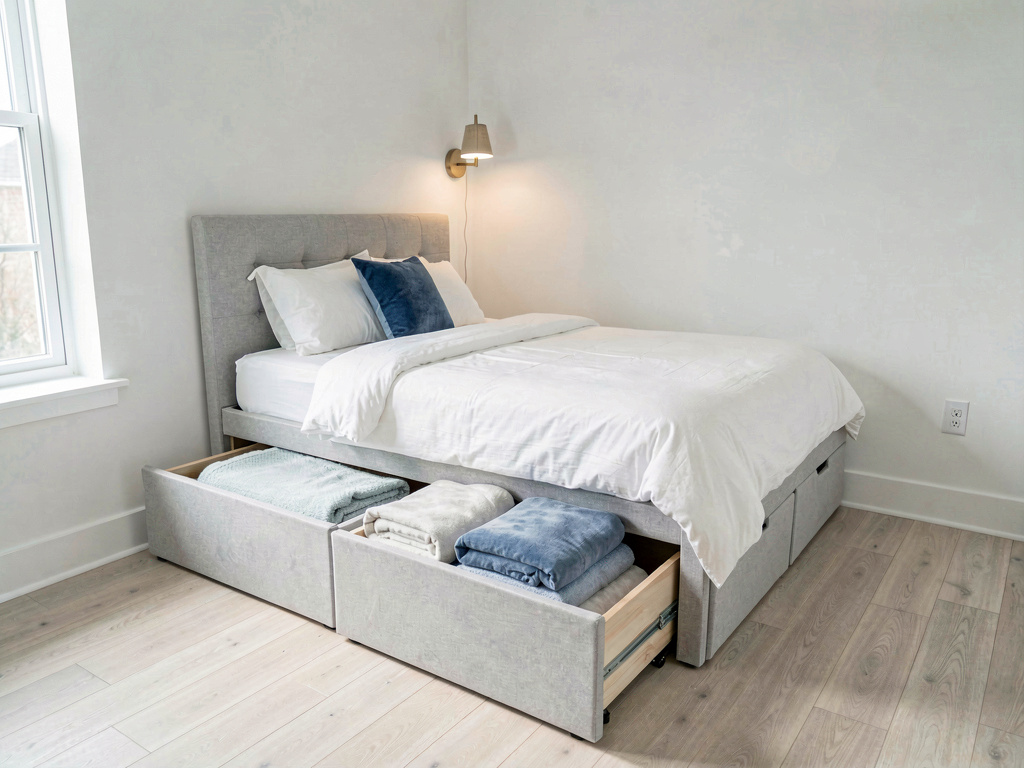
A platform bed sits low to the ground with four deep pull-out drawers built into the base. One drawer is open, showing neatly folded blankets inside. No box spring needed — the platform supports the mattress directly. A slim upholstered headboard keeps things looking finished.
The space under your bed is the largest unused storage area in most bedrooms. A platform bed with built-in drawers turns that dead zone into the equivalent of a small dresser, which means you might not need a dresser at all. That's 6 to 8 square feet of floor space recovered. According to Apartment Therapy, platform storage beds are the number one recommendation from professional organizers for small bedrooms. Budget options start around $400 at IKEA (the MALM series), while solid wood versions from Article or West Elm run $1,200 to $2,000.
4. All-light color palette
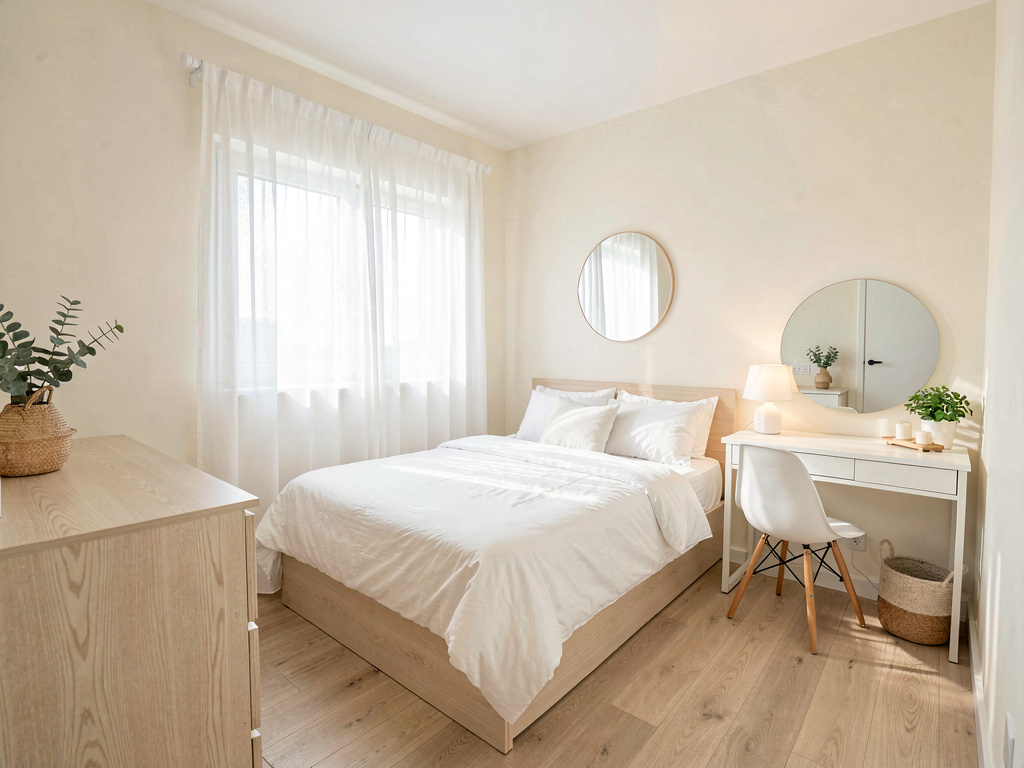
Every surface in this 95-square-foot bedroom is light: soft cream walls, white bedding, blonde wood furniture, sheer white curtains, a pale oak floor. A round mirror on the wall catches and bounces natural light. The room feels significantly larger than its actual dimensions.
Light colors reflect more light, and more light makes a room feel bigger. This is basic physics, and it works every time. A bedroom painted in Benjamin Moore "Simply White" (OC-117) or Sherwin-Williams "Alabaster" (SW 7008) will feel measurably more open than the same room in a medium or dark shade. The trick to keeping an all-light palette from feeling sterile is texture variation — mix linen, cotton, wood grain, and woven materials so the eye has something to read even when the colors are quiet. For more on how color affects room perception, check out our guide to living room color ideas.
5. Wall-mounted everything
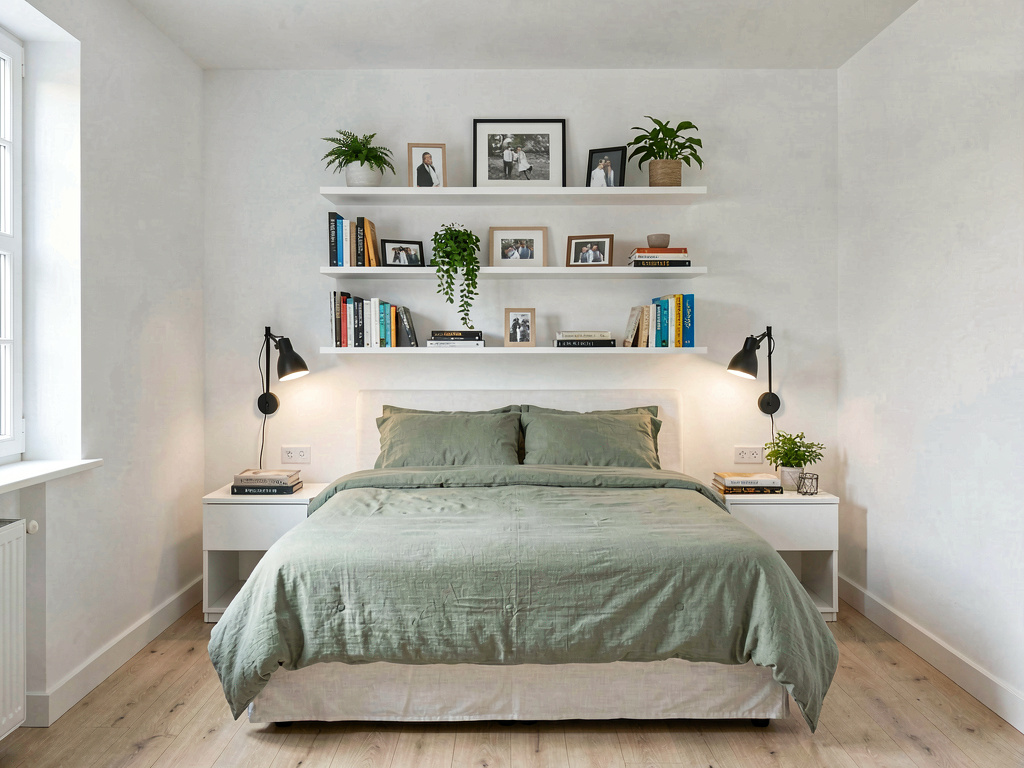
Three rows of floating white shelves sit above the bed where a headboard would normally go, holding plants, books, and framed photos. Wall-mounted swing-arm lamps replace table lamps on nightstands. There are no nightstands at all — just the bed, the wall shelves, and open floor.
Every piece of furniture you can mount to the wall is floor space you get back. Floating nightstands (about $50 to $150 each) free up the space that traditional nightstands occupy. Wall-mounted lamps eliminate the need for table lamps and the surfaces they sit on. Floating shelves above the bed replace both a headboard and a bookcase. In a 100-square-foot bedroom, switching from floor-standing to wall-mounted furniture can free up 10 to 15 square feet — that's 10 to 15 percent of your total room.
6. Mirror wall trick
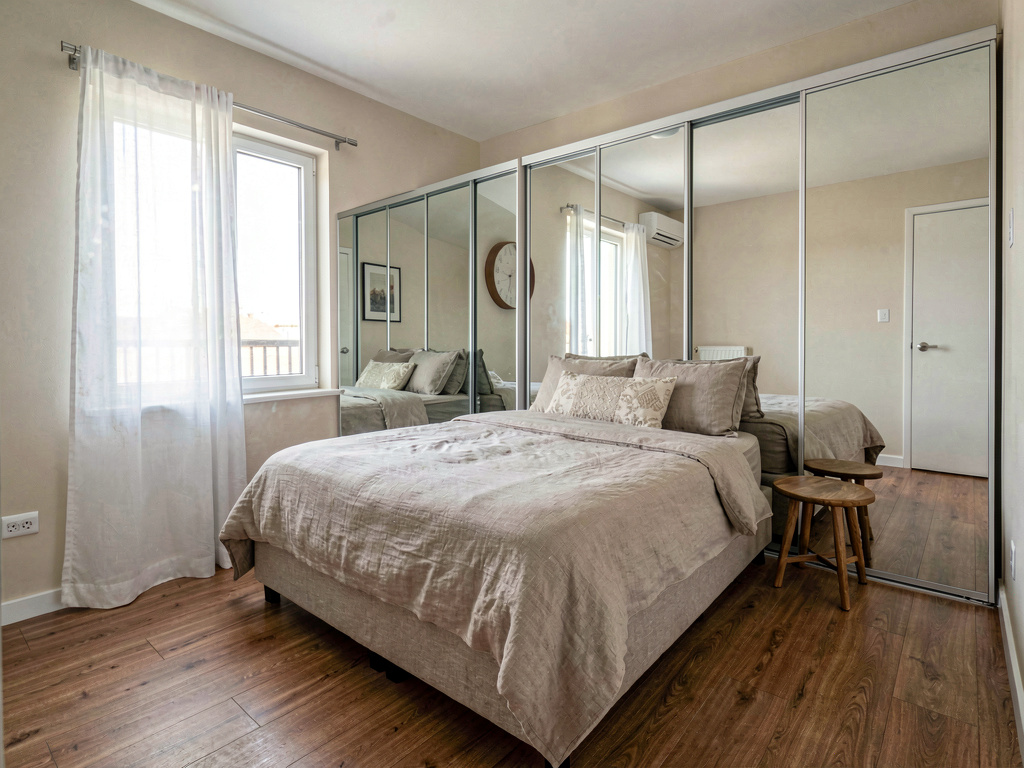
Floor-to-ceiling mirrored sliding doors cover the entire wardrobe wall. The mirrors reflect the window on the opposite side, creating the illusion that the room is twice as wide. A queen bed with neutral linen bedding and a small round wooden side table are the only pieces of furniture.
This is the same principle used in every boutique hotel room you've ever thought was "surprisingly spacious." A full wall of mirrors doesn't just reflect light — it reflects the entire room, which doubles the visual depth. Mirrored sliding closet doors from Home Depot run $200 to $600 per pair depending on size. If you don't have a closet to mirror, a large leaning mirror (at least 5 feet tall) placed opposite or adjacent to the window achieves a similar effect for $100 to $300. According to Architectural Digest, interior designers consistently rank mirrors as the most cost-effective way to make any small room feel larger.
7. Corner desk nook
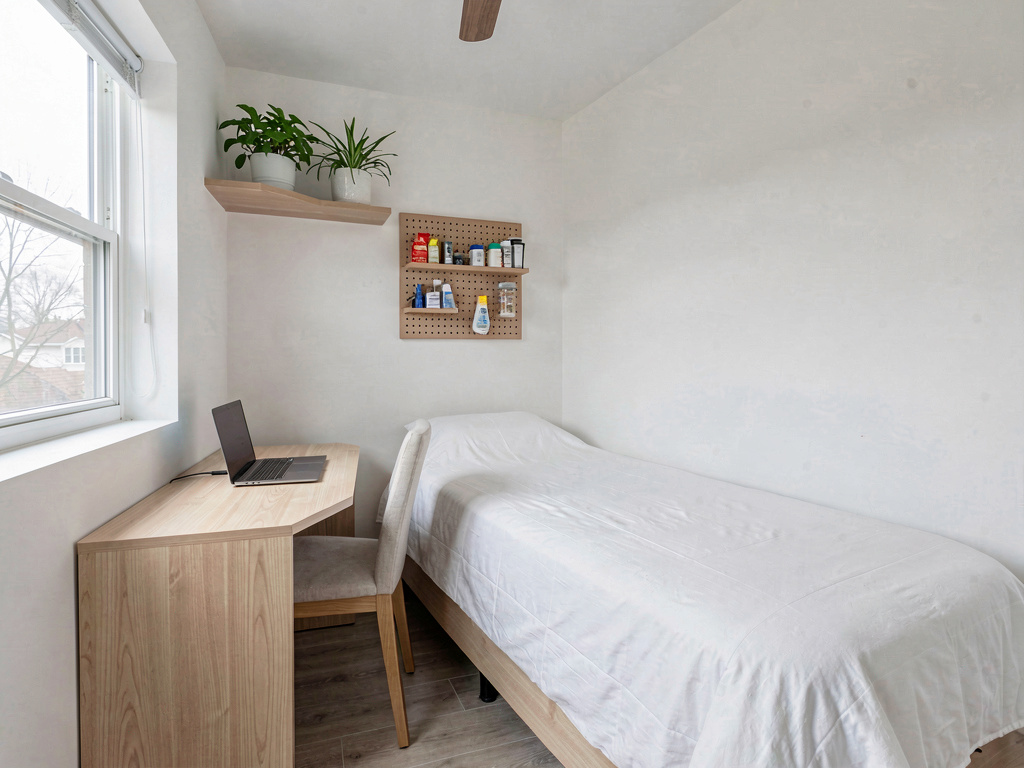
A slim corner desk fits into the space next to the window, barely 30 inches wide. A shelf above holds two small plants. A pegboard on the wall organizes supplies without taking up desk space. A twin XL bed sits against the opposite wall with a simple white duvet. The room is about 85 square feet but functions as both bedroom and office.
In small bedrooms that also need to function as workspaces, the corner desk is the best layout move. Corners are the least usable space in any room — you can't put a bed there, and a nightstand in the corner feels wasted. A compact desk turns that dead corner into productive space. The key is keeping the desk narrow (24 to 30 inches deep) so it doesn't eat into the walking path. IKEA's MICKE desk ($80) and the CB2 Stairway desk ($200) are both designed specifically for tight spaces.
8. Vertical curtain trick
See Your Room Redesigned
Download Remodel AI and transform any room in 30 seconds. 3 free designs, no signup.


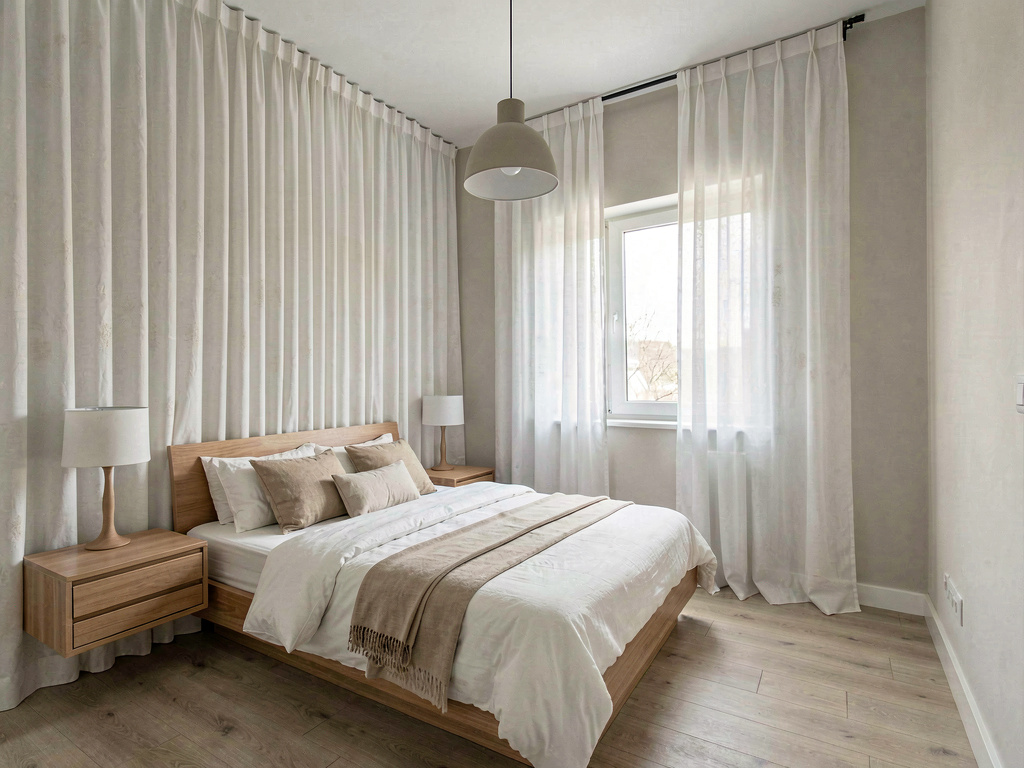
Curtains are hung from the ceiling, not from the window frame, and drop all the way to the floor. The extra 12 to 18 inches of fabric above the window creates a strong vertical line that makes the 8-foot ceiling look closer to 9 or 10 feet. A pendant light hangs from the center instead of a table lamp, reinforcing the height.
This is one of the cheapest upgrades on this list — it costs literally nothing extra if you're already buying curtains. Just mount the rod 4 to 6 inches below the ceiling instead of at the window frame. The visual effect is immediate and significant. Your eye follows the curtain from floor to ceiling, and the unbroken vertical line makes the whole room feel taller. Taller rooms feel bigger, even when the floor area hasn't changed. Use solid-color curtains in white or a near-wall color to maximize the effect. This trick pairs well with the ideas in our master bedroom ideas post, especially for standard-height rooms.
9. Scandinavian minimal
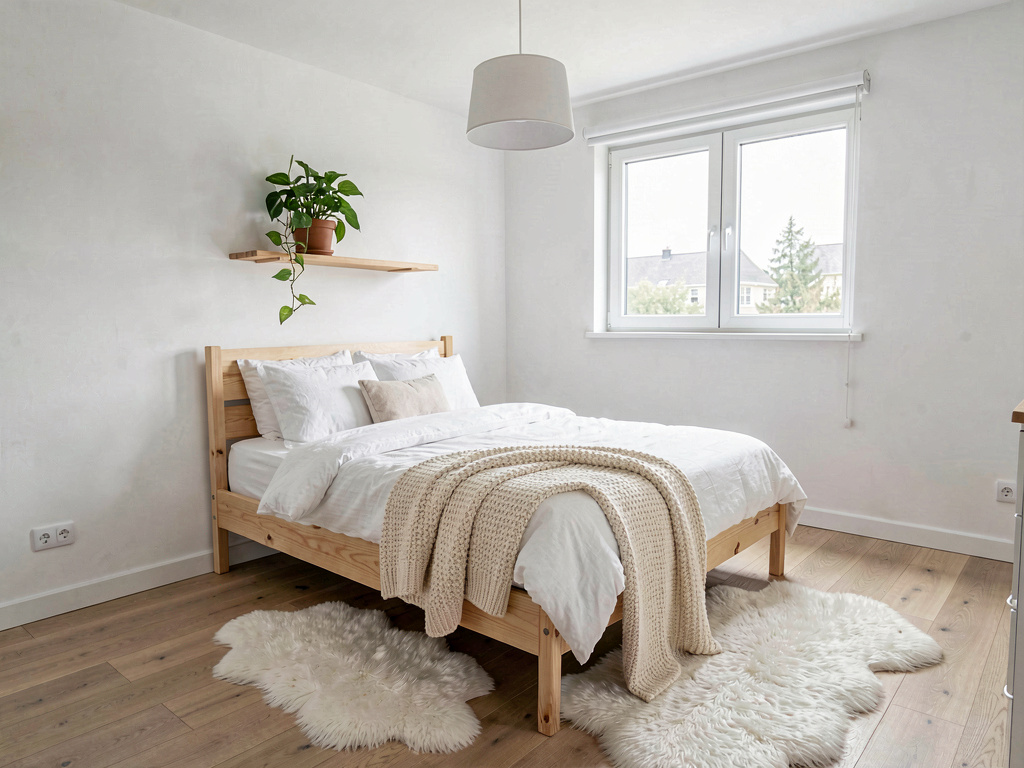
A light birch bed frame, white duvet, cream knit throw, a single sheepskin rug, one plant on a wall shelf, a white pendant light. That's the entire room. No dresser, no desk, no chair. Just the bed, the light, and a few textures. The room is 95 square feet and feels completely adequate.
The Scandinavian approach to small bedrooms is simple: if it doesn't help you sleep, it doesn't belong in the bedroom. Clothes go in the closet. Work happens somewhere else. The bedroom is for sleeping, and a sleeping room doesn't need much. This level of minimalism isn't for everyone, but if you can commit to it, even the smallest bedroom feels spacious when it only has three or four things in it. For more on this design approach, see our full guide to Scandinavian interior design.
10. Daybed with trundle
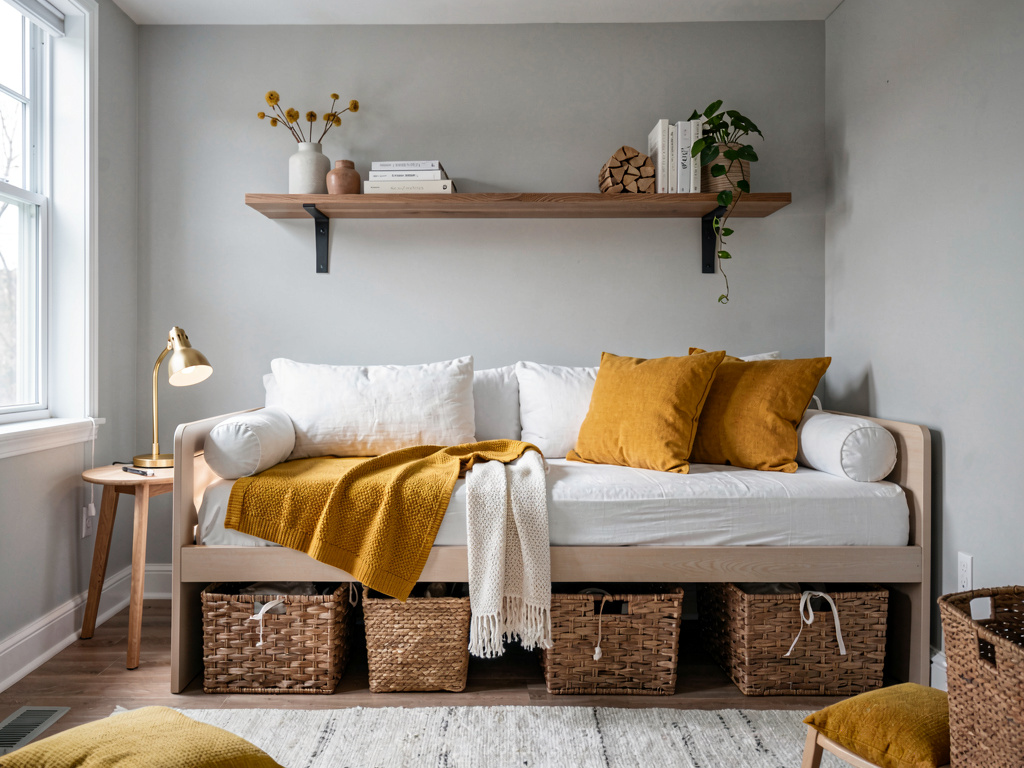
A modern daybed is styled with bolster pillows so it looks like a sofa during the day. A trundle bed hides underneath for guests. Storage baskets tuck under a wall-mounted shelf. Light gray walls with white and mustard yellow textiles keep things bright. The 90-square-foot room works as a living space by day and a bedroom by night.
Daybeds are the most underrated piece of furniture for small bedrooms, especially in studio apartments or guest rooms that need to pull double duty. During the day, a daybed with the right pillows and a fitted cover looks like a sofa. At night, pull out the trundle and you have two twin beds or one king-width sleeping surface. Prices range from $300 for basic metal frames to $1,500 for upholstered versions from West Elm or CB2. The trundle adds about $150 to $300 on top.
11. Narrow room layout
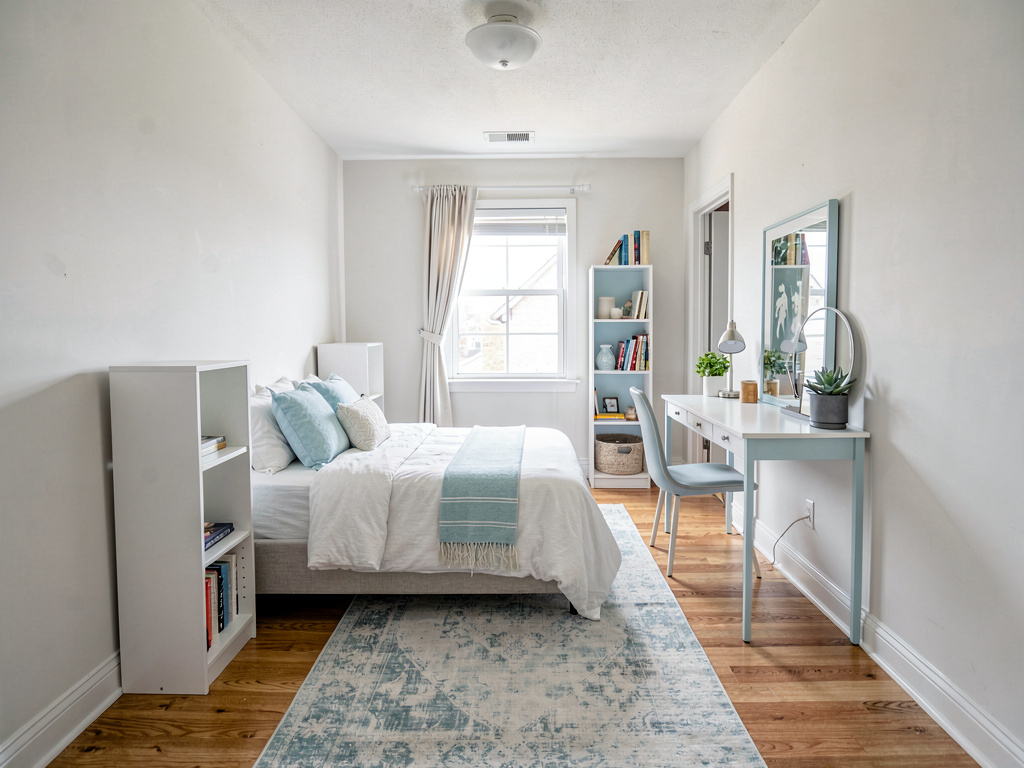
This bedroom is about 8 feet wide and 12 feet long — one of the most challenging shapes to furnish. The bed goes lengthwise against the long wall, leaving a 3-foot walkway. A narrow console table on the opposite wall works as both desk and vanity. A tall slim bookcase at the foot of the bed uses the dead space near the door without blocking the path.
Narrow bedrooms require a different approach than square ones. The biggest mistake is centering the bed on the short wall, which leaves two useless strips of space on either side. Instead, push the bed against one long wall and use the opposite wall for a narrow console (12 to 18 inches deep). This gives you a clear walkway and a functional surface without the room feeling like a bowling alley. A runner rug on the floor breaks up the length visually.
12. Try it with your own room
You don't have to guess which of these ideas will work in your specific room. Upload a photo of your bedroom to Remodel AI and test different layouts, colors, and furniture arrangements before you spend anything. See how a Murphy bed would look in your wall, what sage green paint does to your lighting, or whether a loft bed fits your ceiling height — all in about 30 seconds.
What small bedroom ideas cost
Most of the ideas here are surprisingly affordable. Here's a rough breakdown:
- Paint (light color palette): $30 to $60 for a small bedroom (1 gallon covers ~350 sq ft)
- Floating shelves: $15 to $50 per shelf at IKEA or Home Depot
- Murphy bed system: $1,200 to $3,500 installed, per HomeAdvisor
- Platform storage bed: $400 to $2,000 depending on material
- Mirrored closet doors: $200 to $600 per pair
- Loft bed frame: $350 to $1,500
According to the National Association of Home Builders, the average U.S. bedroom is 132 square feet. If yours is under 120, you're working with less than average but far from unusual. These solutions exist because millions of people face the same constraints.
How do you make a 10x10 bedroom look bigger?
A 10x10 bedroom (100 square feet) looks bigger with three changes: light wall colors that reflect natural light, a mirror placed opposite or next to the window, and furniture that's mounted to the wall instead of standing on the floor. Floating nightstands and wall-mounted lamps alone can free up 10 to 15 square feet of visual floor space.
Is a full bed or queen better for a small bedroom?
A full (double) bed is 54 by 75 inches. A queen is 60 by 80 inches. In a room under 100 square feet, the 6-inch width difference and 5-inch length difference between a full and queen can determine whether you have room for a nightstand. If you sleep alone, a full is usually the better choice for small rooms. If you share the bed, a queen is the minimum comfortable size for two adults, but you'll need to sacrifice other furniture to make it fit.
What color makes a small bedroom feel bigger?
Light, warm whites work best: Benjamin Moore "Simply White," Sherwin-Williams "Alabaster," or Farrow & Ball "All White." These colors reflect the most light without feeling cold. Avoid cool grays in small bedrooms with limited natural light — they can make the space feel like a closet. If you want color, soft pastels like pale blue or sage green are the safest choices because they read as light while adding visual interest. See our full guide to interior design styles for more on how color and style interact.
How do you organize a small bedroom with no closet?
Use vertical space: a tall wardrobe or armoire, wall hooks for daily-wear items, and under-bed storage for off-season clothes. A clothing rack in the corner can hold a capsule wardrobe of your most-worn pieces. Rolling drawer units that fit under a desk or bed add hidden storage without taking up wall space. The goal is to keep the floor clear — visible floor space is what makes a small room feel larger.
Can you fit a desk in a small bedroom?
Yes, as long as the desk is narrow (24 to 30 inches deep) and placed in a corner or along a wall that doesn't have the bed. Floating desks that mount to the wall are even better because they don't have legs taking up floor space. In rooms under 90 square feet, consider a fold-down wall desk (about $150 to $400) that stores flat against the wall when you're not working.
Related reading
Ready to Try AI Interior Design?
Upload a photo and redesign any room in seconds. 3 free designs, no signup required.