Mobile home remodel ideas: 10 upgrades that actually add value
10 mobile home remodel ideas from $500 paint refreshes to $15K kitchen overhauls. See what each looks like with AI before spending. Before/after photos included.

Ryan H.
Founder of Remodel AI · April 27, 2026 · 11 min read
Mobile home remodels are the highest-ROI renovations in housing — a $5,000 kitchen update can add $15,000+ in value to a manufactured home. These 10 ideas show what's possible from $500 paint refreshes to full kitchen and bathroom overhauls. Preview any of them on your own home with Remodel AI — 3 free designs, no credit card required.
Mobile home remodeling gets a bad reputation because people assume manufactured homes aren't worth investing in. That thinking is outdated. The Manufactured Housing Institute reports that 22 million Americans live in manufactured homes, and the average resale value has climbed steadily since 2020. A smart remodel — one that targets the right upgrades — can return 2-3x its cost in added home value.
The key difference between remodeling a mobile home and a site-built house is weight and structure. Mobile homes have different wall construction, lighter roof trusses, and specific plumbing layouts that affect what you can change. Every idea below accounts for those differences.
1. Kitchen cabinet paint and hardware swap
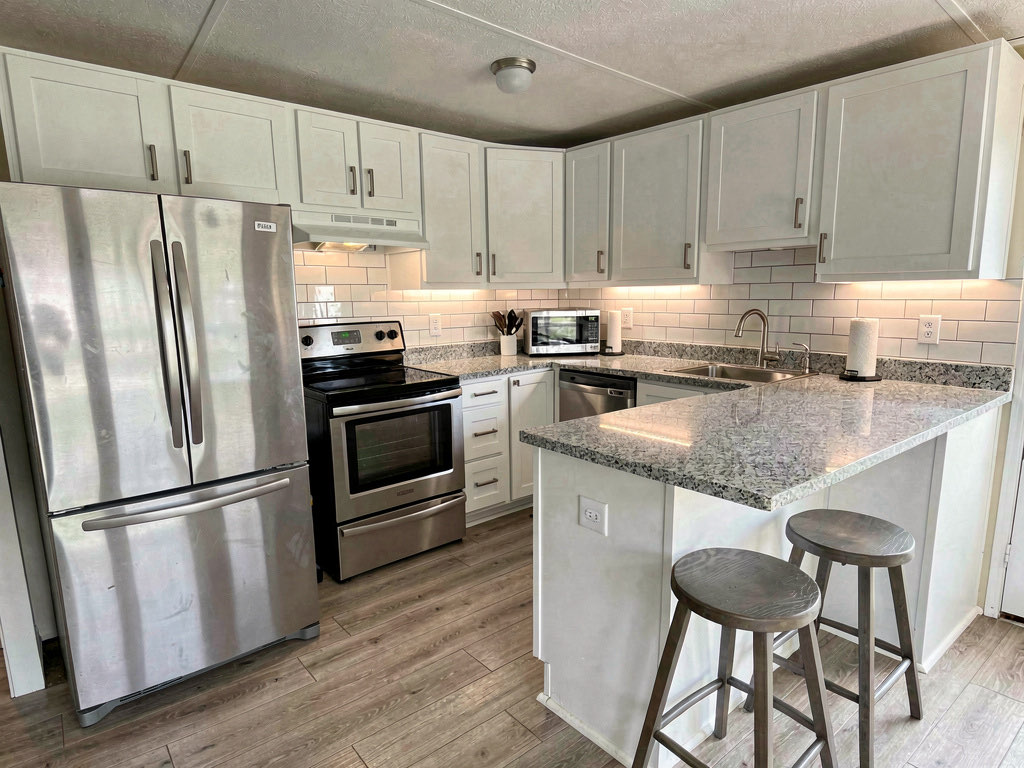
White painted cabinets replace the original dark wood panels. New granite countertops in speckled gray sit on the existing cabinet boxes. A subway tile backsplash covers the wall between the upper and lower cabinets. Under-cabinet LED strip lights add task lighting. Brushed nickel pulls replace the old brass knobs. The kitchen looks completely different, but the layout hasn't changed.
Most mobile home kitchens shipped with dark wood-look cabinet fronts and laminate countertops. Painting the cabinets white or light gray is the single biggest visual upgrade you can make — and it costs $200-$400 in supplies if you do it yourself. Use a bonding primer (like Zinsser BIN) first, because mobile home cabinet surfaces are often thermofoil or laminate that regular paint won't stick to. Add new hardware ($3-$8 per pull) and the kitchen looks like it belongs in a different home. Total cost: $300-$800 DIY, $1,500-$3,000 with a contractor.
2. Flooring replacement throughout
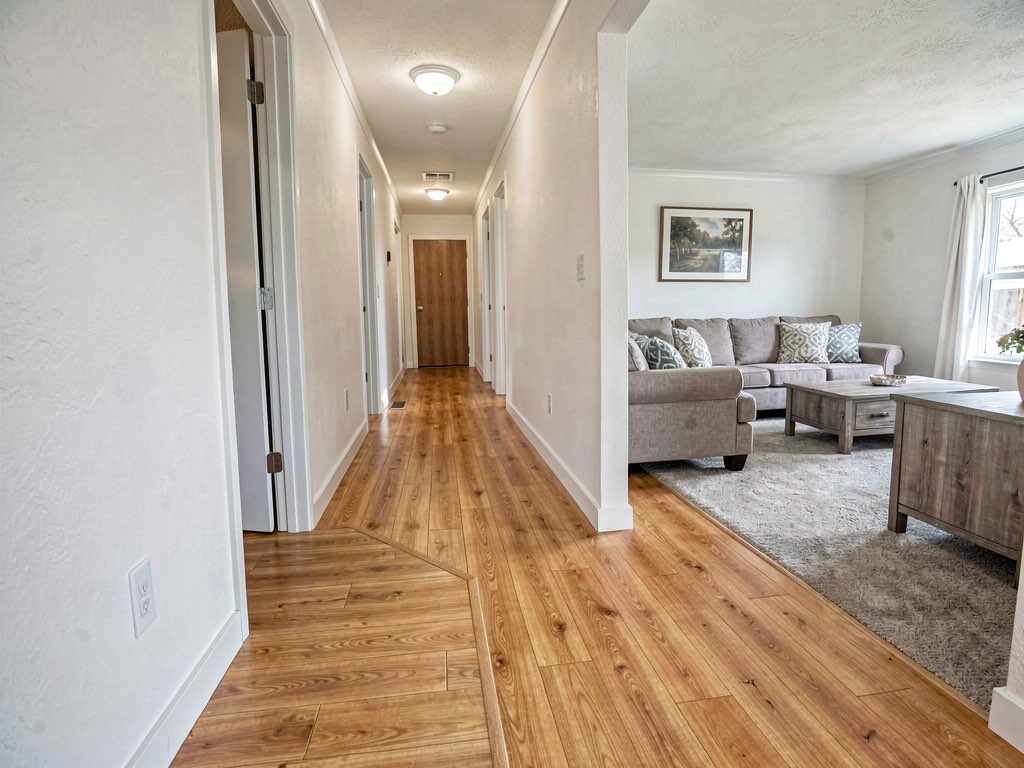
New luxury vinyl plank flooring in warm honey oak runs continuously through the hallway and into the open living area. Clean white baseboards frame the floor. The continuous flooring without transitions between rooms makes the narrow mobile home feel wider and more cohesive.
Old mobile home flooring is almost always the first thing that dates the space — vinyl sheet goods with patterns from the 1990s, thin carpet that stains permanently, or laminate that's peeling at the seams. Luxury vinyl plank (LVP) is the best replacement for manufactured homes because it's waterproof, thin enough to install over existing subfloors without raising door clearances, and it clicks together without glue. A full single-wide floor replacement (roughly 800-1,000 sq ft) runs $1,500-$3,500 in materials. The trick is to run the same flooring through every room (except bathrooms) to make the narrow layout feel larger. This is the same principle that works in a small living room layout — visual continuity tricks the eye into seeing more space.
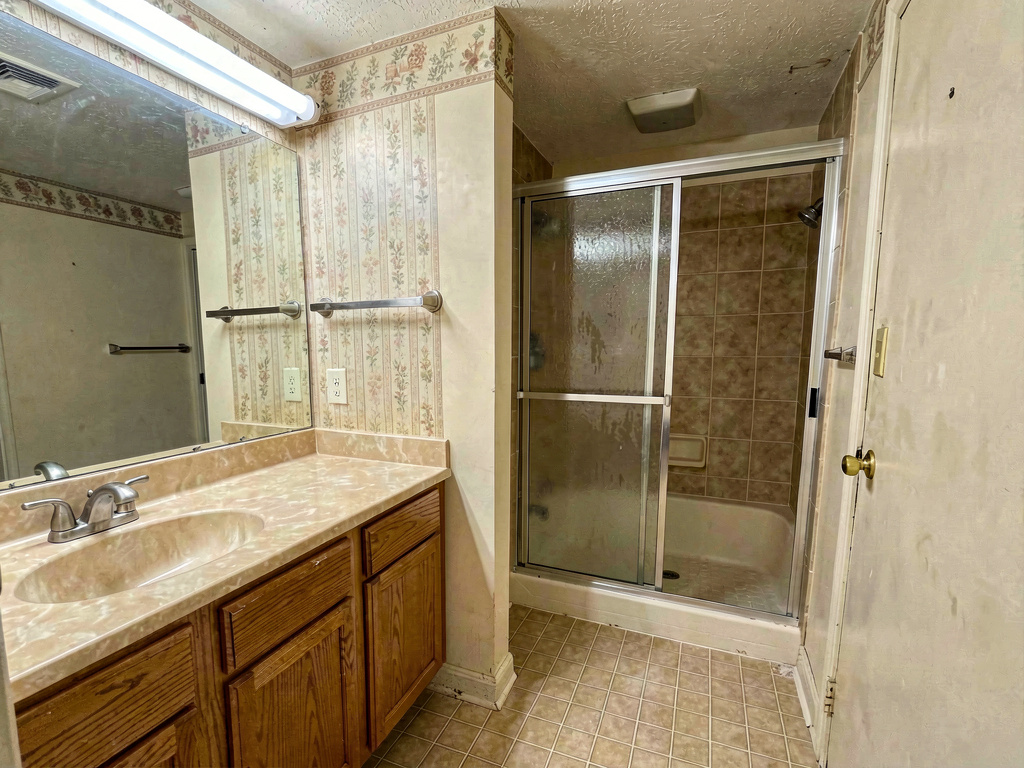
3. Bathroom surround replacement
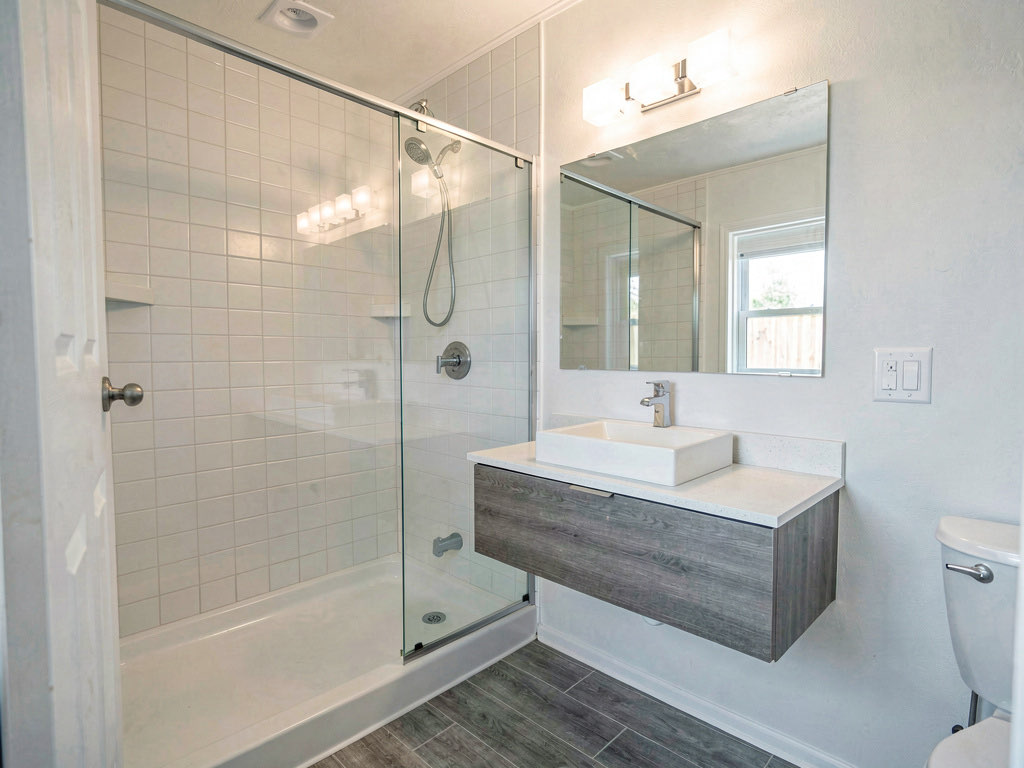
A tiled walk-in shower replaces the old one-piece fiberglass surround. A floating vanity with a vessel sink opens up floor space. A large rectangular mirror reflects light back into the room. New chrome fixtures and a modern light bar complete the update. Gray luxury vinyl tile covers the floor.
Mobile home bathrooms are usually the smallest rooms in the house, and the one-piece fiberglass shower/tub combos that come standard are the most dated-looking feature. Replacing the surround with tile runs $1,500-$3,000 including materials and labor. If the existing tub/shower pan is still in good shape, you can tile over the walls only and save $500-$1,000. A floating vanity ($200-$600) is especially smart in mobile home bathrooms because it exposes floor space and makes tight rooms feel less cramped. For more bathroom ideas that work in small spaces, check out our bathroom remodel ideas guide.
4. Living room accent wall and crown molding
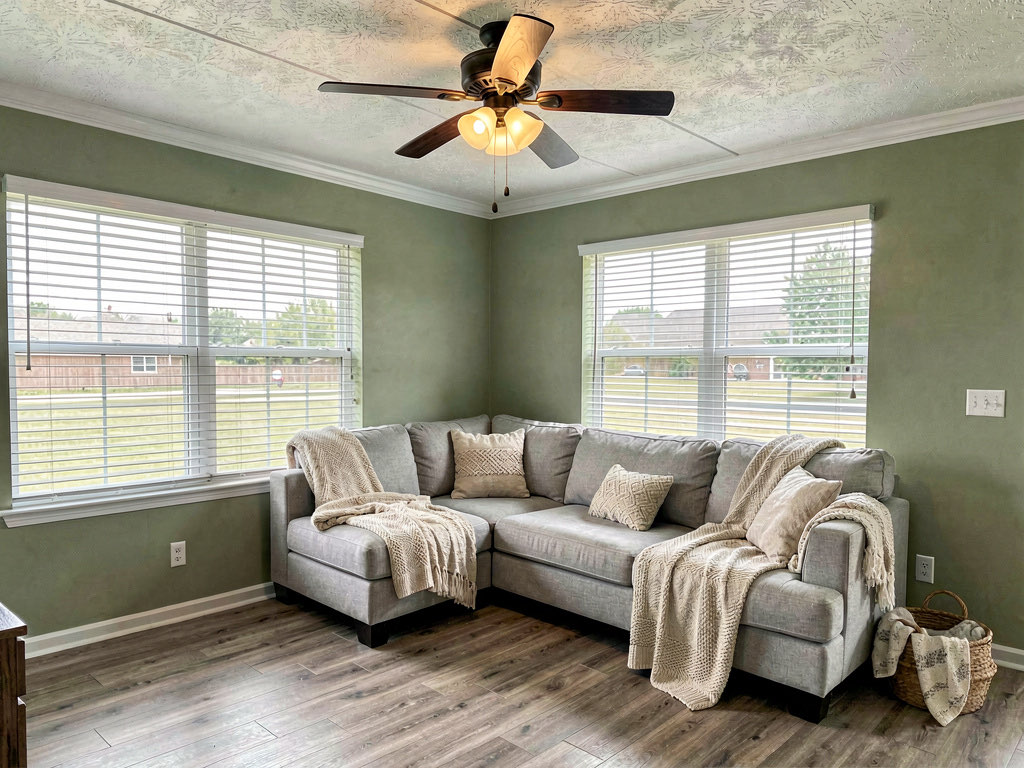
A warm sage green accent wall anchors the living room. New laminate flooring replaces old carpet. White crown molding runs along the ceiling line, hiding the seam where walls meet ceiling panels. A modern ceiling fan with a light kit replaces the old brass fixture. White plantation blinds cover the windows. The room feels twice as expensive as it actually is.
The ceiling seam is one of the biggest visual giveaways in a mobile home — that visible line where the ceiling panels meet the walls. Crown molding hides it completely. Lightweight foam crown molding ($1-$3 per linear foot) is the best option for manufactured homes because it's light enough for mobile home walls and you can install it with adhesive instead of nails. Pair it with an accent wall in a trending color — sage green, warm gray, or navy — and the living room stops looking like a mobile home. Total cost for crown molding, paint, and an accent wall: $300-$700.
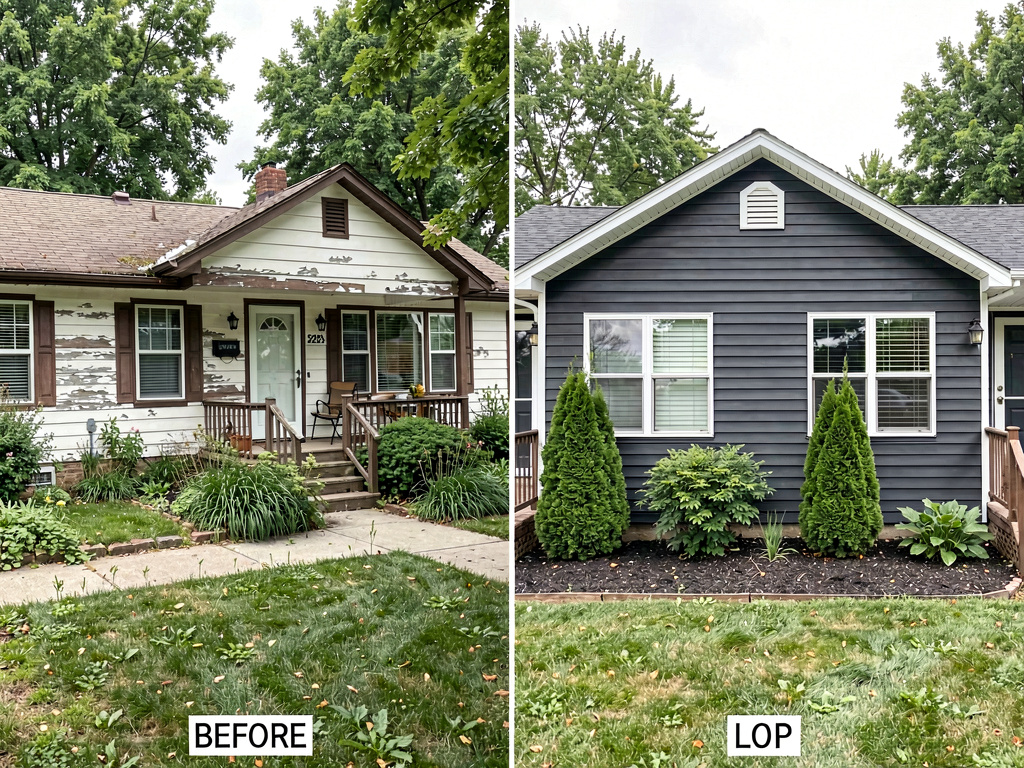
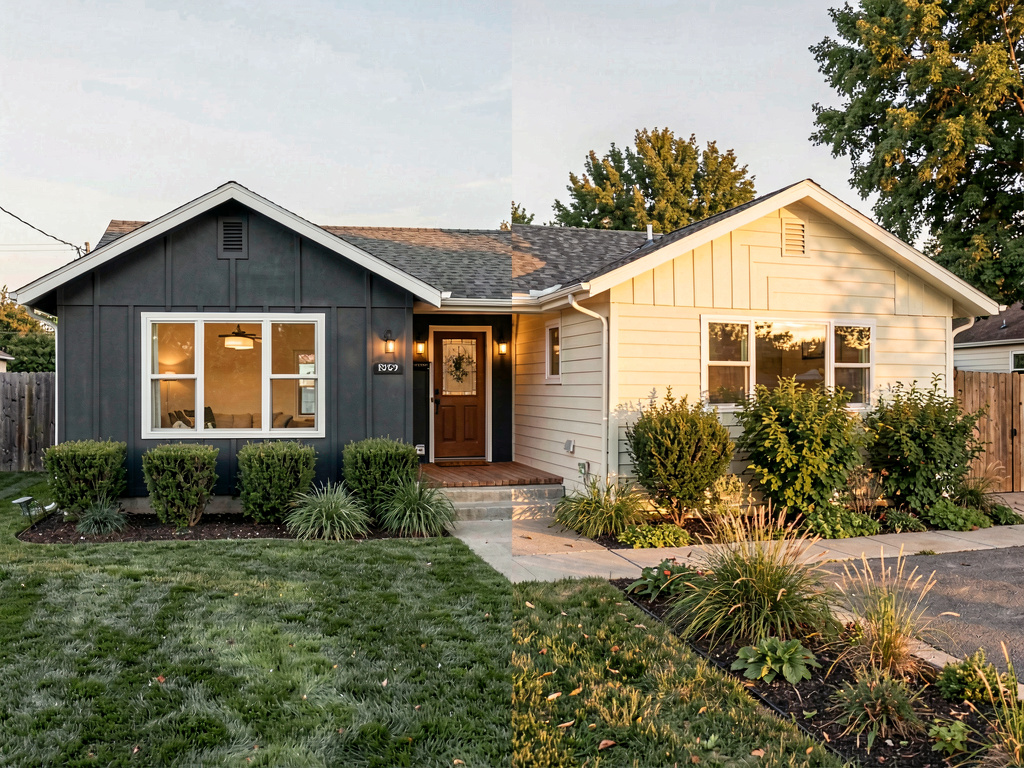
5. Exterior skirting and siding upgrade
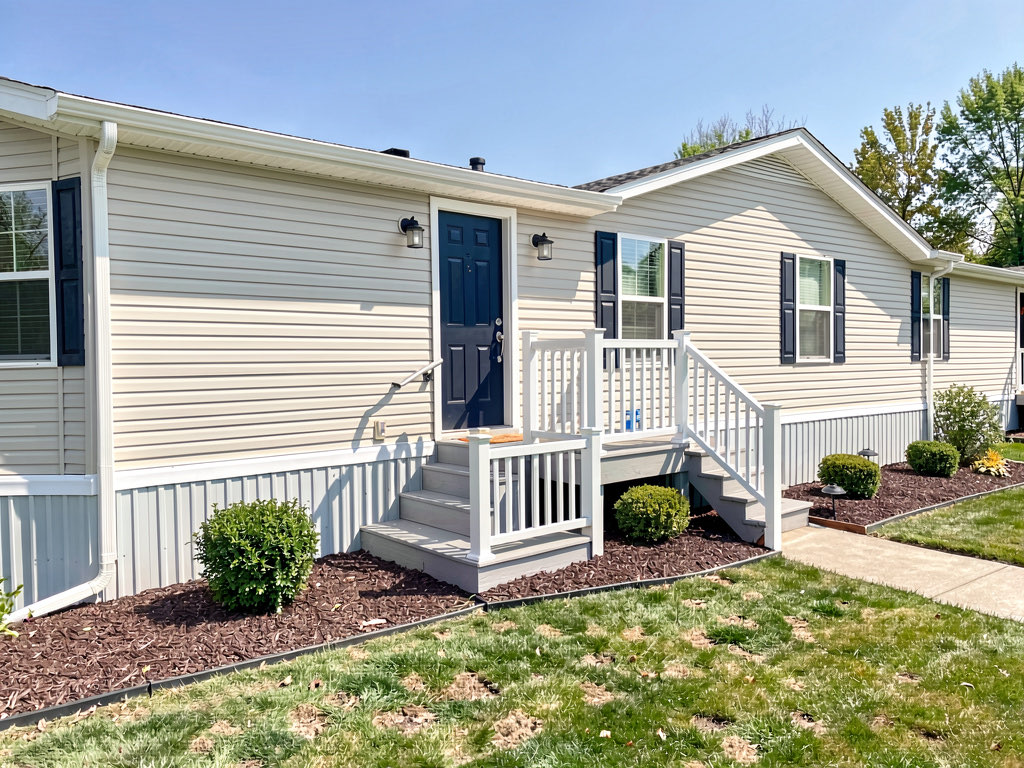
New vinyl skirting wraps the base of the home in a finished look. The front door is painted navy blue. A composite deck with white railing creates a proper entrance. New exterior light fixtures replace the old builders' specials. Clean landscaping with mulch beds and shrubs frames the foundation.
The exterior is where mobile home remodels have the most dramatic impact, because the gap between "stock" and "upgraded" is so wide. New vinyl skirting ($1,500-$3,000 for a single-wide) hides the undercarriage and makes the home look permanently placed. If the existing siding is faded aluminum, vinyl siding covers ($3,000-$8,000 for a single-wide) transform the exterior. But the highest-impact budget move is just the front entrance: paint the door a bold color ($30), add a new light fixture ($50-$150), and put down a deck or landing ($500-$2,000). That entrance upgrade alone changes how the whole home reads from the street. If you want to test exterior colors before committing, try our AI exterior design tool.
6. Bedroom drywall conversion
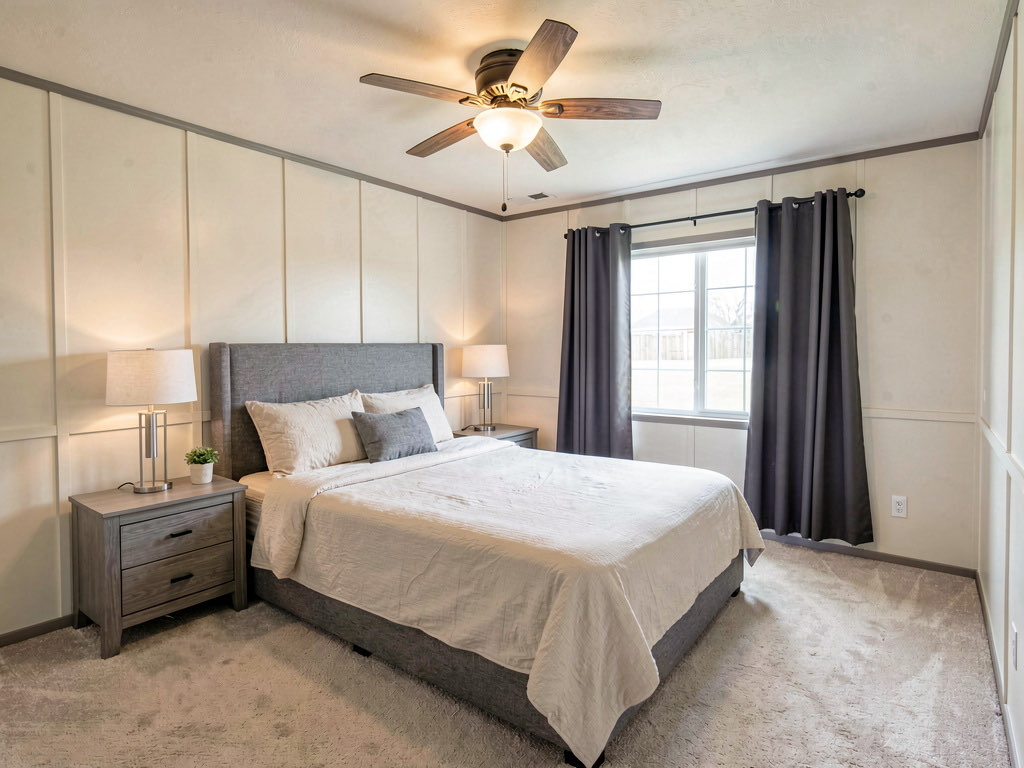
New drywall replaces the original vinyl-on-gypsum wall panels. Smooth warm white paint covers every surface. An upholstered headboard in gray fabric adds softness. Matching nightstands with ceramic lamps create symmetry. Blackout curtains in charcoal frame the window. The room looks and feels like a bedroom in a site-built home.
Mobile home walls are typically vinyl-covered gypsum panels joined with battens (those vertical strips every 4 feet). Replacing them with standard drywall is one of the most impactful structural upgrades you can make, and it costs $1,000-$3,000 per room including mudding and taping. The result is smooth, paint-ready walls that look identical to a regular house. If full drywall is outside the budget, skim-coating the existing panels with joint compound ($200-$500 per room) covers the seams and battens for a fraction of the cost. Pair either approach with bedroom color ideas that work in smaller rooms — lighter warm tones make mobile home bedrooms feel bigger.
7. Deck or porch addition
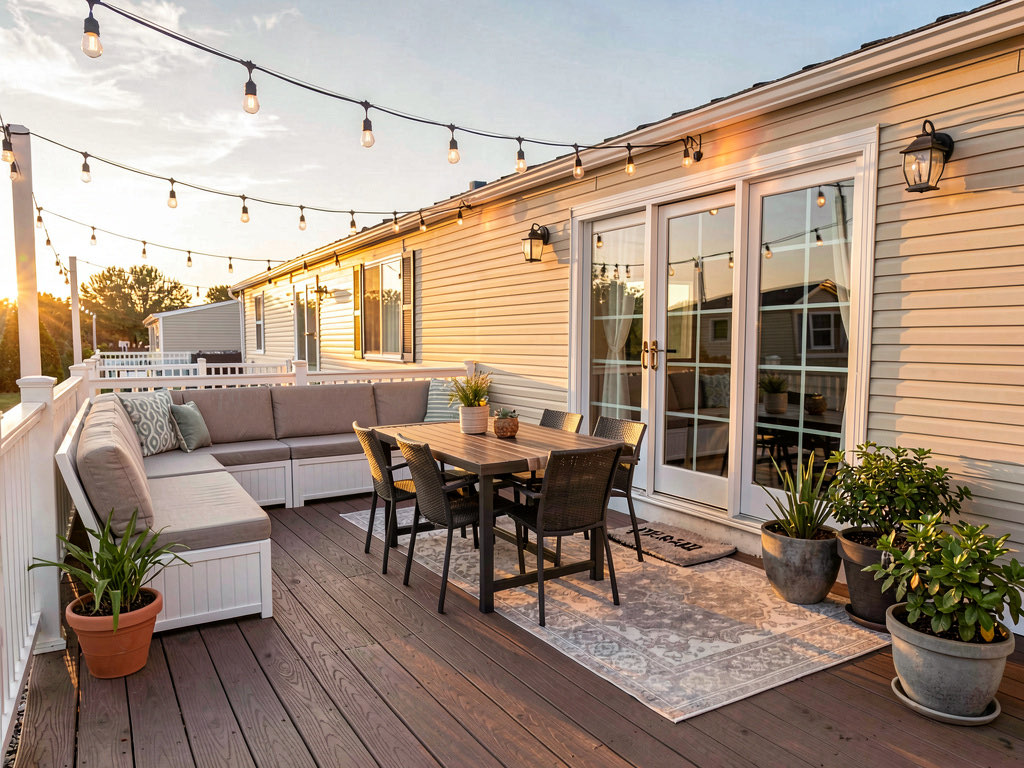
A full-width composite deck extends the living space outdoors. Built-in bench seating lines one side. String lights overhead create ambiance for evening use. A small outdoor dining table seats four. New French doors connect the interior to the deck. The deck effectively doubles the usable living space of the mobile home.
See Your Room Redesigned
Download Remodel AI and transform any room in 30 seconds. 3 free designs, no signup.


A deck is the one addition that almost every mobile home owner should consider. Single-wide mobile homes are typically 14-18 feet wide and 60-80 feet long — adding a 12x20 deck gives you 240 square feet of living space for $2,000-$5,000. Composite decking ($15-$25 per sq ft installed) lasts longer than pressure-treated wood and doesn't require annual sealing. The key structural note: mobile home decks should be freestanding (not attached to the home's rim joist) because manufactured home frames aren't designed to carry lateral deck loads. A freestanding deck on sono-tube footings is the standard approach and it's actually easier to permit.
8. Window replacement
Replacing mobile home windows is one of the upgrades that pays for itself in energy savings. Standard manufactured home windows are single-pane aluminum — they leak air, collect condensation, and make temperature regulation expensive. New double-pane vinyl windows ($150-$300 per window installed) cut heating and cooling costs by 20-30% according to the U.S. Department of Energy. A single-wide with 8-10 windows runs $1,500-$3,000 total. The energy savings alone recoup the cost in 3-5 years, and the windows look dramatically better. Mobile home windows use standard sizing that's different from site-built homes, so measure carefully or hire an installer who specializes in manufactured housing.
9. Kitchen countertop upgrade
If repainting cabinets is step one, new countertops are step two. The laminate countertops in most mobile homes are thin, dated, and often damaged at the seams. Butcher block countertops ($20-$40 per linear foot from IKEA or Home Depot) are the best value upgrade — they look warm and custom, they're easy to cut to size, and they weigh less than granite or quartz (weight matters in manufactured homes). For a more permanent solution, quartz countertops ($40-$80 per linear foot installed) are lighter than granite and don't need sealing. A typical mobile home kitchen has 15-25 linear feet of countertop, putting the total at $300-$1,000 for butcher block or $600-$2,000 for quartz. Either one transforms the kitchen.
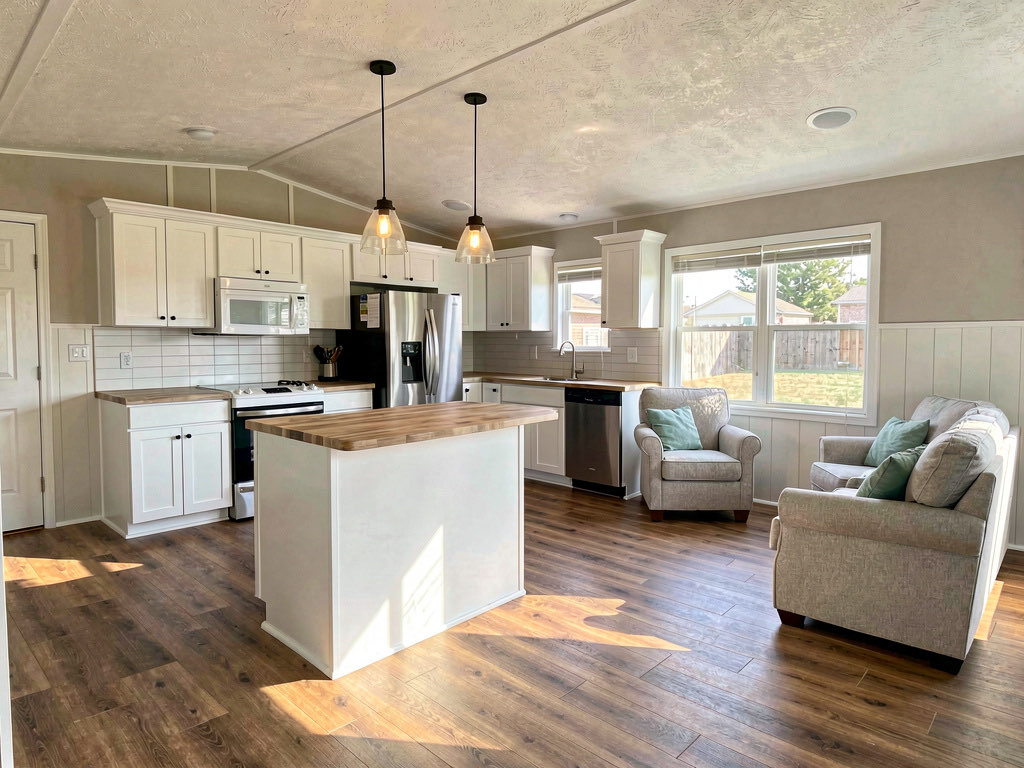
10. Full kitchen overhaul
The full mobile home kitchen remodel combines everything above — painted cabinets, new countertops, new flooring, updated backsplash, new appliances, and better lighting. This is a $5,000-$15,000 project depending on how much you DIY vs. hire out. The result is a kitchen that's indistinguishable from a site-built home. If you're investing at this level, plan the layout carefully. Many mobile home kitchens have a galley layout that works well as-is — the mistake is trying to force an island into a space that's too narrow. If you want to experiment with different kitchen design ideas before committing, upload a photo of your current kitchen to Remodel AI and see 30+ style options in 10 seconds.
Single-wide vs. double-wide: what changes
Single-wide mobile homes (14-18 ft wide) have tighter spaces and more limited layout options. Every upgrade should focus on making rooms feel wider — continuous flooring, light colors, mirrors, and removing unnecessary walls between the kitchen and living room (check with a structural engineer first — some walls carry the roof truss).
Double-wide mobile homes (24-32 ft wide) have room dimensions closer to site-built houses. The main difference is the marriage line — the seam where the two halves join in the center of the home. If the marriage line is visible in the ceiling or floor, addressing it (crown molding for ceiling, continuous flooring for the floor) should be a priority.
How to visualize your mobile home remodel
Before spending on materials, see what your mobile home actually looks like with different upgrades.
Step 1: Take a photo of the room you want to remodel.
Step 2: Upload it to Remodel AI (free on iOS, Android, and web).
Step 3: Select a design style — modern, farmhouse, coastal, minimal, or any of 30+ options.
Step 4: Compare different looks side by side before buying a single thing.
3 free designs. No credit card required. Also check out AI Designer for another AI-powered option.
Do you need a permit to remodel a mobile home?
It depends on the scope. Cosmetic changes (paint, flooring, hardware, fixtures) never need permits. Plumbing and electrical work almost always requires a permit, whether the home is in a park or on private land. Structural changes — removing walls, adding rooms, building decks — require permits in most jurisdictions. Mobile homes in parks may also need approval from the park management. Check with your local building department before starting any project that touches plumbing, electrical, or structure.
Does remodeling a mobile home increase its value?
Yes, and often disproportionately. A $5,000 kitchen remodel in a mobile home that's worth $40,000 can push the value to $55,000 or higher because buyers compare your remodeled home against unremodeled inventory in the same price range. The key is choosing upgrades that eliminate the "mobile home look" — replace dated paneling with drywall, swap old fixtures for modern ones, and install flooring that matches current trends.
Should you remodel or replace a mobile home?
If the structural frame, roof, and floor system are sound, remodel. If the home has persistent water damage, a sagging roof, or foundation issues, replacement may be more cost-effective. A good rule: if the total remodel cost exceeds 50% of what a new manufactured home would cost, consider replacing instead.
What's the difference between a mobile home and a manufactured home?
Legally, they're the same thing. "Mobile home" refers to units built before June 15, 1976 (before HUD standards). "Manufactured home" refers to units built after that date under HUD code. In everyday language, people use both terms interchangeably. The remodel ideas in this guide work for both.
Can you do a DIY mobile home remodel?
Most of the projects above are DIY-friendly — painting cabinets, installing LVP flooring, swapping hardware and fixtures, adding crown molding, and painting accent walls. The exceptions are plumbing work (shower surround replacement), electrical changes, and structural modifications (removing walls). Those should be done by contractors familiar with manufactured home construction, which differs from conventional framing.
Mobile home remodels are some of the highest-ROI home improvements available because the starting point is so far from modern expectations. A few targeted upgrades — flooring, cabinet paint, modern fixtures — close that gap fast. Start with the one room that bothers you most, see what it could look like with Remodel AI, and work from there.
Try Remodel AI free — available on iOS, Android, and web.
Ready to Try AI Interior Design?
Upload a photo and redesign any room in seconds. 3 free designs, no signup required.