Small living room layout: 8 arrangements that actually work
Struggling with a small living room layout? These 8 furniture arrangements make tiny rooms feel bigger, with dimensions, placement rules, and AI examples.

Ryan H.
Founder of Remodel AI · March 28, 2026 · 12 min read
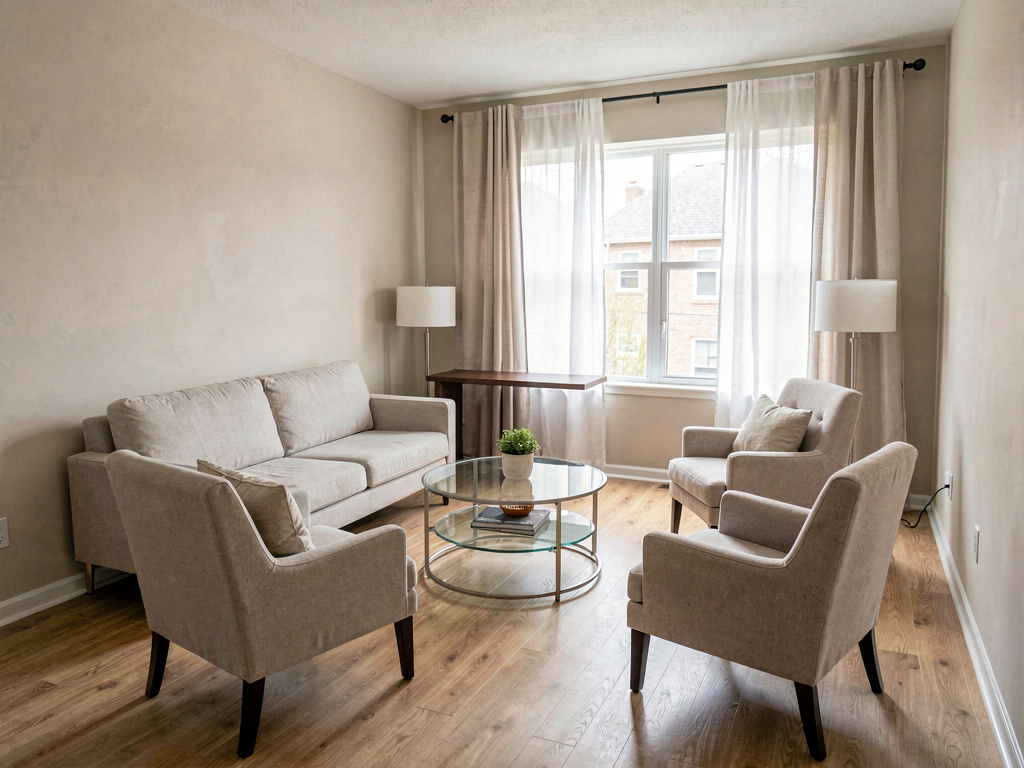
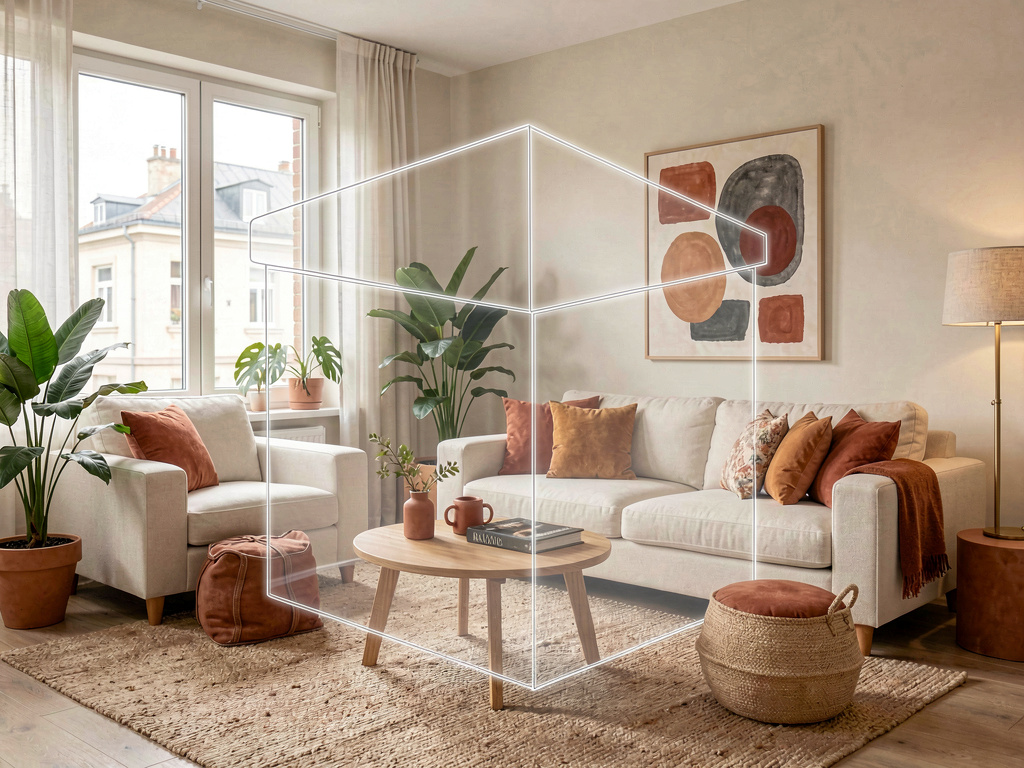
A small living room layout is a furniture arrangement optimized for rooms between 100 and 200 square feet that maximizes seating, circulation, and visual openness. The best small living room layouts pull furniture 6 to 12 inches away from walls, use round tables instead of rectangular ones for better clearance, and replace full-size sofas with loveseats or apartment sofas under 76 inches long.
Most people push everything against the walls, which actually makes the room feel smaller and leaves a dead zone in the middle. The fix is counterintuitive: float the sofa, ditch the coffee table, or angle furniture off the wall axis. The average American living room is about 330 square feet, according to the National Association of Home Builders. But apartments, older homes, and condos often have living rooms closer to 120 to 200 square feet. At that size, layout matters more than furniture.
The 8 best small living room layouts are the L-shaped sectional corner, floating sofa, diagonal arrangement, two-zone split, window seat, symmetrical, no-coffee-table, and narrow room layouts. Each works in rooms under 200 square feet. The most universally effective is the L-shaped sectional corner layout, which handles all seating in one piece and works in rooms as small as 10x10 feet. Key spacing rules: leave 14 to 18 inches between sofa and coffee table, 30 to 36 inches for walkways, and 7 to 10 feet between facing seats. Round coffee tables provide 6 to 8 inches more clearance than rectangular ones in tight spaces.
| Layout | Minimum room size | Best for | Key piece |
|---|---|---|---|
| L-shaped sectional corner | 10x10 ft (100 sq ft) | Maximum seating, minimal pieces | Compact sectional |
| Floating sofa | 10x12 ft (120 sq ft) | Making rooms feel larger | Console table behind sofa |
| Diagonal arrangement | 10x12 ft (120 sq ft) | Breaking boxy rooms | Angled loveseat |
| Two-zone split | 12x14 ft (168 sq ft) | Dual-purpose rooms | Low bookshelf divider |
| Window seat | 10x10 ft (100 sq ft) | Storage + seating combo | Built-in bench ($500-$2K) |
| Symmetrical | 11x11 ft (121 sq ft) | Square rooms, curated look | Matching armchairs |
| No coffee table | 10x10 ft (100 sq ft) | Families with kids, max floor space | Ottoman + C-tables |
| Narrow room | 8x14 ft (112 sq ft) | Rooms under 10 ft wide | Slim media console |
Here's what each layout looks like and when to use it.
1. The L-shaped sectional corner layout
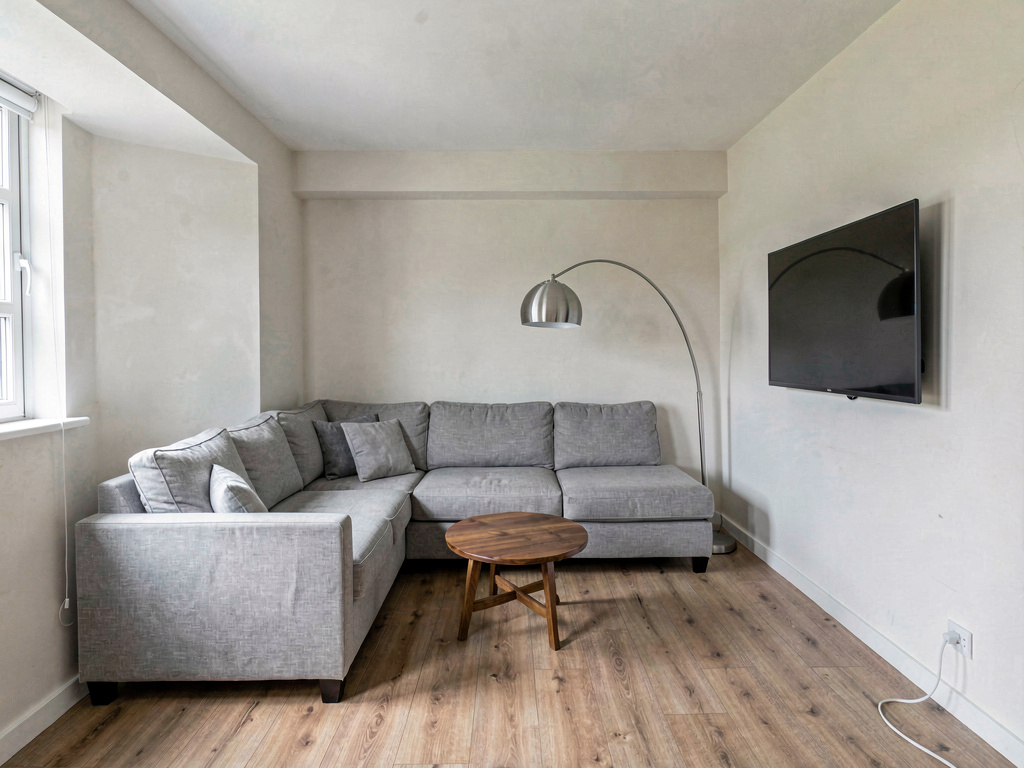
A compact L-shaped sectional pushed into the corner of the room, a small round coffee table in front, and the TV mounted on the opposite wall. The sectional's arms define two sides of the seating area. A single floor lamp arcs over one end for reading light.
This layout works in rooms as small as 10x10 feet because the sectional handles all your seating in one piece. No need for extra chairs. The round coffee table is key here. A rectangular one would block the walkway between the sofa and the door. Round tables give you an extra 6 to 8 inches of clearance on each side, which matters when your room is tight.
The rule: leave at least 18 inches between the coffee table edge and the sofa cushions. Anything less and people can't get in and out comfortably.
2. The floating sofa layout
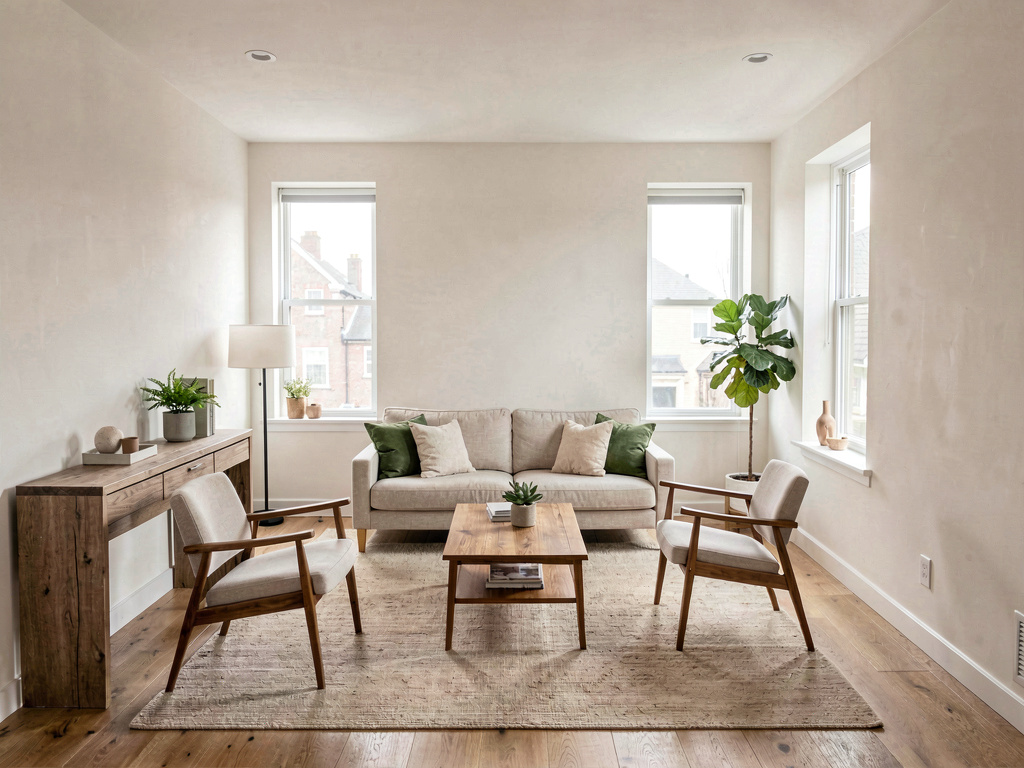
The sofa sits in the middle of the room, pulled 8 to 12 inches off the back wall. A narrow console table fills the gap behind it. Two chairs face the sofa across a slim coffee table. The arrangement creates a defined conversation area with circulation space on all four sides.
This is the layout most people resist because it feels wrong to waste the space behind the sofa. But that 8-inch gap does two things. First, it creates a walking path behind the sofa for anyone moving through the room. Second, it makes the room feel larger because the furniture isn't clamped to the walls. Interior designer Emily Henderson has called floating furniture "the single biggest upgrade in any small room" for exactly this reason.
The console table behind the sofa earns its place. It holds a lamp, a few books, and a small plant without taking up any additional floor space.
3. The diagonal arrangement
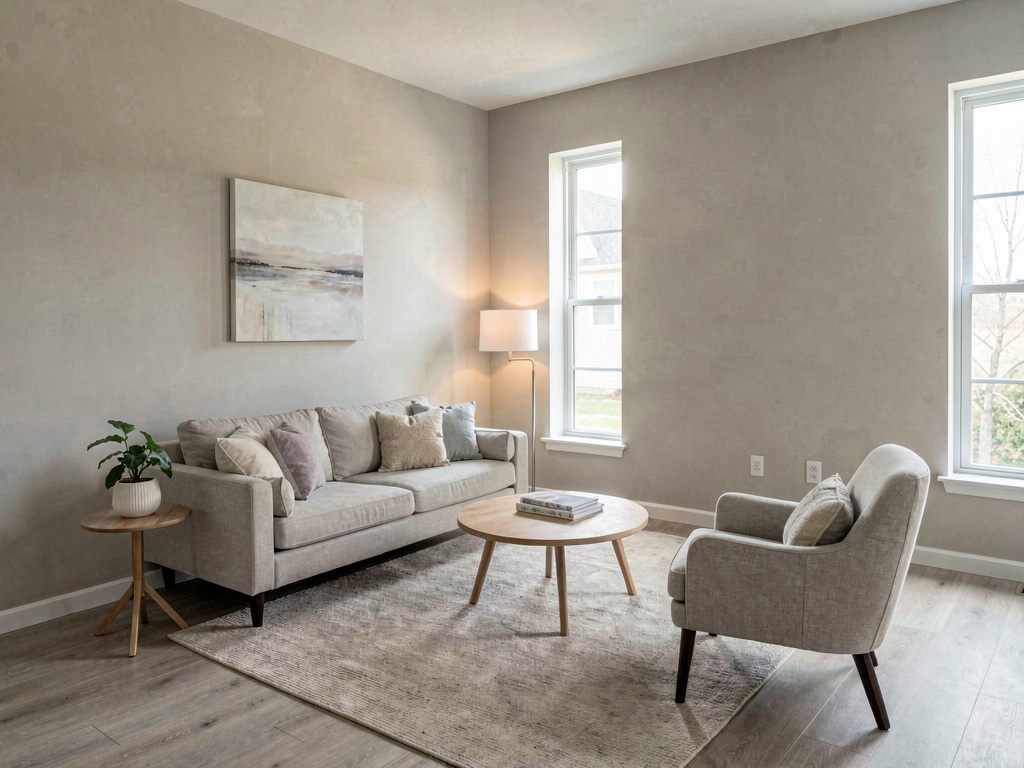
A loveseat placed at a slight angle to the walls. An accent chair at the opposite angle. A round coffee table between them. The diagonal axis breaks the boxy feeling of a small rectangular room and draws the eye across the longest dimension of the space.
This layout is especially good for rooms that feel like a box. When every piece of furniture runs parallel to the walls, the room reads as exactly the shape it is. Angling just one or two pieces by 15 to 30 degrees tricks the eye into reading the room as larger and more dynamic.
Keep the angles subtle. You're not going for a 45-degree rotation. Just a slight twist off the wall axis. And anchor the arrangement with a rug that sits under all the angled pieces so they look intentional, not like someone bumped them.
4. The two-zone split
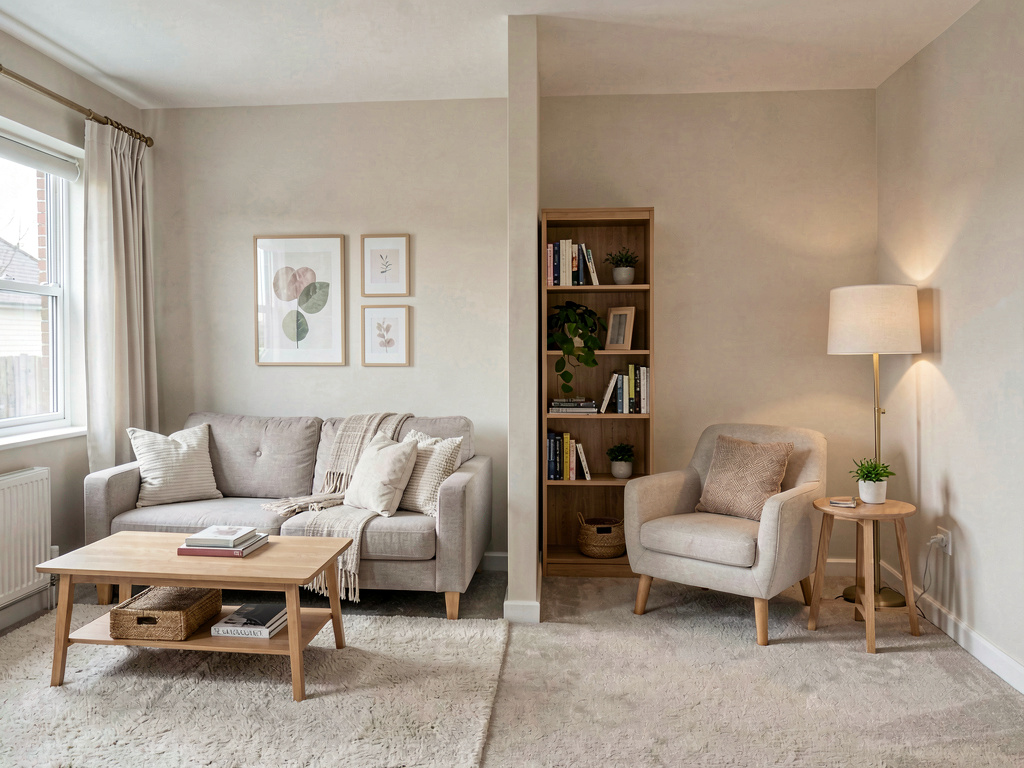
One half of the room has a compact sofa and coffee table for socializing. The other half has a single armchair, a floor lamp, and a small side table for reading or working. A low bookshelf between the two zones acts as a visual divider without blocking light or sightlines.
This works in rooms that need to do double duty, which is most small living rooms. Instead of trying to make one big seating area that handles everything, you create two smaller zones that each do one thing well. The reading nook doesn't need to face the TV. The conversation area doesn't need a reading lamp.
The divider between zones should be low. Anything above 36 inches starts to wall off the space and defeats the purpose. A low bookshelf, a narrow console table, or even a tall plant works.
5. The window seat layout
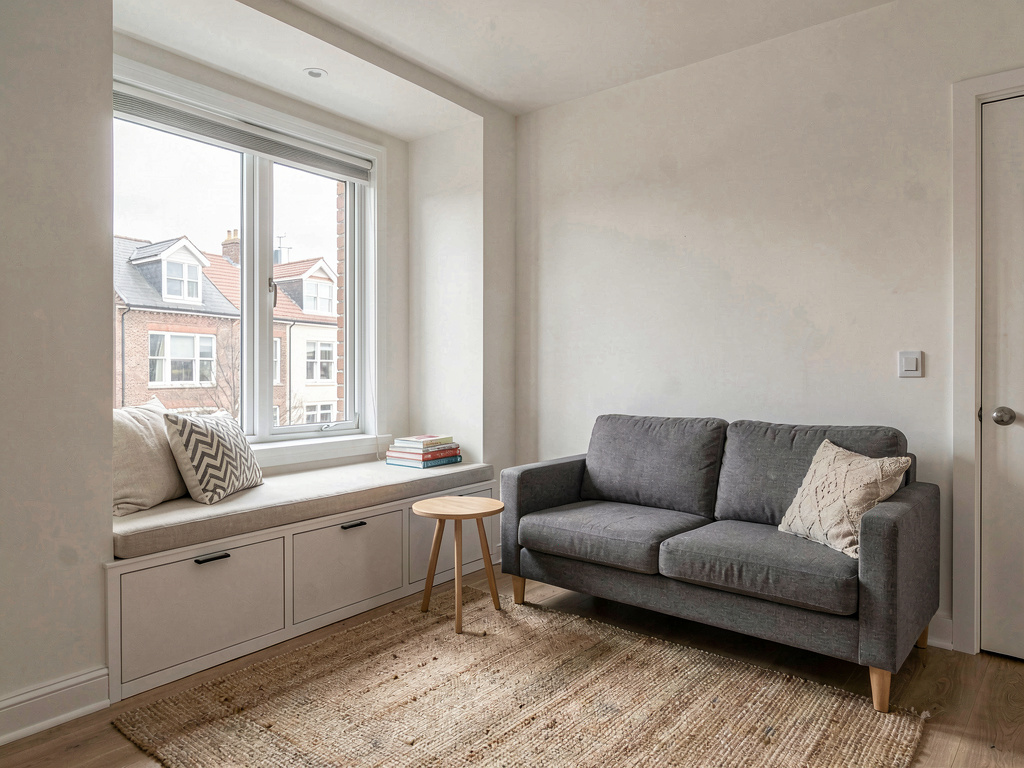
A built-in window seat runs along the window wall, with storage drawers underneath. A small sofa sits perpendicular to it, creating an L-shaped seating arrangement without the bulk of a sectional. A tiny round side table connects the two. The window seat doubles as storage, extra seating, and a reading spot.
If you have the budget for a small built-in, this is the highest-return layout for a small living room. The window seat costs $500 to $2,000 depending on whether you DIY or hire a carpenter, according to HomeAdvisor. You get seating, storage, and architectural character in one piece. And because it's built into the wall, it takes up zero usable floor space.
The sofa can be smaller too since the window seat handles overflow seating. A 60-inch loveseat or apartment sofa is plenty when you have 4 to 5 feet of window seat beside it.
6. The symmetrical layout
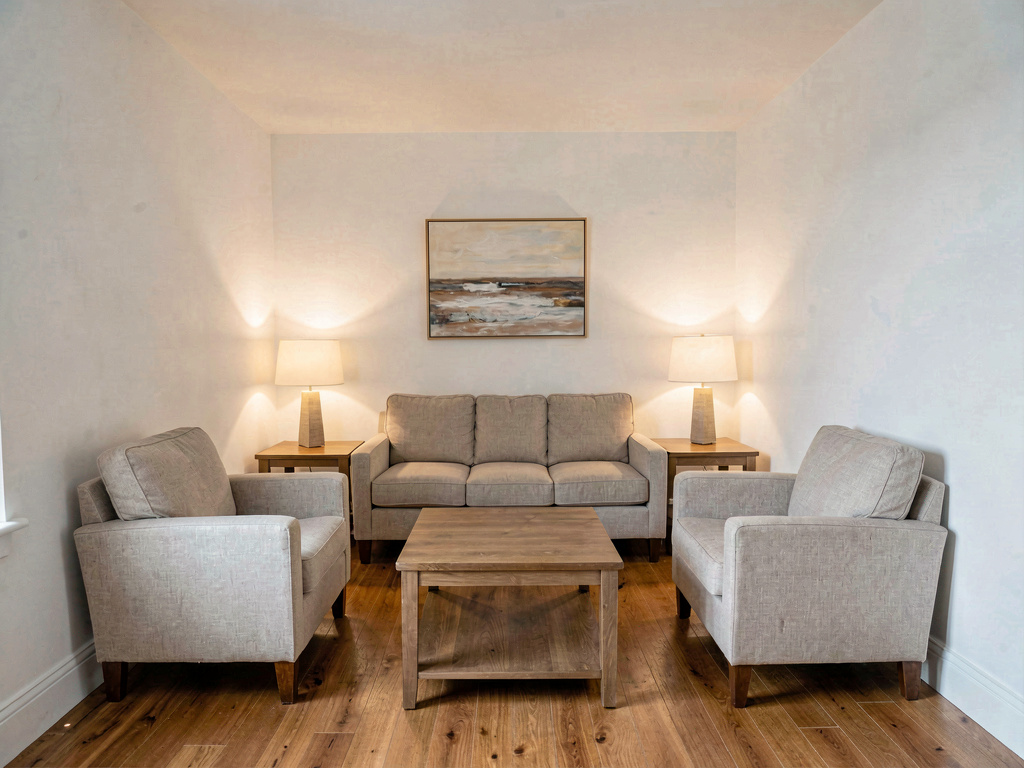
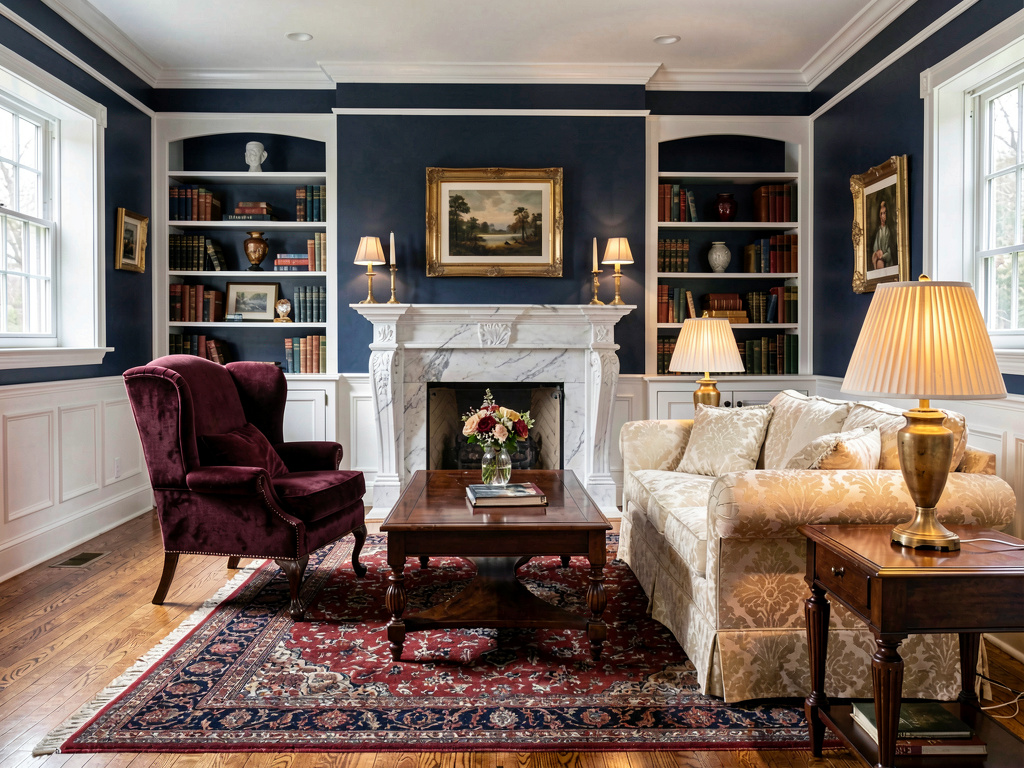
Two identical armchairs face each other across a rectangular coffee table. A small sofa anchors one end. Matching side tables and matching lamps on each side of the sofa. One piece of art centered on the wall.
Symmetry in a small living room layout does something specific: it makes the room feel deliberate. When a small room looks haphazard, it reads as cluttered. When the same furniture is arranged symmetrically, it reads as curated. The visual order tricks your brain into processing the space as tidy and spacious even when the square footage is modest.
This layout works best in rooms that are roughly square, around 11x11 or 12x12 feet. In a long narrow room, symmetry can emphasize the tunnel-like proportions.
7. The no-coffee-table layout
See Your Room Redesigned
Download Remodel AI and transform any room in 30 seconds. 3 free designs, no signup.


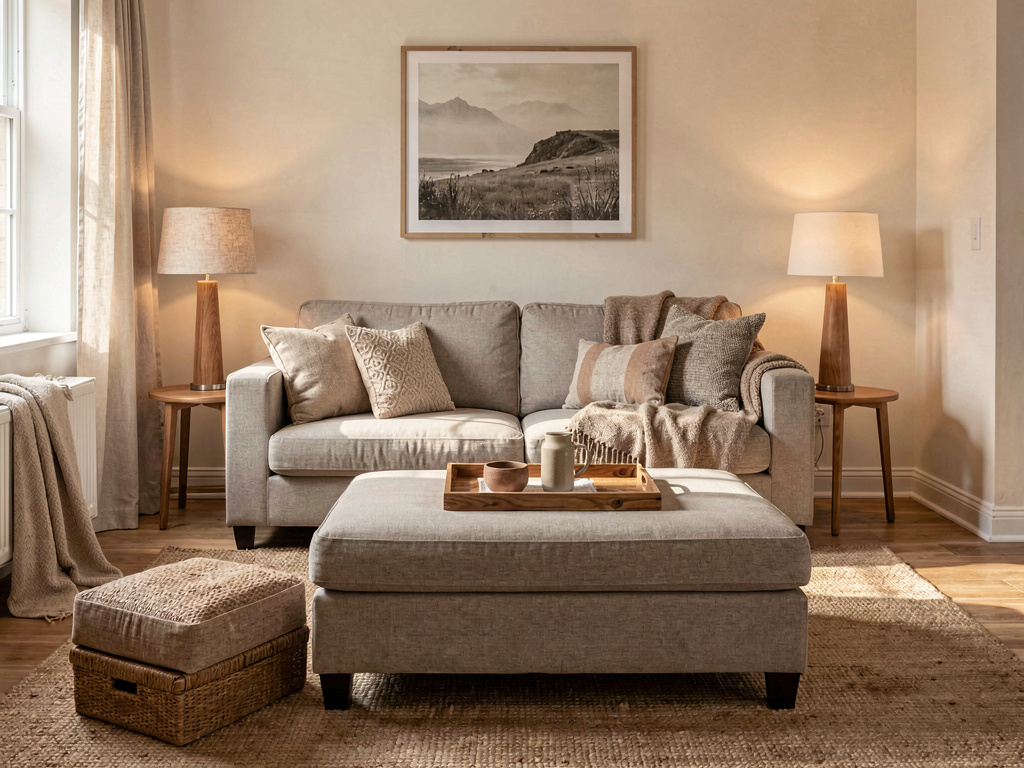
A sofa with two C-shaped side tables that slide under the armrests. A large upholstered ottoman in the center that works as a footrest, extra seat, or table when you put a tray on it. No coffee table at all. The open floor space in front of the sofa makes the room feel significantly larger.
The coffee table is the first piece of furniture to cut in a small living room layout. It eats up the most floor space relative to how much you actually use it. The C-tables give you a surface for drinks and remotes within arm's reach. The ottoman provides the same central surface when you need it but can be pushed aside when you don't.
This layout is also the best option if you have kids. The open floor area becomes play space during the day. The ottoman has no sharp corners.
8. The narrow room layout
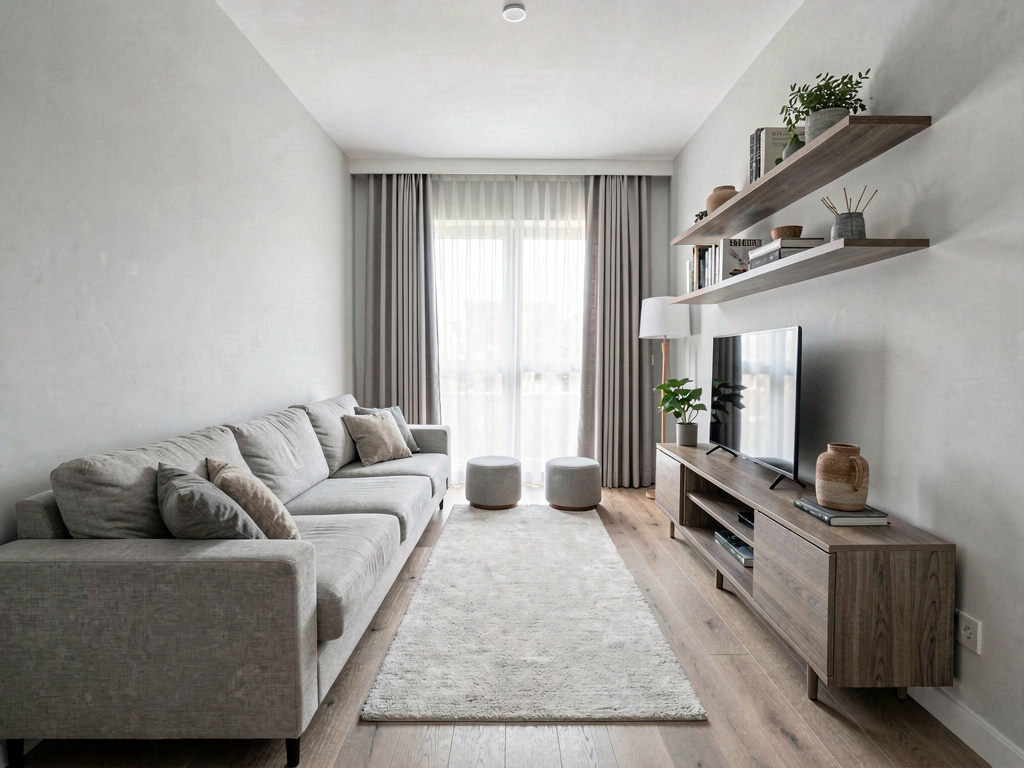
A sofa along one long wall. A slim media console along the opposite wall. Two small poufs or stools that can be repositioned as needed. A narrow runner rug defines the walkway between the sofa and console. Wall-mounted shelves above the console hold decor and books.
Narrow living rooms (8 to 10 feet wide, 14 to 18 feet long) are the hardest to lay out because most furniture is designed for square rooms. The key is accepting the room's proportions instead of fighting them. Put the sofa on the long wall, keep the opposite wall low-profile (console instead of entertainment center), and use flexible seating (poufs, stools, floor cushions) that can be cleared when the room needs to function as a hallway.
Never put the sofa on the short wall facing down the length of the room. It turns the space into a bowling alley.
Open-plan living room corners
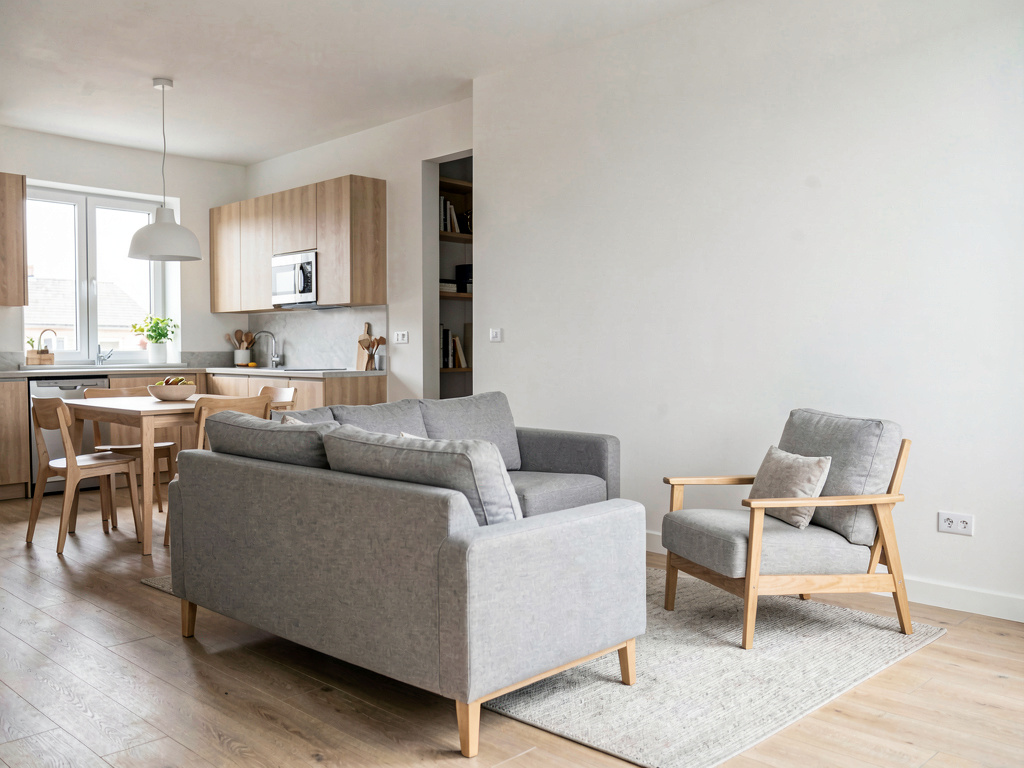
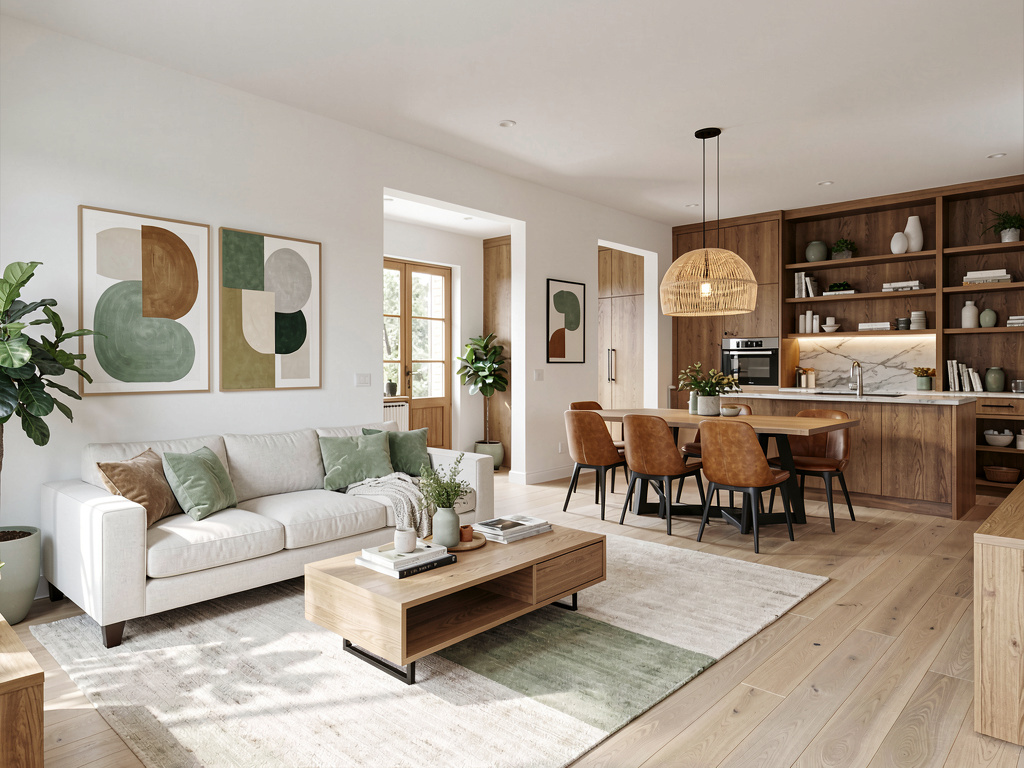
In open-plan apartments, the living room isn't a room at all. It's a zone. The sofa's back faces the kitchen or dining area, defining the living zone without walls. A compact armchair sits at a right angle to the sofa. A small rug anchors the furniture grouping and tells the eye "this is the living room."
The rug is doing most of the work here. In an open-plan space, the rug is your wall. Every piece of living room furniture should sit at least partially on the rug. Nothing from the dining area should overlap onto it. This clear boundary is what separates a thoughtful small living room layout from a collection of furniture scattered across an open floor.
Choose a rug that's big enough for the sofa's front legs to sit on it. For a typical small arrangement, a 5x7 or 6x9 rug works. An 8x10 is usually too large for a small living room zone.
The spacing rules that matter
Regardless of which layout you choose, these dimensions keep a small living room functional:
- Sofa to coffee table: 14 to 18 inches. Enough to get past, close enough to reach your drink.
- Between facing seats: 7 to 10 feet. Any further and conversation feels like shouting.
- Main walkway: 30 to 36 inches minimum. This is the path from the door to the rest of the room.
- TV viewing distance: 1.5 to 2.5 times the screen's diagonal measurement. For a 55-inch TV, that's about 7 to 11 feet.
- Rug size: The front legs of all major seating should touch the rug. In a small room, this usually means a 5x7 or 6x9.
These numbers come from the American Society of Interior Designers standards for residential space planning. They're the same guidelines professional designers use.
How to test a layout before you move anything
Rearranging furniture in a small living room is a workout. Testing layouts on paper or on screen saves you from pushing a sofa back and forth six times.
Step 1: Measure your room and draw it to scale on graph paper, or take a photo from the doorway.
Step 2: Upload your room photo to Remodel AI (free on iOS, Android, and web).
Step 3: Select your room type and choose a style that matches the layout you're going for. The AI will generate a new arrangement of your actual room.
Step 4: Compare 3 to 4 different layouts. You get free designs to start.
This is especially useful for the layouts that feel risky, like floating the sofa away from the wall or going without a coffee table. Seeing it in your actual space, with your actual proportions, makes it easier to commit.
Frequently asked questions
What is the best furniture layout for a small living room?
The best furniture layout for a small living room is the L-shaped sectional corner arrangement. It provides maximum seating in minimum floor space, leaves the center of the room open, and only requires one major piece of furniture instead of a sofa plus separate chairs. For rooms under 120 square feet, the no-coffee-table layout frees up the most usable space.
Should you push furniture against the walls in a small living room?
You should not push furniture against the walls in a small living room. Pushing everything to the perimeter creates a dead center with no purpose and makes the room feel like a waiting room. Pulling furniture 6 to 12 inches off the walls creates walking paths, makes the room feel more dynamic, and often makes the space feel larger even though you're technically using more of it. The only exception is the narrow room layout, where one long wall needs a sofa against it.
How do you arrange furniture in a 10x12 room?
The best furniture arrangement for a 10x12 room is a compact sofa or loveseat on the 12-foot wall, a single accent chair at an angle, and a round coffee table between them. Skip the entertainment center and mount the TV on the wall. Use a 5x7 rug to anchor the seating area. Leave the 10-foot walls for circulation, a slim bookshelf, or a floor lamp.
What size sofa fits a small living room?
For rooms under 200 square feet, a sofa between 60 and 76 inches long works best. That's a loveseat (60 to 70 inches) or a compact apartment sofa (72 to 76 inches). Standard sofas run 84 to 96 inches and will overpower a small room. Measure your wall, subtract 12 inches on each side for end tables or clearance, and that's your maximum sofa length.
How do you make a small living room look bigger with layout?
Three layout strategies make the biggest difference. First, use furniture with visible legs so you can see the floor underneath each piece. Second, keep the tallest furniture (bookshelves, storage) along one wall only so the other walls stay visually open. Third, place a mirror on the wall opposite the largest window to reflect both light and the illusion of depth. These are proportion tricks, not magic, but they reliably add 10 to 20 percent to how large a room feels.
The best small living room layout is the one that matches how you actually use the room. If you watch TV every night, face the seating toward the screen and cut furniture that doesn't serve that purpose. If you host people regularly, prioritize conversation distance and flexible seating. If the room doubles as a home office, the two-zone split gives each function its own space. Start with the activity, then pick the layout. The furniture follows.
Try Remodel AI free at www.remodelai.io/app — available on iOS, Android, and web.
Ready to Try AI Interior Design?
Upload a photo and redesign any room in seconds. 3 free designs, no signup required.