Kitchen design ideas: 20+ styles worth stealing in 2026
Kitchen design ideas for every style and budget — modern, farmhouse, Scandinavian, industrial, coastal, and more with real cost estimates.

Ryan H.
Founder of Remodel AI · April 6, 2026 · 13 min read
Searching for kitchen design ideas is overwhelming because there are too many of them and most articles don't tell you what things actually cost. You see a beautiful kitchen with custom cabinetry and a marble waterfall island and think "I want that," but the price tag is $80,000 and nobody mentioned it. That's not helpful.
This guide organizes kitchen design ideas by style, tells you what makes each one work, and gives you real cost ranges so you know what you're getting into before you start ripping out cabinets. Some of these can be done for $5,000. Some need $50,000. Knowing which is which saves you months of frustration.
1. Modern white kitchen
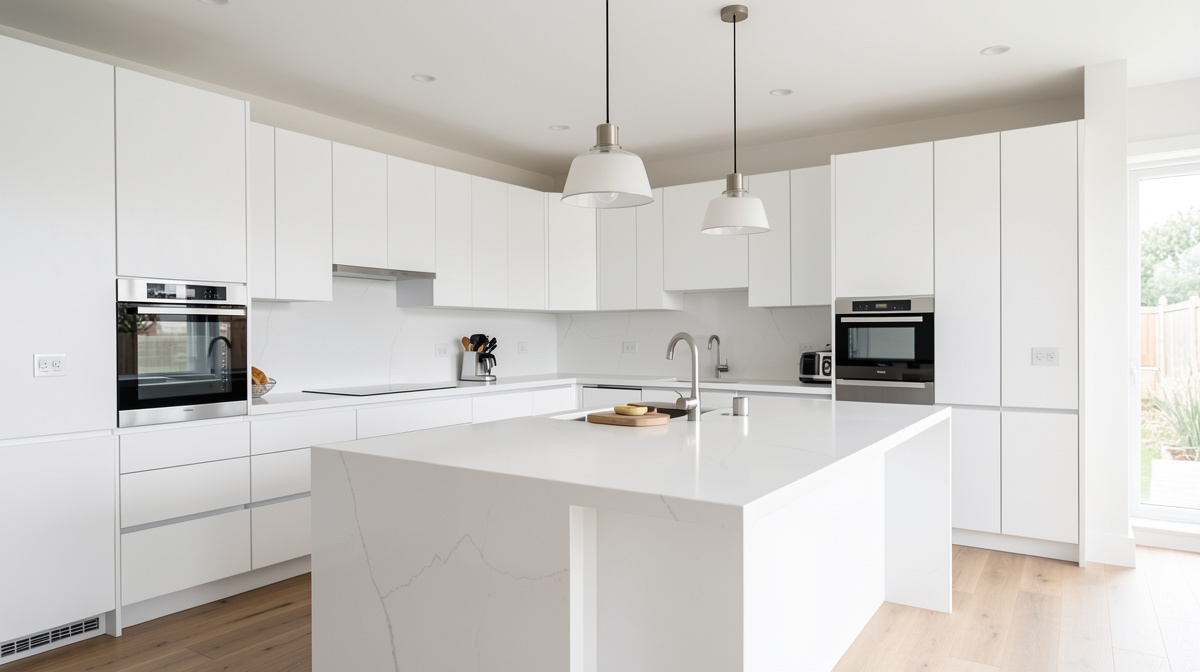
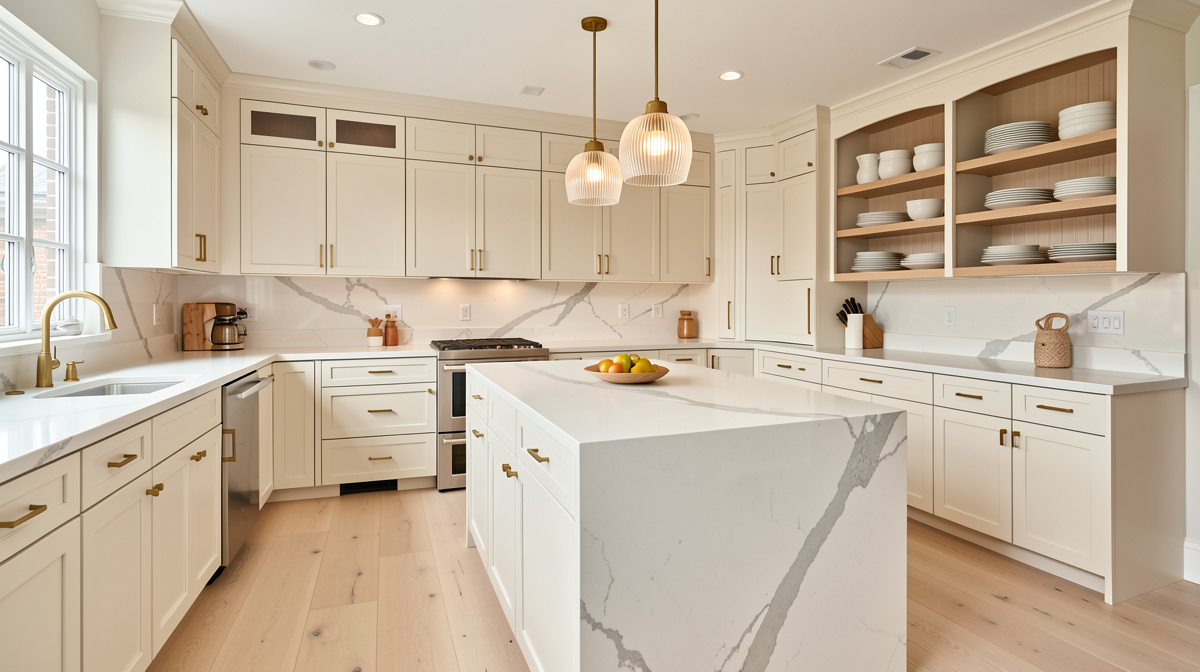
White flat-front cabinets with concealed hardware, white quartz counters, stainless steel appliances, a large-format white tile backsplash, polished chrome fixtures. Under-cabinet LED strip lighting. The island has waterfall edges where the countertop material wraps down the sides.
This is the most popular kitchen design in America for a reason: it's clean, it photographs well, and it works with every home style. According to the National Kitchen and Bath Association's 2025 Design Trends Survey, white kitchens still account for 35% of all kitchen renovations, though the number has dropped from 45% five years ago as warmer tones gain ground.
Cost range: $15,000-$40,000 for a full renovation depending on cabinet quality and counter material. Quartz counters run $50-$100 per square foot installed. Stock white cabinets from IKEA or Home Depot bring the low end down significantly.
2. Modern farmhouse kitchen
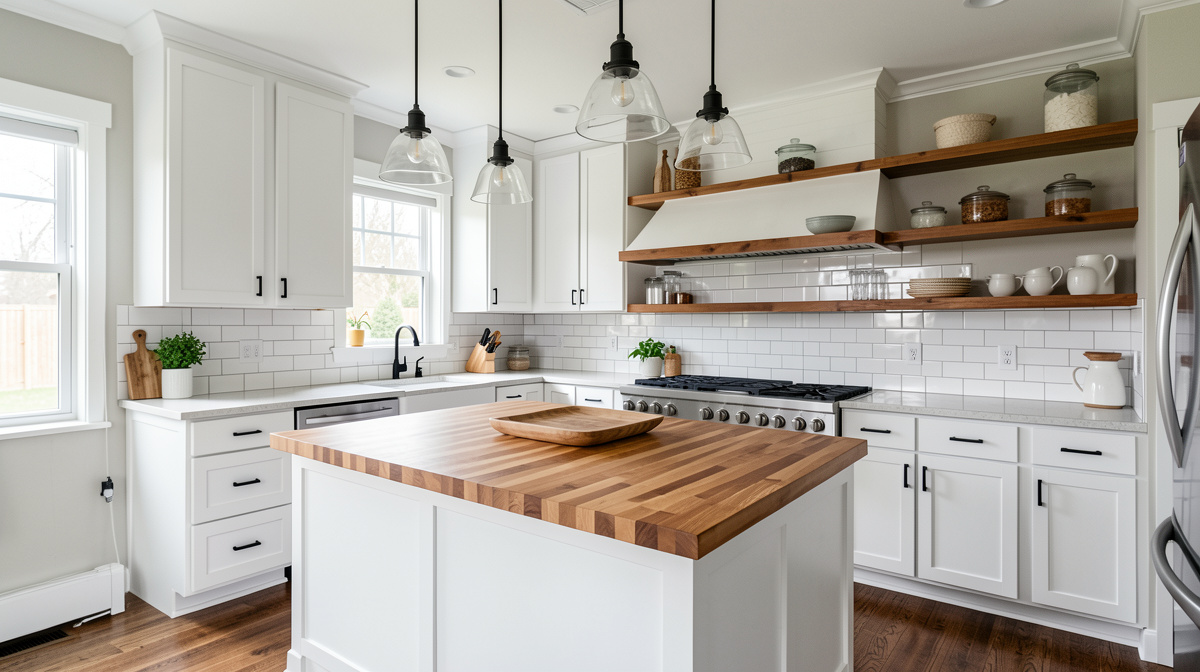
White shaker cabinets (the one with the recessed center panel), a butcher block or wood island countertop, subway tile backsplash, a farmhouse apron-front sink, black or oil-rubbed bronze hardware, open shelving on one wall, pendant lights with an industrial feel — maybe black metal with exposed bulbs. Hardwood floors in a warm medium tone.
Modern farmhouse takes the warmth and character of a traditional country kitchen and strips away the clutter and the roosters. The result feels approachable without being dated. The shaker cabinet is the workhorse of this style because the simple frame-and-panel design reads as both traditional and modern depending on context.
If you're drawn to this direction, our modern farmhouse interior guide covers how the style extends beyond the kitchen into living rooms, bedrooms, and bathrooms.
Cost range: $12,000-$35,000. Butcher block counters are one of the most affordable options at $20-$50 per square foot installed. Shaker cabinets cost only marginally more than flat-front.
3. Scandinavian kitchen
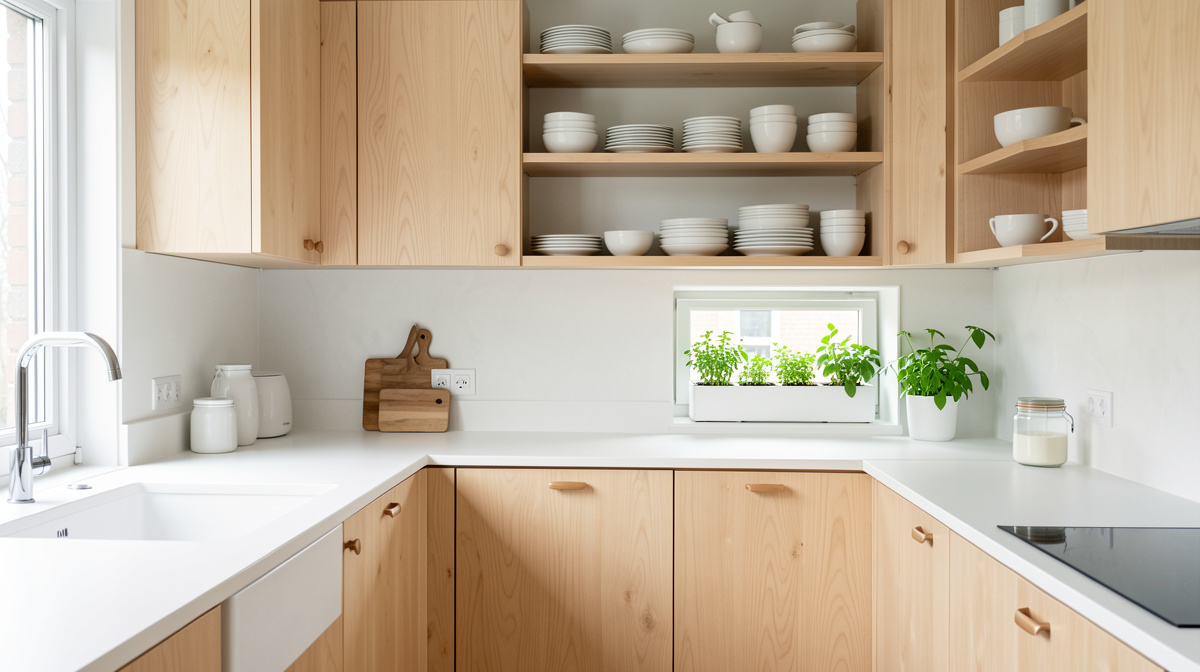
Light wood cabinets — birch, ash, or light oak — with simple hardware or push-to-open doors. White stone or solid surface counters. A simple white backsplash or no backsplash with the wall painted in warm white. Open shelving in matching light wood. Minimal accessories: a few ceramic pieces in muted colors, a wooden cutting board leaning against the wall, a single plant. Clean lines, lots of natural light, and nothing that doesn't need to be there.
Scandinavian kitchens succeed because they treat the room as a workspace first. Everything has a logical place. The visual noise is turned way down so cooking becomes calming rather than chaotic. The light wood keeps it from feeling sterile the way an all-white kitchen sometimes can.
Cost range: $15,000-$40,000. Light wood cabinets are comparable in price to white painted ones. The savings come from the minimal accessories and simple backsplash approach.
4. Industrial kitchen
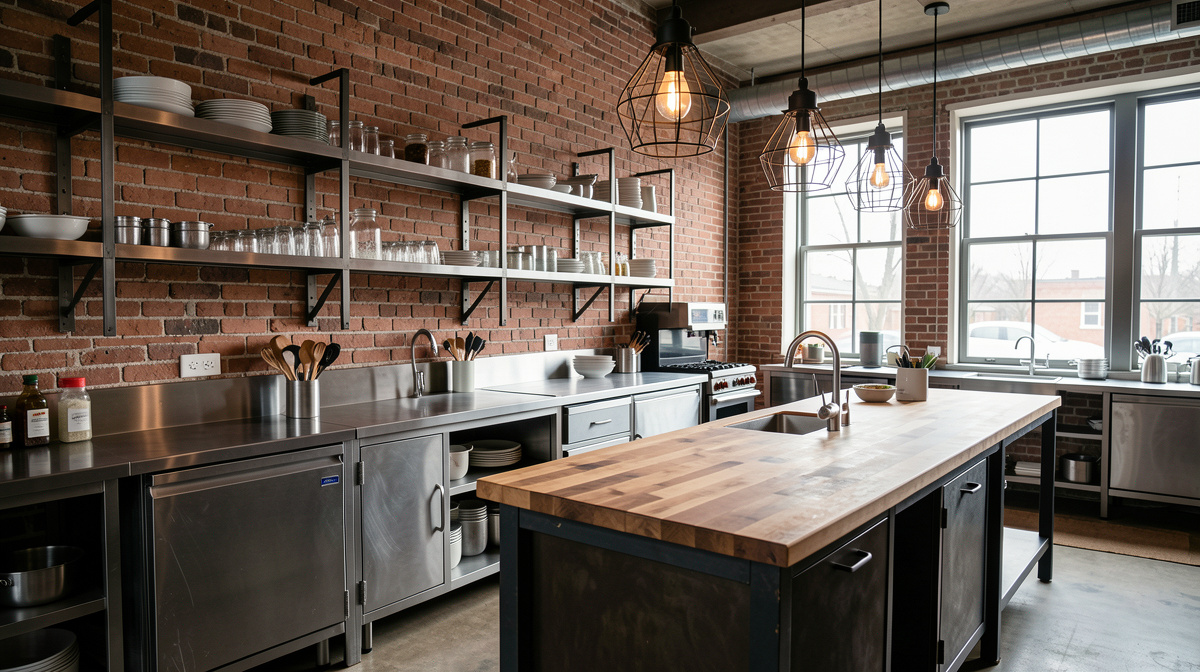
Stainless steel countertops and appliances, open metal shelving instead of upper cabinets, exposed brick on one wall, concrete or dark tile floors, matte black or iron fixtures, a commercial-style range with a stainless hood, Edison bulb pendant lights on a metal track. The lower cabinets are flat-front in dark gray or matte black.
Industrial kitchens borrow from restaurant kitchens and converted warehouse spaces. They're practical, easy to clean, and have a certain toughness that other styles lack. Stainless steel counters are actually cheaper than stone — $40-$80 per square foot installed versus $50-$150 for granite or quartz — and they're nearly indestructible.
Cost range: $10,000-$30,000. Open shelving costs less than closed cabinets. Stainless counters are affordable. The major expense is if you want to expose actual brick (which might involve removing drywall, repointing mortar, and sealing) or install a commercial-style range ($3,000-$8,000).
5. Transitional kitchen
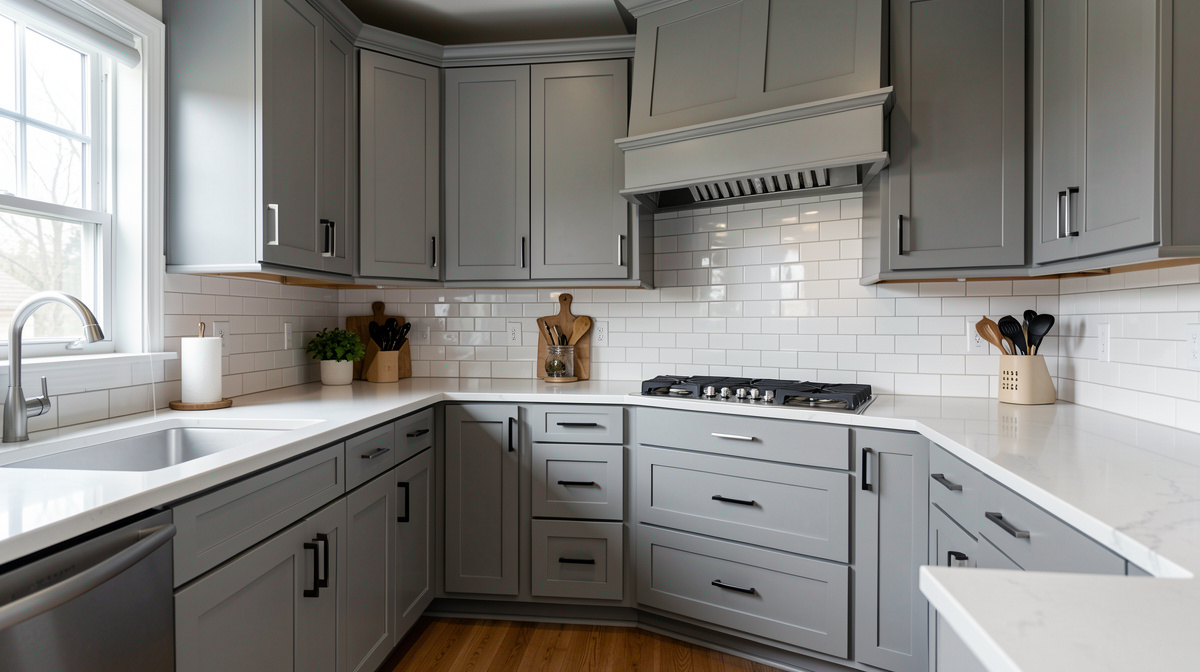
This is the catch-all style for people who want something between traditional and modern. Shaker or modified shaker cabinets in white, gray, or a soft sage green. Quartz or marble counters. A herringbone or chevron pattern backsplash in subway tile. Brushed gold or satin brass hardware. A mix of pendant and recessed lighting. The cabinets might be traditional, but the hardware and fixtures are modern.
Transitional works because it doesn't commit fully to either direction, which makes it the safest choice if you plan to sell your home in the next decade. According to Zillow's 2025 Home Features Report, homes with transitional kitchens sell for an average of 3.1% more than expected, likely because the style appeals to the broadest range of buyers.
Cost range: $15,000-$45,000. The herringbone tile backsplash adds labor cost because the pattern is harder to install ($15-$25 per square foot for labor versus $8-$12 for standard subway tile).
6. Coastal kitchen
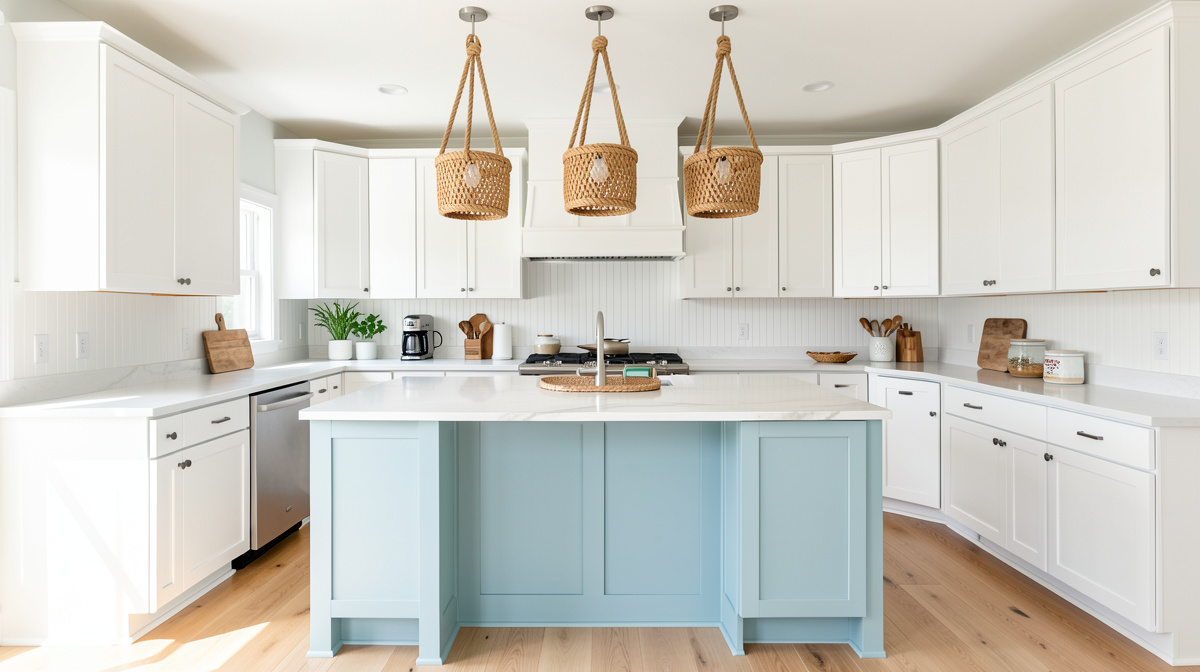
White or soft blue-gray cabinets, a blue or green glass tile backsplash, light countertops (white marble or quartz), natural rope or woven hardware pulls, rattan pendant lights, beadboard details on the island, light hardwood or whitewashed floors. The palette is whites, blues, sandy tones, and natural textures.
Modern coastal kitchens are about a feeling — breezy, light, relaxed — rather than a theme. Skip the seashell knobs and the fish-shaped anything. Let the color palette and the natural textures do the work. Glass tile is the signature element because it catches light and subtly references water.
Cost range: $15,000-$40,000. Glass tile is more expensive than ceramic ($15-$30 per square foot versus $5-$15) but it's used in smaller quantities on a backsplash.
7. Mediterranean kitchen
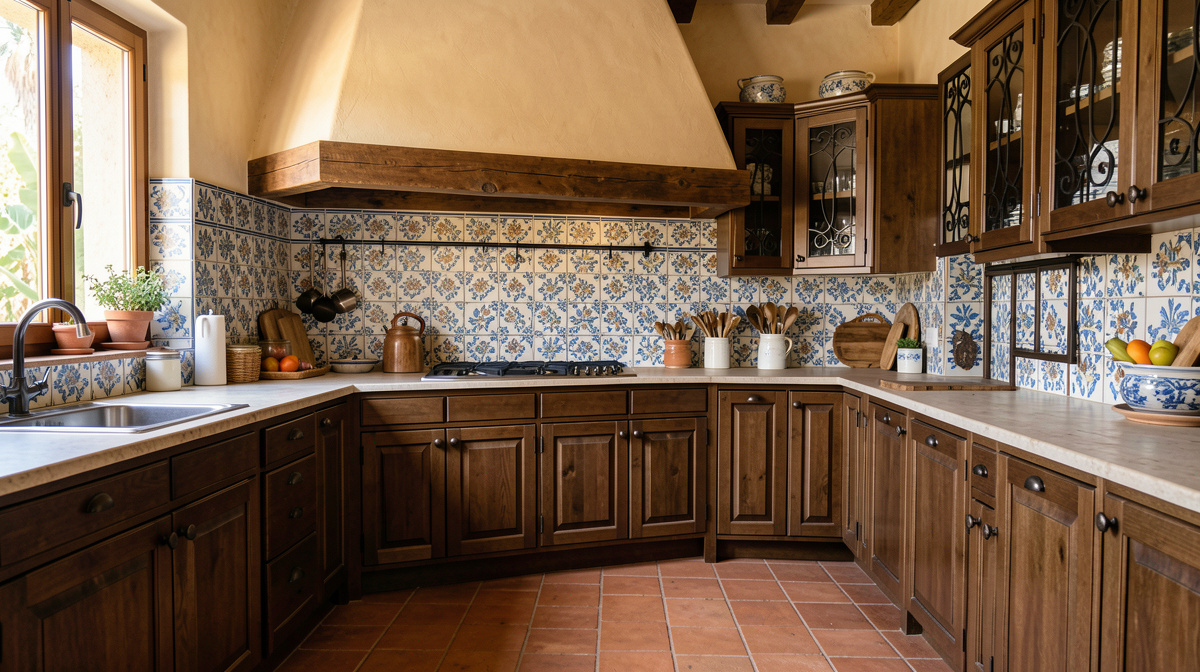
Terracotta or patterned encaustic tile floors, dark stained wood cabinets or a rich olive green, a plaster or stucco range hood with an arched shape, wrought iron light fixtures, hand-painted tile backsplash, stone counters, warm terra cotta walls. The room feels warm, earthy, and a little old-world.
Mediterranean kitchens are having a moment as people move away from the all-white everything trend. The style works particularly well in homes with Spanish, Italian, or Southwestern architecture but it can be adapted to almost any space if you commit to the material palette.
Cost range: $20,000-$50,000. Encaustic tile and hand-painted tile are expensive ($15-$40 per square foot). Custom plaster range hoods run $2,000-$6,000. But the rich wood cabinets can be achieved with stock cabinets in the right stain.
8. Japanese-inspired kitchen
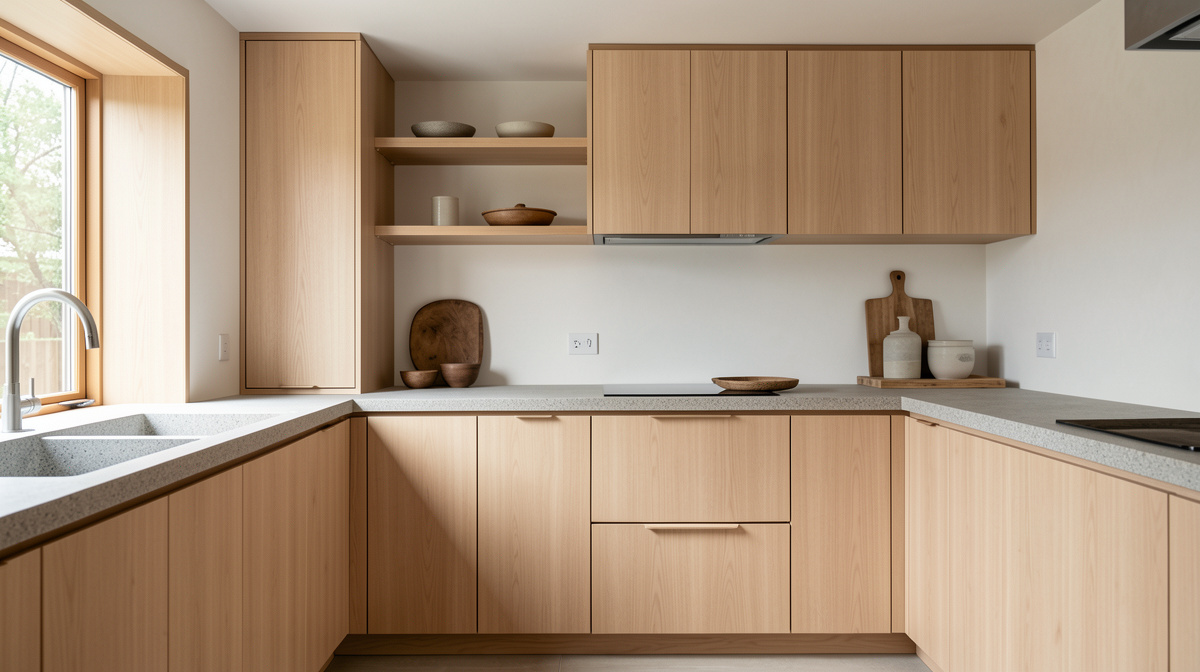
Light wood throughout — cabinets, ceiling beams, open shelving — in a consistent grain and tone. Minimal or no hardware (push-to-open or routed finger pulls). Clean lines with no ornamentation. A natural stone counter in a soft gray or beige. Paper or fabric pendant lights in simple geometric shapes. Concealed appliances behind cabinet panels. Everything is ordered, calm, and intentional. Nothing competes for attention.
The Japanese approach to kitchen design treats the space as a zen workspace. The emphasis on concealment — hiding the refrigerator, the dishwasher, even the outlets — creates a room that looks more like furniture than a kitchen. This is the style where less genuinely is more, and every detail is considered.
Cost range: $25,000-$60,000. The cost comes from custom cabinetry (concealing appliances requires custom panels) and the level of precision in the woodwork. Budget versions can use IKEA cabinet boxes with custom wood fronts.
9. Rustic kitchen
See Your Room Redesigned
Download Remodel AI and transform any room in 30 seconds. 3 free designs, no signup.


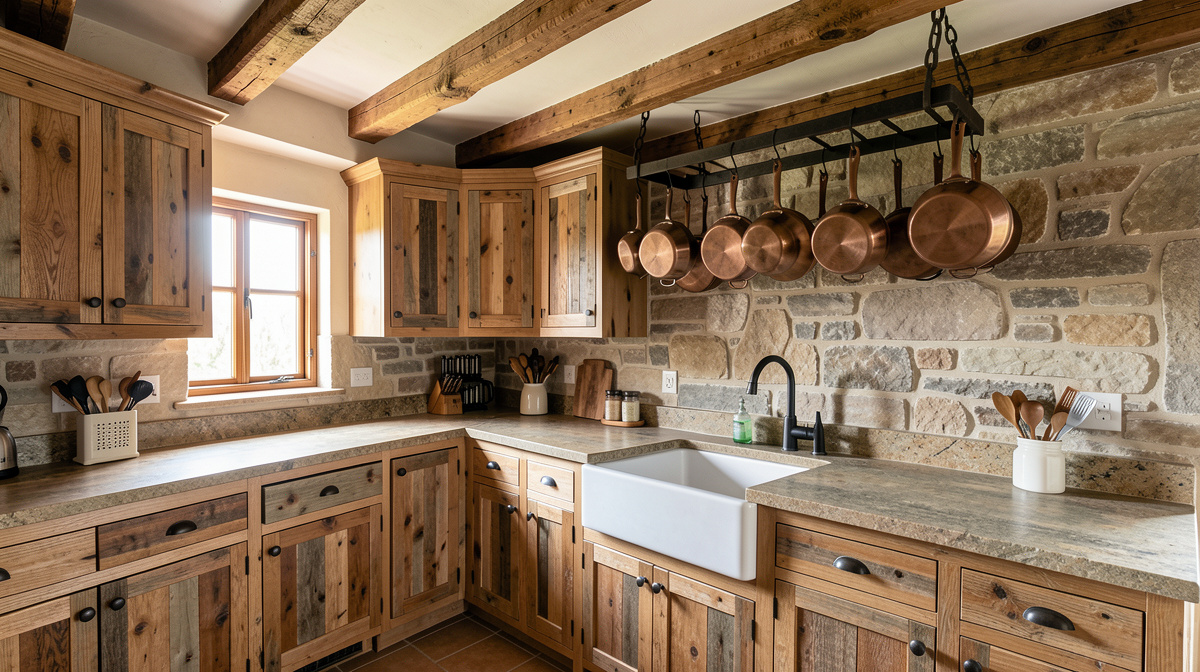
Reclaimed wood ceiling beams, stone or brick accent walls, distressed or knotty wood cabinets, a copper or hammered metal sink, soapstone or butcher block counters, wrought iron hardware and light fixtures, an antique rug in front of the sink, hand-forged metal hooks for hanging pots. The floor is wide-plank wood, ideally reclaimed.
Rustic is the style most dependent on the right house. In a cabin, a farmhouse, or a home with existing stone or wood features, it feels authentic. In a brand-new suburban home, it can feel forced. The test is whether the materials could plausibly have been in the building for decades.
Cost range: $15,000-$45,000. Reclaimed wood is sometimes cheaper than new hardwood (depending on source and availability), but the labor to install irregular materials costs more. Copper sinks run $400-$2,000.
10. Black kitchen
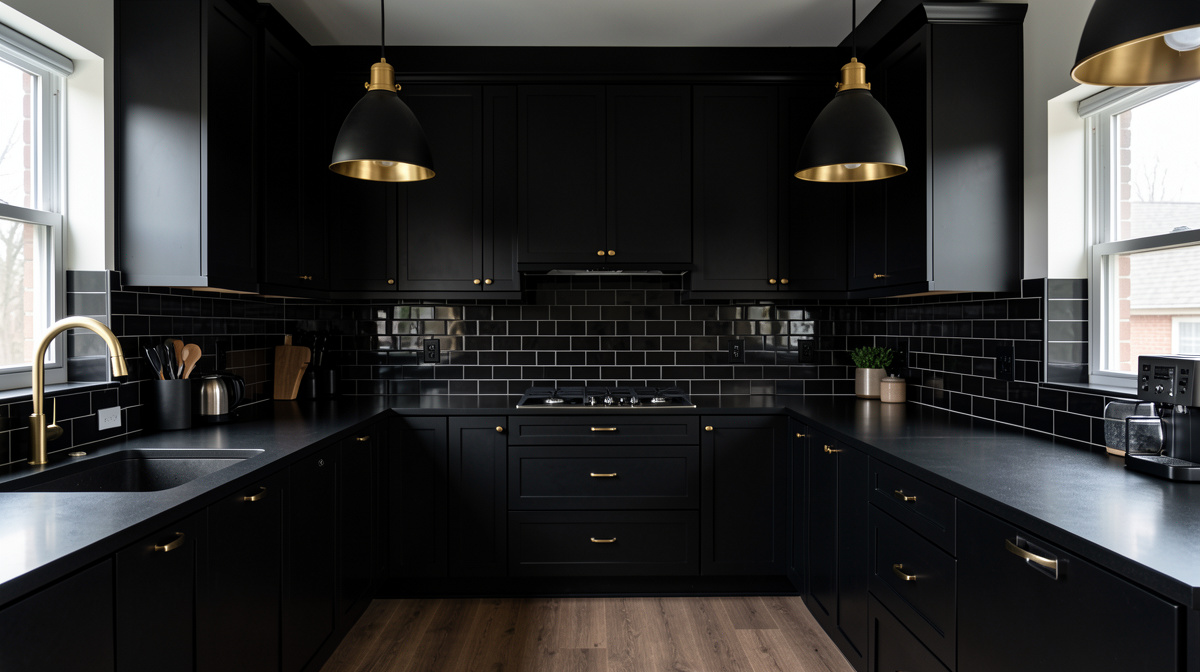
Matte black flat-front cabinets, black or very dark gray counters (honed black granite, soapstone, or dark quartz), brushed brass or gold fixtures and hardware, a matte black faucet, dramatic pendant lights in black and brass. The backsplash might be black tile, dark stone, or a contrasting element like white marble for relief.
Black kitchens are bold and they polarize people, but when they're done right the effect is striking. The key is using matte finishes (not glossy, which shows every fingerprint and scratch) and including enough warm metal — brass, gold, copper — to keep the room from feeling like a cave. Natural light helps enormously; a black kitchen with small windows can feel oppressive.
Cost range: $15,000-$40,000. The materials cost the same as a white kitchen in the same quality tier. The cost difference is zero — the drama is free.
11. Two-tone kitchen
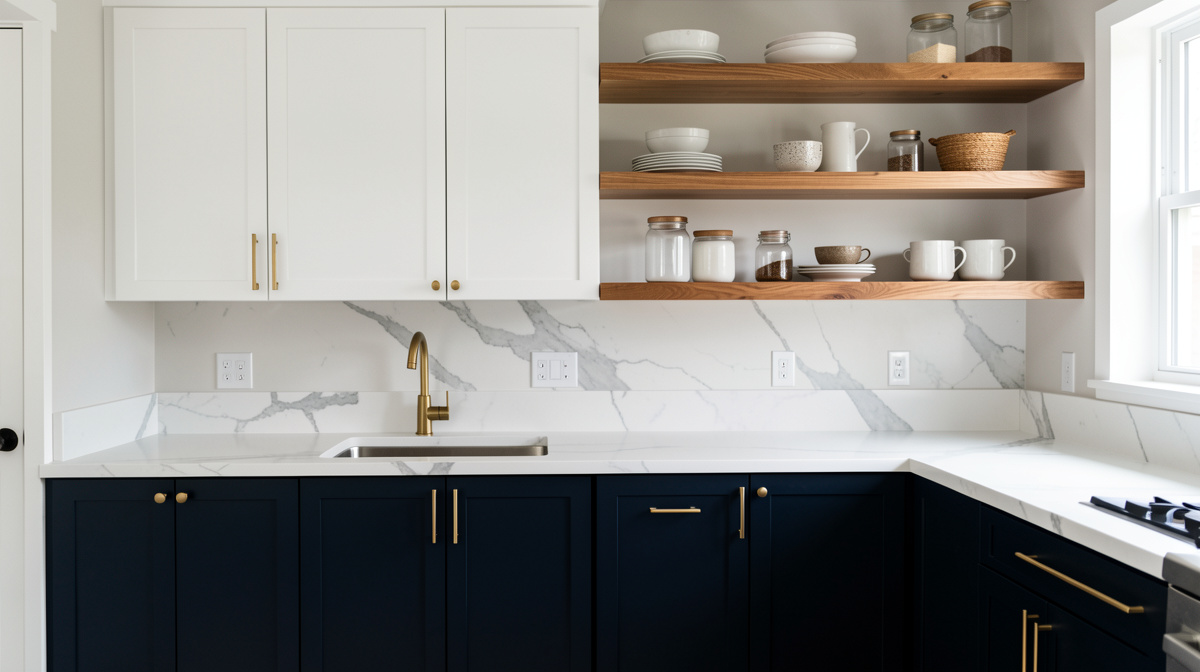
Different colors on the upper and lower cabinets. The most common combination is white or light upper cabinets with a darker color below — navy, forest green, charcoal, or a warm wood tone. The island might be a third color or match one of the two. This approach breaks up visual monotony and lets you add color without painting every cabinet surface.
Two-tone works because the lower cabinets are grounded by the floor and countertop, so a heavier color makes sense there. The lighter uppers keep the room from feeling closed in, especially if the ceiling isn't tall. According to Houzz's 2025 Kitchen Trends Report, two-tone cabinets appeared in 28% of kitchen renovations, up from 18% in 2022.
Cost range: $15,000-$45,000. Two-tone doesn't add significant cost unless you're using two different materials (for example, painted uppers and natural wood lowers with different door profiles).
12. Maximalist eclectic kitchen
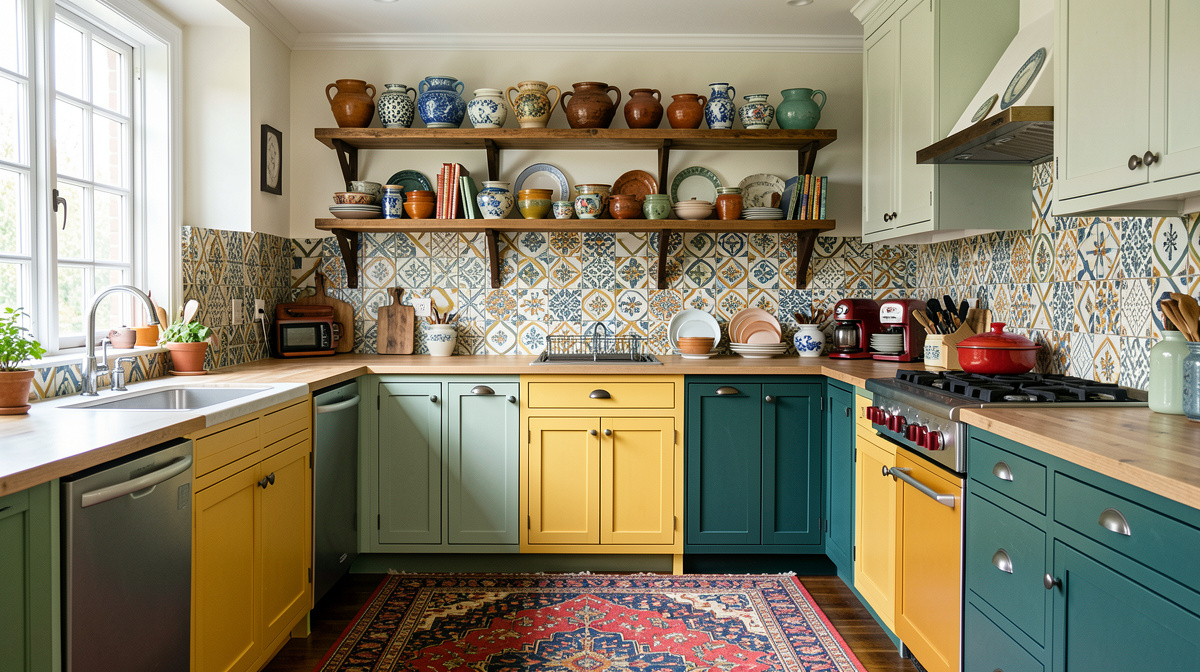
Patterned encaustic tile floor, cabinets painted in a bold color (emerald, terracotta, deep blue), a mix of hardware styles (vintage brass alongside matte black), open shelving displaying a collection of colorful pottery and glassware, a patterned or mosaic tile backsplash that doesn't match the floor but somehow works, art on the walls, a vintage rug, plants everywhere.
This style breaks every rule from every other style on this list, and that's the point. The eclectic kitchen works when the person designing it has a clear sense of what they like and the confidence to combine it all. It fails when it's random. The difference between eclectic and messy is intention.
Cost range: $15,000-$50,000. Can actually be cheaper if you source vintage and secondhand items, but the tile work and bold paint colors require the same labor as any other renovation.
How layout affects every style
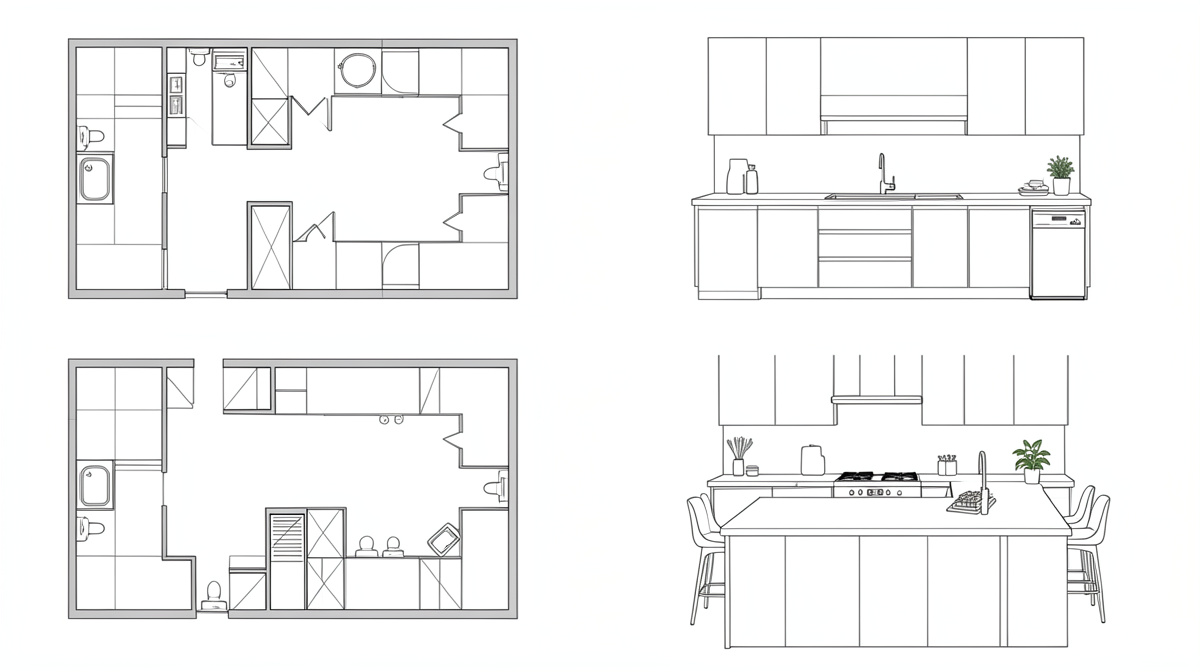
The style you choose matters less than you think if your layout doesn't work. The three most common issues:
The work triangle is broken. The sink, stove, and refrigerator should form a triangle with each leg between 4 and 9 feet. If you have to walk across the entire kitchen to get from the stove to the sink, no amount of beautiful cabinetry will make the kitchen enjoyable to cook in.
The island is too big or too small. An island needs at least 36 inches of clearance on all sides for people to walk past. In a kitchen under 12 feet wide, an island often doesn't fit. A peninsula (attached to a wall on one end) gives you the same counter space with better traffic flow.
There's no landing space. You need at least 15 inches of counter on each side of the stove and 24 inches on at least one side of the sink. These are the spots where you set down hot pots, rest cutting boards, and stack dishes. Skip them and you'll notice the inconvenience every single day.
For a deeper look at kitchen renovation planning, including appliance selection and contractor tips, see our AI kitchen remodel guide.
What to prioritize when budget is tight
If you can only afford to change three things:
Paint the cabinets. A professional cabinet painting job runs $3,000-$7,000 and transforms the room more than any other single change. DIY brings the cost to $200-$500 in materials, but it takes a full weekend and the finish quality depends on your prep work and patience.
Replace the hardware. New pulls and knobs cost $3-$15 each and take 20 minutes to install. Going from builder-grade to something intentional (brass, matte black, or a distinctive shape) is one of the highest-impact, lowest-cost changes in any kitchen.
Upgrade the lighting. Swap the fluorescent or basic flush-mount ceiling fixture for pendant lights or a combination of recessed and under-cabinet lighting. Budget $200-$800 for fixtures, plus electrician fees if you need new wiring.
How to see these styles in your kitchen
The hardest part of choosing a kitchen style is imagining it in your actual space. Your kitchen has a specific layout, specific light, specific flooring that won't change. What looks great in a magazine photo with perfect lighting and 20-foot ceilings may not translate.
Remodel AI lets you upload a photo of your kitchen and see any of these styles applied to your real room. Modern white, farmhouse, industrial, Mediterranean, or anything else — you can compare them side by side in your actual space before you commit to a contractor or a single purchase.
Frequently asked questions
What kitchen style has the best resale value?
Transitional and modern white kitchens consistently perform best for resale because they appeal to the broadest range of buyers. Bold choices like black kitchens or maximalist eclectic can turn off buyers who want a neutral starting point. If resale is your priority, stick with neutral cabinets (white, warm gray, or light wood), quartz or marble-look counters, and brushed metal hardware.
How much does a full kitchen renovation cost in 2026?
The average full kitchen renovation runs $25,000-$50,000 in the U.S., according to the National Kitchen and Bath Association. Minor renovations (cabinet painting, new hardware, lighting upgrades, backsplash) can be done for $5,000-$15,000. High-end renovations with custom cabinetry, premium appliances, and structural changes can exceed $100,000.
What kitchen trends are outdated in 2026?
All-gray kitchens with gray cabinets, gray counters, and gray backsplash have aged poorly. The gray-on-gray look peaked around 2018-2020 and now reads as dated. Barn doors on pantries, shiplap backsplashes (too hard to clean), and tuscan-style dark cherry cabinets have also moved past their moment. That said, "outdated" and "bad" are different things — if you love it, build it.
Should I choose cabinets or countertops first?
Countertops first, then cabinets to complement them. Natural stone has limited color options and significant variation between slabs, so it's easier to match a cabinet color to the actual stone slab you've selected than to find the perfect stone to match pre-chosen cabinets. If you're using a manufactured counter (quartz, solid surface), the order matters less because the color is consistent across pieces.
Is an island worth it in a small kitchen?
Not always. Islands need 36-42 inches of clearance on every open side. If your kitchen is under 10 feet wide, an island will make the space feel cramped and block traffic flow. A peninsula (one end attached to a wall or cabinet run) gives you the extra counter space and seating without sacrificing walkway width. Another option: a mobile kitchen cart that can be wheeled out of the way when you need the floor space.
Ready to Try AI Interior Design?
Upload a photo and redesign any room in seconds. 3 free designs, no signup required.