Dining room ideas: layouts, styles, and what actually works
Dining room ideas by size, style, and budget — modern, farmhouse, Scandinavian, industrial, and more with layout advice and real costs.

Ryan H.
Founder of Remodel AI · April 6, 2026 · 12 min read
Good dining room ideas are harder to find than you'd think. Most articles about dining rooms show enormous formal spaces with 10-seat tables and chandelier collections that cost more than a car. That's not useful when you're working with a 10-by-12 room off the kitchen or an open-plan space where the dining area has to coexist with the living room.
This guide organizes dining room ideas by what actually matters: how big your space is, what style you want, and what you can spend. Every suggestion includes specific enough detail that you could shop for it today.
Dining room ideas by space type
Small apartment dining (under 80 square feet)
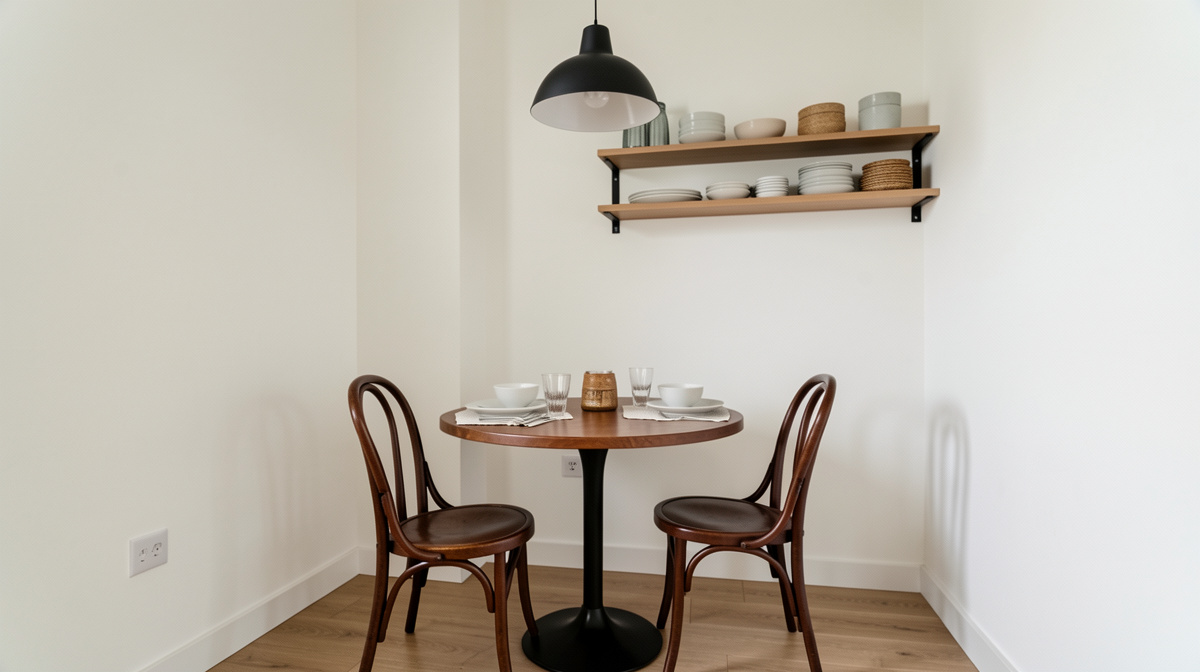
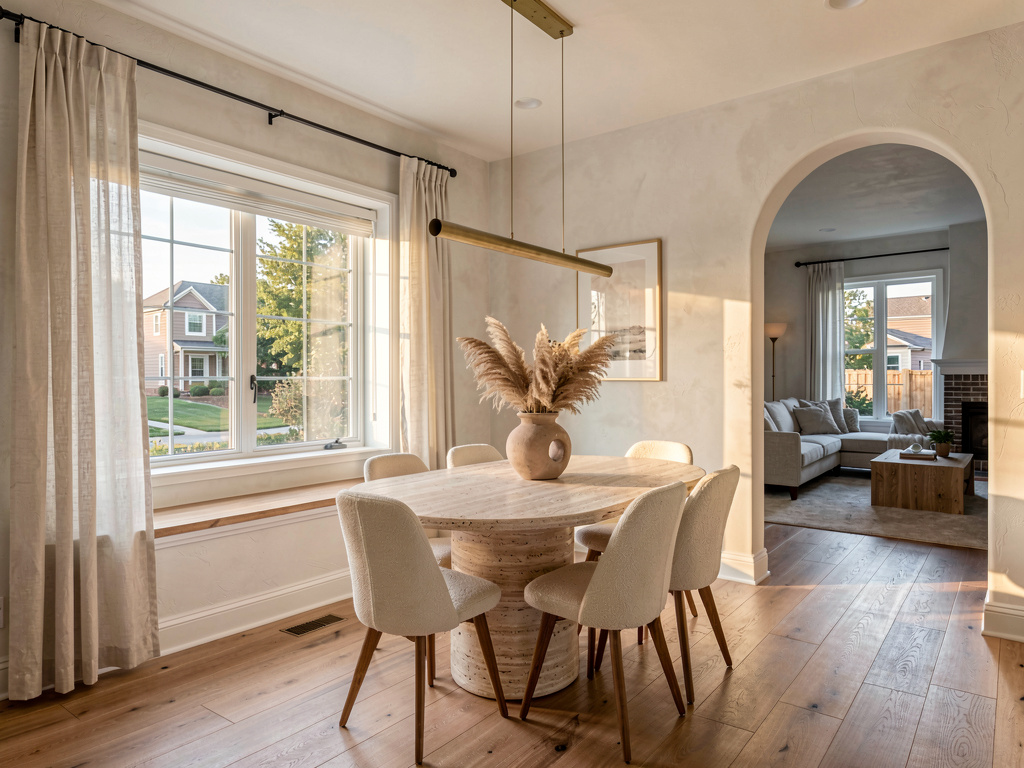
A round table, 36 to 42 inches in diameter, with two to four chairs. Round tables work better in small spaces because there are no corners to bump into and they allow easier traffic flow around them. A pedestal base is better than four legs because chairs can tuck closer. Wall-mounted shelving or a narrow console replaces a buffet or sideboard.
The biggest mistake in small dining spaces is choosing a table that's too big. You need at least 36 inches between the table edge and the nearest wall or furniture for someone to sit down and get up comfortably. In a room that's 8 feet wide, a 36-inch round table with 36 inches of clearance on each side leaves exactly zero extra inches. Measure twice.
Lighting matters more in a small dining space because the fixture is closer to eye level and more visually prominent. A single pendant light 30 to 36 inches above the table surface creates a pool of warm light that defines the dining area even in an open room.
Budget: $500-$1,500. A good round table runs $200-$600. Two to four solid chairs are $50-$150 each. A pendant light is $50-$300.
Open-plan dining area
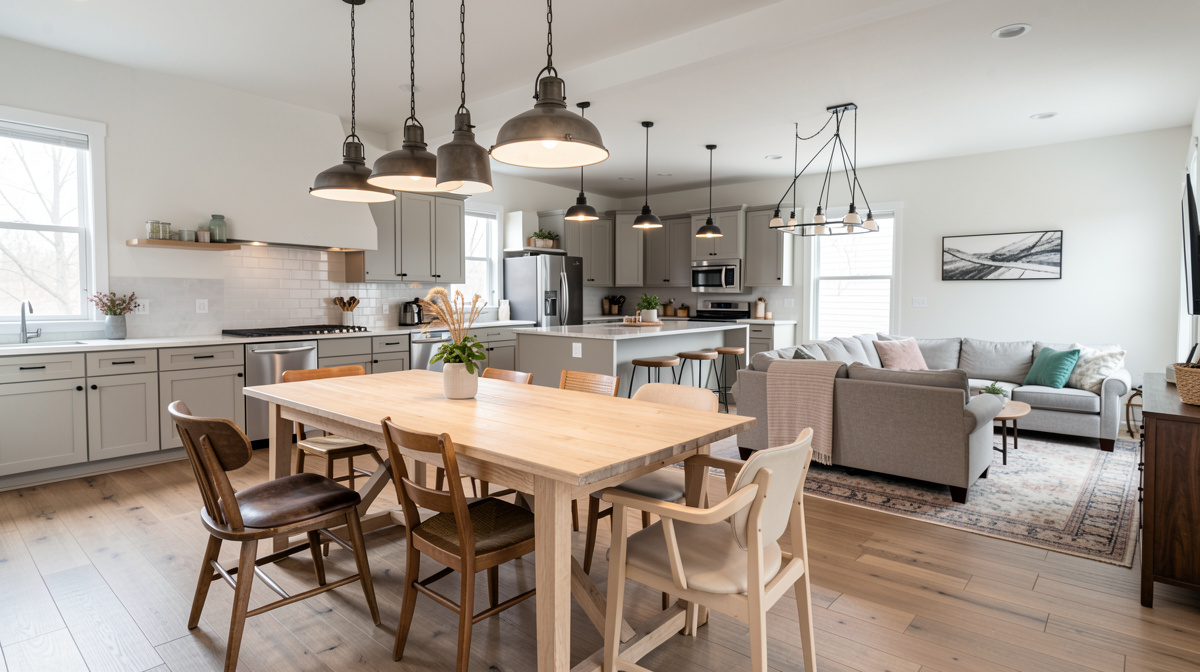
In an open floor plan, the dining area needs to be visually separated from the living area without walls. Three tools for this: an area rug under the table that doesn't extend into the living space, a pendant light or chandelier that hangs directly over the table (creating a visual boundary from above), and a slight change in furniture style or material that makes the dining area read as its own zone.
A rectangular table with a bench on one side works well in open plans because the bench can be pushed under the table when not in use, making the space feel less crowded. The table should be proportional to the rug — the rug needs to extend at least 24 inches beyond the table on all sides so the chairs stay on the rug when pulled out.
According to the National Association of Home Builders' 2025 Home Trends Report, 62% of new single-family homes built in 2024 had open-plan living and dining areas, up from 54% a decade ago. The formal separated dining room is disappearing, and the open-plan dining zone is the replacement.
Budget: $1,000-$3,000. The rug is an additional $200-$600 expense that wouldn't exist in a walled room, but it's necessary.
Formal dining room
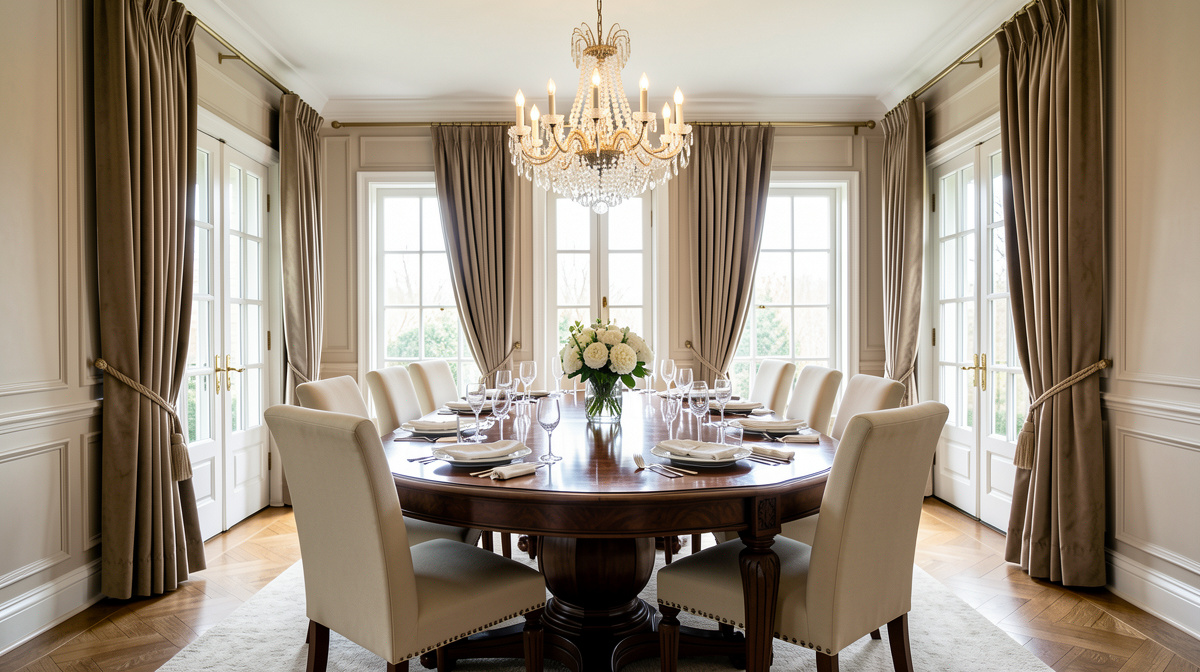
If you have a dedicated room with four walls and a door (or at least a clear threshold), you have the freedom to go bigger and bolder. A table that seats 8 to 10, a chandelier or multi-pendant installation as the centerpiece, a sideboard or credenza against one wall for serving and storage, upholstered chairs for comfort during long meals, and wall treatment — wallpaper, wainscoting, or a strong paint color.
Formal dining rooms are making a quiet comeback after two decades of being converted into home offices and playrooms. According to Architectural Digest's 2025 design survey, 38% of homeowners who renovated in 2024 either restored or created a formal dining room, citing "the desire for a dedicated space for family meals and entertaining."
Budget: $3,000-$15,000+. Large tables are $800-$4,000. Eight upholstered chairs at $150-$500 each add up fast. The chandelier is $300-$3,000 depending on how dramatic you want to go.
Dining room ideas by style
Modern dining room
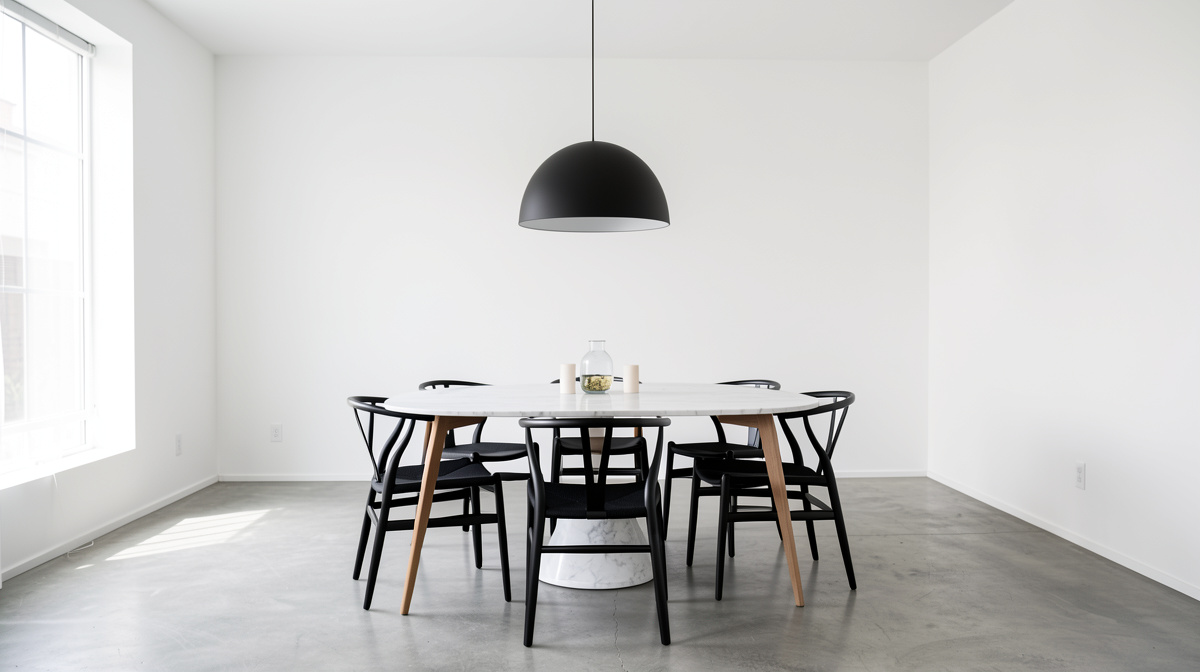
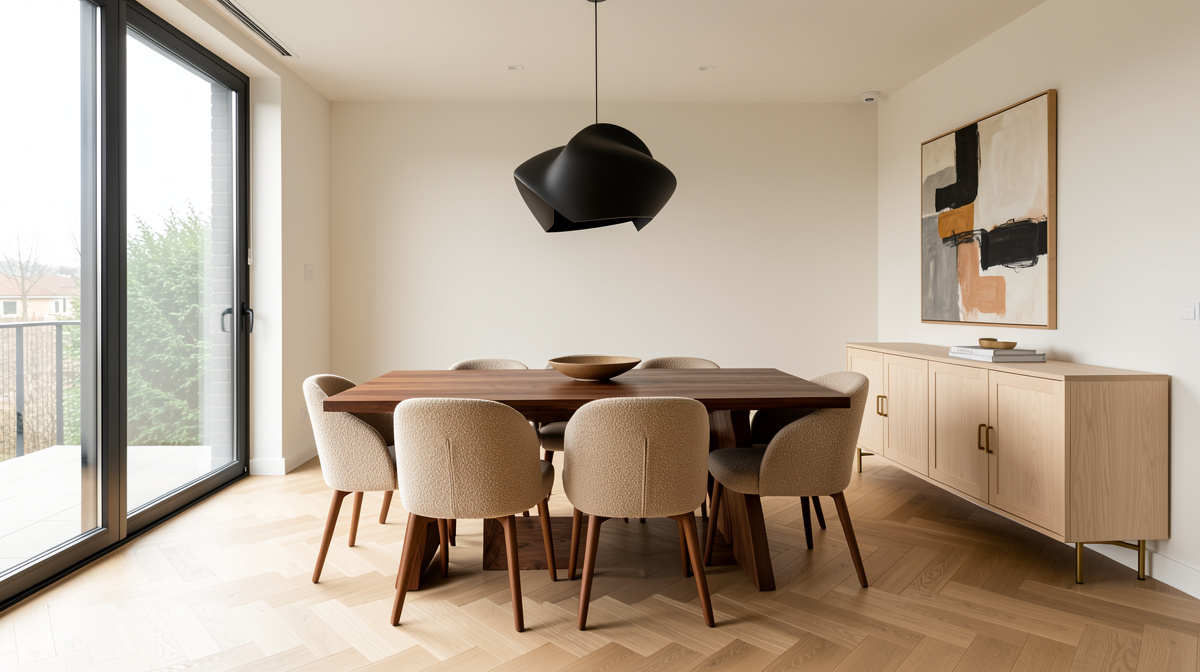
An oval or rectangular table in marble, glass, or high-quality engineered stone. Sculptural chairs — something with an interesting shape rather than a traditional dining chair silhouette. A linear pendant light in matte black or brushed brass running the length of the table. Minimal accessories: maybe a single sculptural object as a centerpiece. Walls in white or very light warm gray. The room is clean, intentional, and slightly gallery-like.
Modern dining rooms work best when the table and chairs are strong enough to carry the room on their own. The less you put on the walls and surfaces, the more attention goes to the furniture, so the furniture has to be worth looking at.
For more on how the modern aesthetic works across your home, see our modern living room ideas guide.
Cost range: $2,000-$8,000. Marble dining tables run $800-$3,000. Sculptural dining chairs are $100-$400 each. Linear pendants are $200-$1,200.
Farmhouse dining room
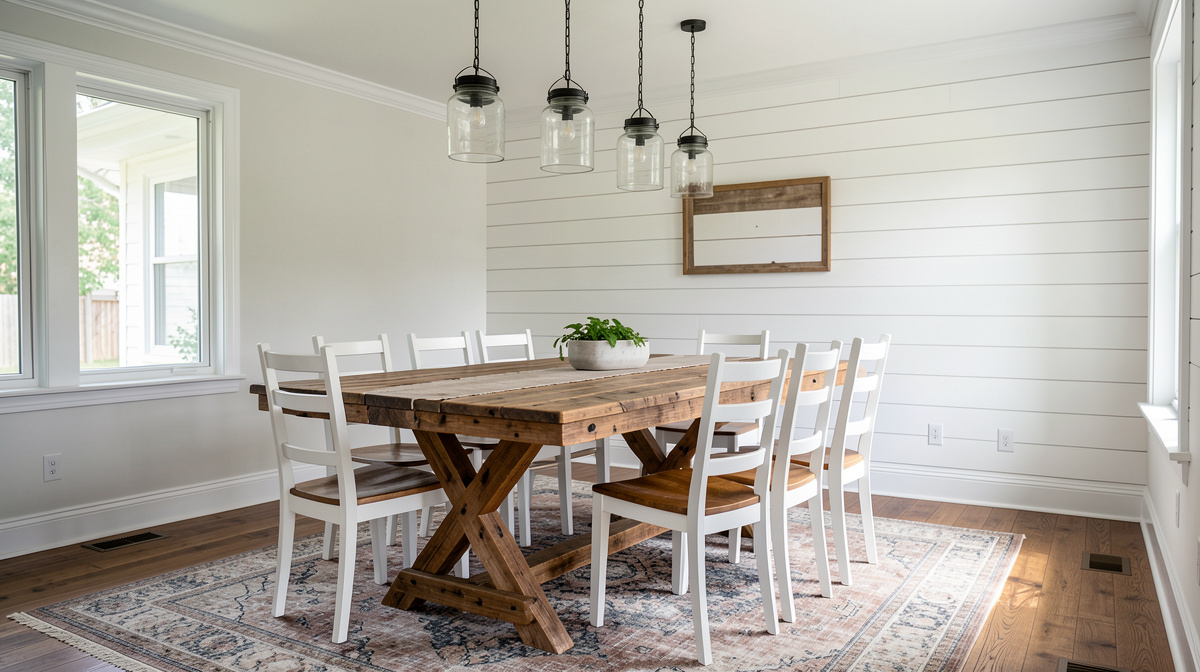
A long rectangular table in reclaimed wood or new wood with a distressed finish, a bench on one side, mismatched chairs on the other (or matching chairs in a farmhouse style — cross-back, ladder-back, or Windsor). A chandelier with a rustic element — wrought iron, wood and metal, or a simple candle-style fixture. A sideboard in painted wood (white, sage, or cream). Walls in white or warm white, possibly with beadboard or shiplap on one wall.
The farmhouse dining room works because the table does almost everything. A big solid wood table with visible grain, knots, and character is the anchor. The mismatched chairs add personality. The bench makes seating flexible for different-sized groups. The style is forgiving of imperfection, which is part of its appeal — a scratch on the table adds character rather than damage.
Cost range: $1,500-$5,000. Reclaimed wood tables range widely ($400-$3,000) depending on whether you buy from a furniture store or directly from a craftsperson.
Scandinavian dining room
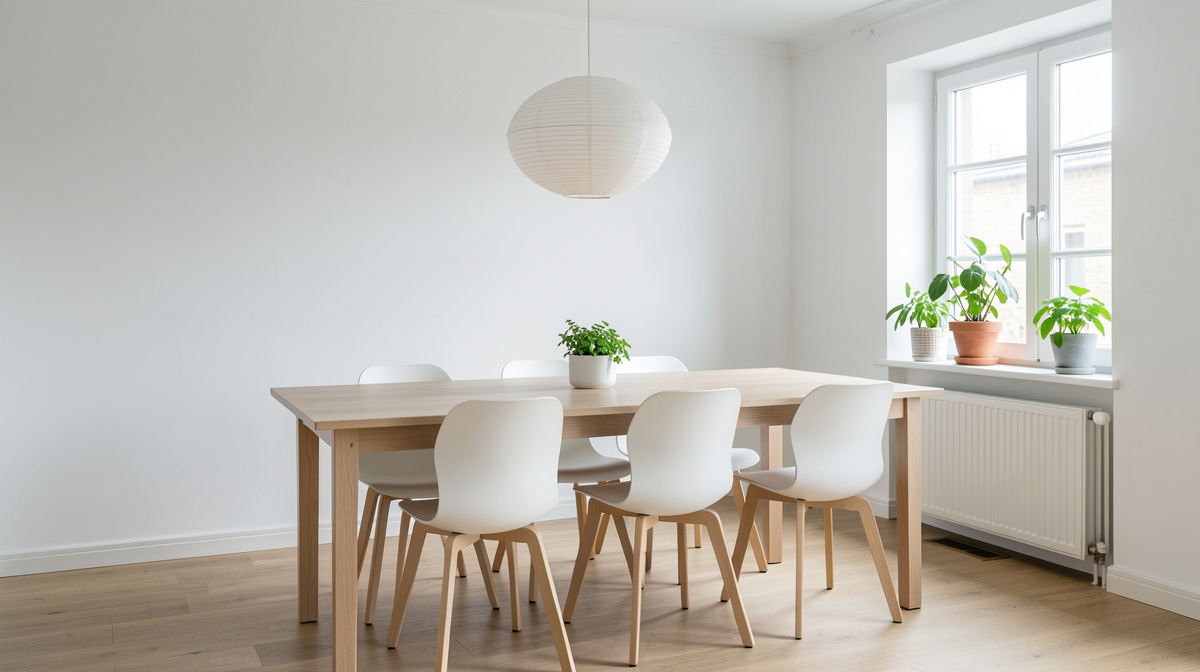
A round or oval table in light wood (birch, ash, or white oak), wishbone chairs or simple scooped-seat chairs in light wood and paper cord, a sculptural pendant light in white or natural materials, light hardwood floors, white walls, and very little else. Maybe a single ceramic vase with one stem on the table. Maybe a simple print on the wall. The room is bright, airy, and functional.
Scandinavian dining rooms are among the easiest to get right because the formula is tight: light wood, white, and one or two accent pieces. The wishbone chair (CH24, designed by Hans Wegner) is the defining piece of this style, and while the original runs $700+ per chair, excellent reproductions are available for $100-$200 each.
Cost range: $1,200-$4,000. The pendant light is often the most distinctive purchase ($100-$800 for something with presence).
Traditional dining room
A dark wood table (mahogany, cherry, or walnut) with turned or cabriole legs, upholstered dining chairs in a damask, stripe, or solid fabric, a crystal or candle-style chandelier, a matching sideboard with china display, heavy curtains, possibly a wallpapered accent wall in a traditional pattern (toile, chinoiserie, damask). Crown molding and chair rail on the walls.
Traditional dining rooms are formal by nature, and they require more furniture and fabric than minimalist styles. The payoff is a room that feels substantial and intentional, one where sitting down to dinner feels like an event rather than a routine.
Cost range: $3,000-$12,000+. Solid wood tables in traditional styles are $1,000-$5,000. Upholstered chairs are $200-$600 each. Crystal chandeliers start at $300 and go to infinity.
Industrial dining room
See Your Room Redesigned
Download Remodel AI and transform any room in 30 seconds. 3 free designs, no signup.


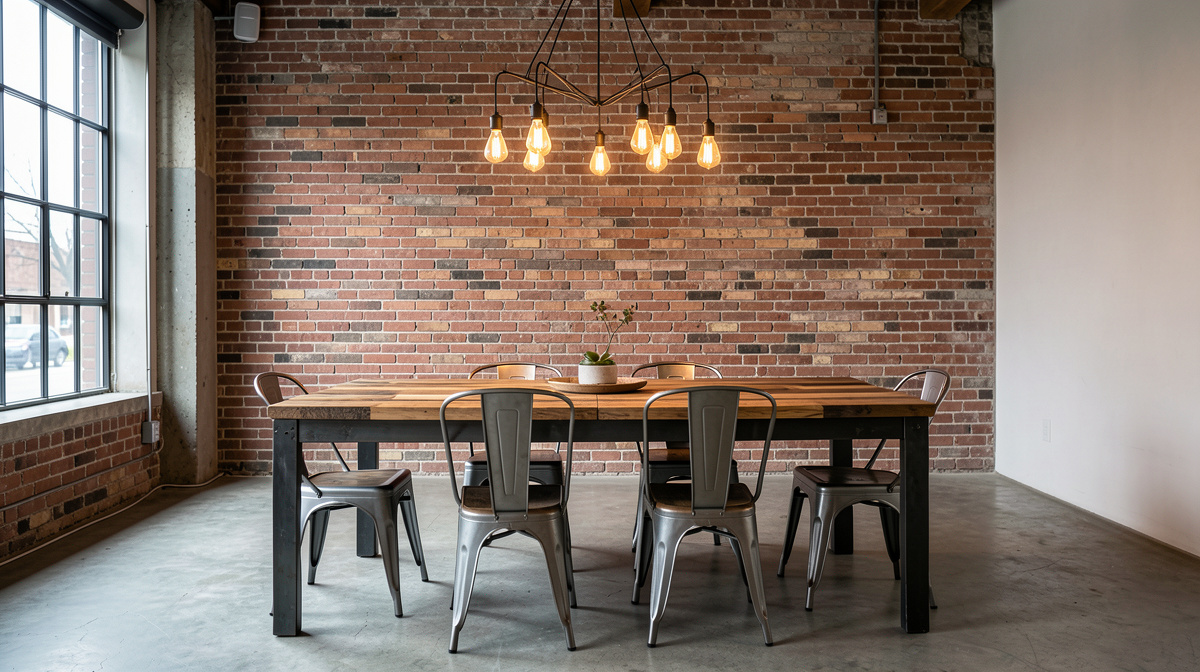
A table made from reclaimed wood and iron pipe or steel legs, metal dining chairs (Tolix-style or similar), Edison bulb pendant lights on a metal frame, exposed brick or concrete walls, polished concrete or dark tile floors. Minimal decoration — the materials are the decoration.
Industrial dining rooms are practical and easy to maintain. Metal chairs don't stain. Wood-and-metal tables handle heat and scratches. There's nothing precious about the space, which makes it good for families with kids or for people who cook messy food and eat it enthusiastically.
Cost range: $800-$3,000. Metal chairs are $30-$80 each. Industrial-style tables are $300-$1,500. Edison bulb light fixtures are $50-$400.
Mid-century modern dining room
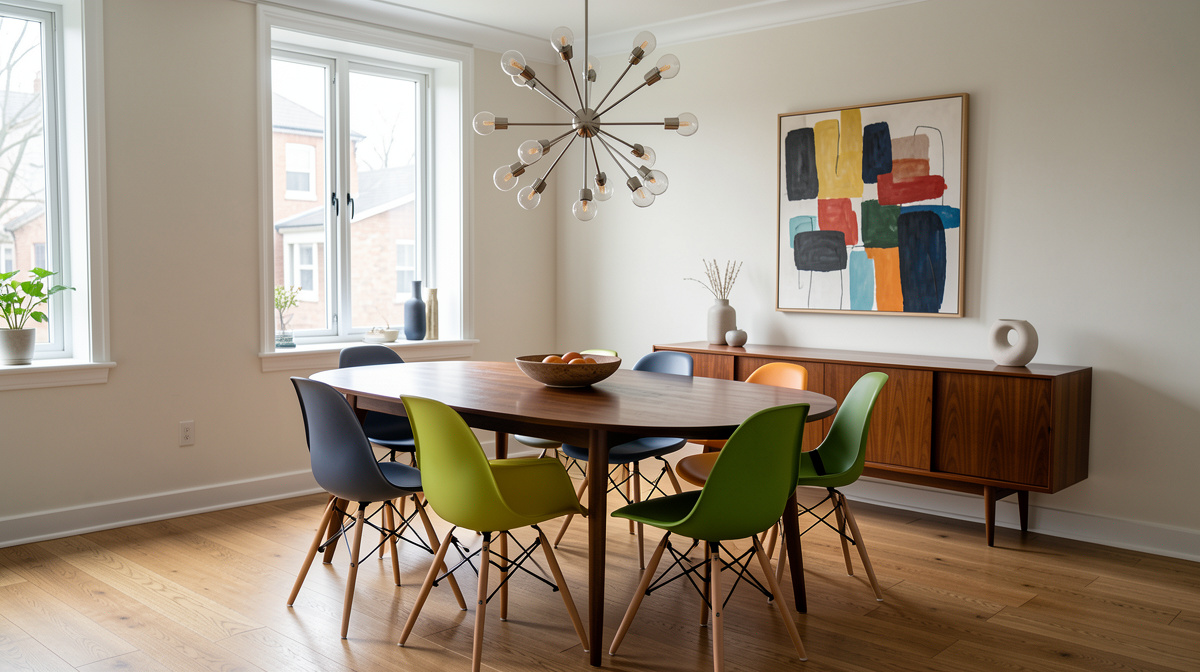
An oval table in walnut with tapered legs, molded plastic or fiberglass chairs (Eames-style or similar), a sputnik or globe chandelier, a long low walnut credenza against one wall, an abstract print or two on the walls. The color palette is warm neutrals with one or two accent colors — burnt orange, mustard, teal.
The oval table shape is the signature of mid-century dining rooms. It allows more seats than a round table but has better conversation flow than a rectangular one because everyone can see each other. Mid-century credenzas are dual-purpose: they store dishes and linens, and their low horizontal profile makes the room look wider. For a broader look at interior design categories including mid-century, see our interior design styles guide.
Cost range: $1,500-$5,000. Vintage mid-century pieces are expensive. Reproductions from West Elm, Article, and similar brands bring costs down significantly.
Choosing the right table shape
The table shape matters more than most people think, and the best choice depends on your room shape and how many people you want to seat.
Round: Best for square rooms and groups of 2-6. Everyone faces each other, which is good for conversation. Takes up less visual space than rectangular. A 48-inch round table seats 4 comfortably, 6 in a pinch.
Oval: Best for narrow rooms where a rectangular table would feel too rigid. Seats 6-8 without any sharp corners. Arguably the best shape for conversation at scale because the people at the ends can still see the people in the middle.
Rectangular: Best for long rooms and large groups (6-12). The most efficient use of space per seat. Can feel formal or casual depending on the style. The standard dining table is 30 inches tall, 36-42 inches wide, and 60-96 inches long.
Square: Works for intimate groups of 4. Creates a sense of equality since all four sides are the same. Not practical for groups larger than 4 because extending a square table makes it rectangular anyway.
Wall treatments that change the room
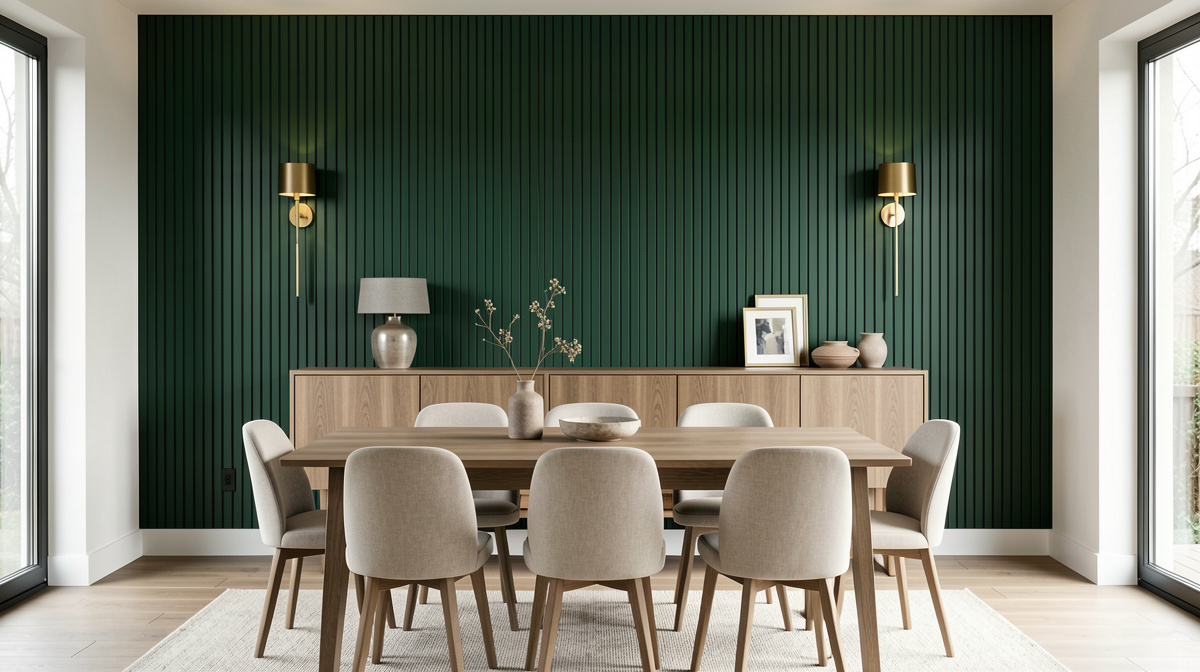
The dining room is one of the best rooms in the house for a bold wall treatment because you're usually facing one wall while seated, so whatever is on that wall gets extended attention.
Wallpaper on one wall: A bold pattern on the wall you face from the table. Floral, geometric, chinoiserie, or abstract — the pattern sets the room's personality. Modern peel-and-stick wallpaper makes this reversible. Cost: $50-$300 per wall depending on the paper.
Board and batten or wainscoting: Vertical boards from floor to chair-rail height, painted in the same color as the wall above or in a contrasting shade. Adds dimension and architectural interest. Cost: $300-$800 per wall for materials and labor.
A bold paint color on all walls: Deep green, navy, terracotta, or charcoal. The dining room is a good room for dark paint because you mostly use it in the evening when warm lighting makes dark walls feel intimate rather than heavy. Cost: $100-$200 for the whole room.
Lighting that makes or breaks it
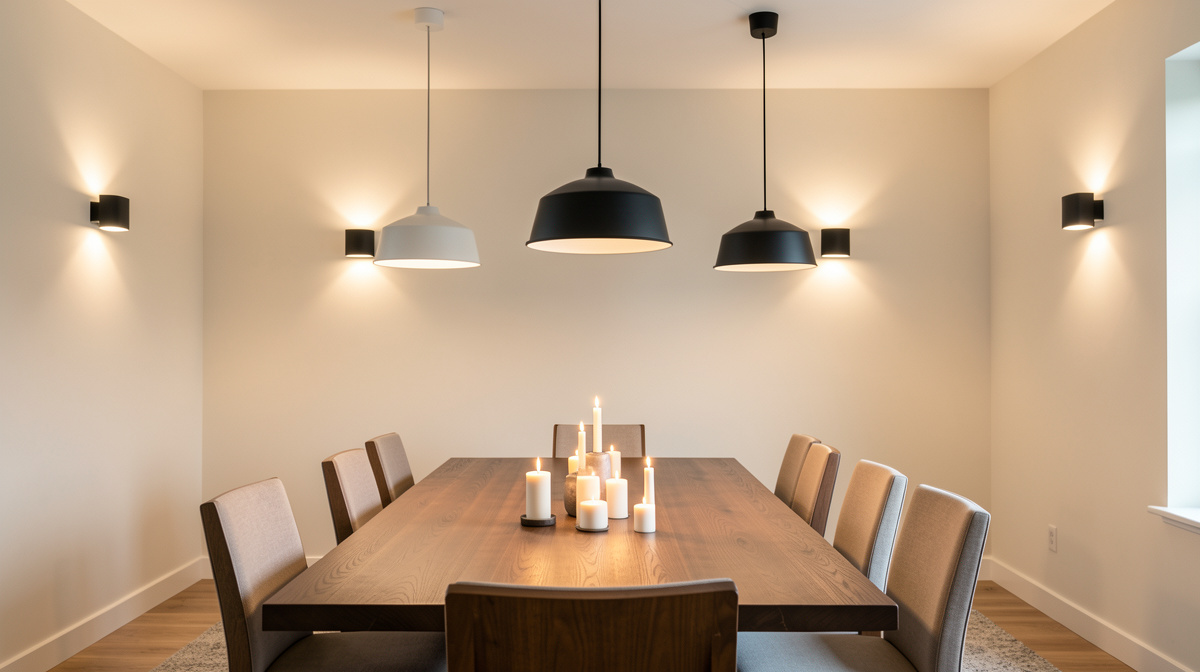
The single most common mistake in dining rooms is a light fixture that's too small. Here's the rule: the diameter of the chandelier or pendant should be roughly one-half to two-thirds the width of the table. For a 42-inch-wide table, that's a 21-to-28-inch fixture. The bottom of the fixture should hang 30-36 inches above the table surface.
A too-small fixture over a dining table looks like an afterthought. A properly scaled fixture makes the whole room feel finished. This is the one place to spend money if you're on a tight budget — a good light fixture transforms a dining room more than any other single purchase.
According to the American Lighting Association, layered lighting — a central fixture plus wall sconces or buffet lamps — creates the most flattering and functional dining room environment. The central fixture provides ambient light, and the secondary sources add warmth and fill shadows.
Budget guidance
Under $1,000: A solid table ($200-$400 from IKEA, Target, or Wayfair), four basic chairs ($40-$80 each), and one pendant light ($50-$150). This gets you a functional dining area that looks intentional. Skip the sideboard and rug for now.
$1,000-$3,000: A better table ($400-$1,200), better chairs ($80-$200 each), a quality pendant or chandelier ($150-$500), an area rug ($150-$400), and maybe a simple sideboard or console table ($200-$500). This is where the room starts to feel designed rather than furnished.
$3,000-$8,000: A solid wood table ($800-$2,500), upholstered or designer chairs ($150-$400 each), a statement light fixture ($300-$1,000), a wall treatment ($200-$800), a quality rug ($300-$800), and a proper sideboard ($400-$1,500). The room looks complete and cohesive.
$8,000+: Custom or high-end furniture, designer lighting, professional paint or wallpaper installation, quality art, and all the finishing touches. This is where you're making choices that will look good for decades.
See these styles in your dining room
The challenge with dining room design is spatial — a table that looks perfect in a 14-by-16 room might overwhelm your 10-by-12 space. And the wall color that looks rich and warm in a south-facing room might look gloomy in your north-facing one.
Remodel AI lets you upload a photo of your actual dining area and see different styles applied to your specific space. Modern, farmhouse, Scandinavian, industrial, or any other look — you can compare them in your real room with your real lighting before you make any purchases.
Frequently asked questions
What size dining table do I need?
Allow 24 inches of table width per person. A 60-inch rectangular table seats 6 (two on each long side, one at each end). A 72-inch table seats 8. A 48-inch round table seats 4-6. Add a leaf when you need more space for guests. Always measure your room first and subtract 36 inches from each wall to determine the maximum table dimensions that will still allow comfortable seating.
How do I make a small dining room feel bigger?
Use a round or oval table instead of rectangular — the curved edges improve traffic flow and reduce visual bulk. Choose chairs with open backs or wire frames instead of solid upholstered ones. Use a large mirror on one wall to double the visual depth. Keep the color palette light. And use a pendant light rather than a chandelier — it takes up less visual space.
Should I use a rug under the dining table?
Yes, if the floor is hard (wood, tile, concrete). The rug defines the dining zone, protects the floor from chair scuffs, and absorbs sound (hard floors with nothing on them make conversation echo). The rug should be large enough that chairs stay on the rug when pulled out — typically the table dimensions plus 48 to 60 inches in each direction. A flat-weave or low-pile rug is easier to clean than a shag or high-pile one.
What is the best dining room lighting for small spaces?
A single pendant light (not a chandelier) in a proportionate size — 18 to 24 inches in diameter for a table under 48 inches wide. Hang it 30-34 inches above the table. Avoid flush-mount ceiling fixtures in the dining room; they cast flat light that makes everything look harsh. A pendant or semi-flush mount creates a warm pool of directed light that defines the table and makes the food look good.
Ready to Try AI Interior Design?
Upload a photo and redesign any room in seconds. 3 free designs, no signup required.