Living room decor ideas on any budget
Living room decor ideas organized by budget — $500, $2K, and $5K+ tiers with specific furniture, color, lighting, and layout advice.

Ryan H.
Founder of Remodel AI · April 6, 2026 · 13 min read
The problem with most living room decor ideas is that they skip the budget part. You see a room with a $3,000 sofa, a $1,200 coffee table, and $800 in art, and the caption says "easy weekend refresh." That's not a weekend refresh. That's a small renovation. And if you're working with $500, the advice is useless.
This guide breaks living room decor ideas into three budget tiers: under $500, around $2,000, and $5,000 and up. At every tier, you'll get specific changes that make the biggest visual difference for the money. No vague suggestions. No "add a pop of color" without saying what color and where. Just practical living room decor ideas you can actually execute.
The $500 tier: high-impact changes that cost almost nothing
You're not buying a new sofa at $500. You're not replacing furniture. You're working with what you have and changing the things that affect how the room feels the most: color, light, and arrangement.
Rearrange the furniture
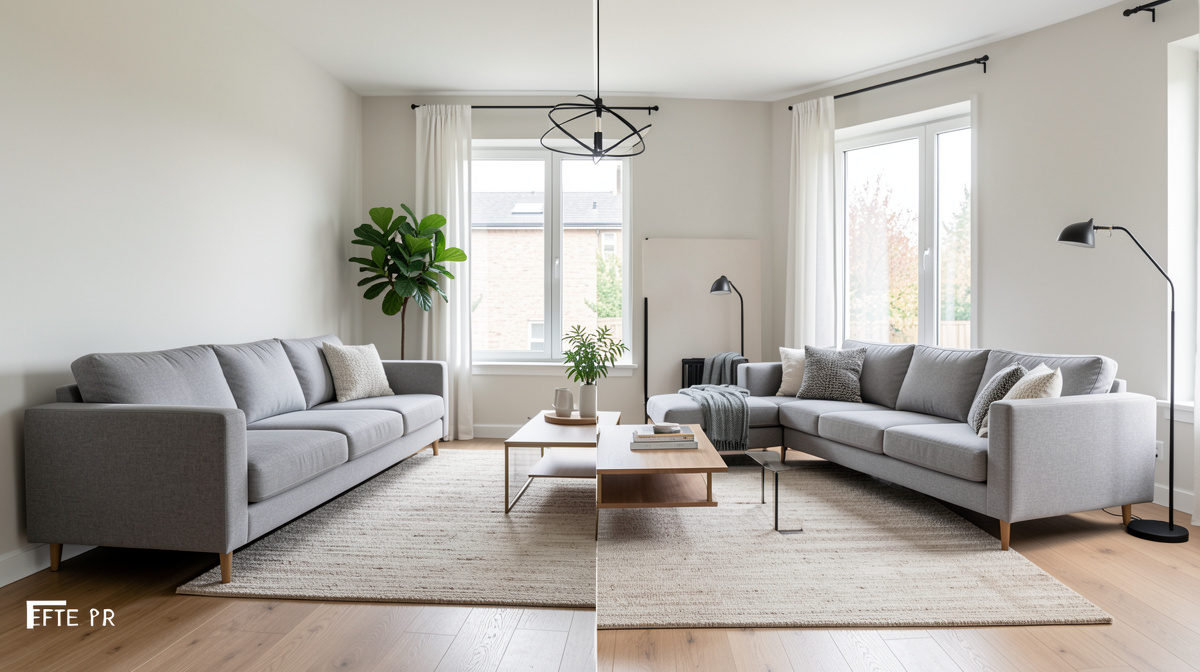
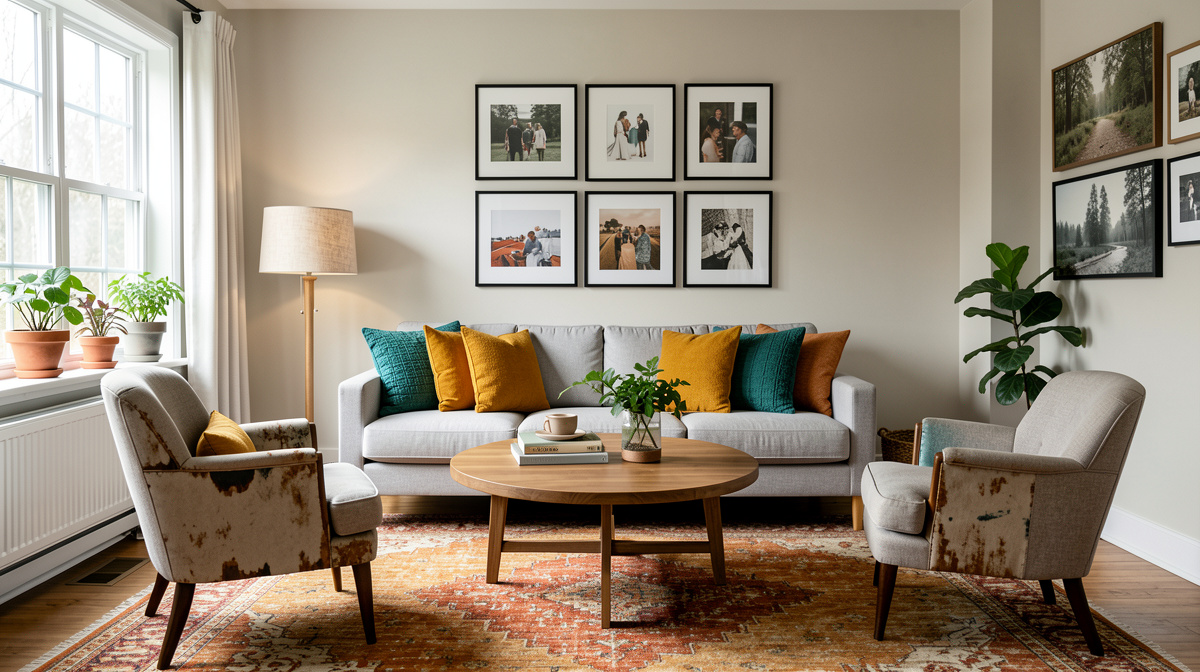
This is free and it's the single highest-impact change you can make. Most living rooms are arranged wrong because people default to pushing everything against the walls. This makes the center of the room feel empty and the edges feel crowded. Pull the sofa away from the wall by 6 to 12 inches. Angle the accent chair toward the sofa to create a conversation grouping. Make sure every seat has a surface within arm's reach for setting down a drink.
The goal is a layout where people sitting in different seats can talk to each other without shouting across an empty void. According to Emily Henderson's layout guide, the ideal conversation distance between seats is 8 to 10 feet. Closer feels cramped, farther feels disconnected.
If your living room is tight on space, our guide on small living room ideas has specific layouts for rooms under 200 square feet.
Repaint one wall
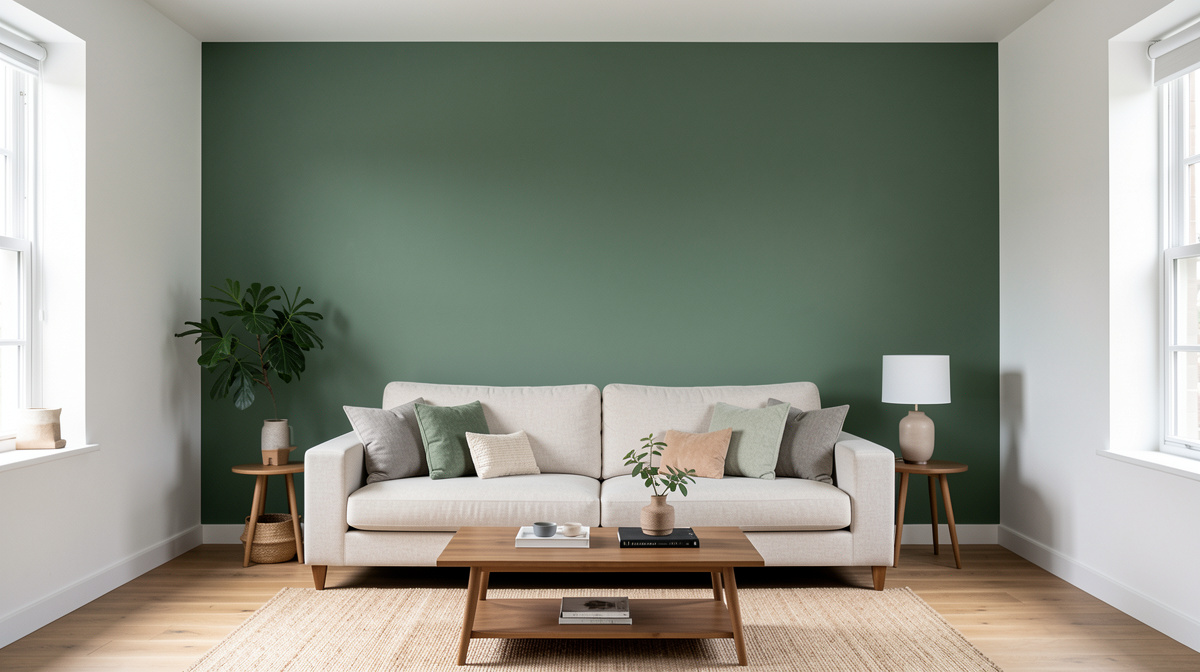
A gallon of paint costs $30-$60. Two gallons will cover a single wall in most living rooms with two coats. Choose the wall your eye goes to first when you enter the room — usually the wall behind the sofa or the wall with the fireplace. Paint it a color that shifts the mood: warm clay (Benjamin Moore Cinnamon), sage green (Sherwin-Williams Evergreen Fog), or deep navy (Benjamin Moore Hale Navy).
Leave the other walls in a warm white or light neutral. The contrast between the accent wall and the surrounding walls creates depth and makes the room feel more intentional. This is the cheapest way to make a room look like you hired a designer.
For a full breakdown of how different colors affect a living room, see our living room color ideas guide.
Replace the lighting
Most living rooms have one overhead light and nothing else, which creates a flat, harsh environment that makes everything look worse. For under $100, you can change this entirely.
Add two to three lamps at different heights: a floor lamp behind or beside the sofa, a table lamp on a side table, and possibly a small lamp on a bookshelf or console. Use warm-temperature bulbs (2700K) in everything. Turn off the overhead light entirely and use only the lamps. The room will immediately feel warmer, more layered, and more inviting.
A floor lamp is $20-$60 from Target or IKEA. A table lamp is $15-$40. Three lamps with bulbs: $50-$150 total. This change costs less than dinner for two and makes the room look dramatically better.
Add or upgrade throw pillows
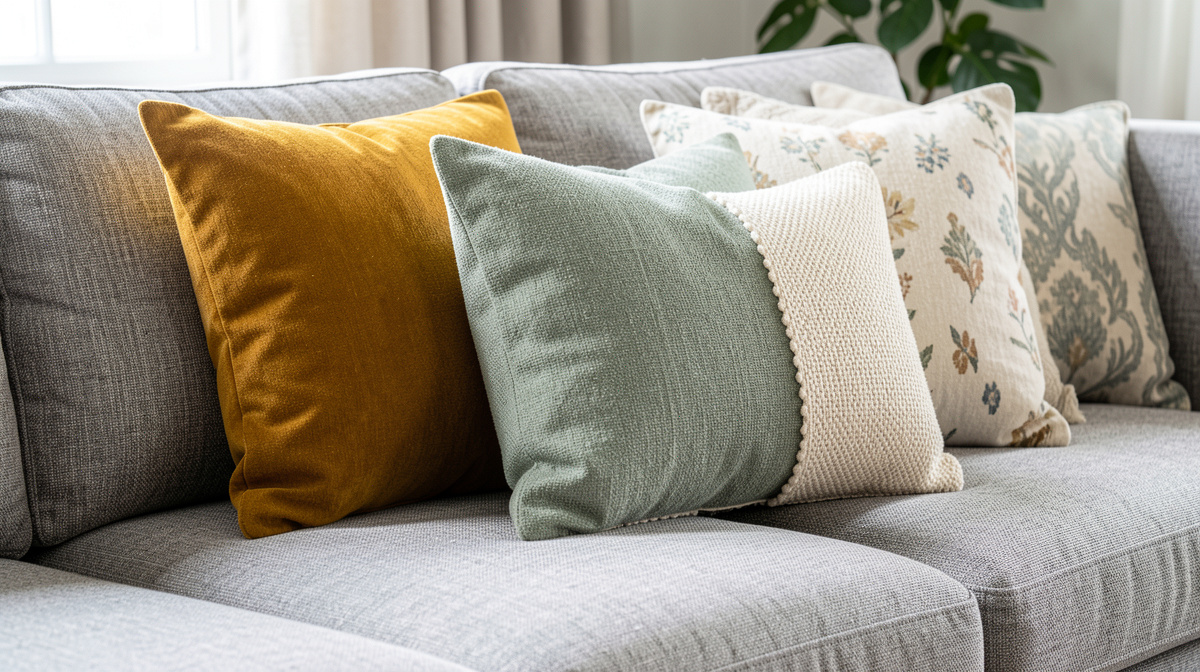
Four new throw pillows in coordinating textures and colors cost $40-$120 total. Aim for three different textures (linen, velvet, and knit, for example) in two to three colors from the same family. Throw pillows are how you tie a color scheme together without buying new furniture. If you painted an accent wall in sage green, add pillows with sage, cream, and a warm gold to pull the color forward into the seating area.
The rule for pillow arrangement: odd numbers per sofa section. Three on a standard sofa. Five on a long one. Two on an accent chair looks stiff; one or zero is better.
Total $500 tier investment
Rearranging: $0. Paint for one wall: $60-$120. Three lamps with bulbs: $50-$150. Four throw pillows: $40-$120. A few small accessories (a candle, a ceramic tray, a plant): $30-$80. Total: $180-$470.
The $2,000 tier: real upgrades that reshape the room
At $2,000 you can start replacing things. Not everything, but the one or two elements that currently hold the room back the most. The strategy at this tier is to identify the weakest link — the thing that, if it changed, would level up the entire space — and spend most of the budget there.
The rug
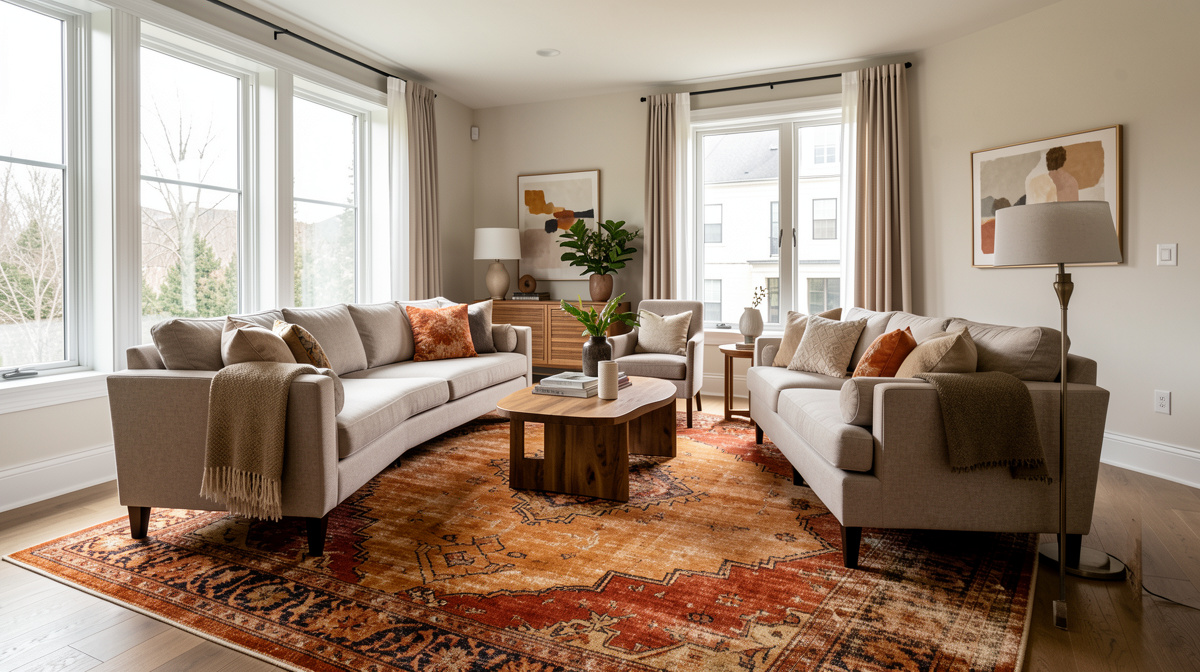
If your living room rug is too small, too worn, or nonexistent, replacing it has more visual impact than any other $300-$600 purchase. A properly sized rug (8x10 for most living rooms, 9x12 for larger ones) anchors the entire seating arrangement and makes the room feel complete. The front legs of all major furniture pieces should sit on the rug.
At this price point, you're looking at wool-blend, jute, or quality polypropylene. Wool is the best value for longevity and feel. A solid or subtly patterned rug in a warm neutral (ivory, tan, warm gray) works with almost any existing furniture.
According to Apartment Therapy's rug sizing guide, the number-one decorating mistake in living rooms is a rug that's too small. An 8x10 rug starts at $300 from Ruggable, Rugs USA, or Boutique Rugs. A 5x7 rug is almost never large enough for a living room.
New coffee table
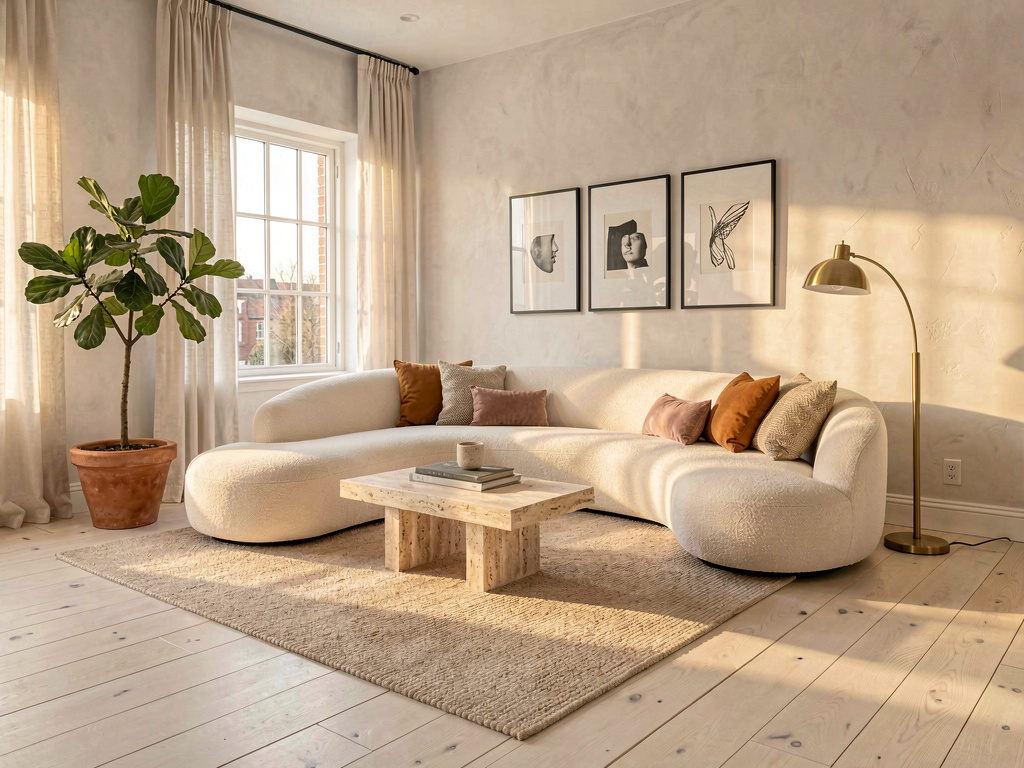
A coffee table change is one of the fastest ways to shift a living room's style. If your current table is a dark wood rectangle from 2012, swapping it for a round travertine, a fluted wood cylinder, or a clean walnut oval changes the entire tone of the room. Budget: $200-$600 for a solid upgrade from Target, Article, or CB2.
Round and oval coffee tables are trending and for good reason — they improve traffic flow, eliminate shin-bruising corners, and make the seating arrangement feel more social. The table should be roughly two-thirds the length of the sofa and the same height as the sofa seat (usually 16-18 inches).
Curtains
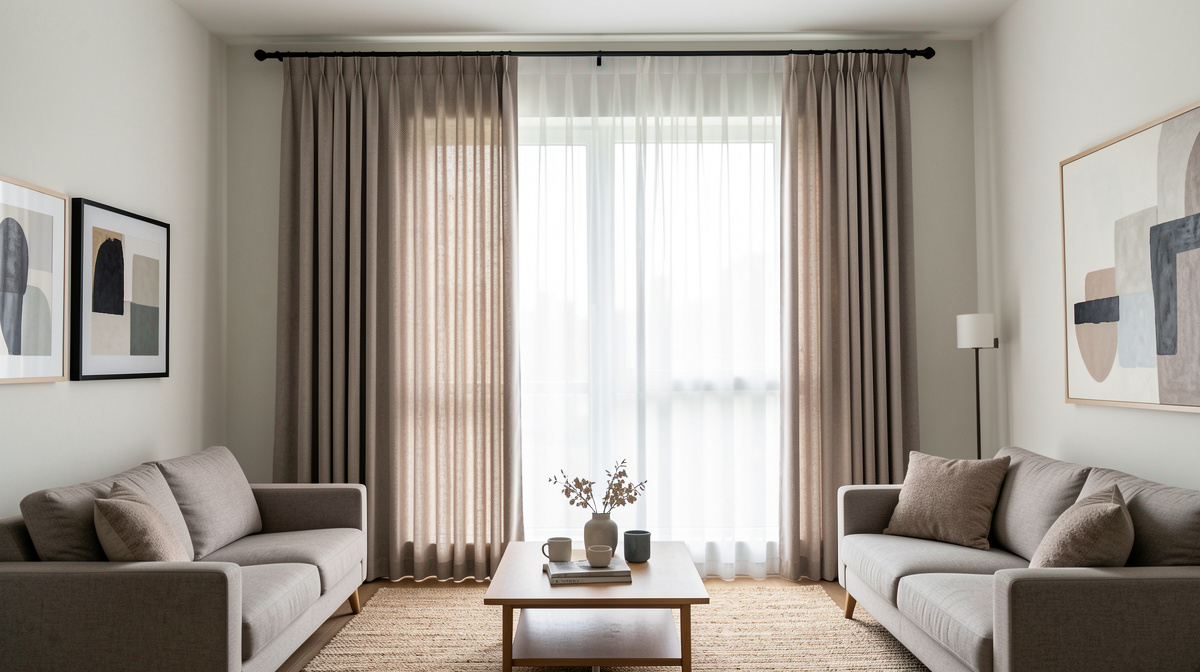
Most living rooms have either no curtains, builder-grade blinds, or curtains hung at the window frame. Upgrading to floor-length curtains hung at ceiling height (or as close to it as possible) and extending 6-12 inches beyond each side of the window frame makes the windows look larger and the room feel taller.
Linen curtains in white, ivory, or oatmeal are the safest choice. A pair of panels for one window runs $40-$120 from IKEA, H&M Home, or Amazon. A curtain rod is $20-$50. Two windows: $120-$340 total.
Wall art
Blank walls make a living room feel unfinished. But bad art is worse than no art. At this budget, your options are: a large-format print from a printable art shop ($5-$30 for a digital file, $30-$80 for framing), a set of two to three smaller pieces in matching frames, or one oversized canvas from a marketplace like Society6, Minted, or Etsy.
Scale matters more than subject. A single large piece (24x36 inches or bigger) looks more intentional than a cluster of small pieces. Center it on the wall at eye height — the center of the piece should be 57-60 inches from the floor.
Total $2,000 tier investment
Area rug: $300-$600. Coffee table: $200-$600. Curtains for two windows: $120-$340. Wall art: $50-$200. Throw pillows and accessories: $80-$200. Paint if not done already: $60-$120. Total: $810-$2,060.
The $5,000+ tier: the full transformation
At $5,000 you can rebuild the room's foundation. This is where you replace the sofa, upgrade the rug, add quality lighting, and finish every surface in the room. The result is a living room that looks and feels like a different space.
A new sofa
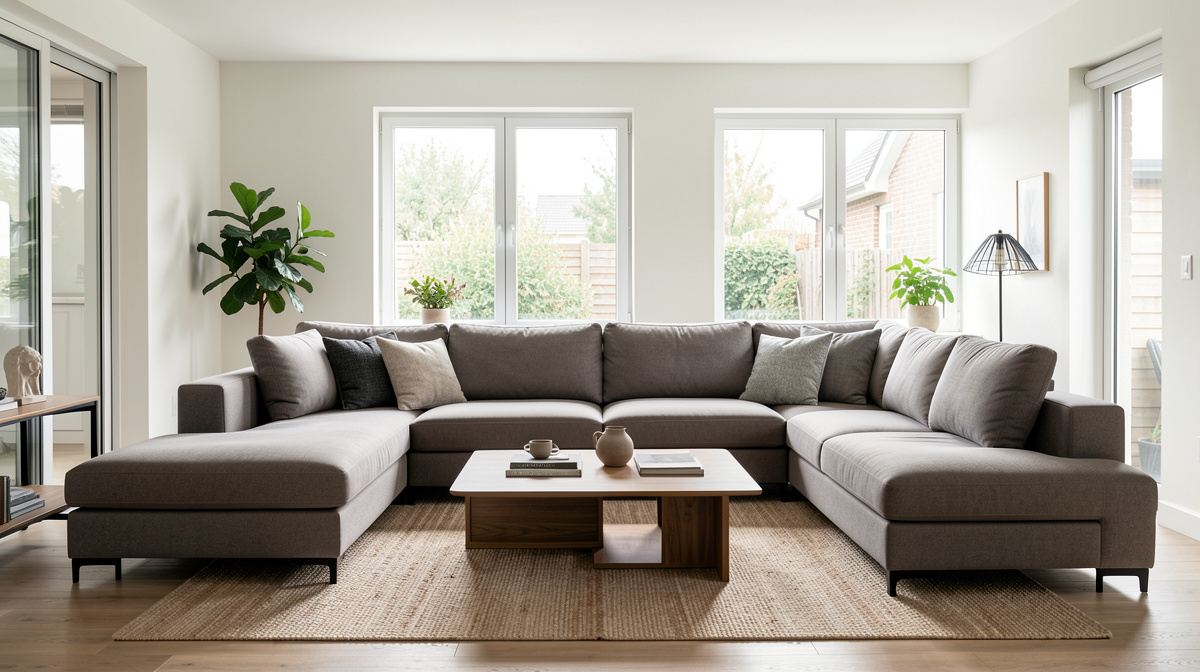
The sofa is the biggest piece in the room and the piece you touch every day. A good sofa in the right color, the right scale, and the right material changes everything. At the $1,000-$2,500 range, you have strong options from Article, Interior Define, Castlery, and West Elm.
See Your Room Redesigned
Download Remodel AI and transform any room in 30 seconds. 3 free designs, no signup.


Choose based on your life, not just your taste. Deep seats for people who like to curl up. Firm cushions for people who sit upright. Performance fabric if you have kids or pets. Linen if you want the look and don't have messy roommates.
The sofa color sets the palette for the rest of the room. A warm ivory or cream sofa works with almost everything and can be dressed up or down with pillows and throws. A green velvet sofa is bold and beautiful but commits you to a specific direction. Decide how locked-in you want to be.
Quality accent chair
An accent chair does two things: it adds another seat, and it adds visual interest. The accent chair is the place to take a small style risk — a shape or color that differs from the sofa but complements it. A bouclé chair in cream with a warm modern sofa. A leather sling chair with a linen sofa. A sculptural wood-frame chair with an upholstered one.
Budget: $300-$800 for a chair with genuine personality from Article, Target's Threshold line, or secondhand.
Upgraded lighting
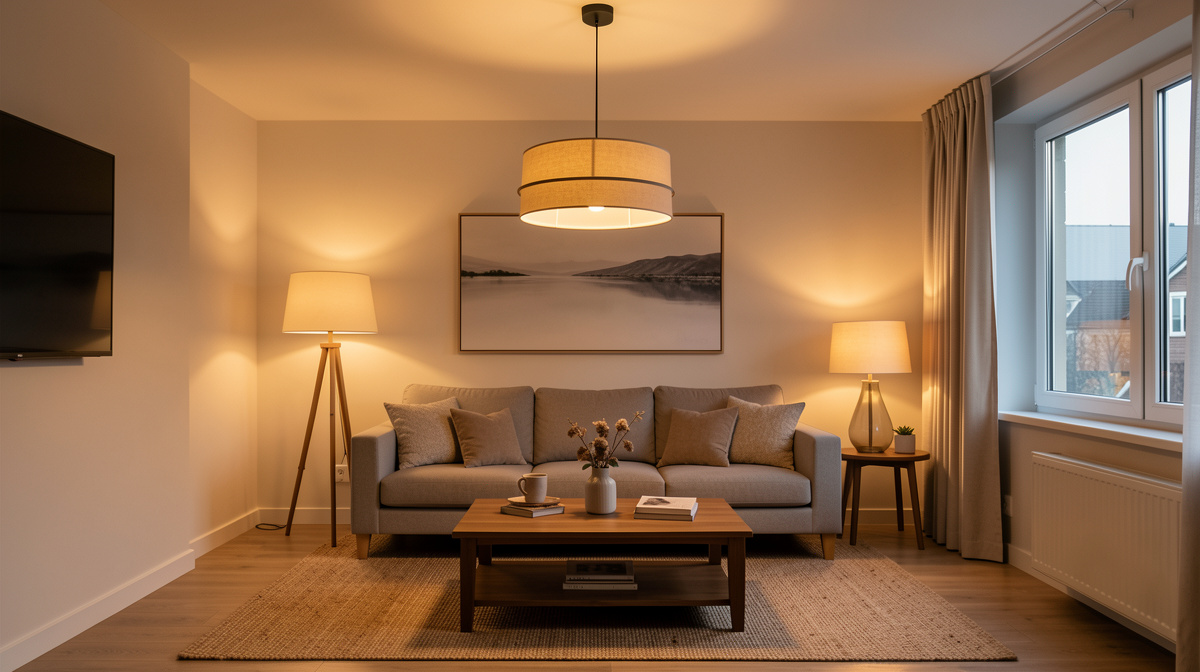
At this tier you can afford to replace the overhead fixture (if there is one) and build a proper lighting plan. The goal is three to four light sources at different heights and positions in the room, all on warm-temperature bulbs.
A floor lamp ($80-$300): behind or next to the sofa, providing reading light and ambient glow. A pair of table lamps ($60-$200 each): on side tables flanking the sofa or one on a side table and one on a console. A pendant or ceiling fixture ($100-$500): if your room has a junction box, replace the basic fixture with something that has presence.
Smart bulbs ($15-$30 each) let you adjust the color temperature from your phone. Set them to 2700K in the evening and slightly cooler during the day. The ability to change the mood of the room with a tap is worth the modest extra cost.
Bookshelf or display unit
A bookshelf styled with a mix of books, objects, and a few plants adds life to any living room wall. At this budget, a quality bookshelf runs $200-$800 (CB2, IKEA Billy with upgraded trim, or a secondhand find). The styling matters as much as the shelf — mix vertical and horizontal book stacks, add one or two ceramic objects per shelf, leave some empty space, and use bookends that have a visual presence.
Console or sideboard
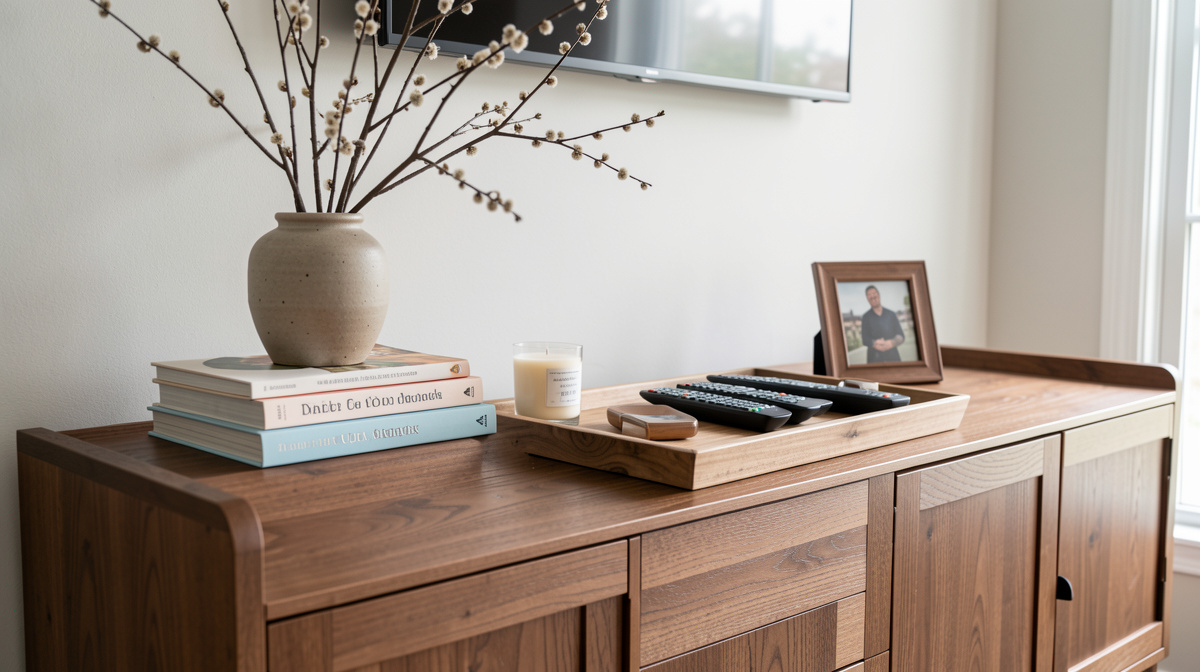
A console table behind the sofa or a sideboard against a wall gives you a surface for a lamp, art, and a few styled objects. It's the finishing piece that makes a room feel complete rather than furnished. Budget: $200-$600.
Total $5,000+ tier investment
Sofa: $1,000-$2,500. Accent chair: $300-$800. Area rug: $300-$800. Coffee table: $200-$600. Curtains: $120-$340. Lighting (4 fixtures): $300-$1,000. Wall art: $100-$400. Bookshelf: $200-$800. Console: $200-$600. Pillows, throws, accessories: $150-$400. Paint: $60-$200. Total: $2,930-$8,440.
The range is wide because quality varies at every level. You can build a beautiful room at $3,000 by shopping smart (secondhand accent chair, IKEA bookshelf, clearance rug) or spend $8,000 going new for everything.
Color palettes that work at every budget
Warm neutral
Warm whites, cream, tan, camel, walnut tones. This palette works because nothing in it is trendy — it won't look dated in five years. It's also the most flexible: you can add color with pillows and accessories that you swap out seasonally.
Earth tones
Sage green, terracotta, warm brown, cream, muted gold. More personality than warm neutral, but still grounded. Earth tones have been the dominant color story in interior design since 2023 and show no signs of fading because they're rooted in natural materials rather than fashion trends.
Cool modern
White, light gray, black, chrome or brushed nickel accents. Dramatic and clean but can feel cold without texture. Add warmth through materials (a linen throw, a wood tray, a ceramic vase) rather than through color.
Bold accent
A neutral base (white walls, neutral sofa) with one bold color running through the room in pillows, art, a rug, and accessories. Navy blue, emerald green, or burnt orange are the most reliable bold accent choices because they pair well with warm neutrals and have enough depth to feel sophisticated rather than loud.
How furniture arrangement affects everything
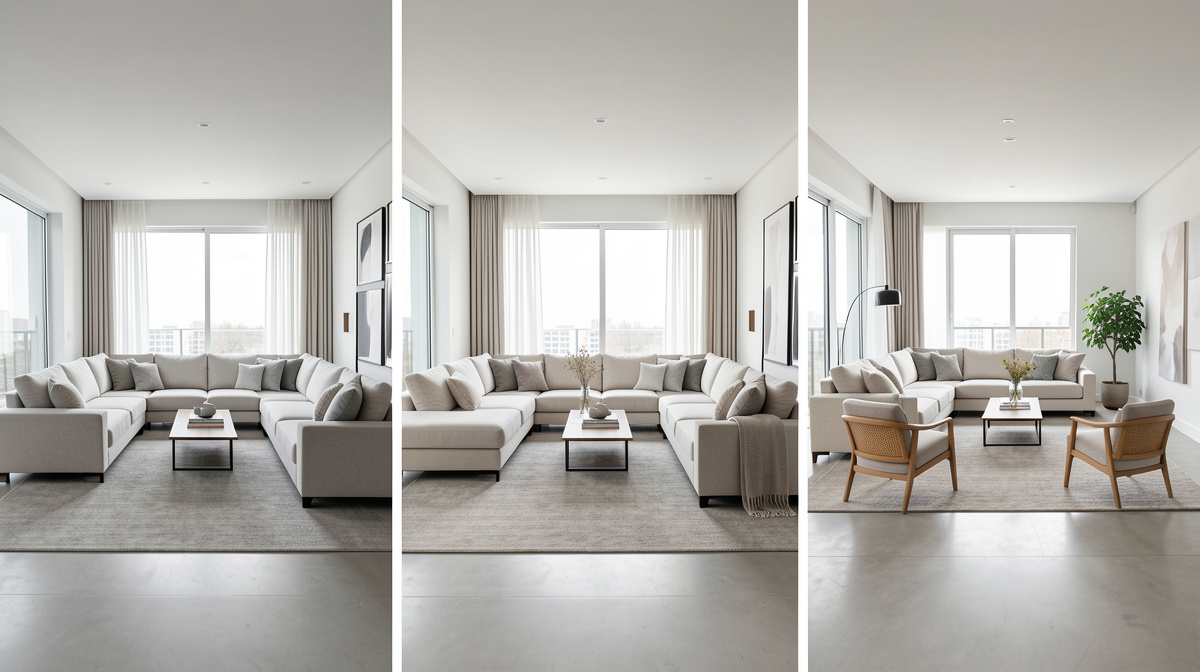
The same furniture arranged three different ways creates three different rooms. Here are the principles:
Create conversation zones. Seats should face each other, not all point at the TV. If TV-watching is the primary use, angle the side chairs slightly so they work for both conversation and viewing.
Float the sofa. Pulling the sofa even 6 inches off the wall creates depth and makes the room feel more intentional. Use the space behind it for a console table with a lamp.
Anchor with the rug. The rug defines the zone. Every piece of furniture that belongs to the conversation area should have at least its front legs on the rug.
Leave walkways. You need 30-36 inches for a walkway between the sofa and the coffee table, and 36+ inches for any path people walk regularly. Tight clearance makes a room feel cramped regardless of how big it actually is.
For more layout-specific guidance in compact spaces, our cozy living room ideas guide covers arrangements that maximize comfort in smaller rooms.
Trying ideas before spending
The worst feeling in home decor is spending $500 on a rug, unrolling it in the living room, and realizing it's completely wrong. Color looked different online. Scale is off. The texture clashes with the sofa. Returns are possible but annoying, and some items (paint, custom curtains) aren't returnable at all.
Remodel AI lets you skip the trial-and-error. Upload a photo of your living room, choose a style direction, and see how it looks in your actual space before you buy anything. You can compare warm modern versus coastal versus Scandinavian versus mid-century in your room with your lighting and your walls. It takes 30 seconds and it's free to try.
Frequently asked questions
What is the most impactful living room decor change under $100?
Lighting. Adding two to three lamps with warm bulbs (2700K) to replace harsh overhead lighting changes the mood of the entire room. Floor lamps run $20-$60, table lamps $15-$40. Turn off the ceiling light and use only lamps after dark. The room will look and feel completely different.
How do I choose a living room color palette?
Start with the largest fixed element you're not replacing — usually the sofa or the floor. Pull two to three colors from that element (the main color plus undertones) and build the palette around them. A cream sofa with warm undertones pairs with warm whites, wood tones, and earth accents. A gray sofa with cool undertones pairs with blues, blacks, and silver metallics. Don't fight the undertone of what you already have.
What size rug do I need for my living room?
An 8x10 rug works for most living rooms with a standard three-seat sofa. If you have a sectional or a room over 300 square feet, go 9x12. The rug should be large enough that the front legs of the sofa and chairs all sit on it. A rug that's too small — the most common mistake — makes the room look disjointed.
Is it worth buying an expensive sofa?
It depends on usage. If you sit on the sofa daily, a $1,200-$2,000 sofa will hold up better, feel more comfortable, and look better after three years than a $400 one. The frame construction (kiln-dried hardwood beats stapled pine), cushion fill (high-resilience foam beats polyester fill), and fabric quality (performance fabrics beat cheap poly blends) all determine longevity. If you plan to replace it in 2-3 years, buy cheap. If you want 7-10 years, invest.
How many throw pillows should I put on a sofa?
Three on a standard sofa, five on a sectional or oversized sofa. Use odd numbers and vary the sizes — two larger pillows (20-22 inches) and one smaller (16-18 inches). Mix two to three textures in a consistent color family. More than five pillows on any sofa crosses from styled into cluttered, and you'll spend more time arranging them than sitting against them.
Ready to Try AI Interior Design?
Upload a photo and redesign any room in seconds. 3 free designs, no signup required.