Bedroom decor ideas: 15 looks from cozy to contemporary
Bedroom decor ideas for every style — minimal, cozy, modern, boho, Japandi, traditional, and glam with specific furniture, lighting, and color tips.

Ryan H.
Founder of Remodel AI · April 6, 2026 · 14 min read
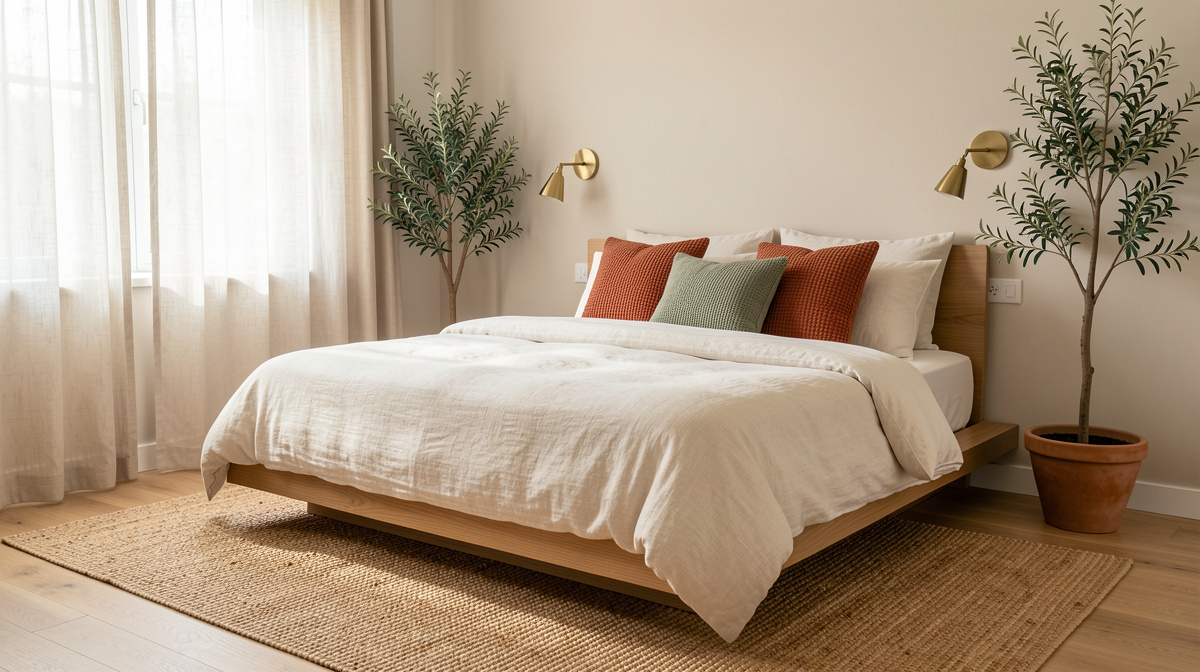
Most bedroom decor ideas articles give you a mood board with no specifics. "Add texture." "Create a cozy vibe." "Use warm lighting." That's not actionable. What texture? What lighting? What does cozy actually mean in terms of purchases?
This guide covers 15 different bedroom decor ideas with enough detail to actually execute them — specific furniture, color codes, materials, and approximate costs. Whether you want a minimal retreat, a layered cozy den, or something bold and editorial, each style below comes with a real description of what goes in the room and what it costs.
1. Warm minimal
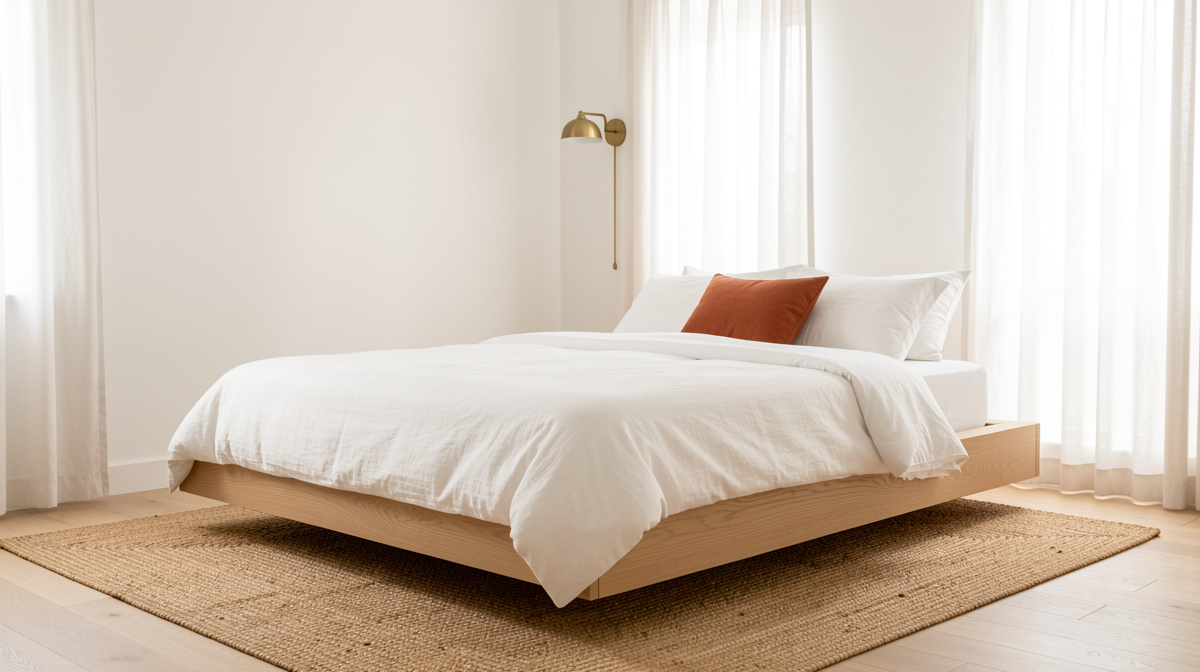
A low-profile platform bed in light oak or walnut with no headboard, white linen bedding with a single cream throw folded at the foot, one nightstand with a ceramic lamp, bare walls painted in warm white (Benjamin Moore White Dove), hardwood floors with no rug, a single pendant light in a paper or fabric shade. That's it. The room works because of what's not in it.
Warm minimal is the bedroom style with the lowest entry cost because you're buying the fewest things. A platform bed frame runs $300-$800 from Floyd, IKEA, or Thuma. Linen bedding from Quince or H&M Home costs $100-$200 for a full set. The ceramic lamp is $40-$100. Total room cost: $500-$1,200.
The challenge is discipline. Every addition to a minimal bedroom has to earn its spot. A stack of books on the nightstand — fine. A collection of decorative objects — you've left the style.
2. Layered cozy
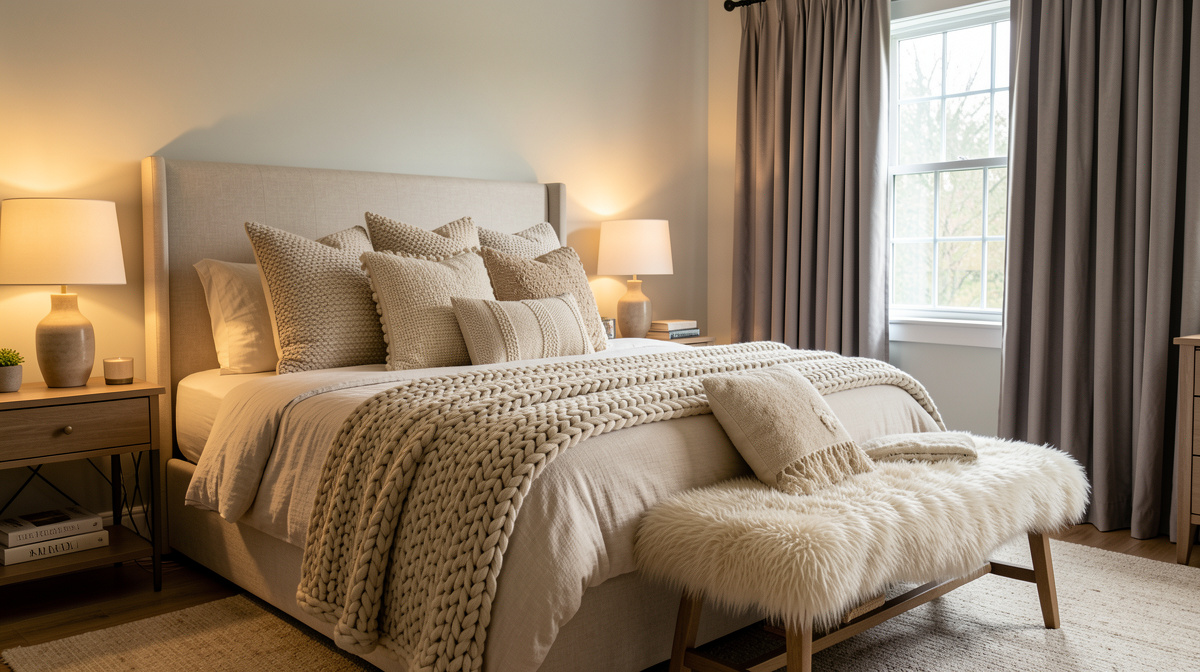
An upholstered bed in cream or taupe bouclé with a thick padded headboard, a fitted sheet, flat sheet, linen duvet, waffle-knit blanket, chunky knit throw, and four to six pillows in varying sizes and textures. A plush wool rug over hardwood. Blackout curtains in a heavy linen or velvet, floor to ceiling. Two table lamps with warm-temperature bulbs (2700K). A small stack of books, a candle, and a ceramic tray on each nightstand. Walls in a warm greige (Sherwin-Williams Accessible Beige).
This is the bedroom that makes you not want to get up in the morning. The layering is the whole point — every surface you touch has texture, and the lighting is warm enough to make the room feel enclosed in a good way. According to the Sleep Foundation's 2025 Bedroom Environment Report, rooms with warm-temperature lighting (under 3000K) and multiple soft textures are associated with faster sleep onset and higher reported sleep quality.
Cost range: $1,500-$4,000. The upholstered bed is the biggest expense ($800-$2,000). The layered bedding adds up ($300-$800 for the full stack). The rug is $200-$600.
3. Modern monochrome
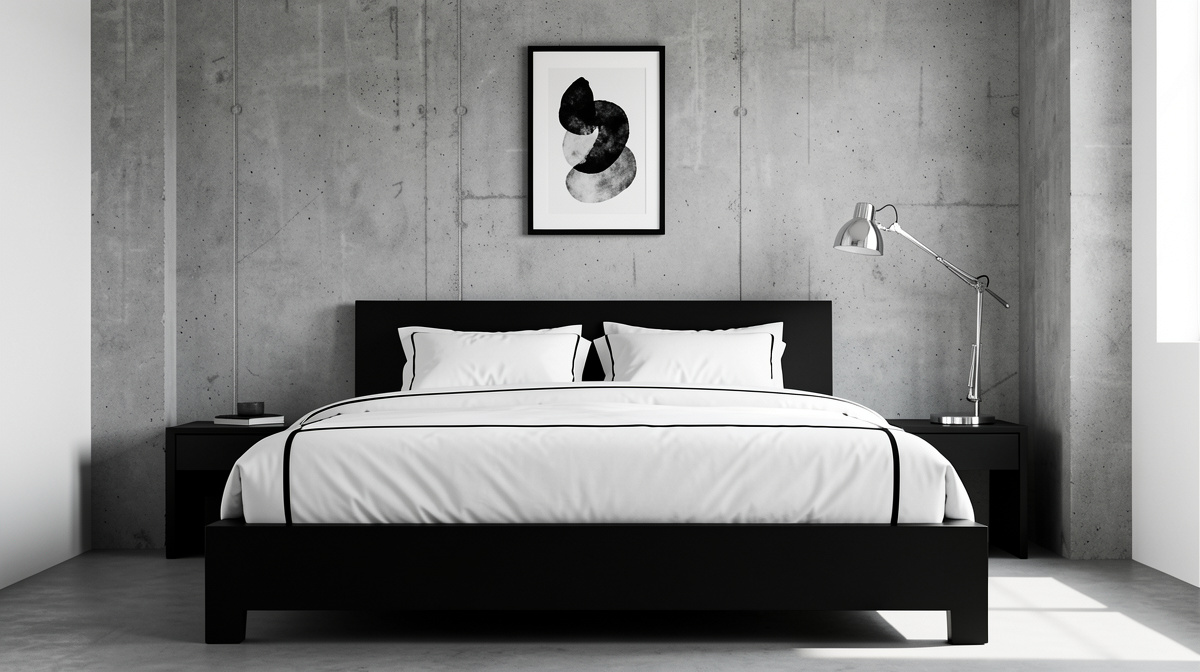
Everything in the room exists within one color family, usually gray-to-black or cream-to-brown. A charcoal upholstered bed, dark gray linen bedding, a black nightstand, a matte black table lamp, dark walls (Benjamin Moore Wrought Iron), dark floors or a dark rug. One warm metal accent — a brass picture frame or a gold-toned knob on the nightstand — to keep it from going completely flat.
Monochrome bedrooms photograph well and feel surprisingly calm in person because there's no color contrast pulling your eye around the room. The brain processes a tonal room as unified, which translates to restful. The downside: dark monochrome rooms need decent natural light or they'll feel like a cave at noon.
Cost range: $1,200-$3,500. Same furniture costs as other styles — the monochrome effect comes from coordinating the colors, not the price point.
4. Scandinavian bedroom
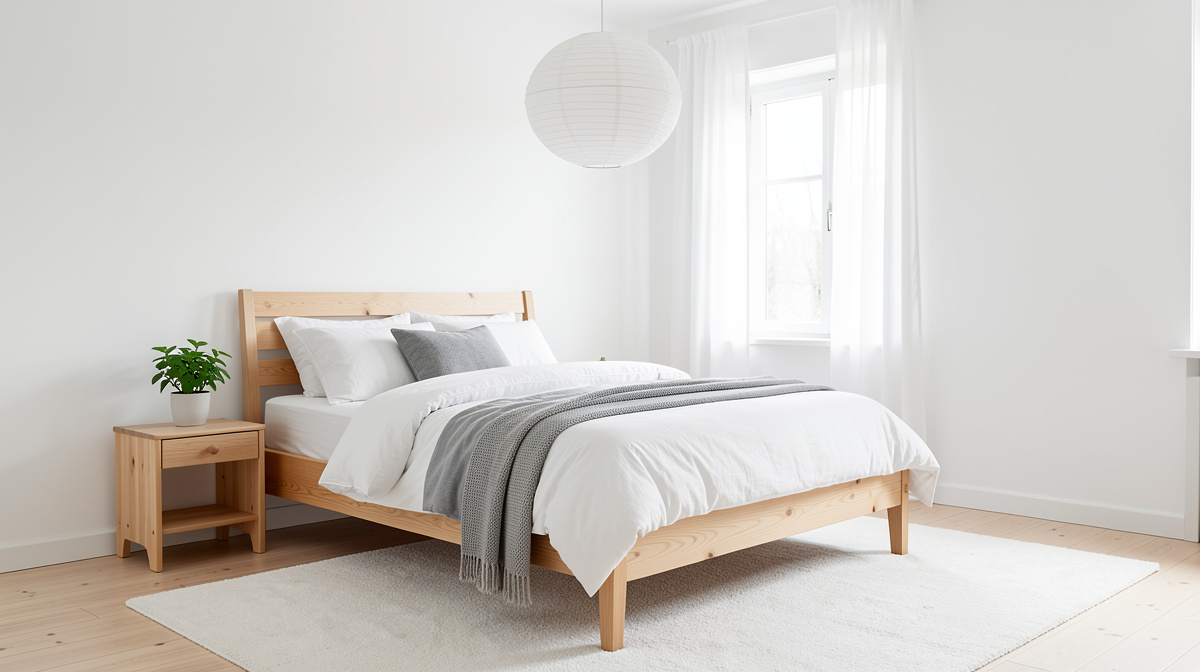
A birch or light ash bed frame with clean lines, white cotton or linen bedding, a sheepskin throw draped over the foot, light wood nightstands, a white or glass pendant light, light hardwood floors, walls in white or the palest possible gray. Minimal art — maybe one large black-and-white photograph. A single small plant. Nothing else.
The Scandinavian bedroom is about light. Everything in the room is chosen to maximize brightness and create a sense of open air, even in a small space. The sheepskin throw adds the only real texture, and it's strategic — one point of warmth in an otherwise cool room. For the full Scandinavian approach across your home, see our Scandinavian interior design guide.
Cost range: $800-$2,500. Scandinavian style favors affordable materials. IKEA is literally the brand most associated with this look, and for good reason — a MALM or TARVA bed frame for $200-$350 is a legitimate Scandinavian bedroom centerpiece.
5. Boho bedroom
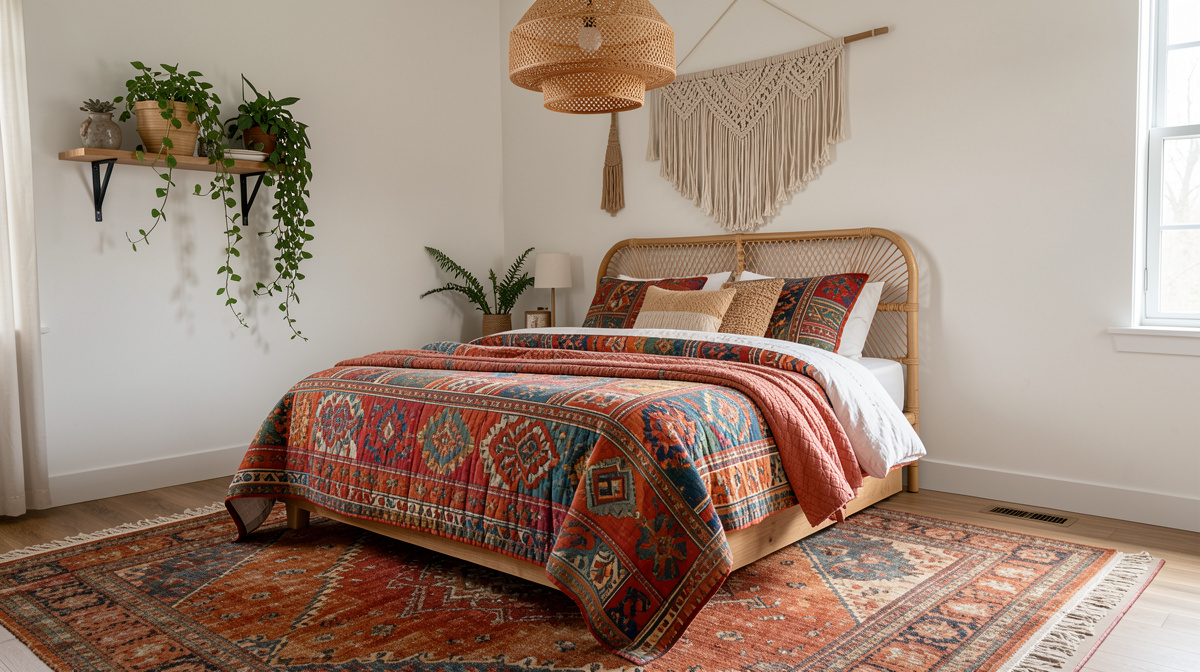
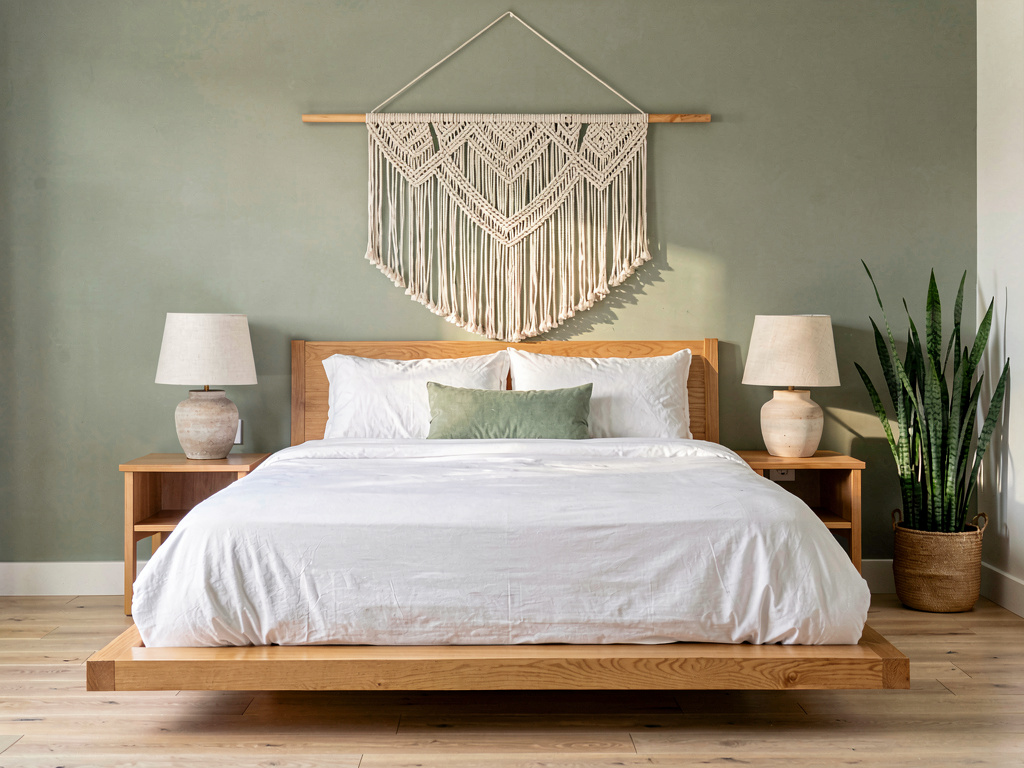
A rattan or cane bed frame, layered bedding in mixed patterns (a block-print duvet, striped euro shams, a woven blanket), a macrame wall hanging or woven textile above the bed, a vintage or distressed wood nightstand, a rattan pendant light, a large jute rug, multiple plants on shelves and hanging from the ceiling. The color palette is warm: mustard, burnt orange, dusty pink, olive, and cream.
Boho gets a bad reputation for looking messy, but the good versions are carefully curated — they just hide the curation behind a relaxed appearance. The trick is mixing patterns within a consistent color temperature. If every textile in the room shares the same warm undertone, they'll look intentional together even when the patterns vary. Random cool-toned pieces break the spell.
Cost range: $1,000-$3,000. Rattan bed frames run $400-$1,200. Much of the boho look comes from accessories that can be thrifted or sourced from Etsy sellers at lower prices than retail furniture stores.
6. Japandi bedroom
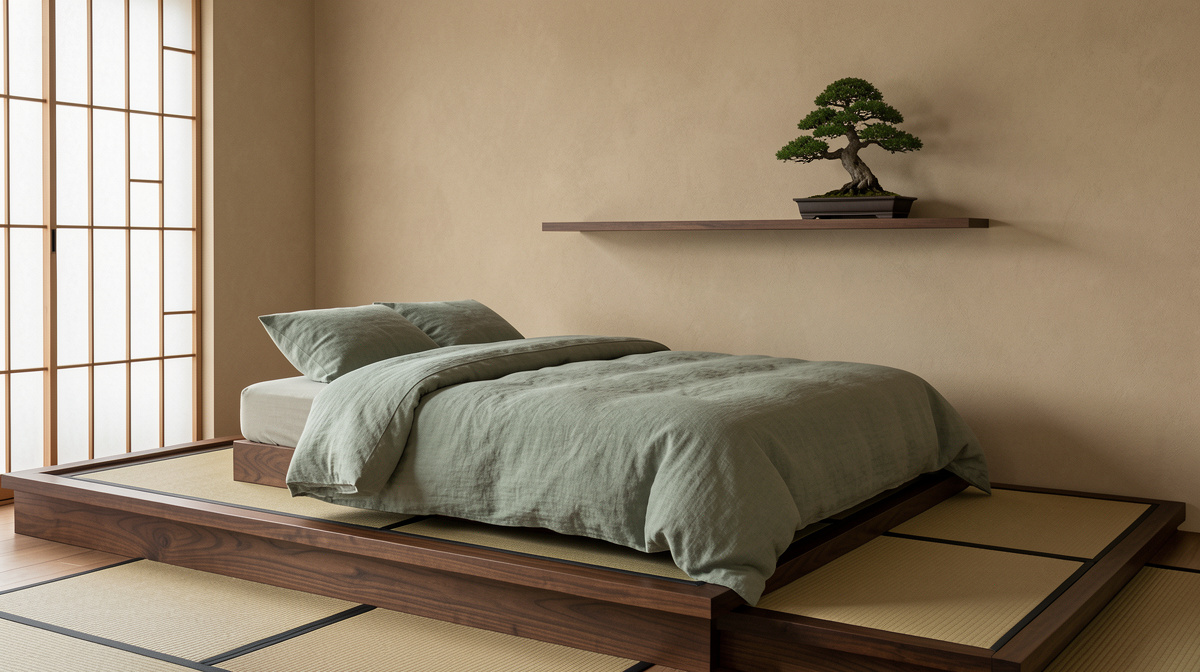
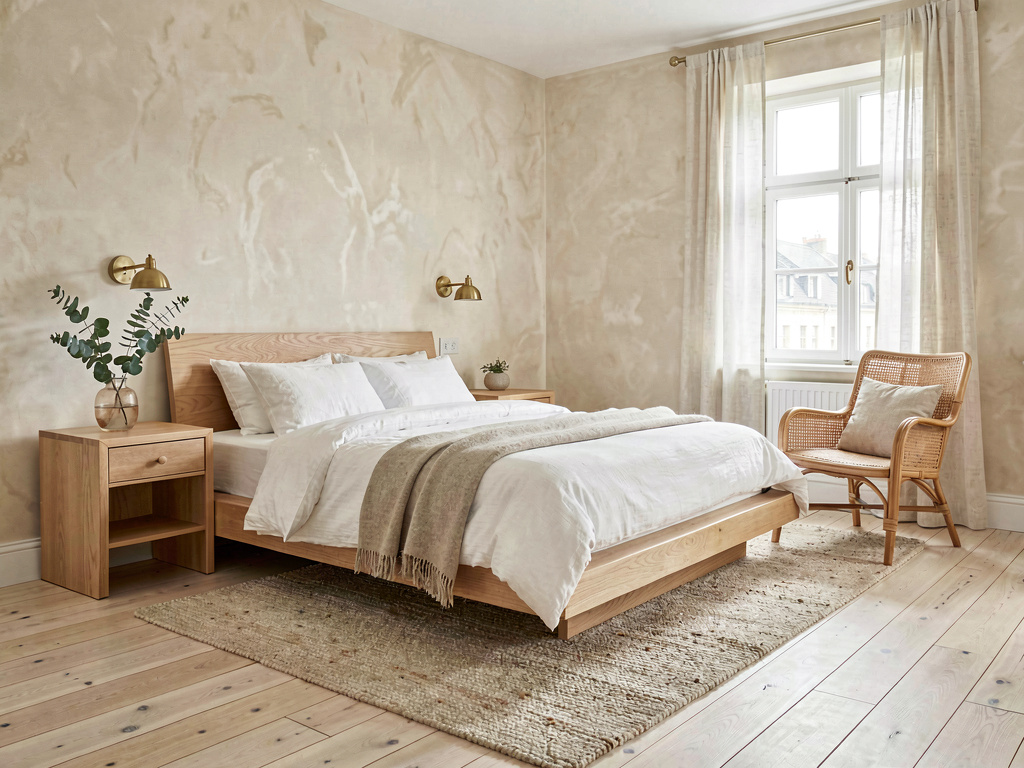
A low platform bed in light wood (almost touching the floor), a muted linen duvet in stone or sage, one simple ceramic vase with a single branch on the nightstand, a paper lantern pendant light, shoji-screen-inspired sliding closet doors, tatami or sisal rug, walls in the palest warm gray. Everything is low to the ground and close to the floor. The ceiling feels higher because the furniture is shorter.
Japandi combines Japanese minimalism with Scandinavian warmth, and in the bedroom this translates to very few objects, all in natural materials, all placed with deliberate intention. The single branch in the vase isn't decoration — it's the room's one visual focal point. According to Elle Decor, Japandi has been one of the fastest-growing interior design searches since 2023, with particular strength in bedroom applications.
Cost range: $800-$2,500. Low platform beds are among the most affordable bed frame styles. The simplicity of the room means you're buying very little.
7. Traditional bedroom
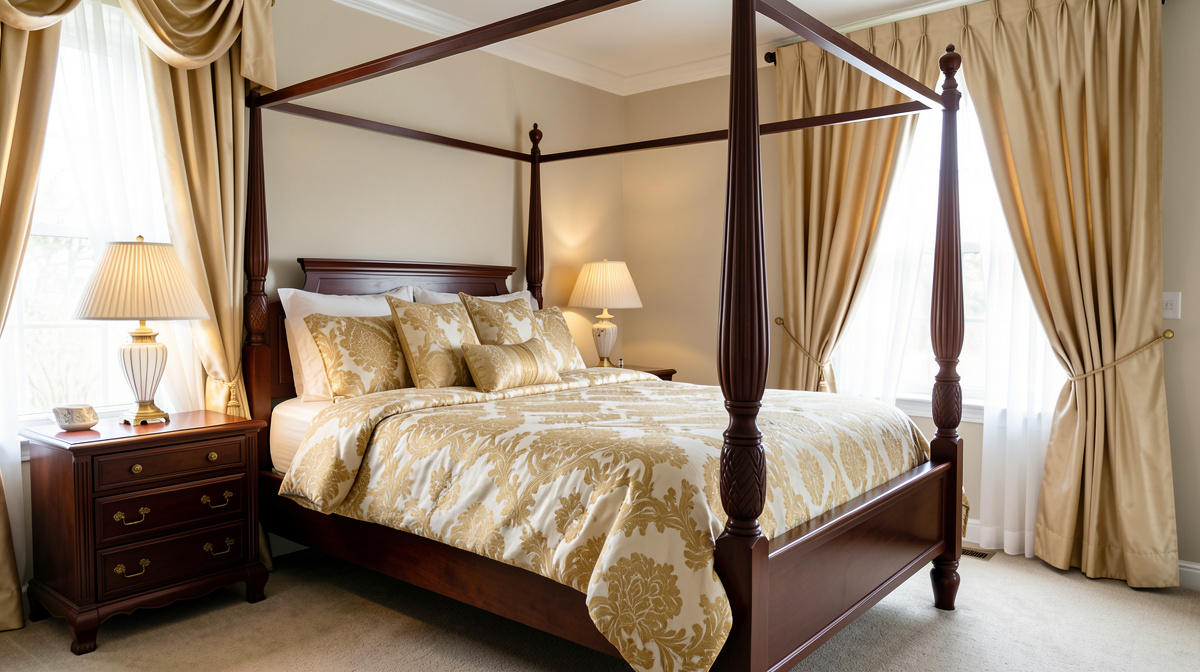
A four-poster or sleigh bed in dark wood (mahogany, cherry, or walnut), a patterned bedding set in florals or damask, a bed skirt, heavy curtains with a valance, matching nightstands with turned legs, a dresser and mirror set, an upholstered bench at the foot of the bed. Crown molding, wainscoting or chair rail on the walls, walls painted in a soft blue, sage, or cream.
Traditional style is the opposite of minimal — the room is furnished fully, with every piece matching or coordinating. This makes it one of the most expensive bedroom styles because you're buying more furniture and each piece tends to be solid wood. But the effect is substantial. A traditional bedroom feels permanent, solid, and grown-up in a way that lighter styles don't.
Cost range: $3,000-$10,000+. Solid wood bedroom sets (bed, nightstands, dresser, mirror) run $2,000-$6,000. The fabric and curtain costs add $500-$1,500.
8. Glam bedroom
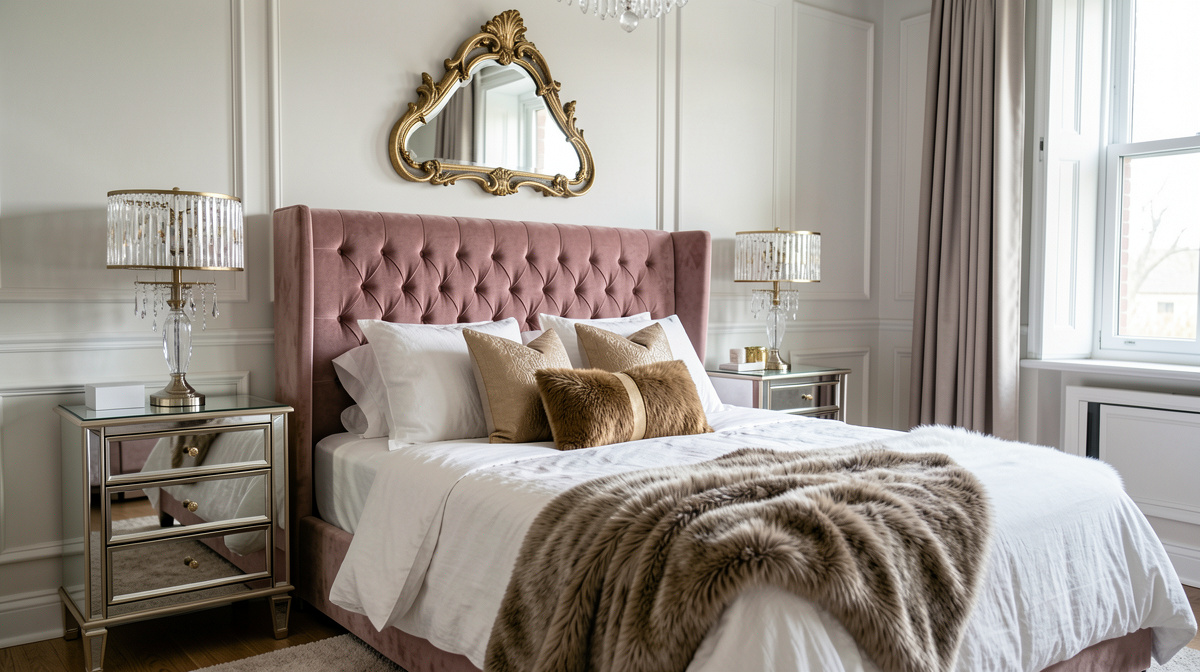
A tall tufted headboard in velvet (navy, emerald, or blush), mirrored or metallic nightstands, a crystal or modern geometric chandelier, metallic throw pillows, a plush white faux fur rug, satin or silk bedding, a mirrored vanity table against one wall. The color palette centers on jewel tones plus metallics: gold, silver, brass.
Glam is unapologetically decorative. It's the bedroom that says "this is my space and it is beautiful." The mistake people make is going too far with the metallics and mirrors, which tips from glamorous into tacky. The fix is balancing the shiny elements with enough matte and soft textures — the velvet headboard, the faux fur rug, the fabric curtains — to absorb some of the light rather than reflecting all of it.
Cost range: $2,000-$6,000. Velvet headboards run $400-$1,500. Mirrored nightstands are $150-$500 each. The chandelier is $200-$1,000.
9. Mid-century modern bedroom
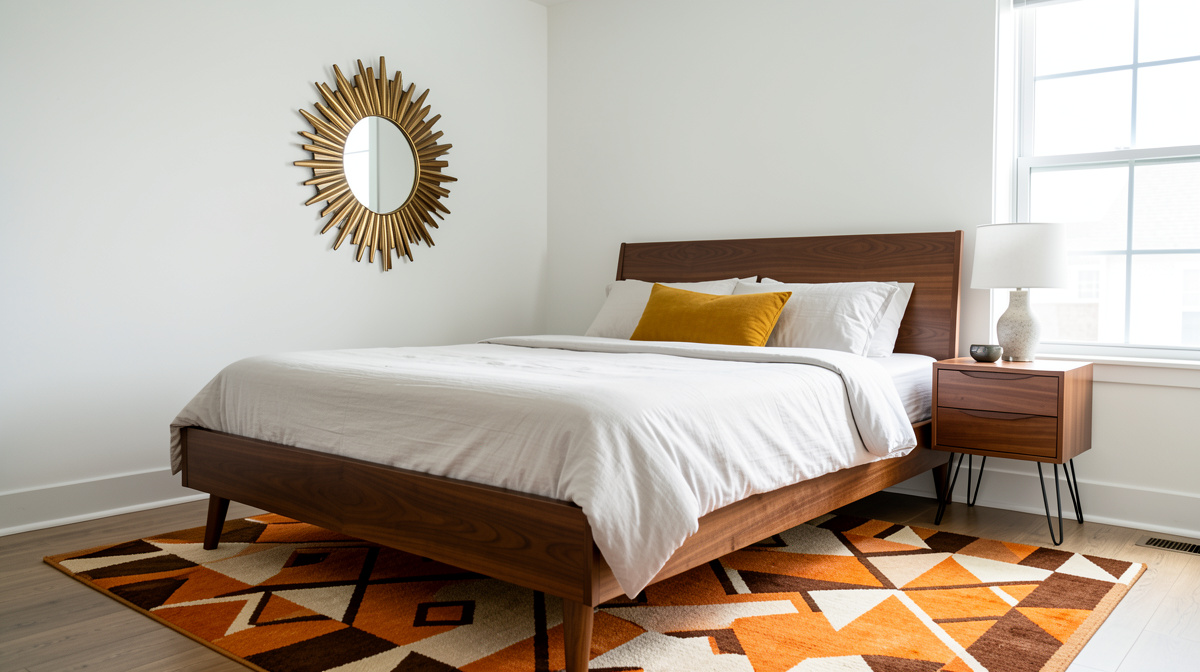
A walnut bed frame with a slatted or spindle headboard and tapered legs. A pair of walnut nightstands with angled drawers. A globe or arc floor lamp in brass. A low walnut dresser with long pulls. The bedding is simple — white or cream with a geometric-print throw. The accent color comes from a few pieces: an orange or teal pillow, a piece of abstract art. Walls in warm white or a soft mustard.
Mid-century modern works in the bedroom because the furniture proportions are right for the room. The low-slung bed, the tapered legs that show floor underneath, the horizontal dresser instead of a tall boy — everything stays below eye level when you're standing, which makes the room feel more spacious. For more on how this aesthetic applies to other rooms, check our guide on aesthetic bedroom ideas.
See Your Room Redesigned
Download Remodel AI and transform any room in 30 seconds. 3 free designs, no signup.


Cost range: $1,500-$5,000. Genuine mid-century pieces are expensive, but reproductions from Article, West Elm, and AllModern capture the look at $400-$1,200 per piece.
10. Coastal bedroom
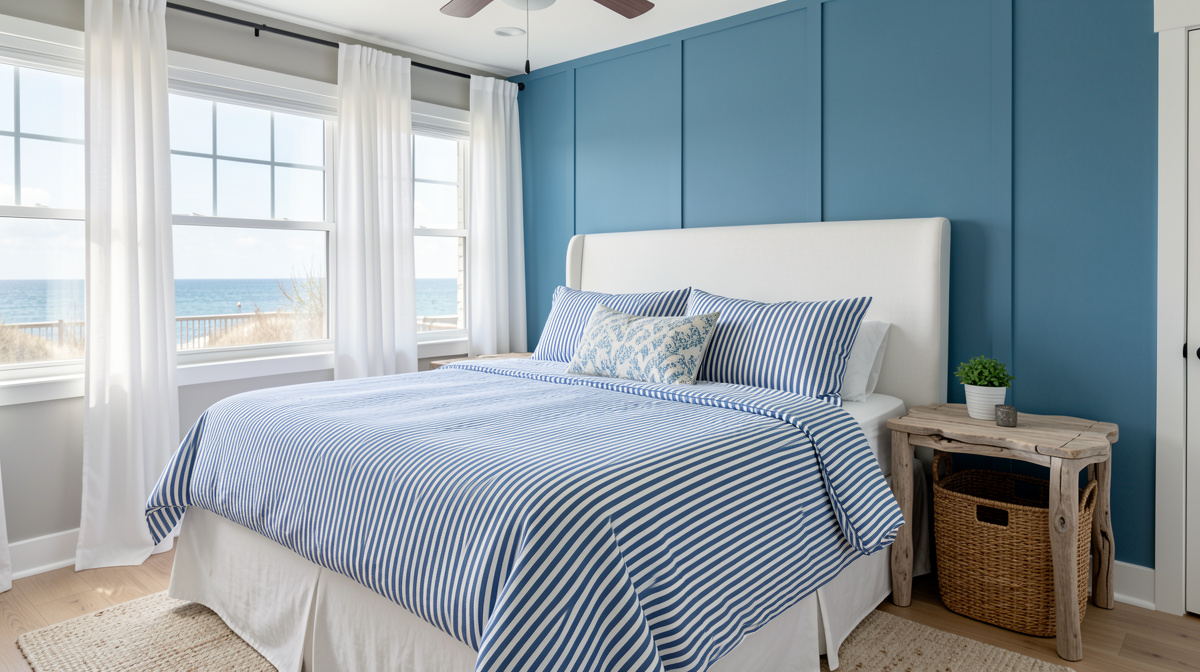
White or pale blue bedding with a lightweight cotton quilt, a rattan or white-painted bed frame, jute or sisal rug, driftwood accents (a mirror frame, a shelf), sheer white curtains letting in natural light, a few pieces of sea-toned art (abstract watercolors in blue and green, not literal seashell prints). The color palette is white, sand, sky blue, and soft gray.
Coastal is breezy and low-effort. It's one of the easiest bedroom styles to pull together because the palette is simple and the furniture is affordable. A white bed frame, white bedding, a jute rug, and blue pillows gets you 80% of the way there. The remaining 20% is restraint — not adding the anchor print pillow, the rope-wrapped lamp, or the "life's a beach" sign.
Cost range: $800-$2,500. White bed frames and natural fiber rugs are budget-friendly. Cotton quilts cost less than heavy duvets.
11. Industrial bedroom
A metal bed frame (iron or steel, either black or brass-finished), exposed brick or concrete walls (or a faux brick panel), dark bedding in charcoal or navy, a reclaimed wood nightstand, Edison bulb wall sconces, a vintage leather armchair in the corner, concrete or dark wood floors with a flat-weave rug. The hardware is all metal — iron hooks, steel brackets, exposed pipe elements.
Industrial bedrooms are more common in loft apartments and converted spaces where the raw materials already exist. Bringing the style into a standard suburban bedroom takes some work (faux brick panels, concrete-look paint) but can be done.
Cost range: $1,000-$3,000. Metal bed frames are often cheaper than wood or upholstered ones ($200-$600).
12. Moody dark bedroom
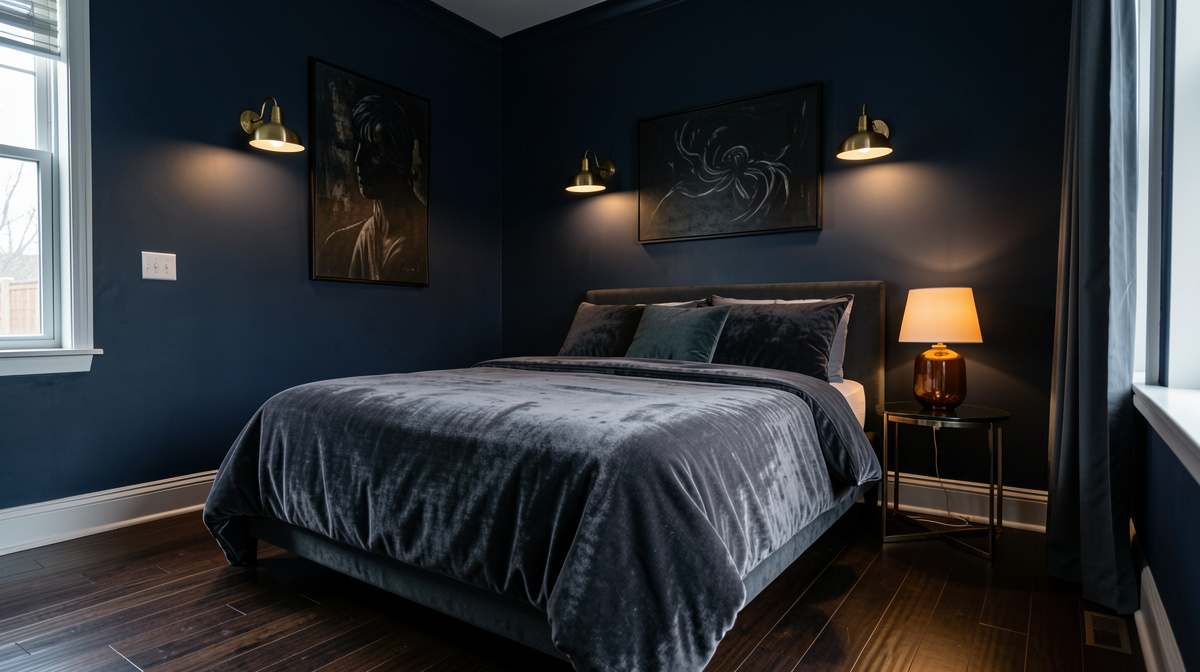
Walls painted in a deep color — forest green (Benjamin Moore Essex Green), deep navy (Hale Navy), or rich charcoal. Dark bedding that tones with the walls. Brass or warm gold sconces flanking the bed instead of table lamps. Velvet curtains in a coordinating dark shade. A lighter element to prevent the room from feeling cave-like: a cream or warm white headboard, or lighter bedding on top of a dark throw.
Dark bedrooms feel luxurious, especially at night. The color wraps around you and the warm lighting creates a cocoon effect that people either love or hate. There's not much middle ground. If you're considering it, test the paint color with a large sample (at least 2 feet by 2 feet) on the wall and live with it for a week before committing to the whole room.
Cost range: $1,200-$3,500. The drama comes from paint ($100-$200 for a room) and curtains ($200-$800), both of which are affordable relative to their impact. For more on how wall color affects a bedroom, see our bedroom color ideas guide.
13. Rustic cabin
A log or reclaimed wood bed frame, plaid flannel bedding, a knit wool throw, antler or wrought iron wall sconces, a stone or brick accent wall, wide-plank wood floors, a cowhide rug, heavy wooden nightstands with iron hardware. The color palette is brown, red, cream, and dark green. The room feels like a mountain lodge.
Cost range: $1,500-$4,000. Reclaimed wood furniture varies wildly in price depending on the source. Plaid bedding and wool throws are affordable ($50-$200 each).
14. Art-forward bedroom
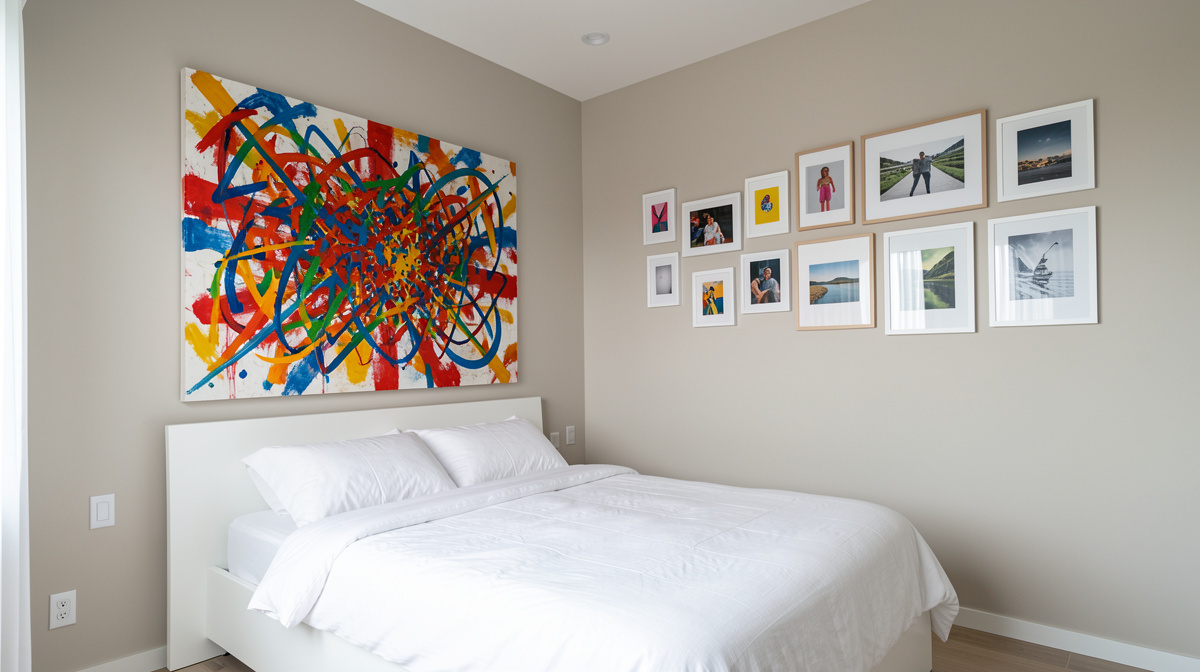
The furniture is simple and neutral — it exists to support the art. A simple upholstered bed in white or gray, plain white bedding, basic nightstands. Above the bed: one very large piece of art (4 feet by 5 feet or bigger) that dominates the wall. Picture lights or track lighting to illuminate it properly. Maybe one additional piece on the opposite wall. The art sets the entire color palette and mood for the room.
This approach works when you have a piece of art you love enough to build a room around. The bed and furniture become background, and that's fine — they're the frame, the art is the subject.
Cost range: $1,000-$5,000+ depending on the art. The furniture cost is low because you're buying simple pieces. The art is the investment, and that range is whatever you're willing to spend. For more on creating a bedroom with strong visual identity, see our modern bedroom ideas guide.
15. Transitional bedroom
A classic upholstered headboard in a neutral fabric paired with modern nightstands (clean lines, no turned legs). A mix of traditional elements (a patterned rug, curtains, matching bedding) and modern ones (simple lighting, minimal accessories, clean hardware). Walls in a soft neutral — warm white, pale gray, or soft blue. The room feels polished but not pinned to any era.
Transitional is the safe choice, and that's not an insult. It means the room won't look dated in five years, it works for couples with different style preferences, and it doesn't require a firm design commitment. It's the bedroom equivalent of a navy blazer — appropriate everywhere, offensive nowhere.
Cost range: $1,500-$4,000. The mix of modern and traditional allows flexibility in sourcing.
How to pick the right style for your room
Two things matter more than personal preference: the amount of natural light your bedroom gets, and the size of the room.
Low light: Lean toward lighter styles (Scandinavian, coastal, warm minimal) or embrace the darkness fully (moody dark). The worst option for a low-light room is a medium-tone style that wants to be bright but can't be.
Small room: Low-profile furniture (Japandi, minimal, Scandinavian) makes small rooms feel bigger. Avoid four-poster beds, heavy curtains, and dark walls in rooms under 120 square feet — they'll shrink the space visually.
Abundant light: You can run any style. South-facing and west-facing bedrooms with big windows are the most forgiving. Dark walls work, bold colors work, heavy furniture works because the light balances everything.
Try different styles in your actual space before committing. Remodel AI lets you upload a photo of your bedroom and apply any design style to see what it looks like with your real walls, windows, and floor plan. It takes seconds and costs nothing to try.
Frequently asked questions
What bedroom decor style is best for sleep?
Warm minimal, layered cozy, and Japandi are the strongest sleep-optimized styles because they share low visual stimulation, warm lighting, and calming color palettes. Avoid styles with high-contrast colors, lots of metallic reflections, or bright accent tones in the immediate view from the bed. The Sleep Foundation recommends cool room temperature (65-68 degrees), warm-toned lighting under 3000K, and minimal visual clutter for optimal sleep quality.
How much should I spend on bedroom decor?
Spend the most on the mattress and the bed frame — you use them every night for 7-10 years. A good mattress runs $800-$2,000 and a solid bed frame is $400-$1,500. After that, bedding matters more than nightstands, and lighting matters more than wall art. Total room cost for a well-decorated bedroom ranges from $800 for minimal styles to $6,000+ for traditional or glam.
Can I mix bedroom decor styles?
Yes, and it usually looks better than going 100% into one direction. The key is picking a primary style (say, Scandinavian) and adding one or two elements from another (a boho woven wall hanging, or a mid-century modern nightstand). Keep the color temperature consistent — either warm or cool throughout — and you'll have room to mix.
What wall color works for most bedroom styles?
Warm white (Benjamin Moore White Dove, Sherwin-Williams Alabaster) works with every style on this list except moody dark and industrial. It's the safest starting point if you're unsure. For more options and how each color affects the room's mood, check our bedroom color ideas guide.
How do I make a small bedroom feel bigger?
Light colors on walls and bedding, a low-profile bed frame, a rug that extends under the bed on all sides (or no rug at all), curtains hung at ceiling height, minimal furniture (skip the bench, skip the accent chair), and a large mirror on one wall. Avoid tall headboards, heavy curtains, and dark paint in rooms under 100 square feet. Every inch of visible floor makes the room feel larger.
Related reading
Ready to Try AI Interior Design?
Upload a photo and redesign any room in seconds. 3 free designs, no signup required.