Entryway ideas: first impressions that set the tone
Entryway ideas for every size and budget — small foyers, mudrooms, apartment entries, and grand entrances with storage, lighting, and style tips.

Ryan H.
Founder of Remodel AI · April 6, 2026 · 12 min read
The entryway is the first thing people see when they walk into your home, and it's usually the last thing anyone designs. Most entryways are an afterthought — a place where keys land, shoes pile up, and mail accumulates on whatever surface is closest to the door. But even a small entryway, done well, changes the feeling of walking into your house. Good entryway ideas start with the same question: what happens in this space, and what does it need to handle?
The answer varies depending on whether you have a grand foyer, a narrow hallway, a mudroom, or a three-foot gap between your apartment door and your living room. Here are the approaches that work for each.
1. The small apartment entryway
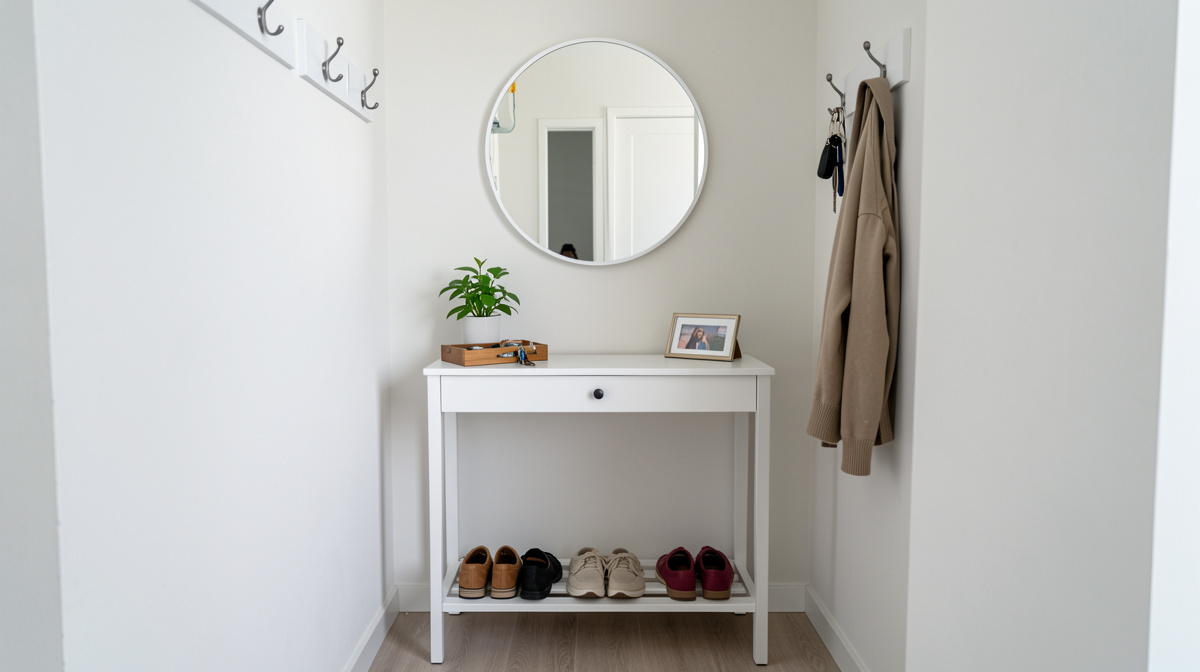
When your "entryway" is really just the first two feet of your apartment, you need solutions that use wall space, not floor space. A wall-mounted floating shelf (24-36 inches wide) holds keys, wallet, and sunglasses. Three or four wall hooks above or beside it handle coats and bags. A narrow mirror above the shelf makes the space feel larger and gives you a final check before walking out. A boot tray on the floor catches wet shoes without spreading puddles.
That's the whole setup: shelf, hooks, mirror, tray. It costs $50-$150 total and takes up zero floor space. The mistake people make is trying to fit a full-size console table or bench in a space that can't handle it. When the area is tiny, wall-mounted solutions are the only ones that work.
Cost estimate: $50-$150 for a basic wall-mounted setup. $200-$400 if you add a small floating cabinet with doors to hide clutter.
2. The narrow hallway entry
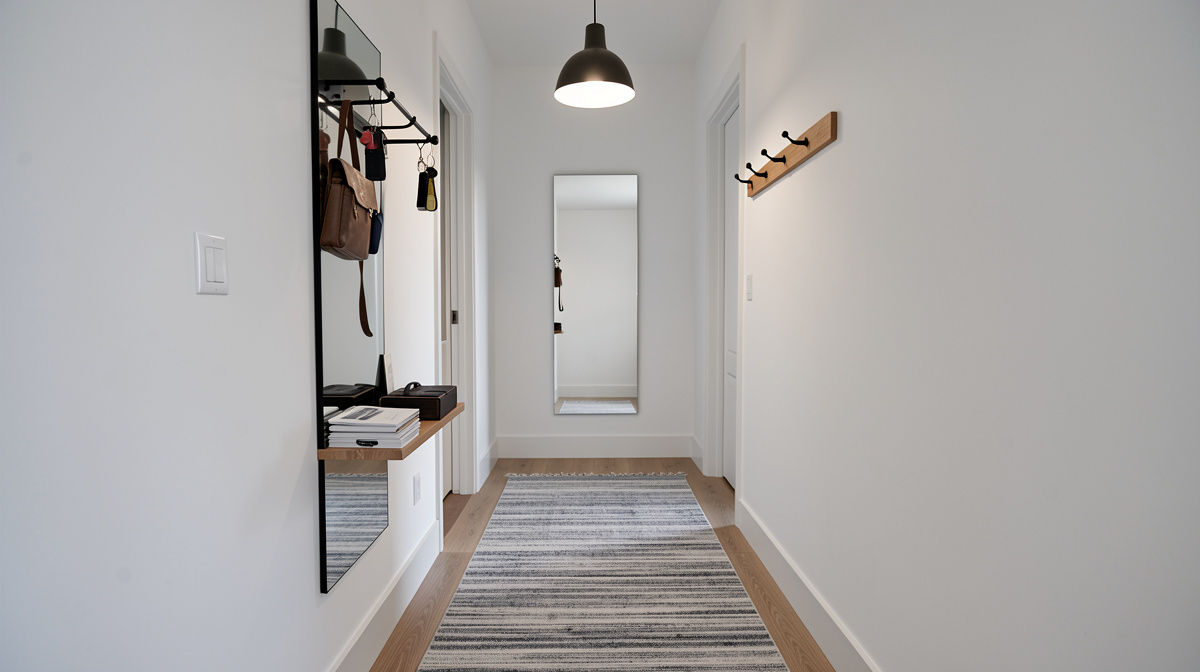
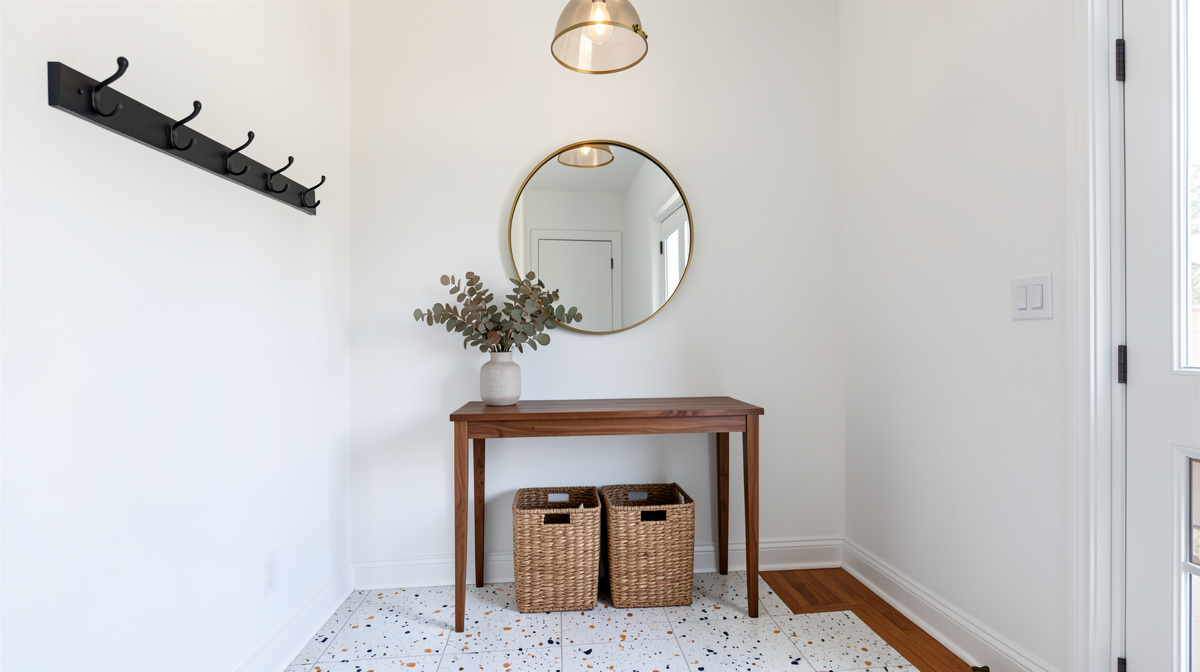
Many homes have an entryway that's essentially a narrow hallway between the front door and the rest of the house. The width determines everything. If you have at least 30 inches of clear passage width after furniture, a slim console table (10-14 inches deep) along one wall works. This gives you a landing zone for keys and mail without blocking the path.
A runner rug defines the hallway as its own space rather than just a transitional corridor. Choose a runner that's 6-8 inches narrower than the hallway width on each side. A pendant light or a pair of wall sconces overhead changes the hallway from a dark pass-through to an intentional space. Art or a gallery wall on the long wall gives the eye something to engage with while walking through.
Cost estimate: $300-$800. Slim console table $100-$300, runner rug $50-$200, lighting $50-$200, art or mirror $50-$150.
3. The mudroom entryway
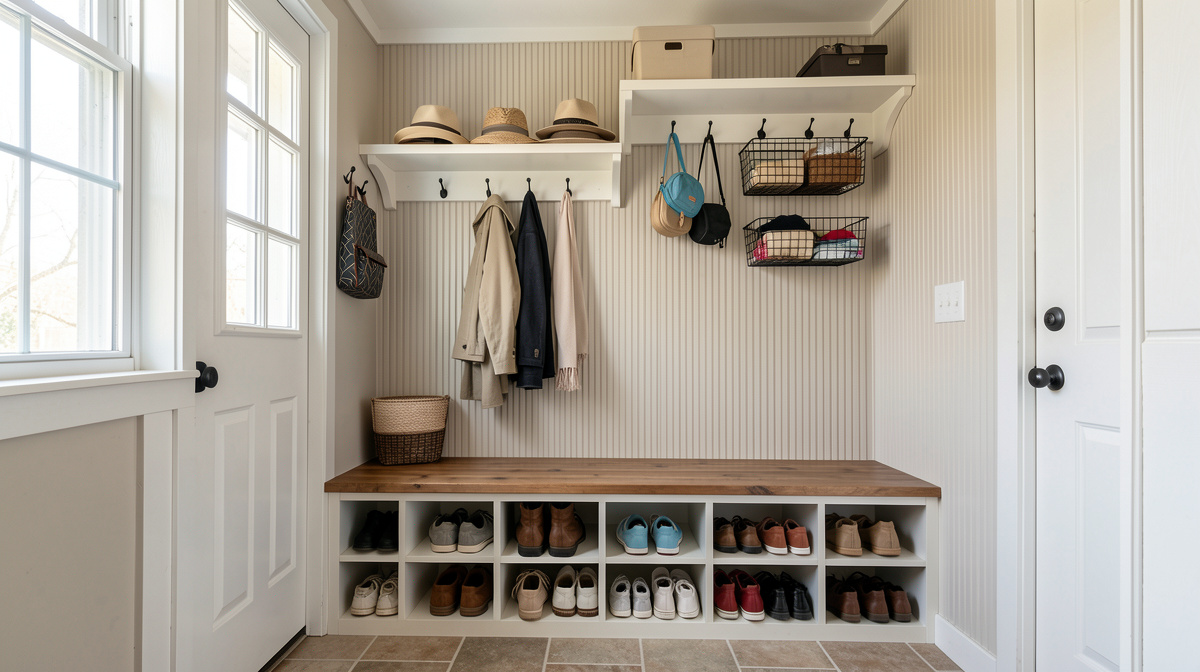
Mudrooms are the workhorses of entryway design. They handle boots, coats, backpacks, dog leashes, sports equipment, and whatever else comes through the door. The best mudrooms are organized by person — each family member gets their own section with a hook, a cubby, and a bench seat with storage underneath.
Built-in mudroom systems with bench seating, upper cubbies, and coat hooks run $1,500-$5,000 depending on materials and whether you hire a carpenter or use modular components. IKEA's HALLEN series and similar modular systems offer a budget-friendly version ($300-$800) that looks custom when painted to match your wall color.
Flooring in a mudroom should be durable and easy to clean — porcelain tile, luxury vinyl plank, or sealed concrete. Hardwood looks nice but shows water damage from wet boots. A good doormat (both outside and inside the door) catches most of the dirt before it reaches the floor.
Cost estimate: $300-$800 for modular components. $1,500-$5,000 for custom built-ins.
4. The grand foyer
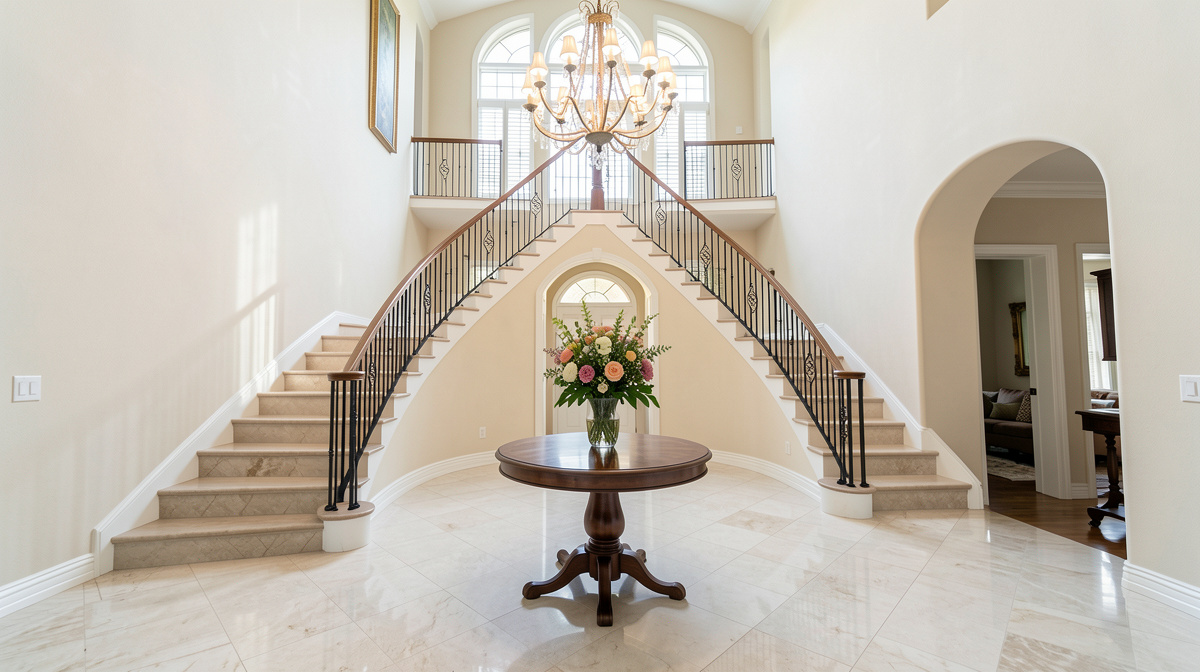
If you're lucky enough to have a foyer with real square footage (say 8x8 feet or larger), you can make a statement. A round center table with a vase of fresh flowers or a sculptural object gives the eye a focal point immediately upon entering. A large mirror (at least 36 inches wide) on the wall behind the table reflects light and makes the space feel even bigger. A statement chandelier or large pendant overhead establishes that this is a designed space, not just a hallway.
Grand foyers benefit from a flooring change — stone, tile, or a patterned floor that differs from the rest of the house signals a transition between outside and inside. Marble, slate, encaustic cement tile, or a large-format porcelain tile all work. According to Realtor.com's 2025 home feature analysis, a well-designed entryway with quality flooring and lighting adds an estimated 3-5% to perceived home value during showings.
Cost estimate: $2,000-$8,000+. Statement lighting $300-$2,000, center table $200-$1,500, mirror $100-$500, flooring upgrade $500-$3,000+.
5. Storage solutions that actually get used
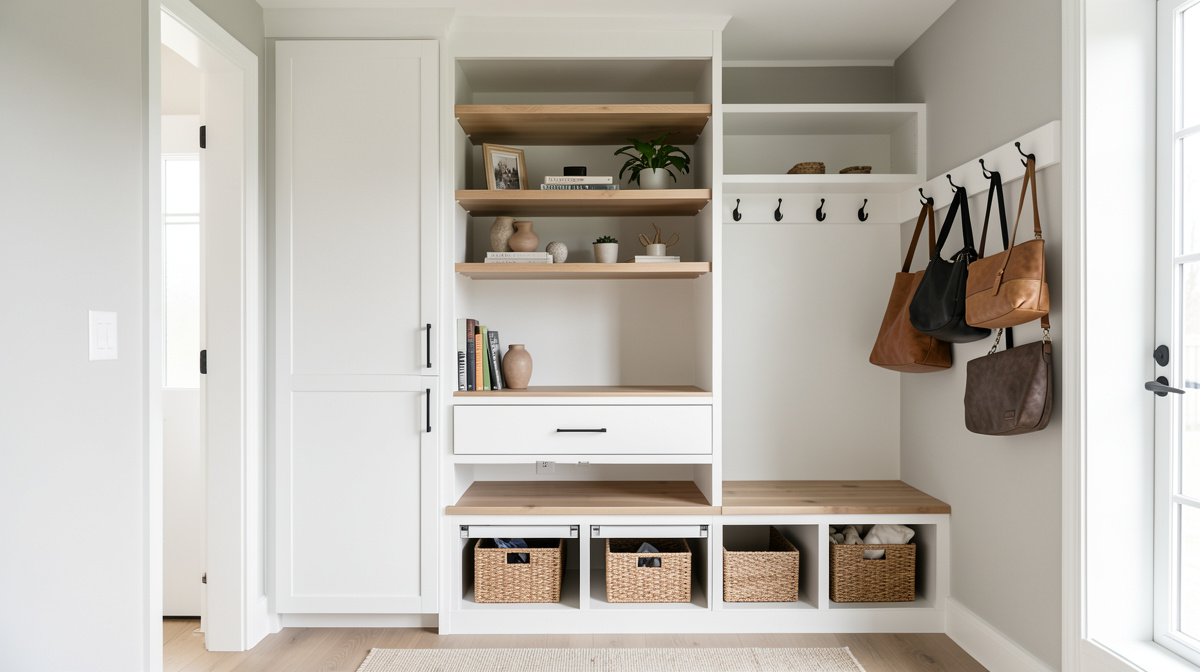
The best entryway storage is the kind people actually use, which means it has to be easier to use than the alternative (dumping everything on the floor). A few principles:
Open storage for daily items. Hooks for coats and bags, an open shelf or bowl for keys, an open cubby for shoes. If you have to open a door or a drawer to put your keys down, you'll end up putting them on the nearest flat surface instead.
Closed storage for everything else. A cabinet or a bench with a hinged seat hides seasonal items, extra shoes, hats, gloves, and the visual chaos that accumulates in any entry. The 70/30 rule from other rooms applies here too: 70% closed storage, 30% open.
A landing strip. This is the horizontal surface right inside the door where you drop things when you walk in. A console table, a floating shelf, or even a small wall-mounted tray. Every entryway needs one. Without it, your dining table becomes the landing strip.
Shoe storage specifically. Shoes are the biggest source of entryway clutter. A shoe bench (you sit on top, shoes go underneath), a boot tray, or a thin shoe cabinet (7-10 inches deep, holds shoes vertically) solves the problem without eating up floor space. The IKEA TRONES shoe cabinet is the go-to budget option — $30 per unit, mounts on the wall, holds 3-4 pairs each.
6. Lighting that creates atmosphere
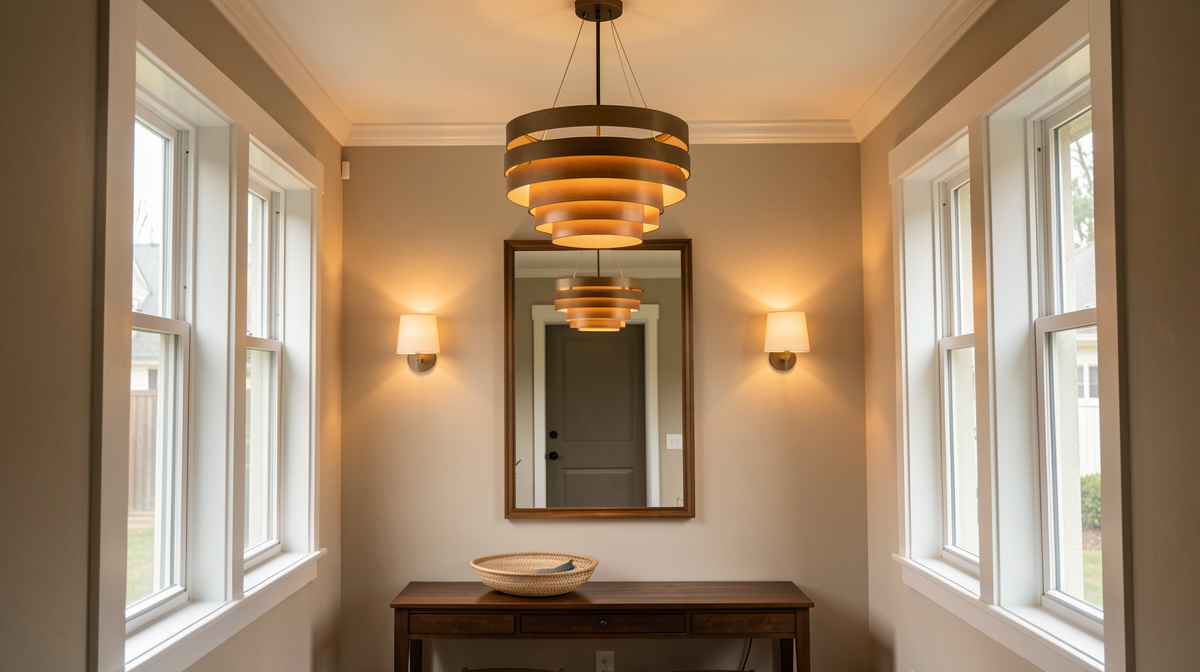
Entryway lighting sets the mood for your entire home. A dark entryway makes the whole house feel smaller and less welcoming. The best approach uses layered lighting:
Overhead: A pendant, chandelier, semi-flush mount, or recessed lights. The overhead fixture should be proportional to the space — in a small entry, a single semi-flush mount works. In a foyer, a chandelier or oversized pendant makes a statement. The rule of thumb for pendant height: the bottom of the fixture should hang at least 7 feet from the floor.
Wall: Sconces on either side of a mirror or flanking the door add warmth and fill in the shadows that overhead lighting misses. Sconces are especially useful in narrow hallway entries where a pendant would hang too low.
Natural: If your entry has sidelights (the narrow windows beside the front door) or a transom window above it, these provide daylight that no fixture can replicate. Keep them unobstructed. If privacy is a concern, use frosted film rather than curtains.
For a similar approach to lighting design in a different context, our small living room ideas guide covers layered lighting strategies that make tight spaces feel larger.
7. Flooring that handles traffic and dirt
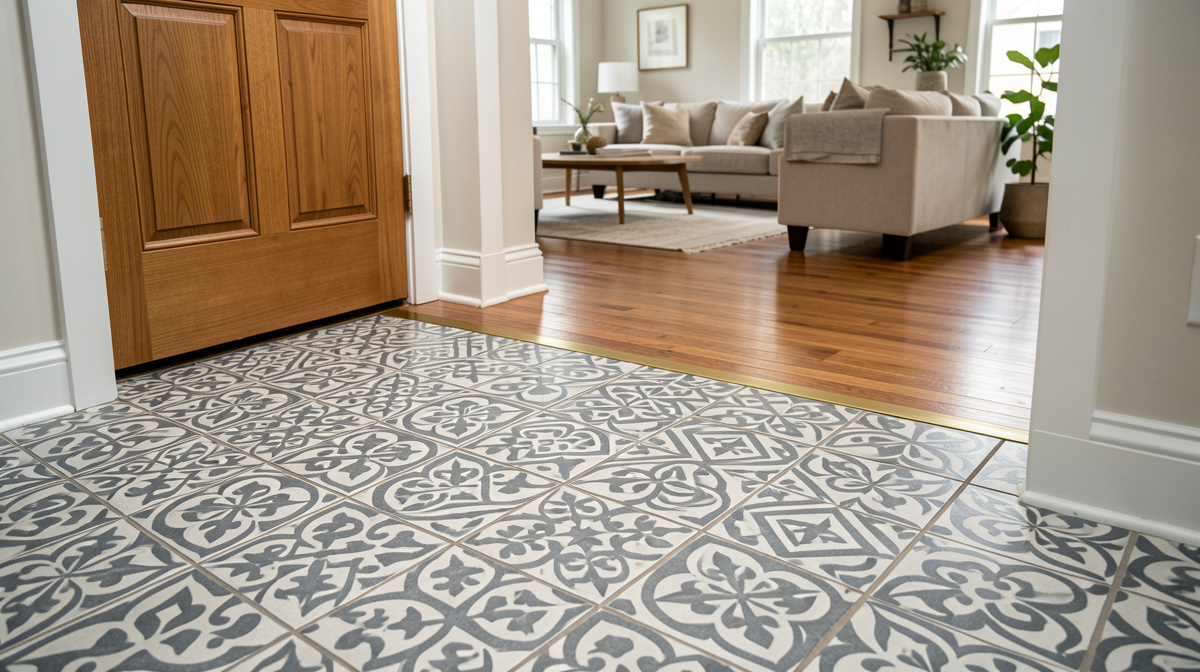
Your entryway floor takes more abuse than any other floor in the house. It handles shoes, water, dirt, snow, sand, and heavy foot traffic. The flooring choice needs to be practical first and attractive second.
Porcelain tile is the top choice for durability, water resistance, and ease of cleaning. Large-format tiles (12x24 or bigger) reduce grout lines and look modern. Herringbone or chevron patterns add visual interest. Cost: $3-$12 per square foot installed.
Encaustic cement tile brings pattern and color. These handmade tiles with bold geometric patterns can turn a boring entry into a focal point. They require sealing and more maintenance than porcelain. Cost: $8-$20 per square foot installed.
Luxury vinyl plank (LVP) is waterproof, durable, and budget-friendly. Modern LVP is nearly indistinguishable from real wood. Cost: $2-$7 per square foot installed.
Hardwood with a runner rug works if the hardwood extends from other rooms into the entry. The runner protects the high-traffic zone. Replace the runner every few years rather than refinishing the floor.
See Your Room Redesigned
Download Remodel AI and transform any room in 30 seconds. 3 free designs, no signup.


Cost estimate for a 4x6 entryway: Porcelain tile $100-$300 installed. Cement tile $200-$500 installed. LVP $50-$170 installed. Runner rug $30-$150.
8. Mirrors that open up the space
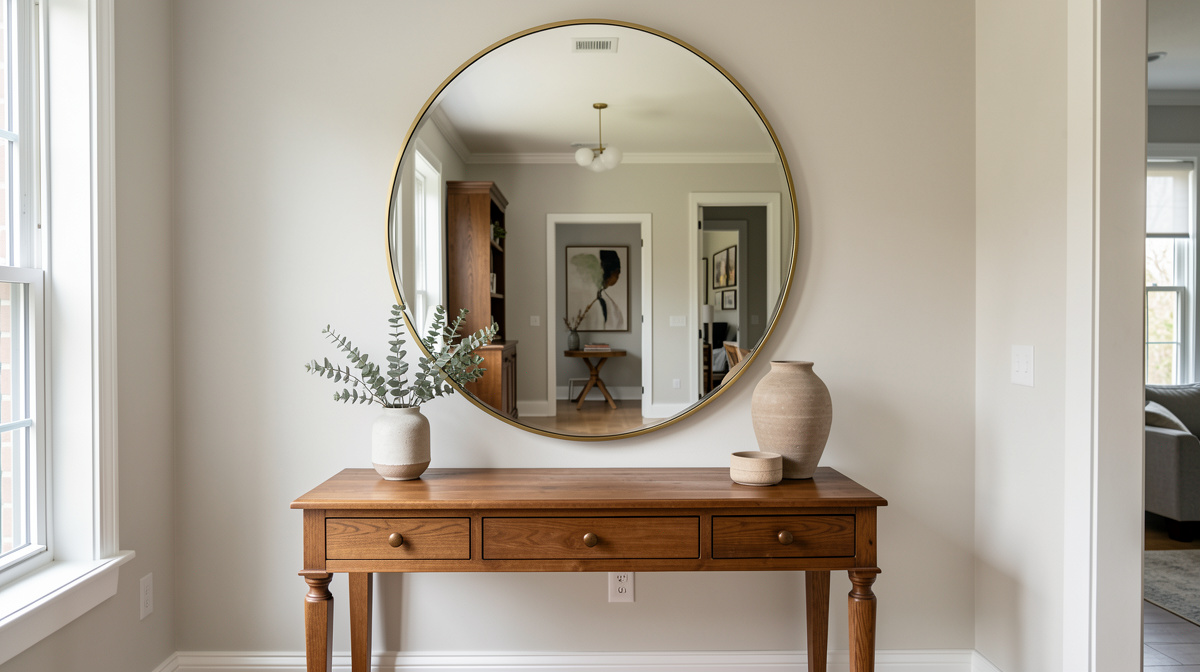
A mirror in the entryway does three things: it makes the space feel larger by reflecting depth, it bounces natural light deeper into the house, and it gives you a final check before leaving. For small entries, a full-length mirror leaning against the wall or mounted on a closet door maximizes the effect. For wider entries, a large round or arched mirror above a console table is the classic choice.
The mirror should be proportional to the wall it's on. On a narrow wall, a tall, slim mirror works. Above a console table, the mirror should be roughly two-thirds the width of the table. Avoid mirrors that are too small for their wall — they look like afterthoughts.
Frame options: black metal for modern, gold or brass for warm contemporary, reclaimed wood for farmhouse, no frame for minimalist. The frame is one of the strongest style signals in the entry.
9. Art and the gallery wall
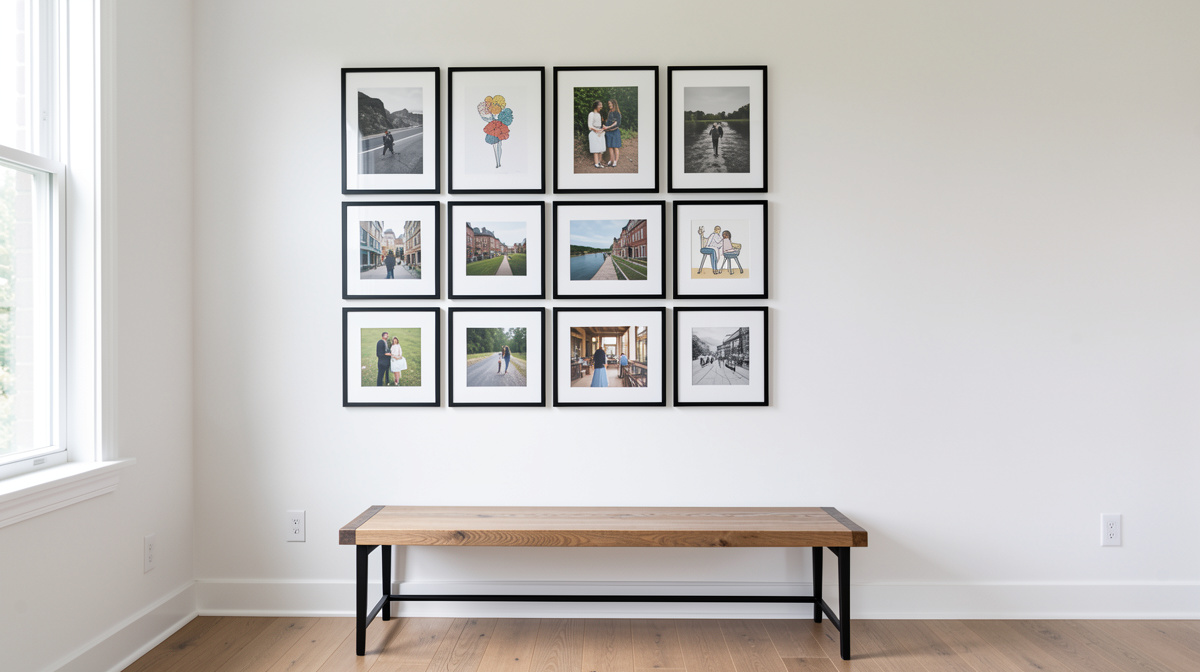
If your entryway has a long wall (common in hallway entries), a gallery wall gives it purpose. The key to a gallery wall that looks intentional rather than random: pick one frame color (black, white, or natural wood), vary the sizes, and keep 2-3 inches between frames. Arrange the frames on the floor first before putting any holes in the wall.
For single statement art: one large piece (at least 24x36 inches) at eye level creates more impact than three small pieces. The art should relate to the style of the rest of the house — abstract for modern homes, landscape photography for organic or natural styles, vintage prints or botanical illustrations for traditional homes.
If art isn't your thing, a large woven textile, a mounted hat collection, or a single architectural element (a vintage window frame, a carved wood panel) achieves the same effect of making the wall intentional.
10. Console tables and benches
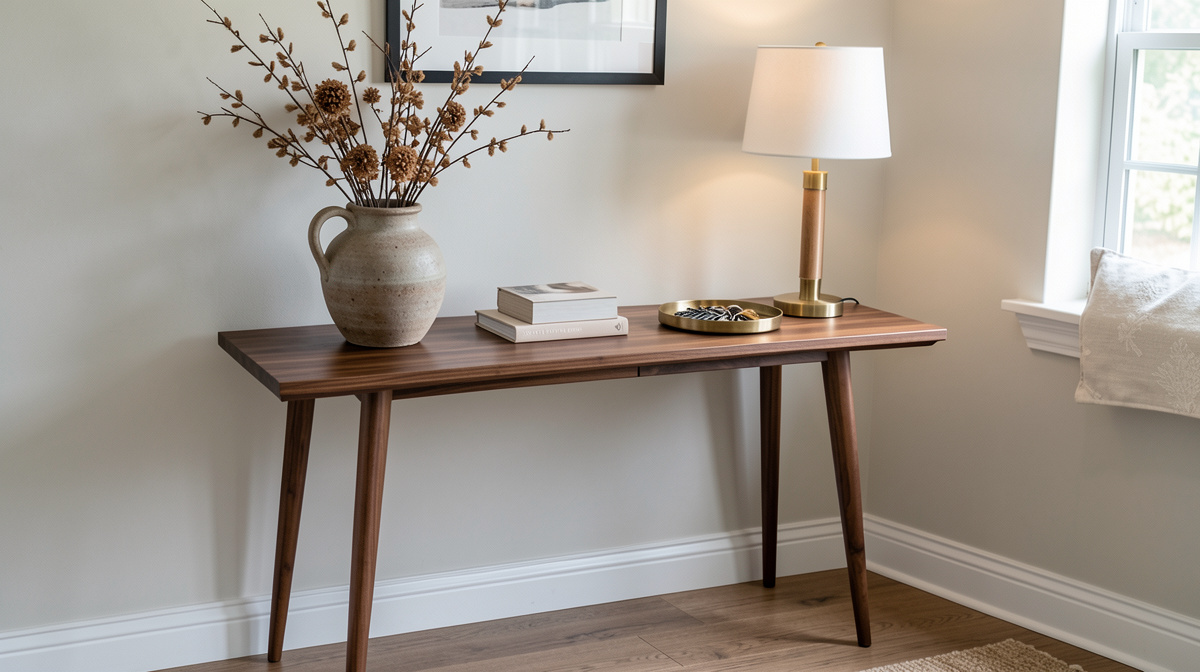
The console table is the workhorse of entryway furniture. It provides a landing surface, storage (often with drawers or a lower shelf), and a display platform for setting the style of the entry. Choose based on your space:
Under 12 inches deep: Floating shelf or wall-mounted narrow table. These fit in the tightest hallways.
12-16 inches deep: Standard slim console table. This is the sweet spot — wide enough to hold a table lamp, a tray for keys, and a small plant.
16-20 inches deep: Full-depth console with drawers. This works in entries with more space and provides serious storage.
A bench works well as an alternative or addition. A bench with shoe storage underneath combines seating (for putting on shoes) with hidden storage. According to the National Association of Realtors 2025 Remodeling Impact Report, an organized entryway with a bench and storage was among the top ten features that help homes sell faster.
For farmhouse-style entries with a bench, shiplap, and warm wood tones, our modern farmhouse interior guide covers how to get that look throughout the house.
11. Seasonal and holiday entryways
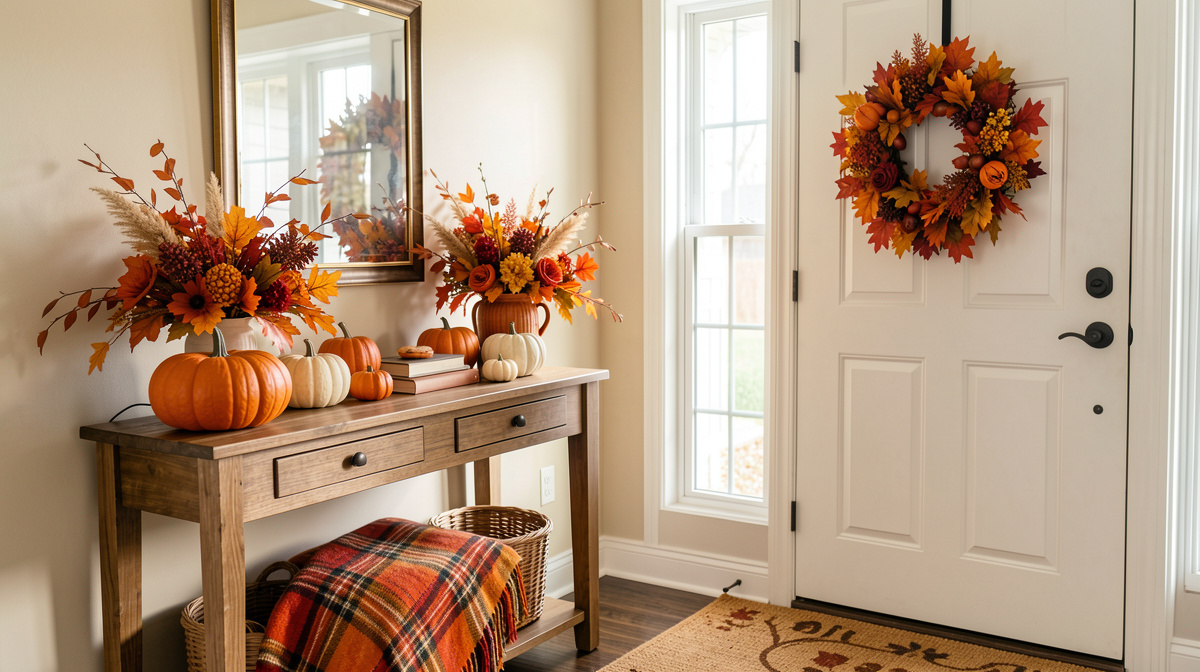
The entryway is the easiest room to update seasonally because it takes so few items. Swap the doormat, change the item on the console table, and update the wreath or door decor. That's it.
Spring and summer: a fresh green wreath, a light-colored doormat, a vase of fresh flowers or green branches on the console table. Fall: a dried wreath, a seasonal doormat, pumpkins or gourds on the table. Winter: an evergreen wreath, a cozy knit throw on the bench, candles on the console table.
Keep a box of seasonal swap items in a nearby closet so the change takes five minutes. The rest of the entryway — furniture, mirror, lighting, flooring — stays the same year-round.
12. Budget breakdown by entry type
Here's what a fully designed entryway costs at each level:
Apartment entry ($50-$200): Wall-mounted shelf, hooks, mirror, boot tray. Everything mounts on the wall to save floor space.
Hallway entry ($300-$800): Slim console table, runner rug, one light fixture, mirror or art, hooks.
Mudroom ($300-$5,000): Ranges from modular IKEA components on the low end to custom built-ins with bench, cubbies, and cabinetry on the high end.
Grand foyer ($2,000-$8,000+): Statement lighting, center table or console, large mirror, flooring upgrade, art.
The highest-impact single purchase for any entryway is good lighting. The second is a mirror. Together they cost $50-$300 and change how the entry feels more than any piece of furniture.
How to try these ideas in your own entryway
Not sure whether your entry would look better with a modern console and pendant light or a farmhouse bench and woven baskets? Remodel AI lets you upload a photo of your entryway and apply different design styles to see which direction works best with your architecture, lighting, and door style before you buy anything.
Frequently asked questions
How do I make a small entryway look bigger?
Three things work: a mirror (reflects depth and light), light colors on walls and floor (white, cream, light gray), and good lighting (overhead plus a lamp or sconce). Remove any furniture that blocks the path or makes the space feel crowded. A floating shelf or wall-mounted hooks take up zero floor space while giving you functional storage. A runner rug in a lighter tone than the floor draws the eye forward and makes the hallway feel longer.
What should I put on an entryway console table?
A tray or bowl for keys and small items, one lamp (a small table lamp or a rechargeable cordless lamp), one plant or vase, and one personal or decorative item. That's four things. More than five items on a console table starts to look cluttered. Below the table, a basket for blankets or bags, and you're done.
What is the best flooring for an entryway?
Porcelain tile is the most practical — waterproof, durable, and easy to clean. Luxury vinyl plank is the budget alternative with similar durability. If your entryway has hardwood that continues from other rooms, use a runner rug to protect the high-traffic zone. Avoid carpet in entryways — it traps dirt and shows wear quickly.
How do I organize a mudroom entryway?
Assign each person their own section with a hook (for coat/bag), a cubby or shelf (for hats, gloves, small items), and a seat or bench section (with shoe storage underneath). Add a dedicated spot for pet leashes and a tray for wet boots. The key is that every item has a home — when the system is easy, people use it. When it's complicated or there's not enough space per person, everything ends up on the floor.
Do entryways add home value?
A well-organized, well-lit entryway with good storage and clean design improves first impressions during showings and has measurable impact on perceived home value. Industry data suggests a 3-5% improvement in how buyers rate a home's overall impression based on the entry alone. The cost to achieve this is relatively low — $200-$1,000 for most homes — making it one of the highest-return design investments.
Ready to Try AI Interior Design?
Upload a photo and redesign any room in seconds. 3 free designs, no signup required.