Zen Interior Design Ideas
Tranquil simplicity. Low furniture, natural elements, balanced proportions.
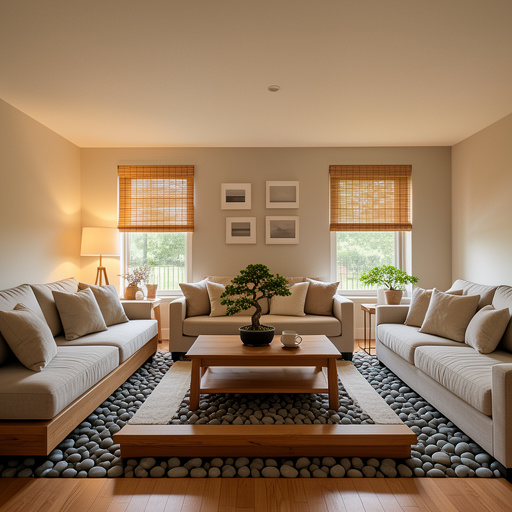
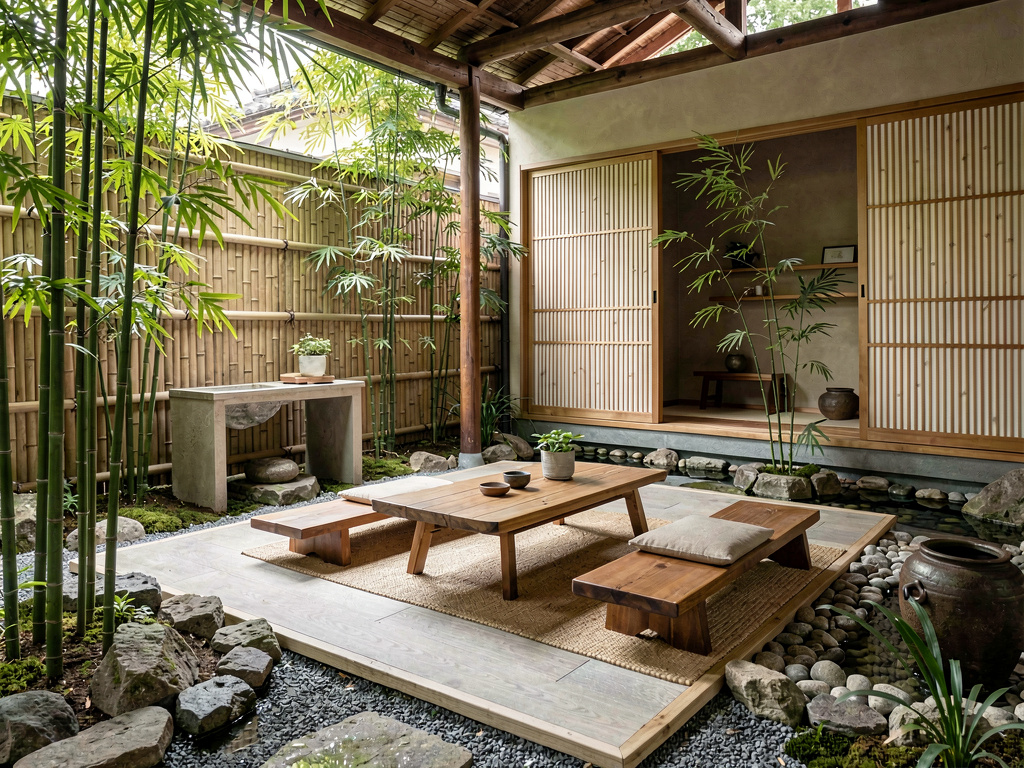
Zen design translates the principles of Zen Buddhism into physical space. The goal isn't just a pretty room — it's a room that quiets your mind when you walk in. Everything is low, grounded, and balanced. Furniture sits close to the floor, echoing the Japanese tradition of floor-level living. Colors are muted and pulled from nature: stone gray, sand beige, moss green, charcoal. Ornamentation is nearly absent. Instead, the design relies on proportion, negative space, and the quality of materials to create beauty. A single branch in a ceramic vase. A smooth river stone on a wooden shelf. Sunlight falling across a tatami mat. Zen interiors draw heavily from traditional Japanese architecture — shoji screens, engawa (transitional indoor-outdoor spaces), and the concept of ma (the purposeful use of empty space). The rooms often feel like they're breathing. This style is particularly effective in bedrooms and meditation spaces where calm is the primary function.
Zen design in every room
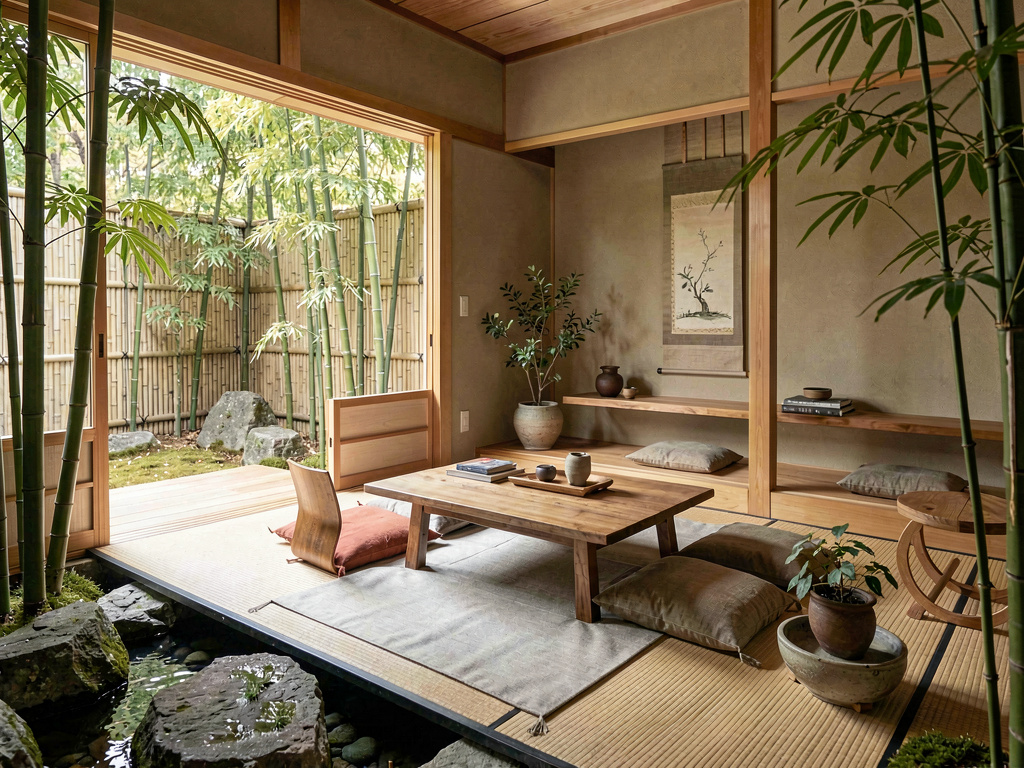
Zen living room
A low platform sofa, floor cushions for guests, and a single bonsai on a wooden stand. The room has more open space than furniture — that emptiness is the design.
View design ideas →
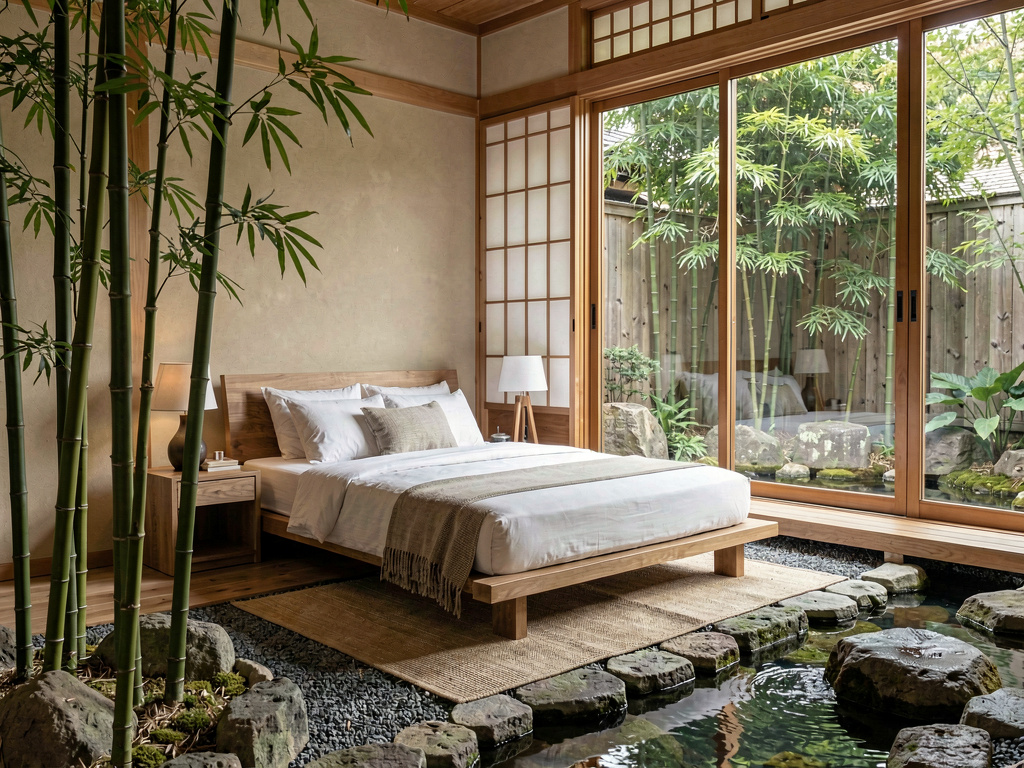
Zen bedroom
A futon or very low bed on the floor, one nightstand with a candle, and nothing else. Natural light and empty space create the stillness that defines zen.
View design ideas →
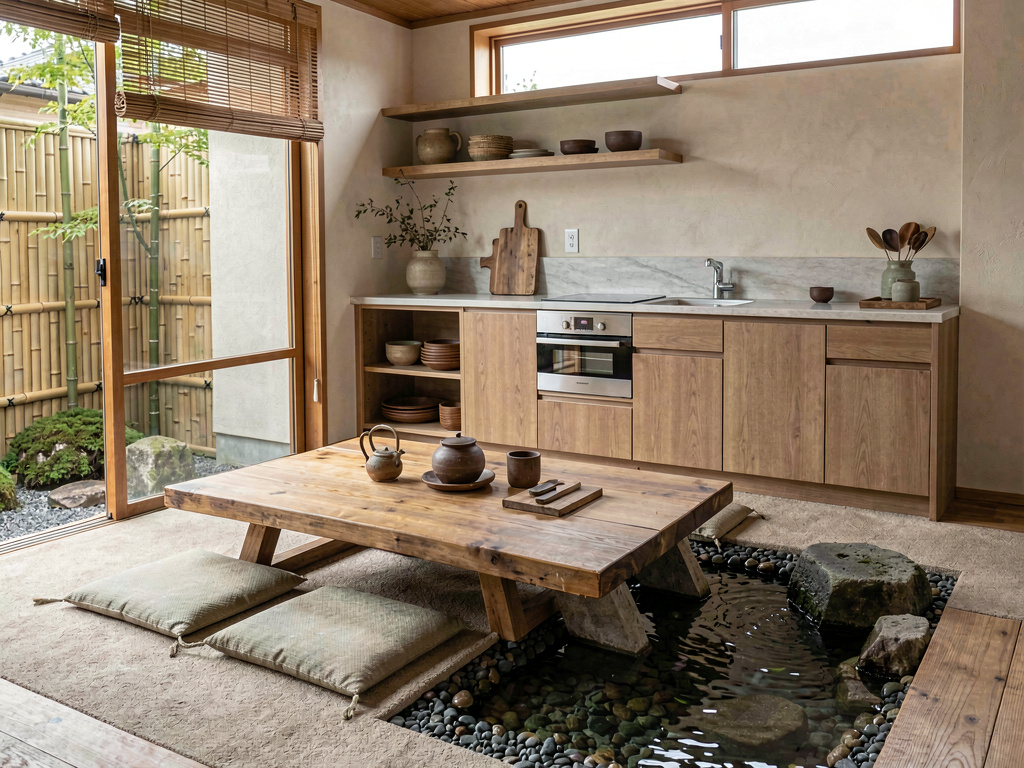
Zen kitchen
Simple wooden cabinets, a stone countertop, and ceramic vessels for tea. The kitchen has only what is needed for preparing food mindfully.
View design ideas →
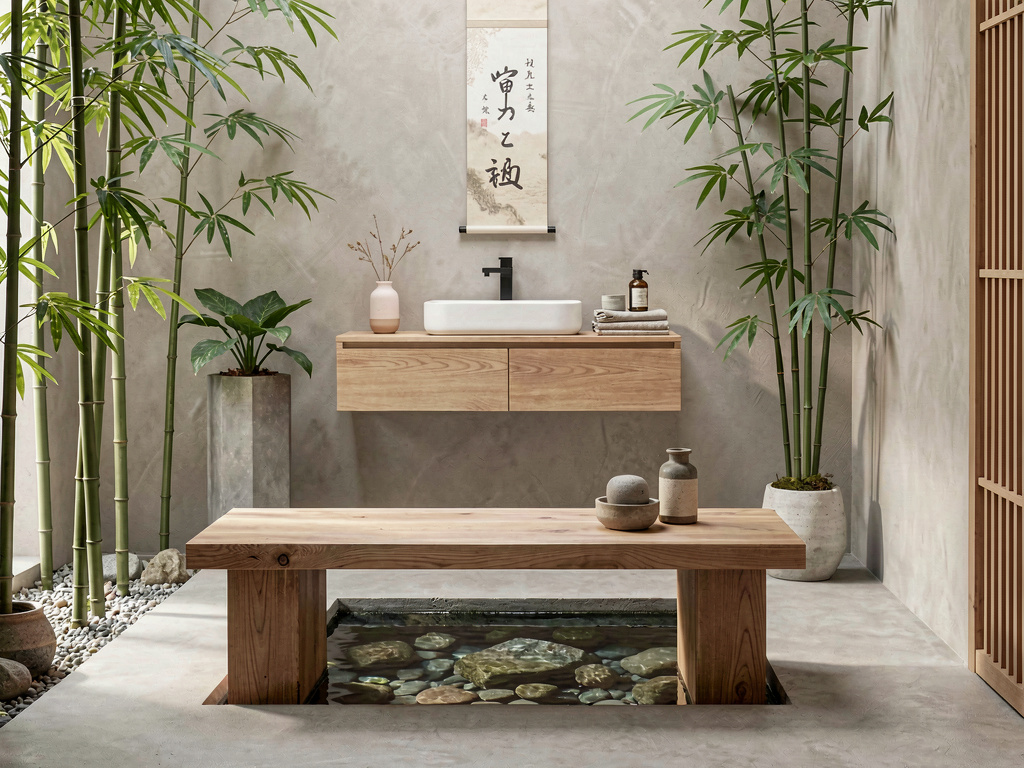
Zen bathroom
A deep soaking tub, smooth river stones, and bamboo accessories. The bathroom is a meditation space where water and stone bring calm.
View design ideas →
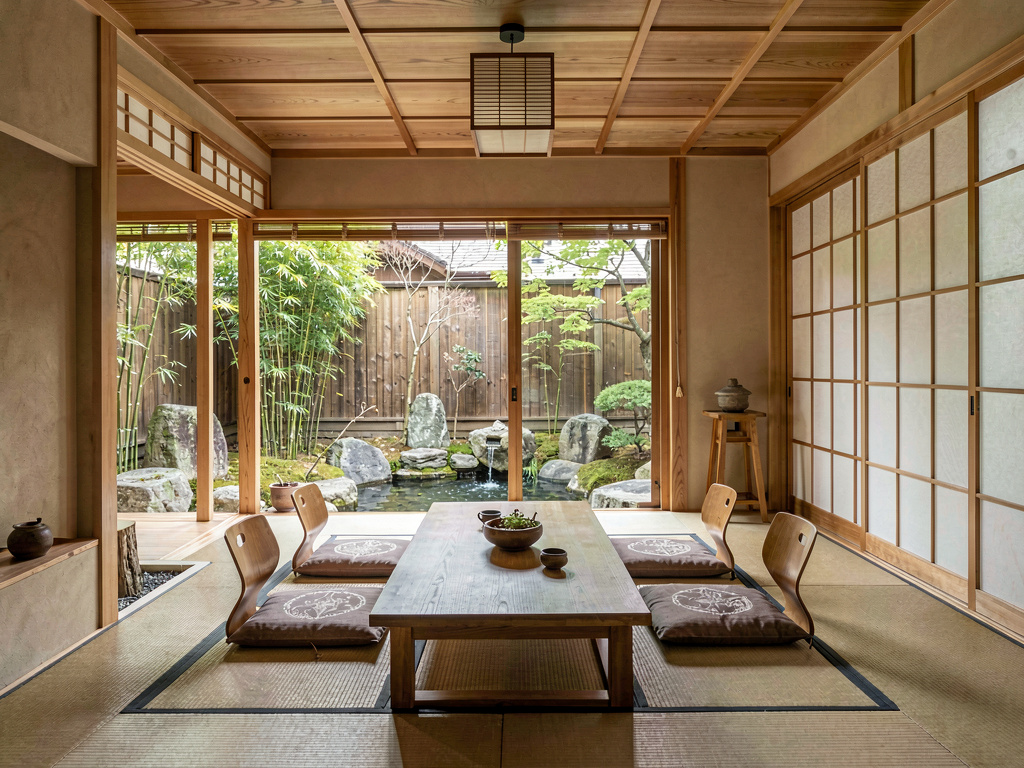
Zen dining room
A low wooden table with floor cushions or zabuton. A single ceramic bowl as a centerpiece. Meals are mindful events, not rushed activities.
View design ideas →
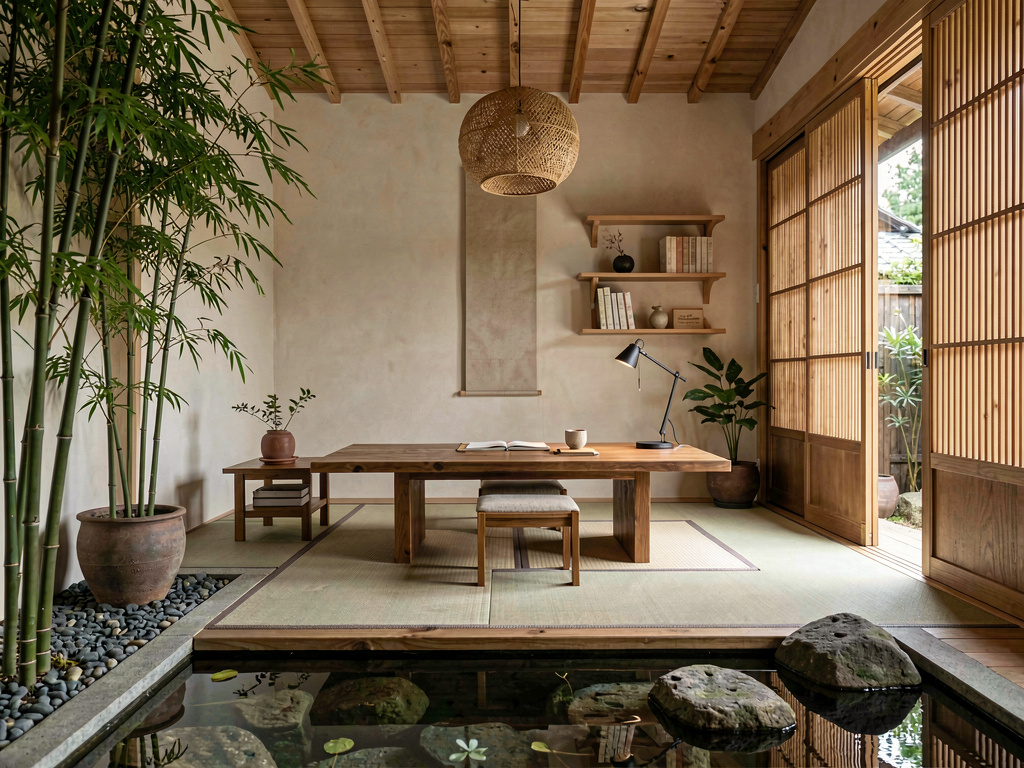
Zen home office
A low desk (or no desk — a cushion and a lap desk), shoji screen dividers, and one piece of calligraphy on the wall. The workspace promotes deep focus.
View design ideas →
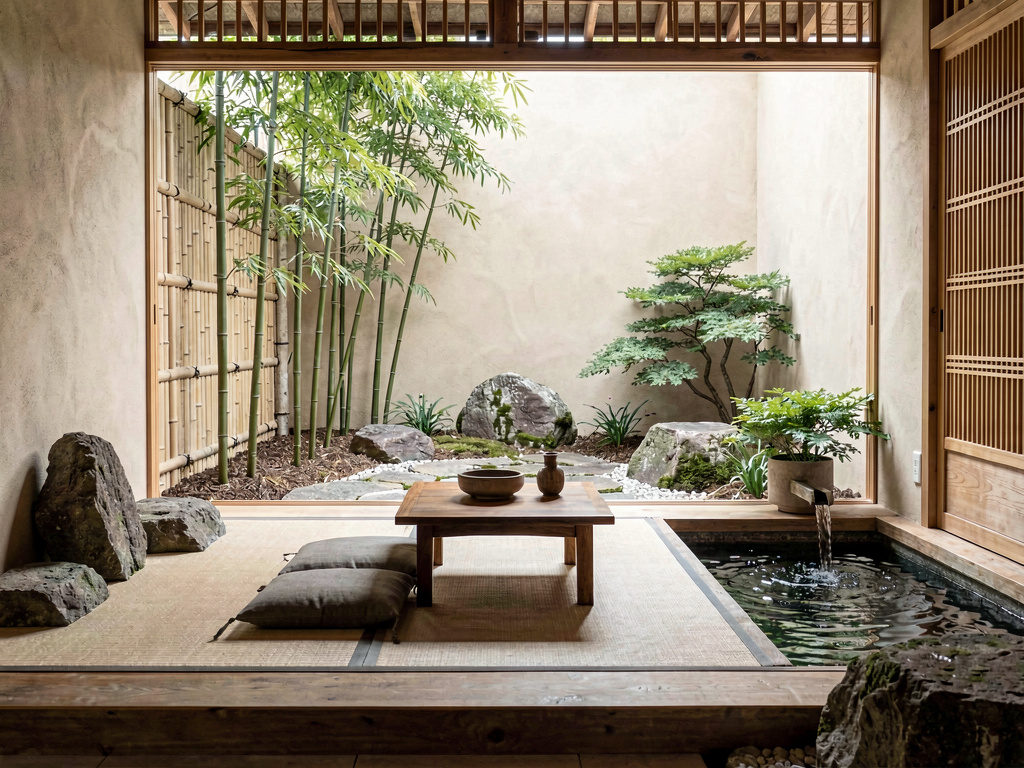
Zen entryway
A single stone step, a bamboo shoe shelf, and a ceramic bowl of smooth river stones. The entry signals that this home is a place of peace.
View design ideas →
Zen nursery
A low floor bed (Montessori-style), natural wood toys, and a bamboo mobile. The nursery is calm, safe, and connected to nature.
View design ideas →
Key characteristics of zen design
- Low-profile furniture close to or on the floor
- Extensive use of negative space (ma)
- Muted, nature-derived color palette
- Asymmetrical balance in arrangements
- Minimal decoration — each object is intentional
Common materials
How much does a zen makeover cost?
$2,000 – $12,000
Typical living room makeover
Zen is one of the most affordable styles because it uses fewer items than almost any other approach. A platform bed frame ($300-$1,500), a low coffee table ($150-$800), floor cushions ($50-$150 each), and a shoji screen room divider ($100-$500) cover the fundamentals. The expense comes from quality natural materials — a genuine tatami mat runs $80-$200 per panel, and Japanese-made ceramics cost $30-$200 per piece. Decluttering is the biggest 'cost' — and it's free.
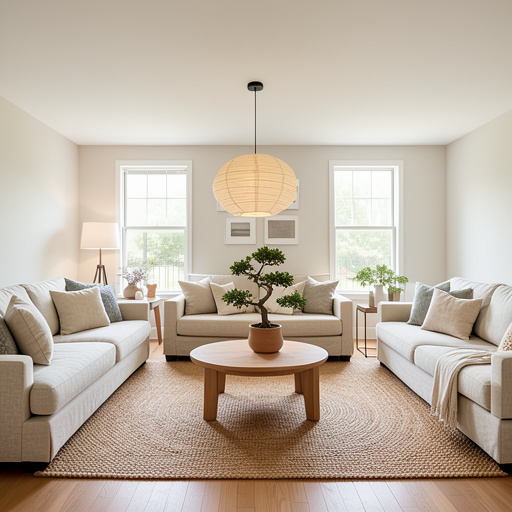
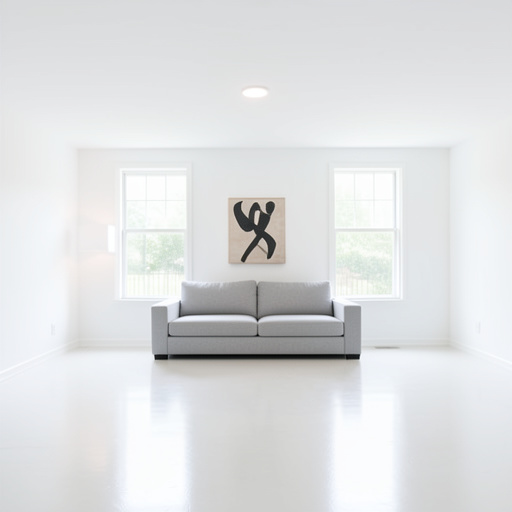
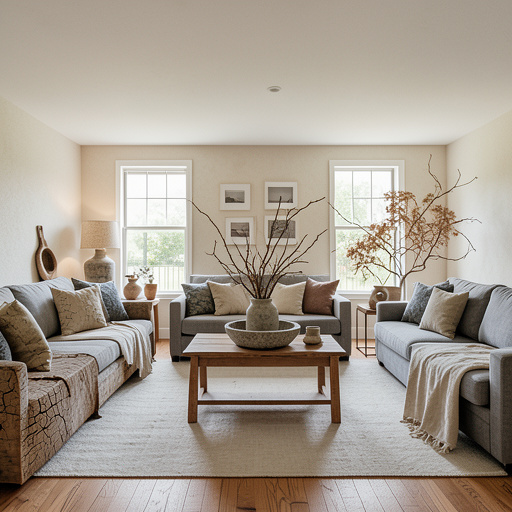
See your room remodeled with zen style — AI does it in seconds
Upload a photo and get your room remodeled with AI in zen style — takes about 10 seconds, no design skills needed.
Try It FreeFrequently asked questions
How is Zen design different from minimalism?
Minimalism is about reduction — owning and displaying less. Zen goes further by designing for a specific mental state: calm and presence. A minimalist room can feel cold or clinical. A Zen room always feels peaceful because every element is chosen to promote tranquility — natural textures, warm lighting, grounding materials, deliberate empty space.
Can I create a Zen room without going fully Japanese?
Absolutely. Focus on the principles rather than the specific objects. Low furniture, muted colors, natural materials, and plenty of open space create a Zen feeling regardless of the specific pieces. You don't need tatami mats — a low platform bed with linen bedding and one plant achieves a similar calm.
What rooms work best for Zen design?
Bedrooms and bathrooms benefit most because calm is their primary function. A Zen bathroom with stone tile, a soaking tub, bamboo accents, and soft lighting feels like a spa. Living rooms work too but require discipline — no cluttered coffee tables or overloaded bookshelves.
Related styles
Your next renovation starts
with a photo
Upload a room. See it transformed. 3 free designs, no credit card.

