Wabi-Sabi Interior Design Ideas
Beauty in imperfection. Handmade ceramics, patinated surfaces, organic forms.
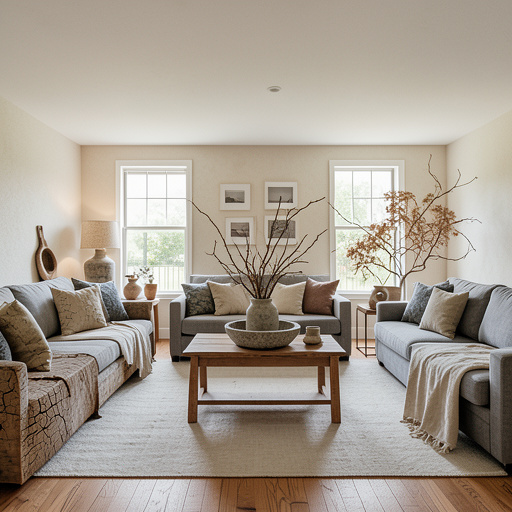
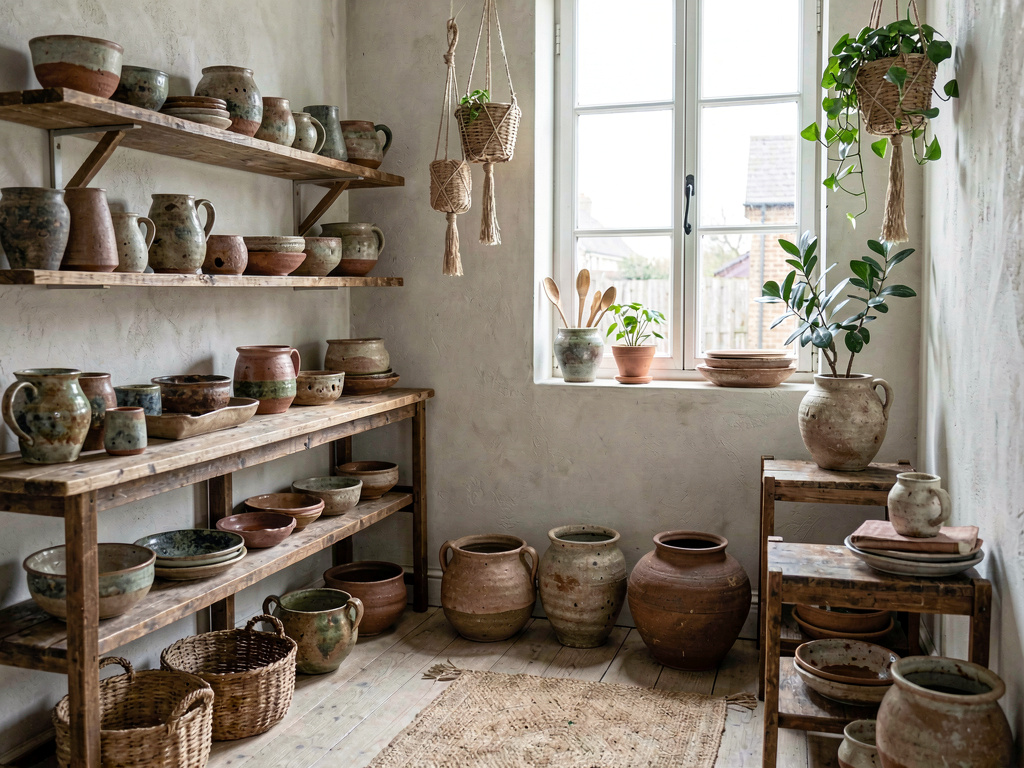
Wabi-sabi is a Japanese philosophy that finds beauty in imperfection, impermanence, and incompleteness. In interior design, this translates to rooms that celebrate natural materials in their raw state, handmade objects with visible irregularities, and surfaces that show age and use. A cracked ceramic bowl repaired with gold (kintsugi) is more beautiful than a perfect new one. A weathered wood table with visible grain tells a story that veneer cannot. Plaster walls with natural variation in texture and tone are preferred over perfectly smooth drywall. The palette is quiet and natural: raw clay, undyed linen, weathered wood, stone gray, and off-white. There is very little color because the focus is on texture and form. Rooms feel sparse but not empty — every object is chosen with care and displayed as if it matters. Wabi-sabi is the opposite of perfectionism. It asks you to stop hiding wear and start appreciating it. In a culture of mass production and disposability, rooms designed with wabi-sabi principles feel deeply personal and authentic.
Wabi-Sabi design in every room
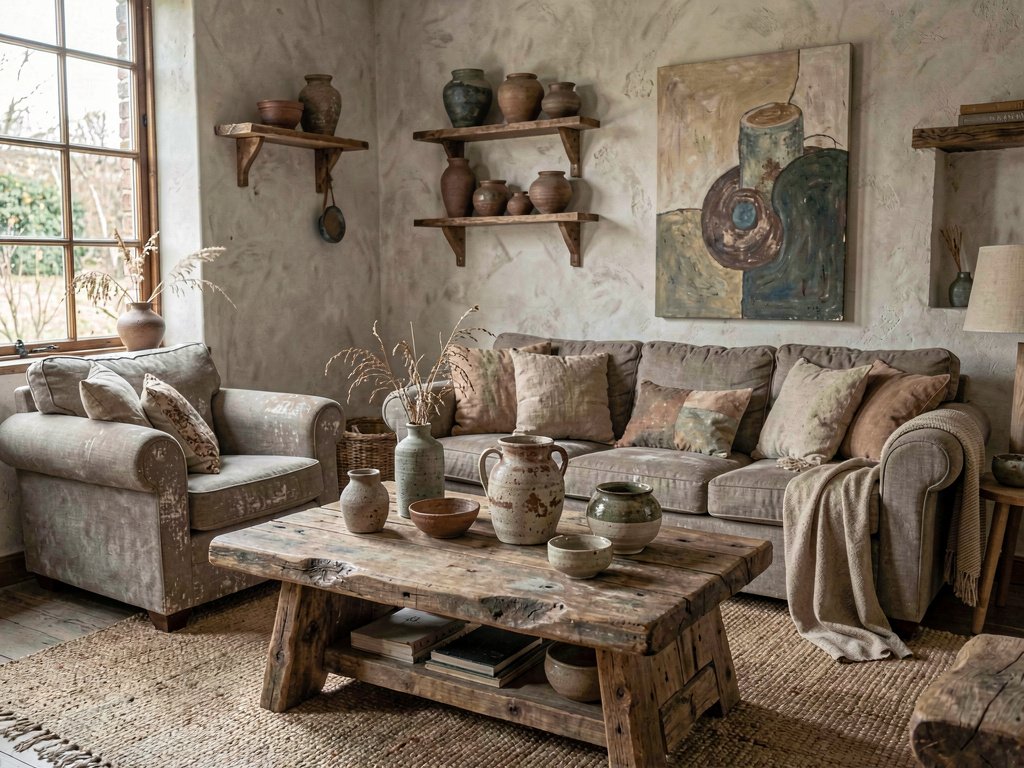
Wabi-Sabi living room
A sofa with visible linen weave, a coffee table with a crack repaired in gold (kintsugi), and a single branch in an imperfect ceramic vase. Beauty in what's broken.
View design ideas →
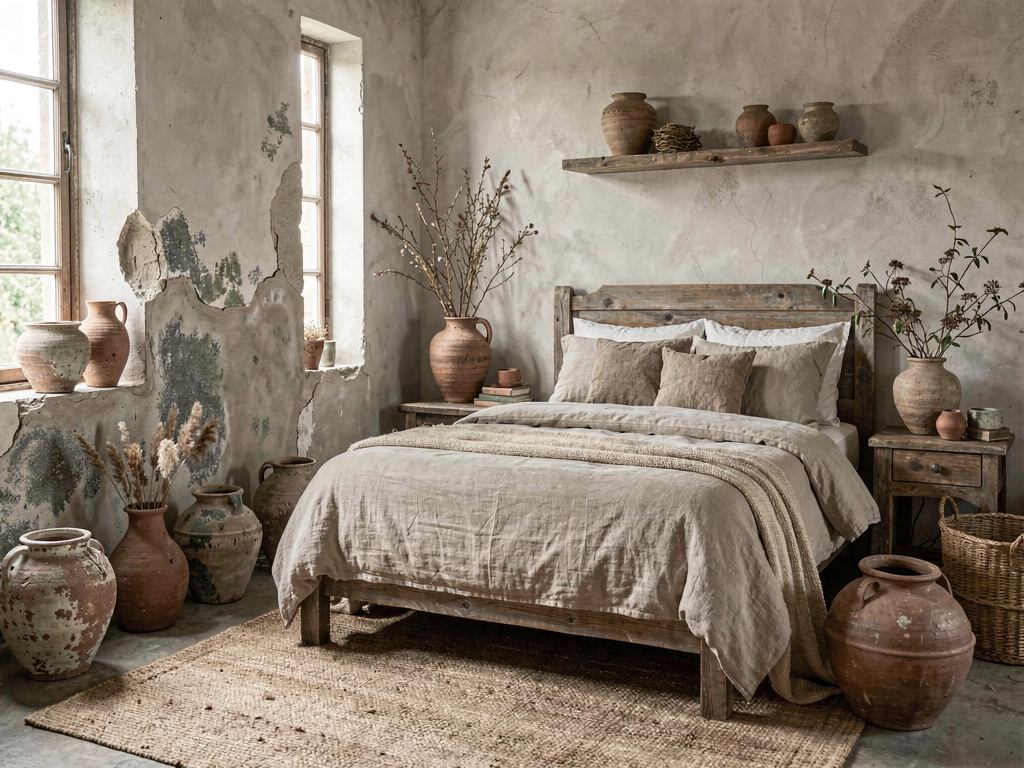
Wabi-Sabi bedroom
An unfinished wood bed frame with visible grain, undyed linen bedding, and a clay lamp that shows the potter's fingerprints. Nothing is new. Everything is honest.
View design ideas →
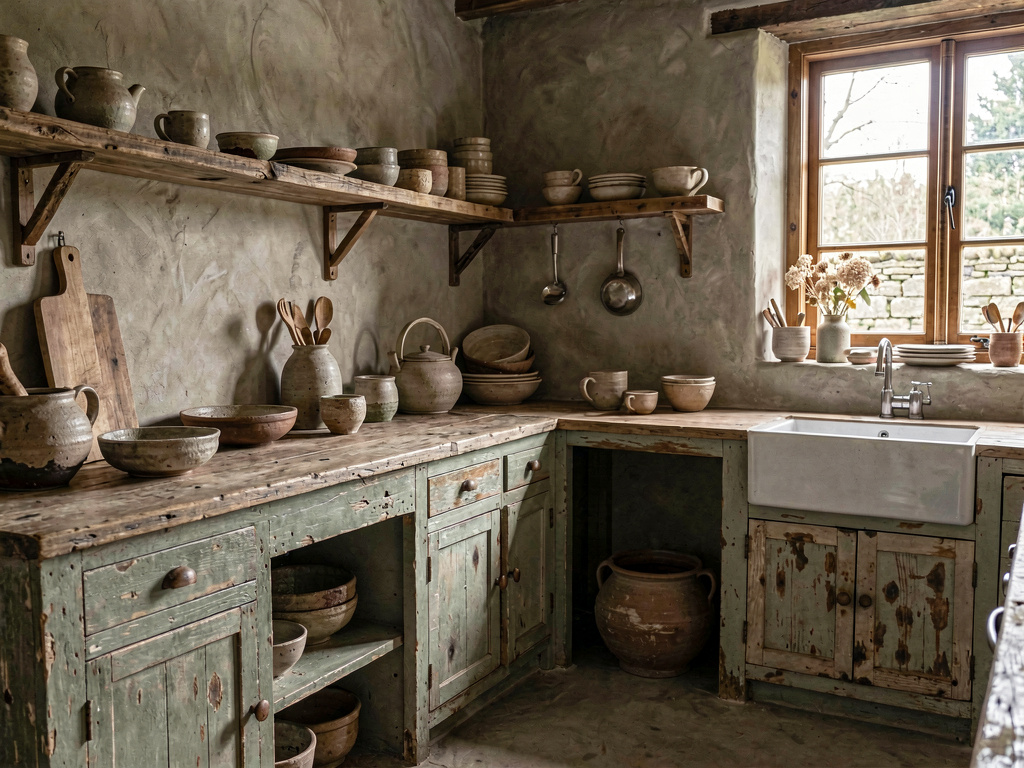
Wabi-Sabi kitchen
Hand-thrown ceramic plates on open shelves, a stone countertop with natural variation, and a wooden cutting board worn smooth from years of use. The kitchen ages gracefully.
View design ideas →
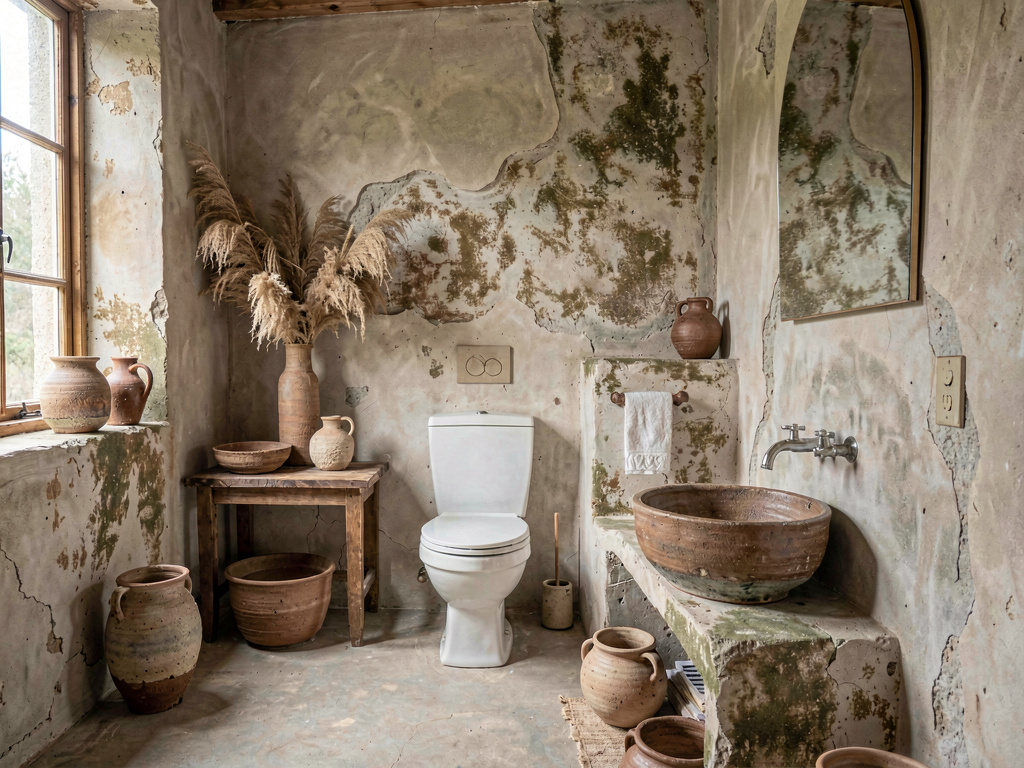
Wabi-Sabi bathroom
Raw plaster walls with natural color variation, a stone basin, and a single piece of driftwood as a towel holder. The bathroom embraces imperfection as beauty.
View design ideas →
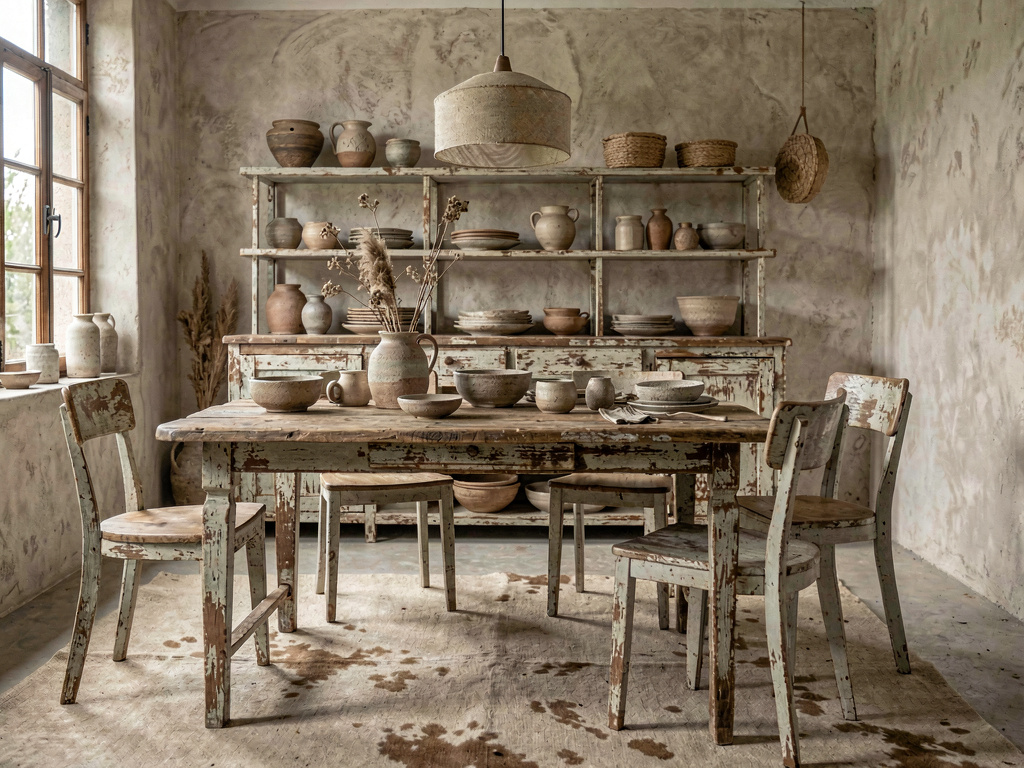
Wabi-Sabi dining room
A wooden table with visible age rings, handmade ceramic bowls, and a single wildflower in a cracked vase. The dining room finds beauty in what others discard.
View design ideas →
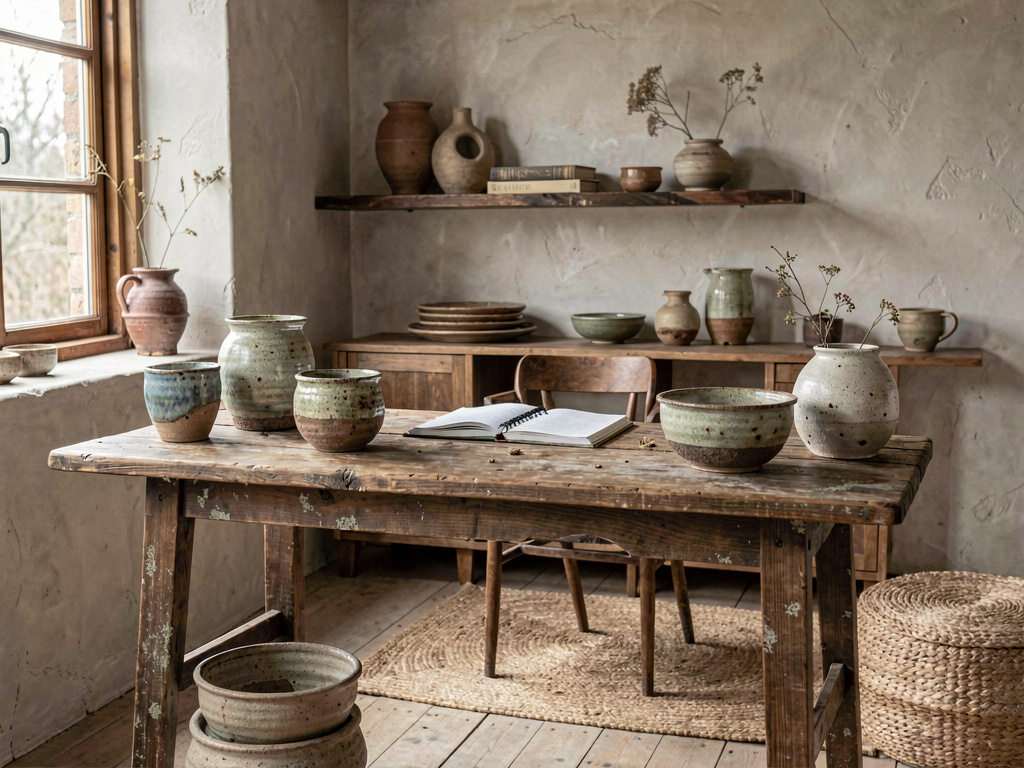
Wabi-Sabi home office
A weathered wood desk, a ceramic pen holder with visible tool marks, and hand-bound notebooks. The workspace values the handmade and the imperfect.
View design ideas →
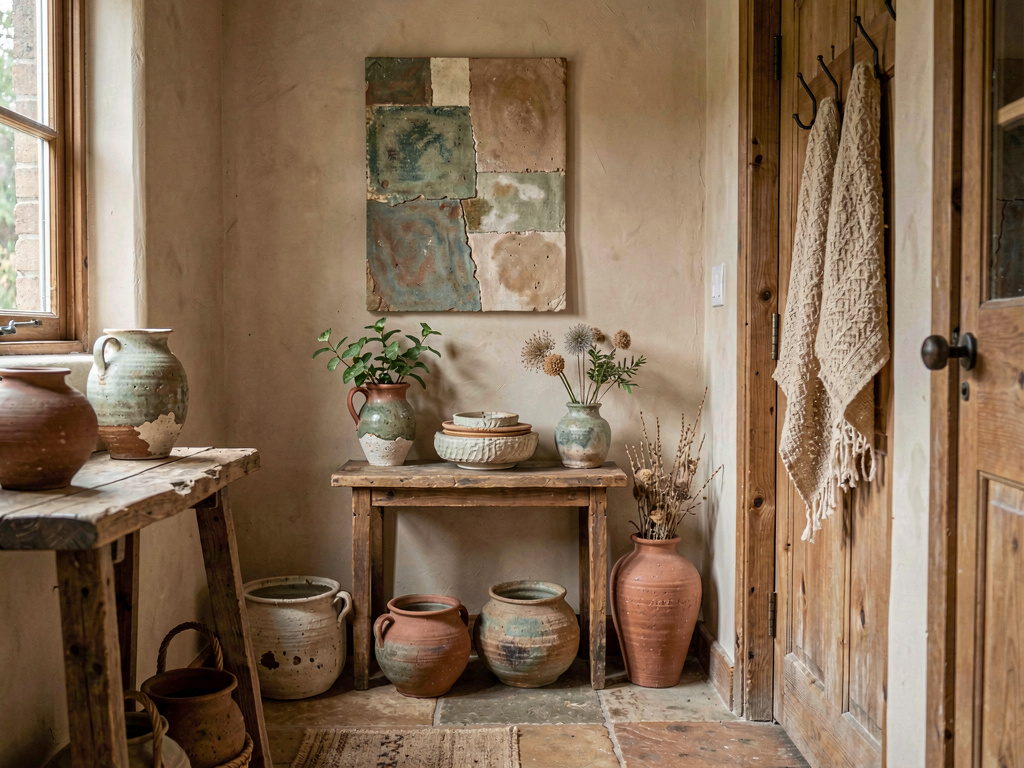
Wabi-Sabi entryway
A stone step worn smooth by footsteps, a single hook in raw iron, and a ceramic bowl with a chipped edge holding keys. The entry is honest about time passing.
View design ideas →
Wabi-Sabi nursery
A simple wood crib with natural imperfections, handwoven blankets, and a mobile of found objects — driftwood, stones, feathers. The nursery teaches beauty in the real.
View design ideas →
Key characteristics of wabi-sabi design
- Handmade objects with visible irregularities and maker's marks
- Natural materials showing age, wear, and patina
- Muted, earth-derived colors: raw clay, undyed linen, stone
- Asymmetrical arrangements that feel organic
- Sparse composition — few objects, each one meaningful
Common materials
How much does a wabi-sabi makeover cost?
$3,000 – $15,000
Typical living room makeover
Wabi-sabi can be affordable because the style rejects newness — your existing worn furniture and imperfect surfaces are assets, not problems. The main expense is handmade ceramics and pottery ($30-$200 per piece from local potters or Japanese makers), quality natural textiles ($100-$500 for linen bedding or curtains), and potentially limewash or natural plaster walls ($50-$100 per gallon). A wabi-sabi room is built by subtracting (removing decor, embracing existing imperfections) more than by buying.
See your room remodeled with wabi-sabi style — AI does it in seconds
Upload a photo and get your room remodeled with AI in wabi-sabi style — takes about 10 seconds, no design skills needed.
Try It FreeFrequently asked questions
How is wabi-sabi different from minimalism?
Both use few objects, but the philosophy is different. Minimalism seeks perfection through reduction — clean lines, flawless surfaces, precision. Wabi-sabi seeks beauty in imperfection — cracks, asymmetry, weathering, handmade variation. A minimalist vase is machine-made and smooth. A wabi-sabi vase is hand-thrown with fingerprints still visible in the clay.
Where do I find wabi-sabi ceramics and objects?
Local pottery studios and ceramicists are the best source — their handmade pieces are wabi-sabi by nature. Online: Etsy (search 'handmade ceramic' + 'irregular' or 'rustic'), Nalata Nalata (Japanese homewares), and Tortoise General Store. For affordable options, MUJI and H&M Home carry simple, natural pieces that fit the aesthetic.
Can I practice wabi-sabi in a modern home?
Yes — start by changing your relationship with imperfection. Stop hiding the scratch on your dining table; let it tell a story. Use a chipped bowl instead of throwing it away. Replace one piece of mass-produced decor with something handmade. Wabi-sabi is a mindset first and a design style second. The room follows the philosophy.
Related styles
Your next renovation starts
with a photo
Upload a room. See it transformed. 3 free designs, no credit card.

