Bauhaus Interior Design Ideas
Form follows function. Geometric shapes, primary colors, innovative materials.
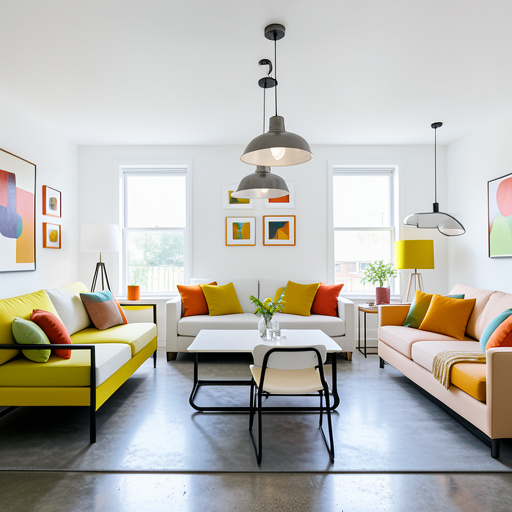
Bauhaus is the grandfather of modern design. Founded in 1919 by architect Walter Gropius in Weimar, Germany, the Bauhaus school taught that art and industry should merge — that beautiful objects should be functional and accessible to everyone. The movement lasted only 14 years (the Nazis shut it down in 1933), but its influence on architecture, furniture, and graphic design is permanent. In interiors, Bauhaus means geometric forms, primary color accents (red, blue, yellow) against neutral backgrounds, and furniture designed around function rather than decoration. The iconic Bauhaus pieces are still in production: Marcel Breuer's Wassily Chair (tubular steel and leather), Ludwig Mies van der Rohe's Barcelona Chair (steel and leather), and the Bauhaus desk lamp. The aesthetic is rational, clean, and industrial — but with more personality than pure minimalism thanks to the bold primary color accents and the geometric compositions. Bauhaus rooms feel intellectual and deliberate. Every object was designed with intent.
Bauhaus design in every room
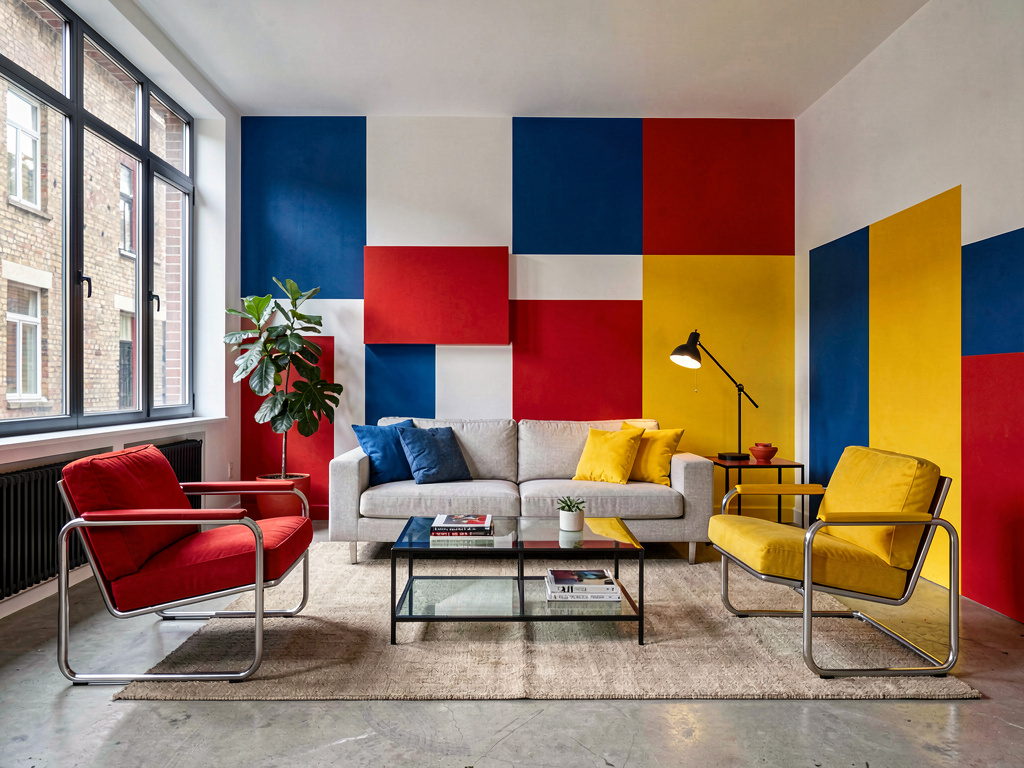
Bauhaus living room
A Wassily chair in leather and chrome, a primary-colored accent wall, and a geometric rug. Tubular steel furniture and intentional simplicity. Every form has a function.
View design ideas →
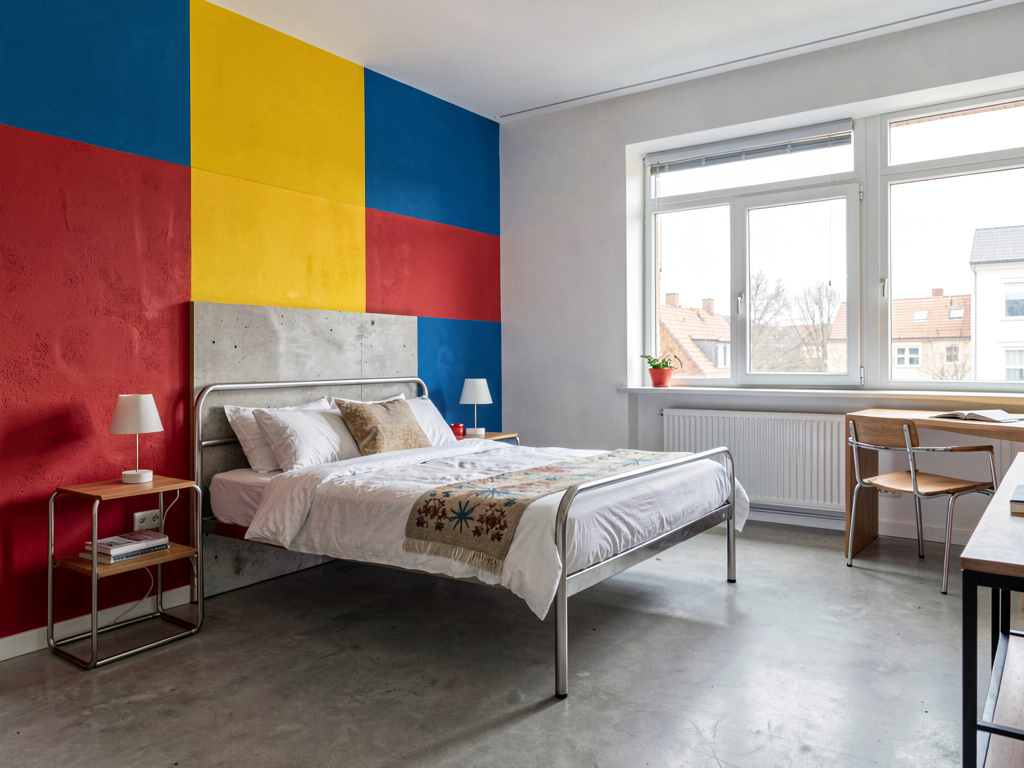
Bauhaus bedroom
A tubular steel bed frame, primary-colored pillows on white bedding, and a Bauhaus poster on the wall. The bedroom is a manifesto of functional design.
View design ideas →
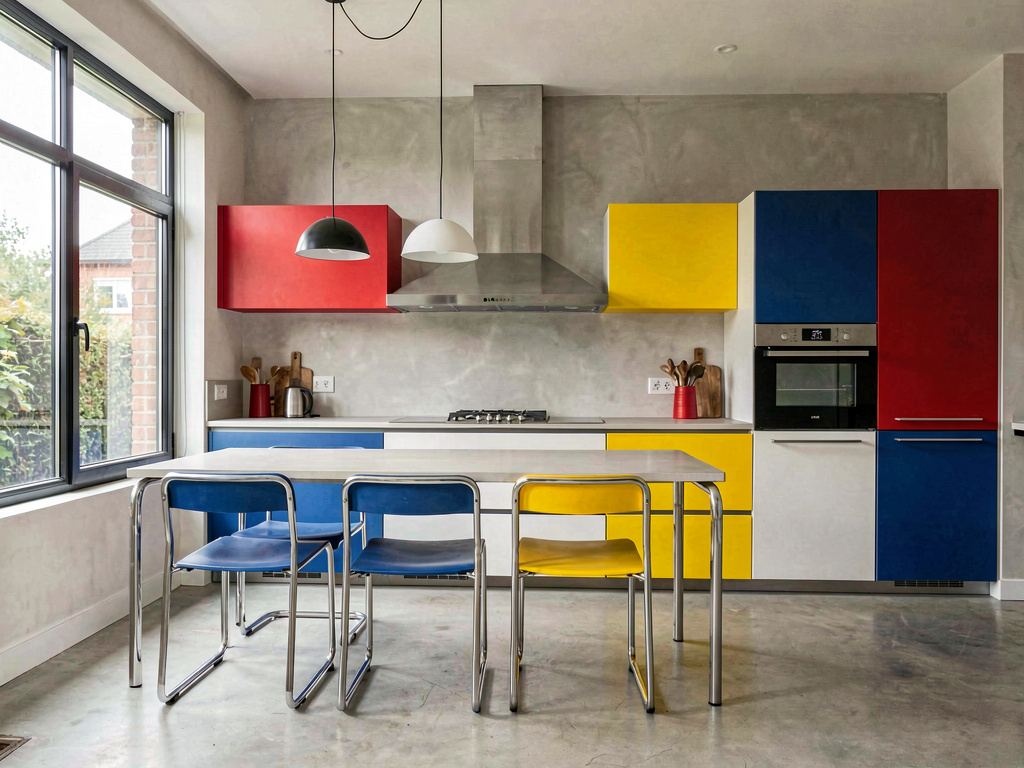
Bauhaus kitchen
Flat-panel cabinets in white with a red or blue accent, steel fixtures, and geometric tile. The kitchen treats cooking as an efficient, well-designed process.
View design ideas →
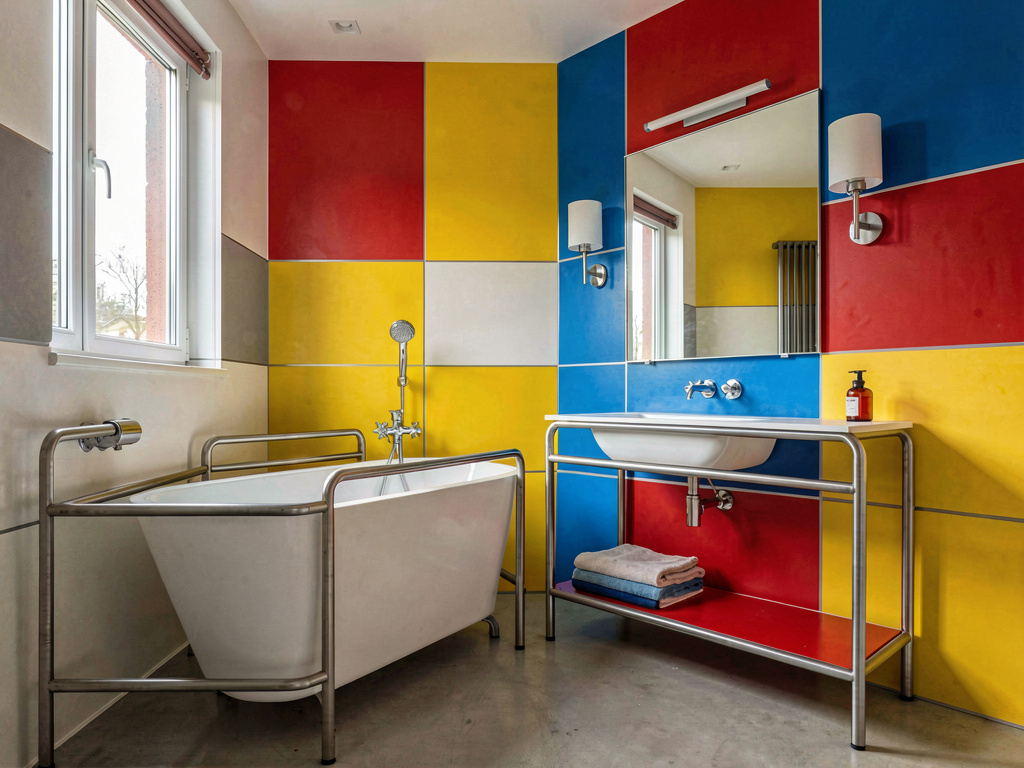
Bauhaus bathroom
White tile with primary-color accents, chrome fixtures, and geometric shapes in the mirror and storage. Clean, functional, and intellectually satisfying.
View design ideas →
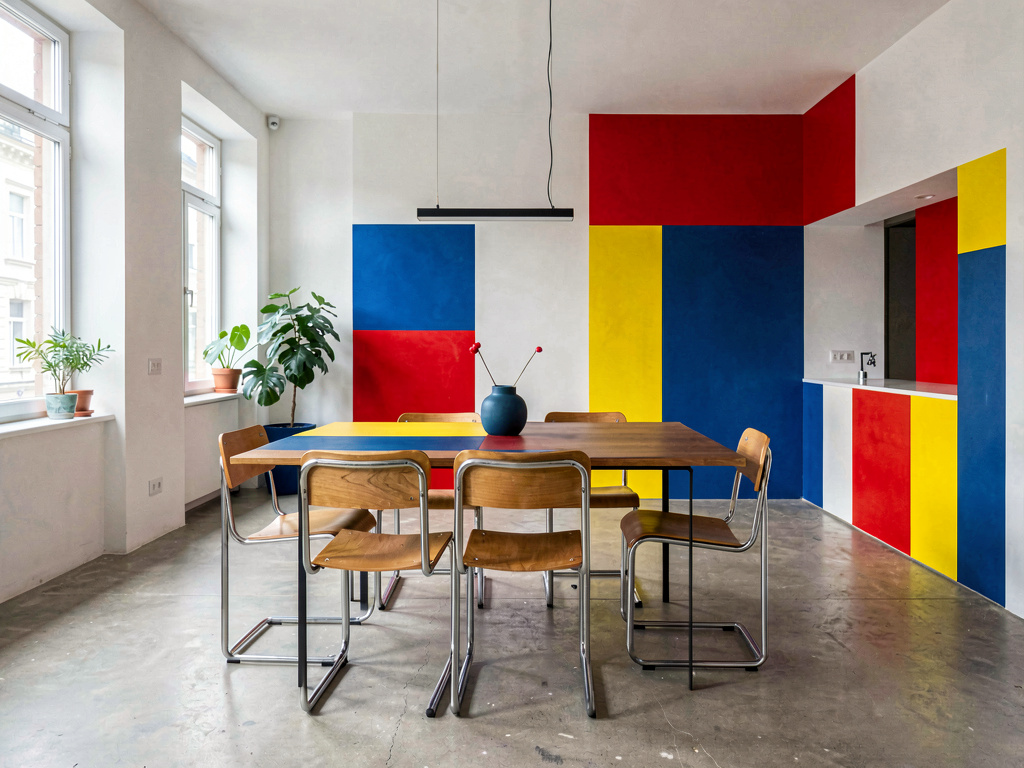
Bauhaus dining room
A steel-and-glass table with Breuer-style chairs and a primary-colored pendant. The dining room is a geometry lesson you eat dinner in.
View design ideas →
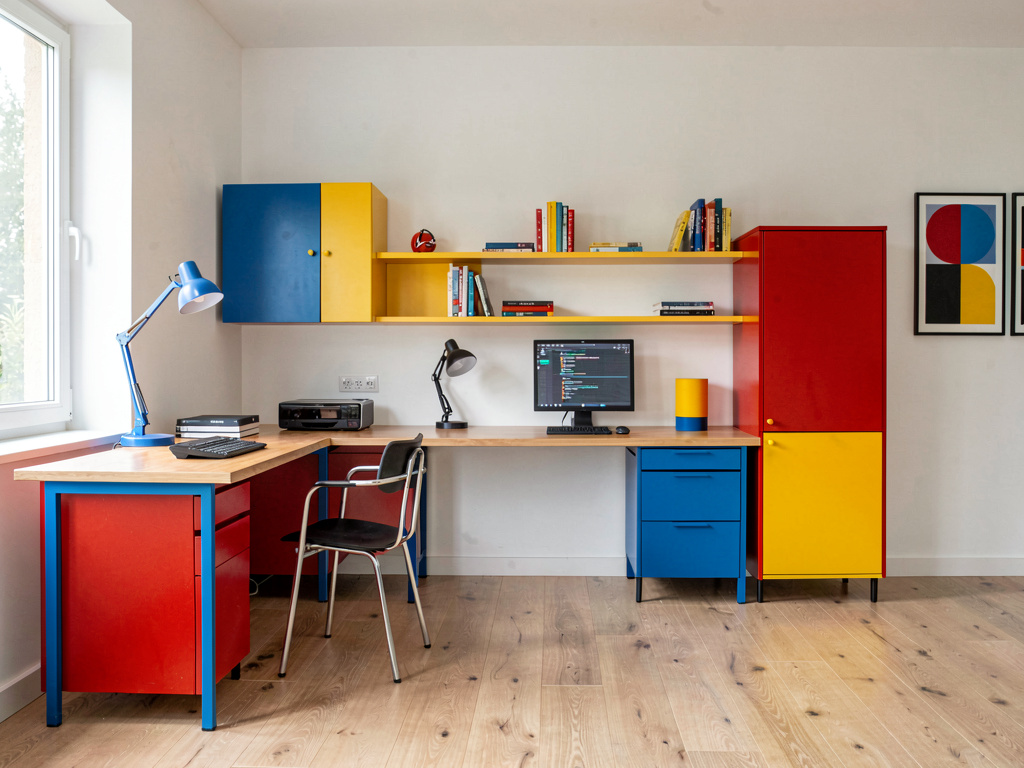
Bauhaus home office
A tubular steel desk with a glass top, a Bauhaus task lamp, and a primary-colored accent on one wall. Function is the only ornament.
View design ideas →
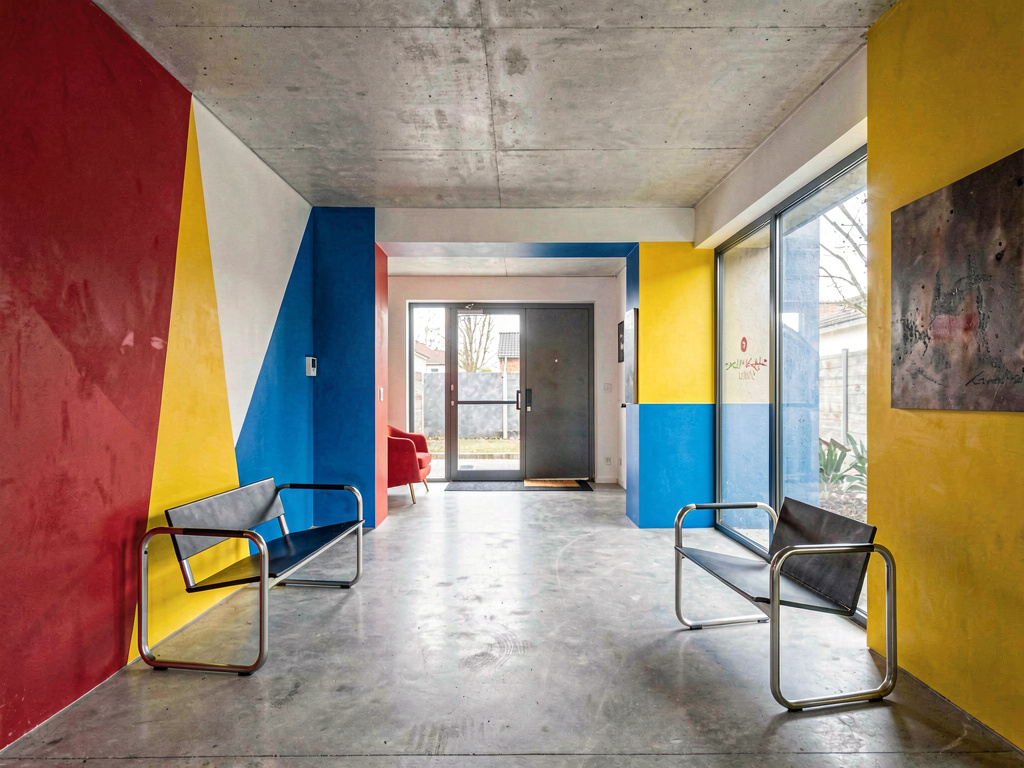
Bauhaus entryway
A steel console with a glass top, a circular mirror, and one object in a primary color. The entry is a statement about design philosophy.
View design ideas →
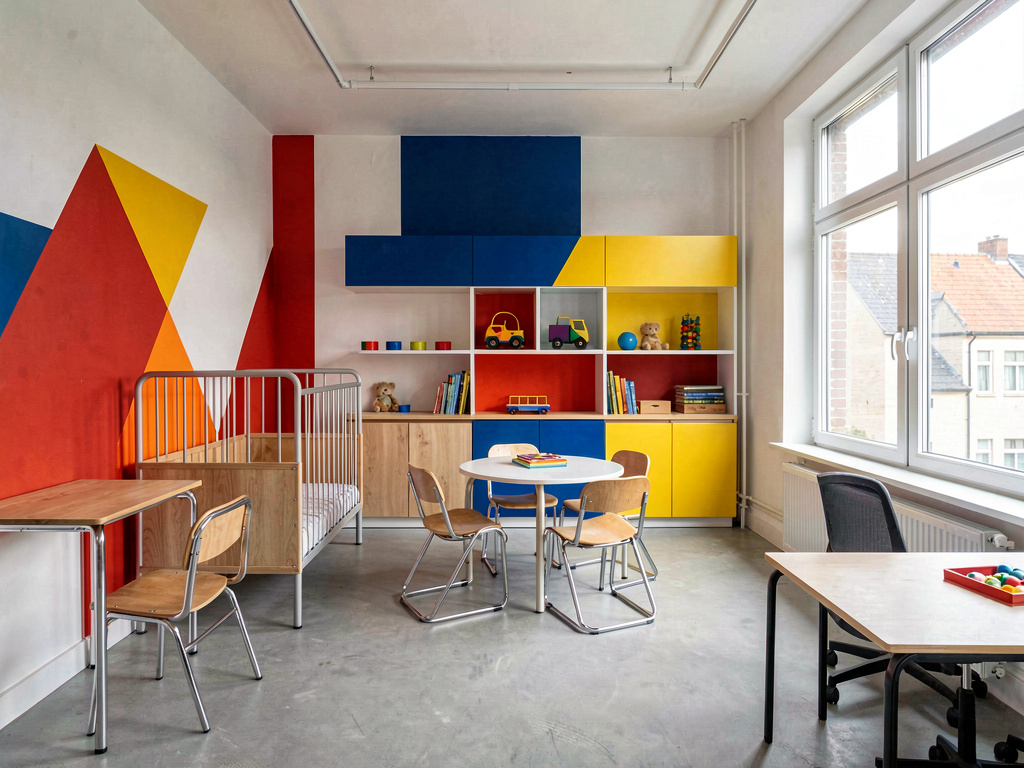
Bauhaus nursery
A simple crib with primary-colored bedding, geometric mobile, and Bauhaus-inspired wall art. The nursery introduces design thinking from birth.
View design ideas →
Key characteristics of bauhaus design
- Geometric forms: circles, squares, triangles as design motifs
- Primary color accents: red, blue, yellow on neutral backgrounds
- Tubular steel and industrial materials in furniture
- Function-driven design with no unnecessary decoration
- Open, rational floor plans with clear purpose
Common materials
How much does a bauhaus makeover cost?
$5,000 – $25,000
Typical living room makeover
Authentic Bauhaus furniture is expensive because the designs are licensed and still manufactured by Knoll and Thonet. A Wassily Chair retails for $1,500-$3,000. A Barcelona Chair is $5,000-$7,000. However, many Bauhaus designs have entered the public domain or are widely reproduced. Quality reproductions cost 30-50% of originals. A Bauhaus-inspired room with a mix of reproductions and modern pieces runs $5,000-$10,000. The style's simplicity means fewer total pieces are needed.
See your room remodeled with bauhaus style — AI does it in seconds
Upload a photo and get your room remodeled with AI in bauhaus style — takes about 10 seconds, no design skills needed.
Try It FreeFrequently asked questions
What makes a room Bauhaus?
Three elements define it: geometric shapes (in furniture, art, and layout), primary color accents against white or gray walls, and furniture made from industrial materials (steel, glass, bent plywood). If your room has a Breuer-style chair, a geometric rug, and a primary-colored accent wall, it reads as Bauhaus.
Is Bauhaus the same as modern?
Bauhaus is a subset of modern. All Bauhaus design is modern, but not all modern design is Bauhaus. Modern is the broader movement. Bauhaus specifically refers to the aesthetic developed at the Bauhaus school: geometric, primary-colored, and industrial. Standard modern design is more neutral and less geometric.
How do I add Bauhaus touches without buying iconic furniture?
Start with color and geometry. Paint one wall in a primary color (red, blue, or yellow). Add geometric art prints (Kandinsky, Klee, Mondrian are all Bauhaus-adjacent). Use a geometric rug. Choose furniture with tubular metal frames — many affordable brands make steel-framed chairs and tables. The geometric-primary combination is the core of the look.
Related styles
Related articles
Your next renovation starts
with a photo
Upload a room. See it transformed. 3 free designs, no credit card.

