Industrial Interior Design Ideas
Raw, urban aesthetic. Exposed brick, metal, concrete, and Edison bulbs.
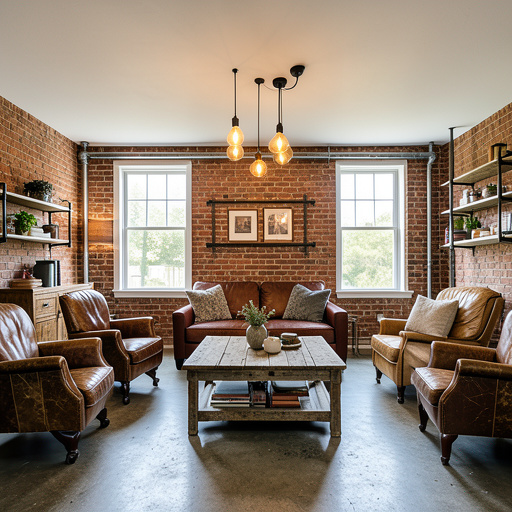
Industrial design started in the lofts of Manhattan and Brooklyn in the 1960s and 70s, when artists converted abandoned factories and warehouses into live-work spaces. They couldn't afford to renovate, so they left the bones exposed — brick walls, steel columns, concrete floors, ductwork, pipes. It turned out those raw elements looked great with a few pieces of furniture dropped in. The style works because of contrast: hard surfaces softened by leather, warm lighting against cold concrete, a vintage rug on a bare floor. Industrial design needs height (ideally 10+ foot ceilings) and natural light to avoid feeling like a bunker. If your space has exposed elements already, industrial is the cheapest style to achieve — you're literally leaving things unfinished. For spaces without those raw bones, faux brick panels and industrial-style furniture achieve the mood without demolition.
Industrial design in every room
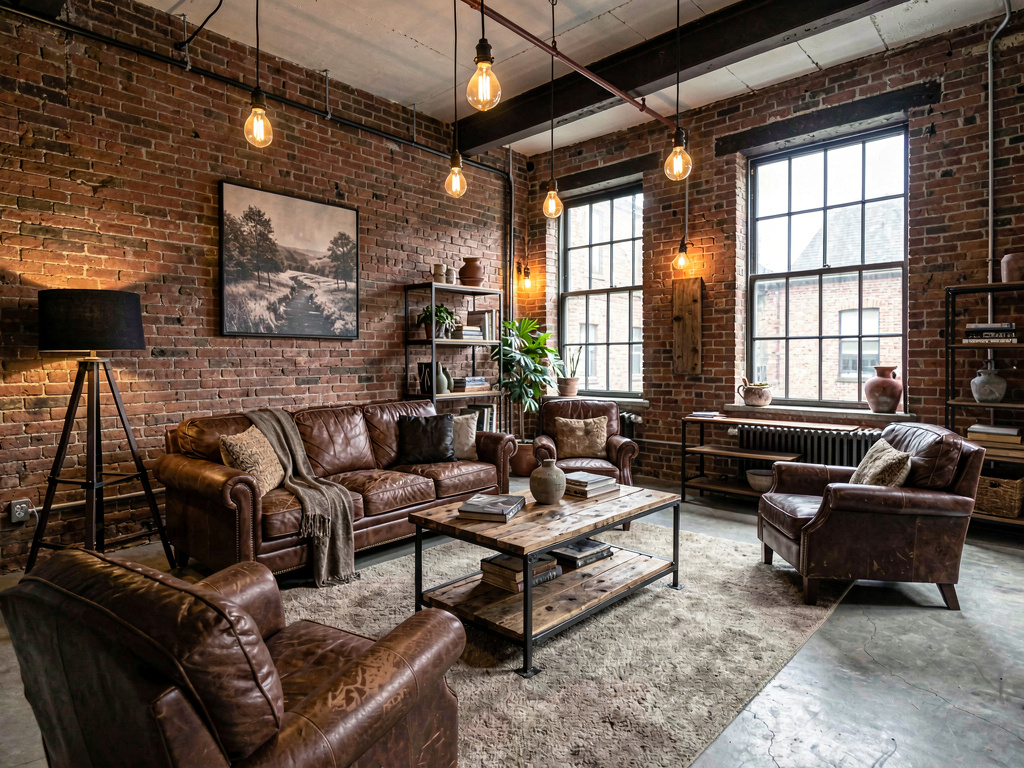
Industrial living room
A leather Chesterfield sofa on a vintage Persian rug, exposed brick on one wall, and Edison bulb pendants casting warm amber light. The room has history and weight.
View design ideas →
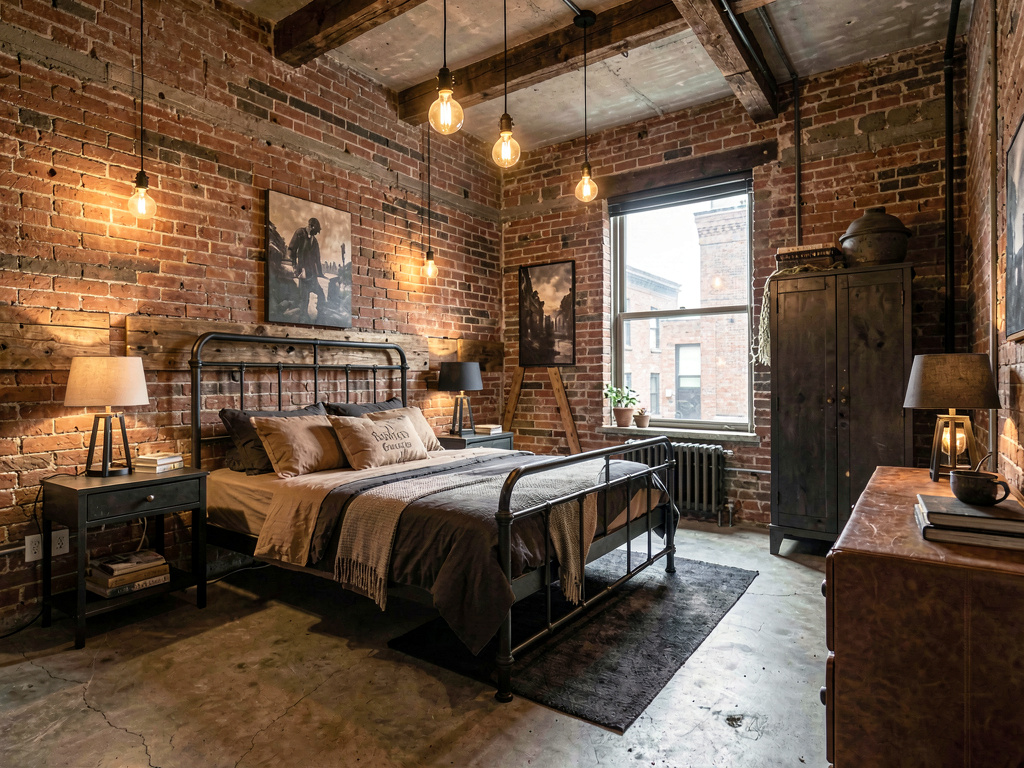
Industrial bedroom
An iron bed frame against an exposed brick wall, a reclaimed wood nightstand, and warm Edison sconces. A vintage rug on concrete floors softens the raw materials.
View design ideas →
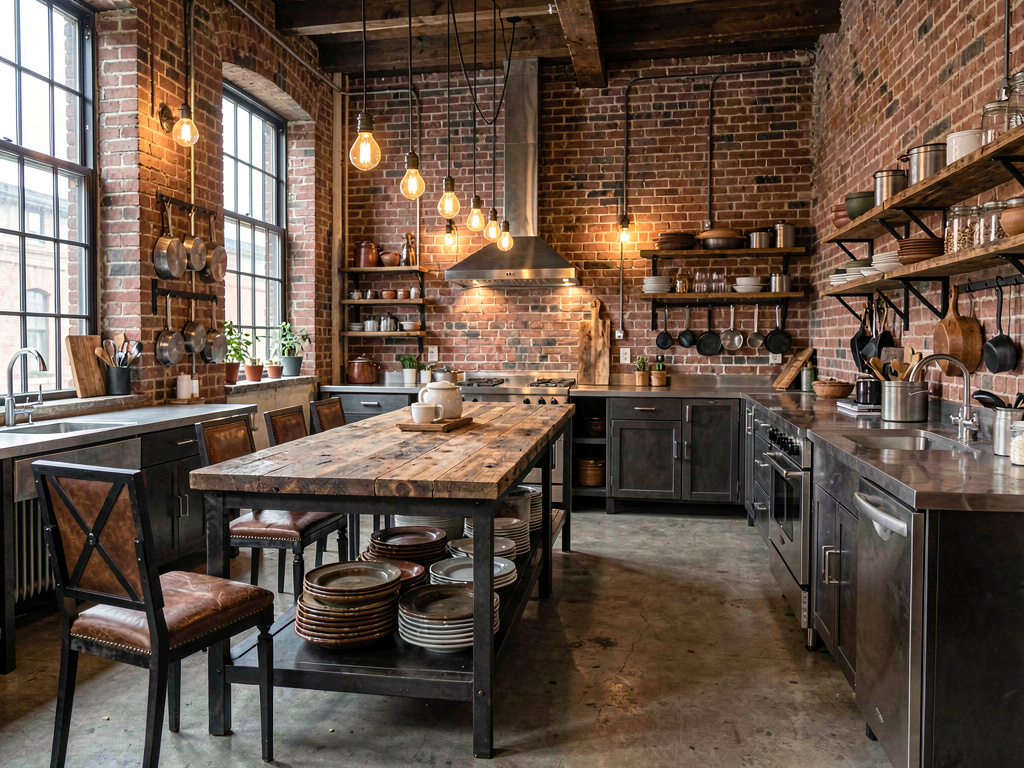
Industrial kitchen
Open metal and wood shelving replaces upper cabinets. Concrete countertops, subway tile in dark gray, and black cage pendant lights create a professional-kitchen feel.
View design ideas →
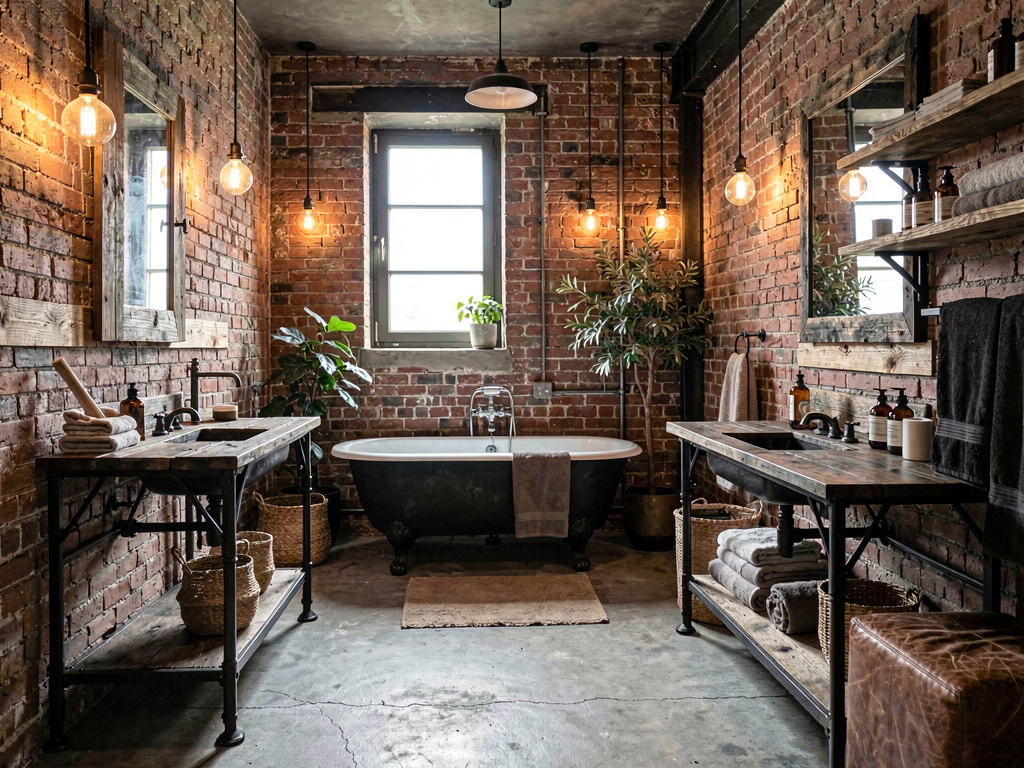
Industrial bathroom
Concrete-look tile, black iron fixtures, and an exposed-pipe vanity. A vintage mirror with a metal frame and a single Edison bulb sconce. Raw but refined.
View design ideas →
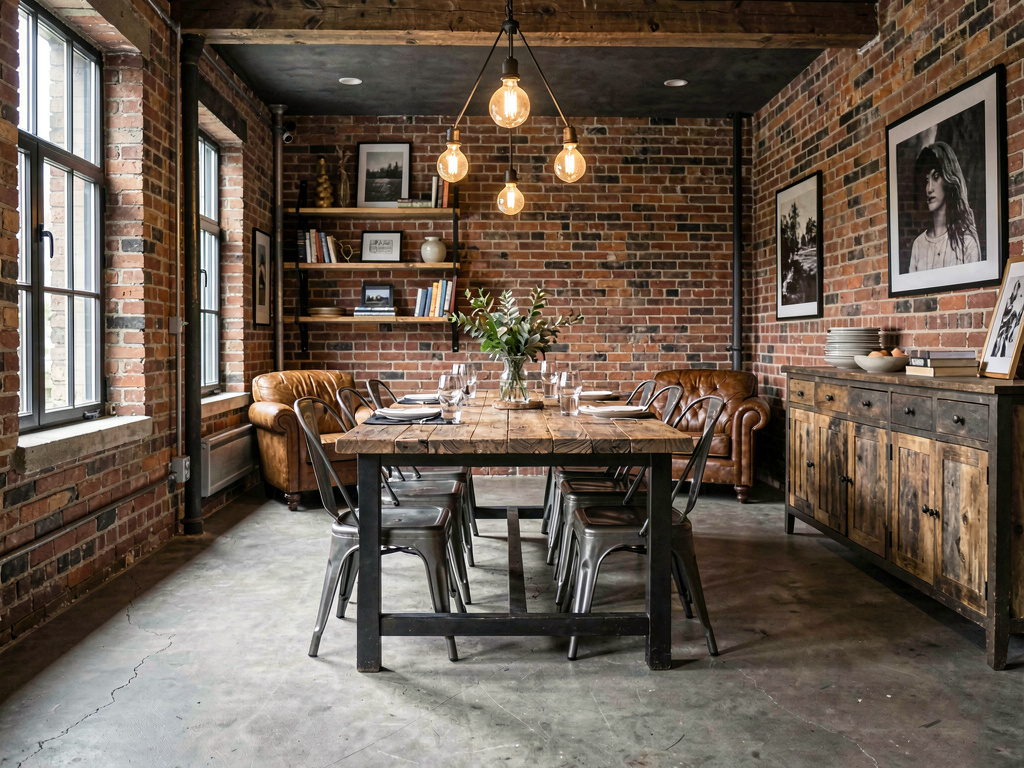
Industrial dining room
A steel-and-wood dining table with metal chairs and an oversized industrial pendant. Exposed ductwork above and a concrete floor below. The room means business.
View design ideas →
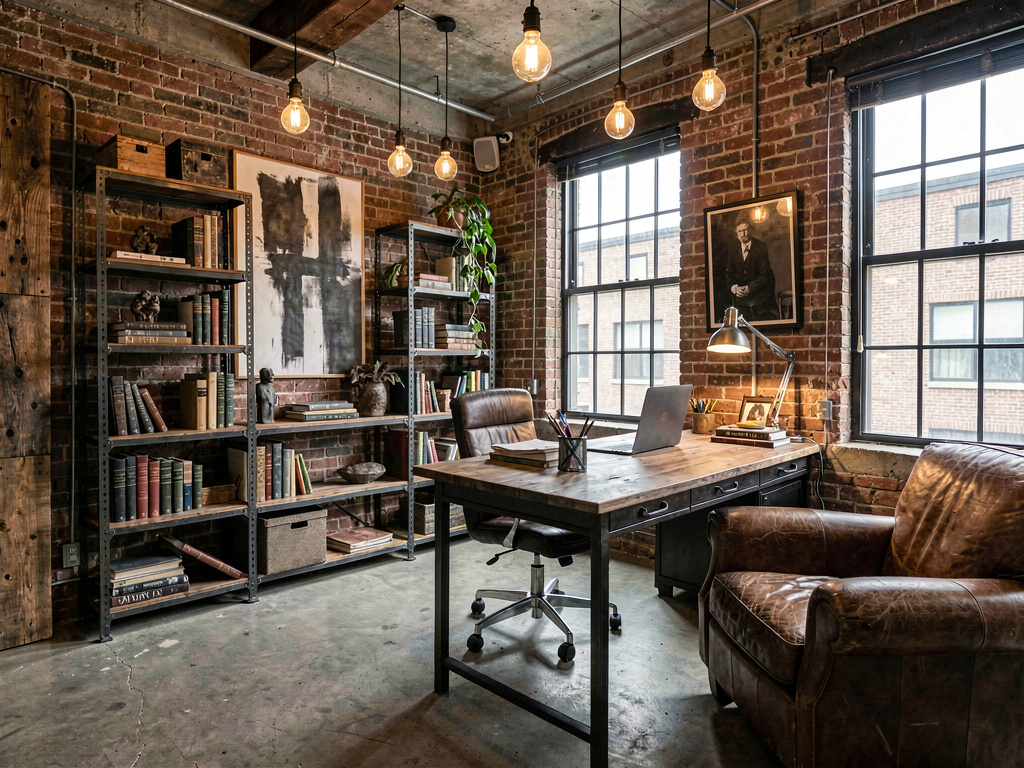
Industrial home office
A pipe-and-wood desk against a brick wall, metal shelving, and a vintage leather desk chair. The workspace feels like a creative studio in a converted warehouse.
View design ideas →
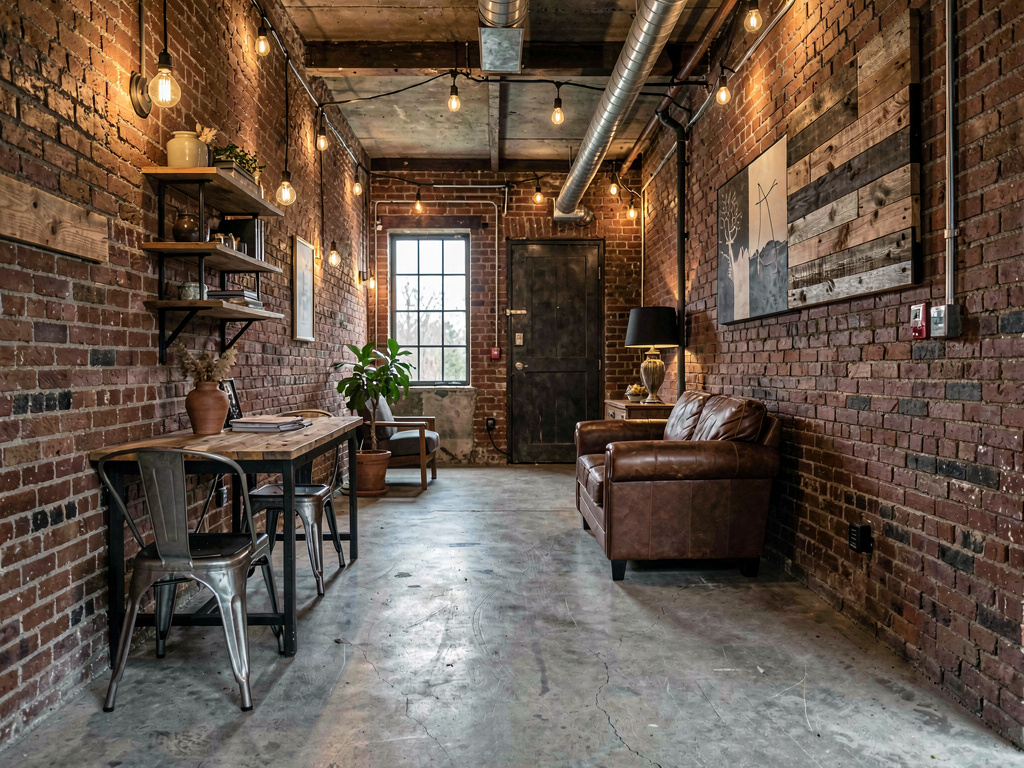
Industrial entryway
A steel and reclaimed wood console, industrial hooks welded from pipe fittings, and a vintage factory mirror. The entry signals that this home has character.
View design ideas →
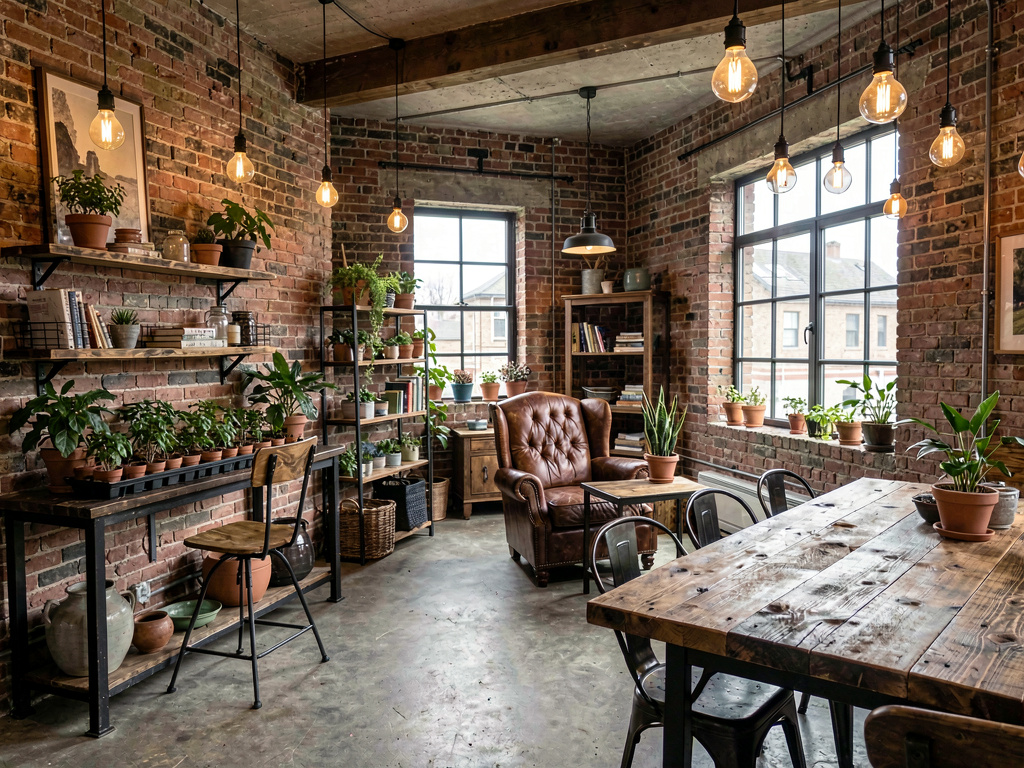
Industrial nursery
An iron crib frame softened with warm wool blankets and natural textiles. Exposed brick is balanced by soft rugs and warm-toned lighting. Industrial with a gentle touch.
View design ideas →
Key characteristics of industrial design
- Exposed structural elements: brick, ductwork, beams, pipes
- Raw materials: concrete, steel, iron, reclaimed wood
- Open floor plans with high ceilings
- Edison bulb and pendant lighting
- Dark, moody color palette with warm accents
Common materials
How much does a industrial makeover cost?
$3,000 – $20,000
Typical living room makeover
Industrial is paradoxically one of the cheapest styles because it celebrates unfinished surfaces. If you already have concrete floors, exposed brick, or metal elements, you're halfway there for free. The main costs are furniture (a quality leather sofa runs $1,500-$4,000), lighting ($100-$500 per fixture), and any intentional demolition (removing drywall to expose brick costs $1,000-$3,000).
See your room remodeled with industrial style — AI does it in seconds
Upload a photo and get your room remodeled with AI in industrial style — takes about 10 seconds, no design skills needed.
Try It FreeFrequently asked questions
Can I get an industrial look without exposed brick?
Yes. Focus on the other elements: a concrete-look floor (LVP or polished concrete), metal and wood furniture, Edison bulb lighting, and a dark color palette. Faux brick panels ($30-$100 per panel) work as accent walls if you want the brick look without actual masonry.
How do I make industrial feel warm?
Leather, wood, and warm lighting. A leather sofa on a concrete floor with a vintage rug and Edison bulb pendants feels inviting. Without those warm elements, industrial feels cold and unfinished. Plants also help — greenery softens hard surfaces immediately.
Does industrial work in small spaces?
It's trickier. Industrial design relies on open space and height. In a small room, limit industrial elements to an accent wall and a few key pieces (metal shelving, Edison lights) rather than going full loft. Mix it with Scandinavian or modern to keep the room feeling open.
Related styles
Related articles
Your next renovation starts
with a photo
Upload a room. See it transformed. 3 free designs, no credit card.

