Outdoor patio ideas: 10 designs that actually get used
10 outdoor patio ideas with costs and photos — from simple furniture setups to full outdoor living rooms. See each design in your own yard with AI.

Ryan H.
Founder of Remodel AI · March 23, 2026 · 11 min read
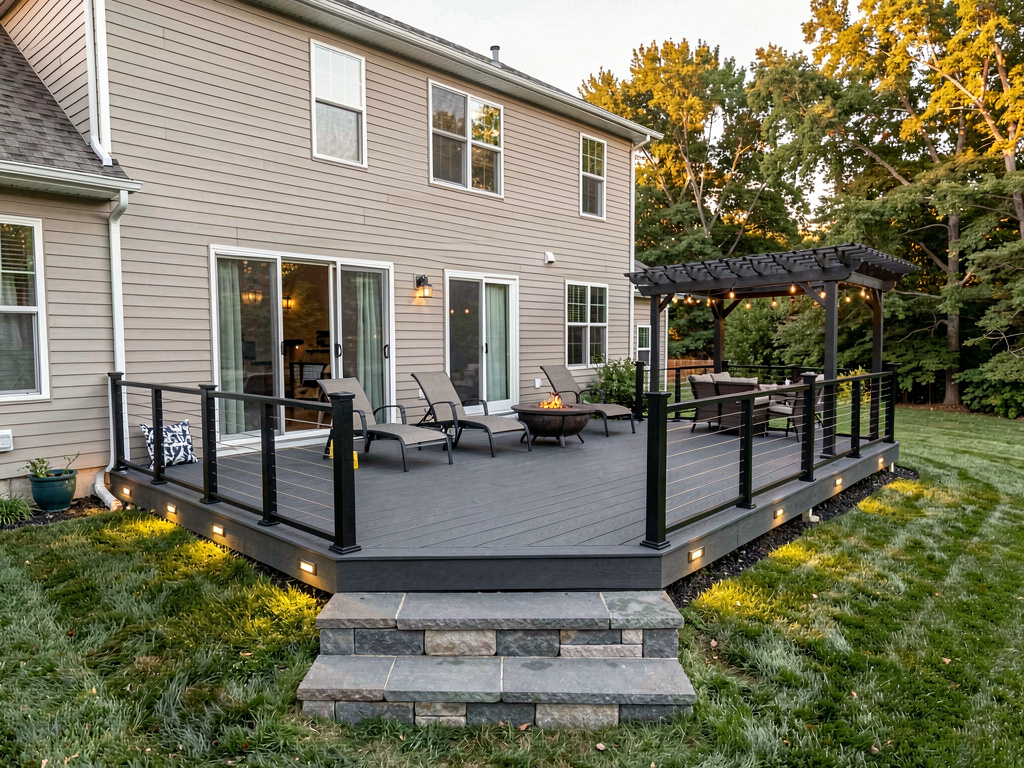
Most patios get built and then barely used. The furniture is uncomfortable, the layout doesn't make sense, there's no shade, or the space just doesn't feel like a room. The patios that people actually sit on every evening have something in common: they're designed like indoor rooms that happen to be outside. They have defined zones, comfortable seating, lighting, and a reason to be there after dark.
Here are 10 outdoor patio ideas that work, what each one costs, and why some patios become the best room in the house while others collect leaves.
1. The outdoor living room
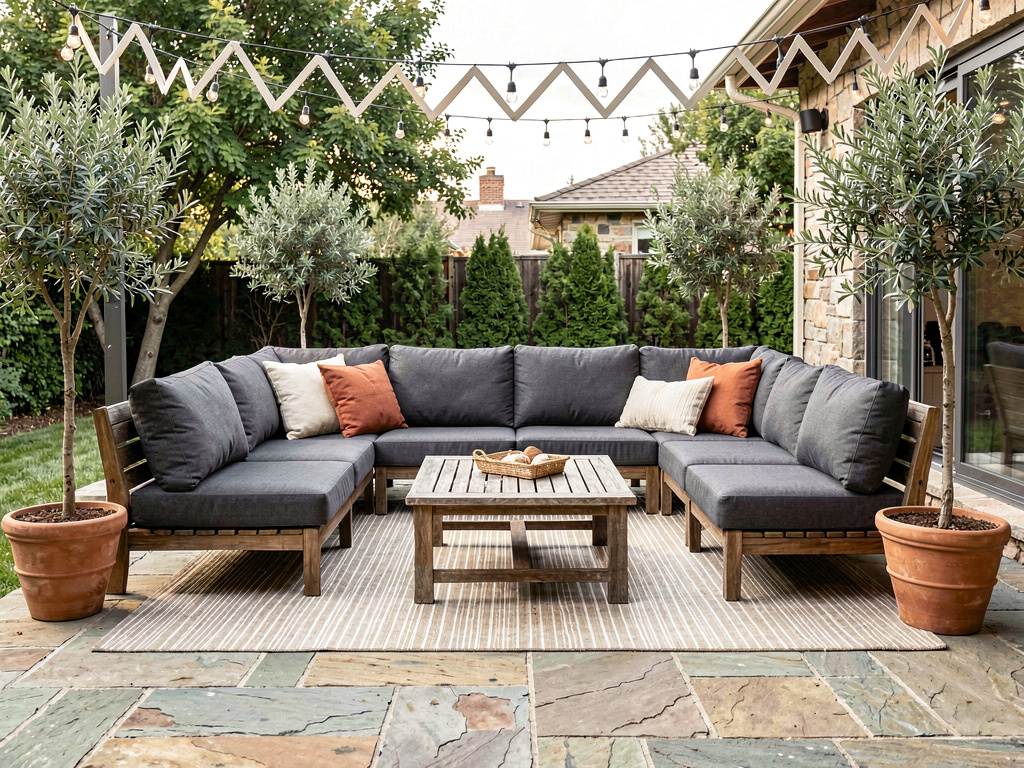
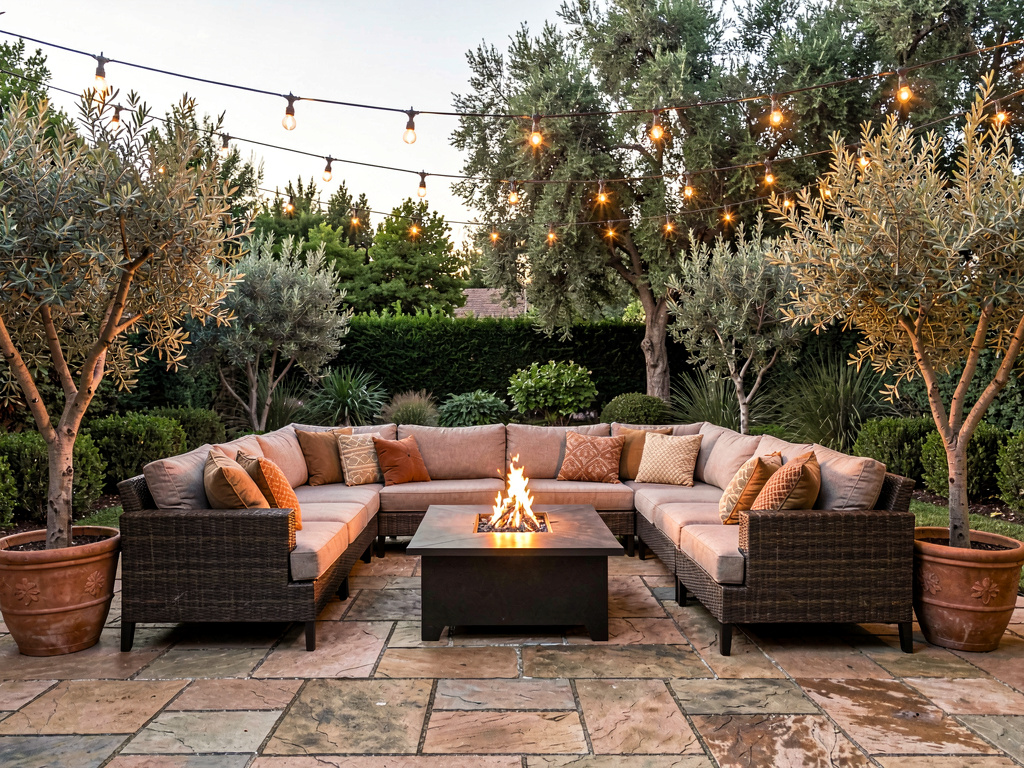
A large L-shaped outdoor sectional in dark gray performance fabric fills one corner of a flagstone patio. An outdoor coffee table in weathered teak sits in the center. An outdoor rug in a neutral stripe anchors the seating area. String lights hang overhead in a zigzag pattern. Throw pillows in cream and terracotta add color. Potted olive trees frame both sides.
Treat the patio like a living room and people will use it like one. The sectional is the most important piece — it has to be genuinely comfortable, not "comfortable for outdoor furniture." Good outdoor sectionals run $1,500-$4,000. The outdoor rug ($50-$200) defines the space the same way an indoor rug does. String lights ($15-$40) are the cheapest way to make any patio usable at night. Without lighting, a patio is done at sunset. With it, the patio becomes the preferred seating area all evening.
2. Fire pit gathering
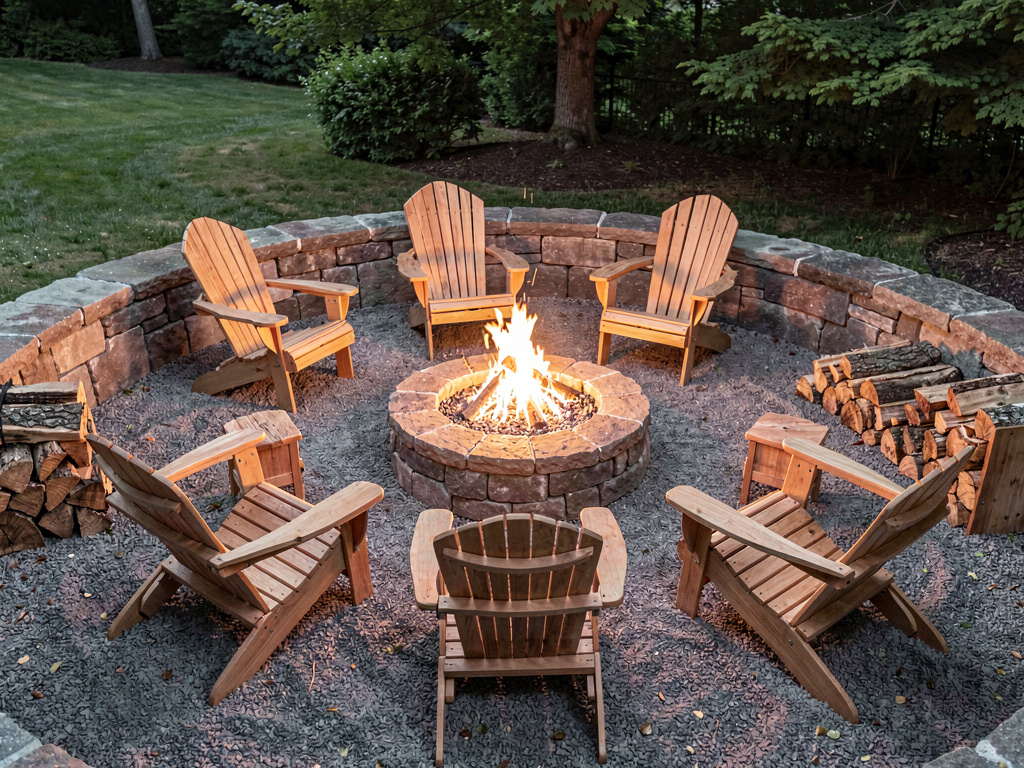
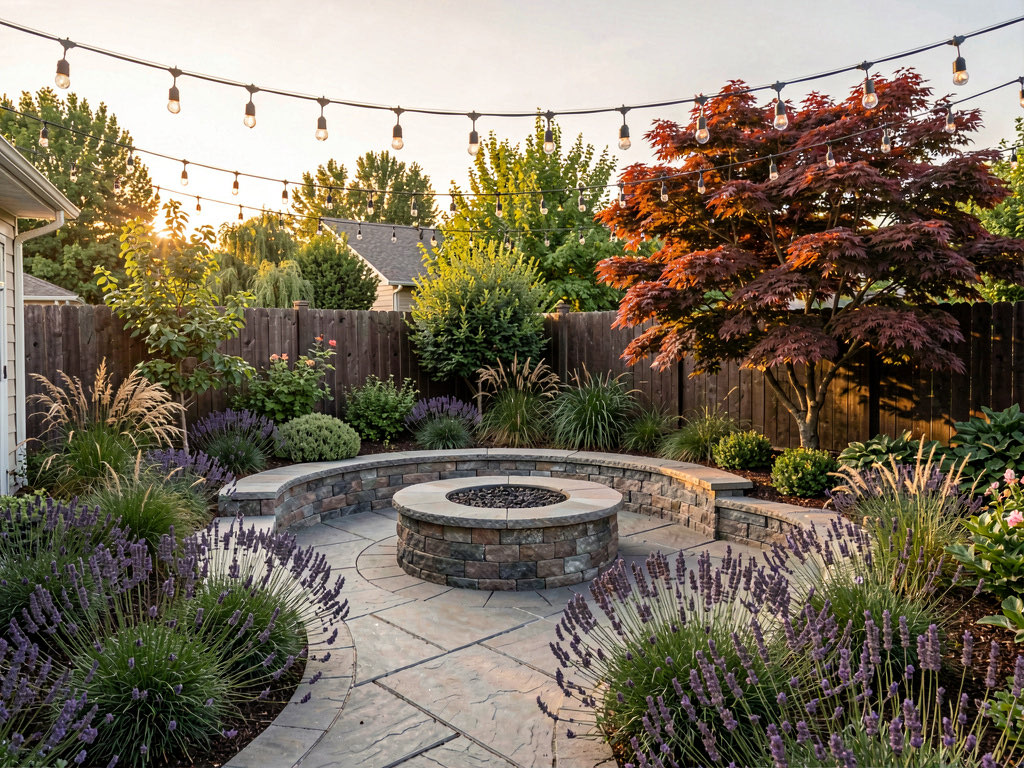
A round stone fire pit sits at the center of a gravel circle. Six Adirondack chairs in natural cedar surround it, evenly spaced. A low stone wall forms the outer ring. Firewood stacks neatly beside one of the chairs. The gravel crunches underfoot. Beyond the circle, the yard fades into darkness. Flames from the fire pit cast moving shadows on the chairs.
A fire pit turns a patio from a summer amenity into a three-season room. People gather around fire — it's instinctive. A basic stone fire pit runs $200-$500 built from a kit, or $1,000-$3,000 for custom stonework. Gas fire pits ($300-$1,500) are cleaner and easier but lack the crackle and smell of a wood fire. The Adirondack chairs ($100-$300 each in cedar or polywood) are the natural companion — they're the right height and recline angle for fire-watching. According to the American Society of Landscape Architects, fire pits have been the most requested outdoor feature for five consecutive years.
3. Dining patio
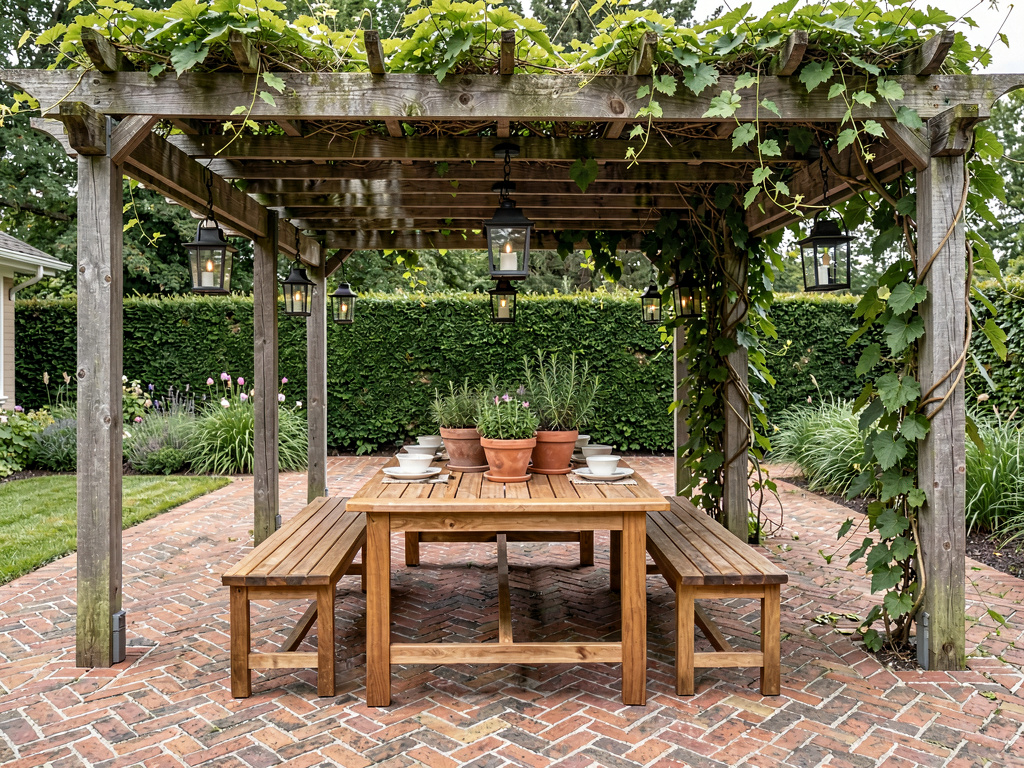
A long rectangular teak dining table seats eight on two matching benches. A wooden pergola overhead provides partial shade. Hanging lanterns line the center beam of the pergola. Potted herbs in terracotta pots run down the center of the table. A climbing vine has partially covered the pergola, adding natural shade. The patio surface is brick in a herringbone pattern.
Outdoor dining is the single best use of a patio if you cook at all. A long table with benches is the classic setup — benches seat more people than chairs in less space, and they create a communal feel. A teak dining table ($500-$2,000) and pair of benches ($200-$600) last decades with minimal maintenance. The pergola ($1,500-$5,000 for wood, more for aluminum) provides the overhead structure that makes the space feel like a room rather than a table sitting in the yard. If you have a deck design project, the same dining setup works on a raised deck with even more impact.
4. Small patio maximizer
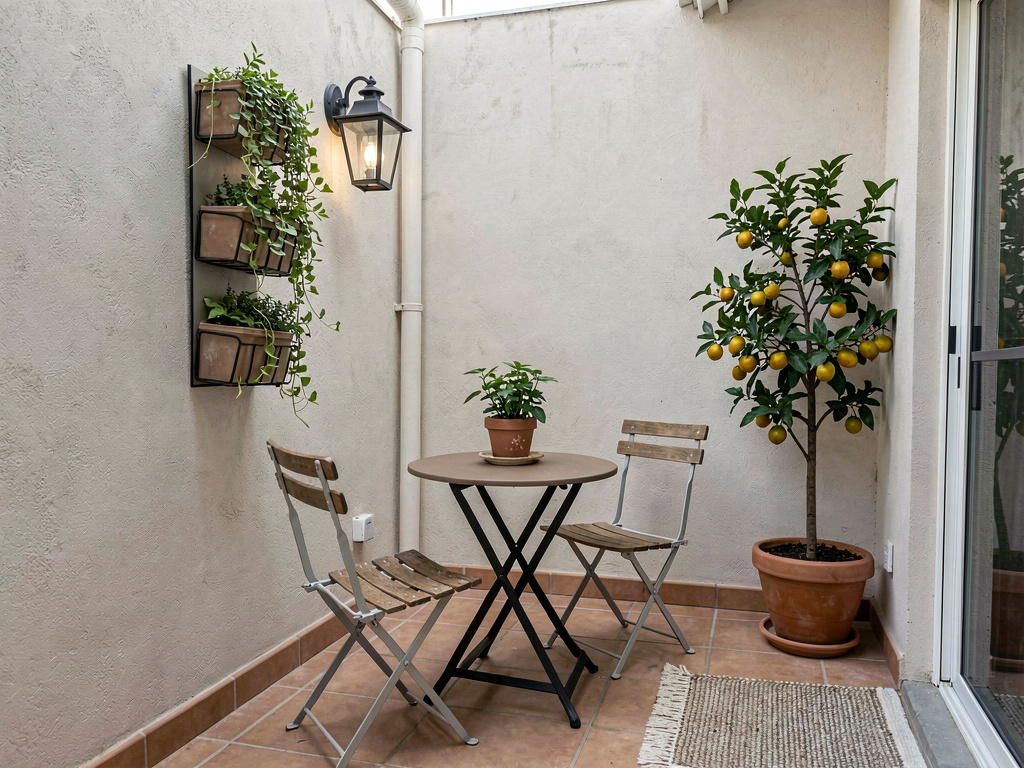
A round bistro table and two folding metal chairs fit perfectly on a small concrete patio. A vertical planter on the wall holds trailing plants and herbs. A wall-mounted lantern provides evening light. A small outdoor rug defines the sitting area. One potted citrus tree in the corner adds height. The space is maybe 6x8 feet but feels like a complete outdoor room.
Small patios work when every piece earns its spot. The bistro set ($80-$300) is the right scale — a full dining table would overwhelm the space. Vertical planters ($30-$80) move the garden onto the wall, freeing floor space. The same principles that work for small living rooms apply outdoors: define zones, use vertical space, choose furniture that fits the actual dimensions. A small patio that feels intentional beats a large one that feels empty.
5. Modern concrete and steel
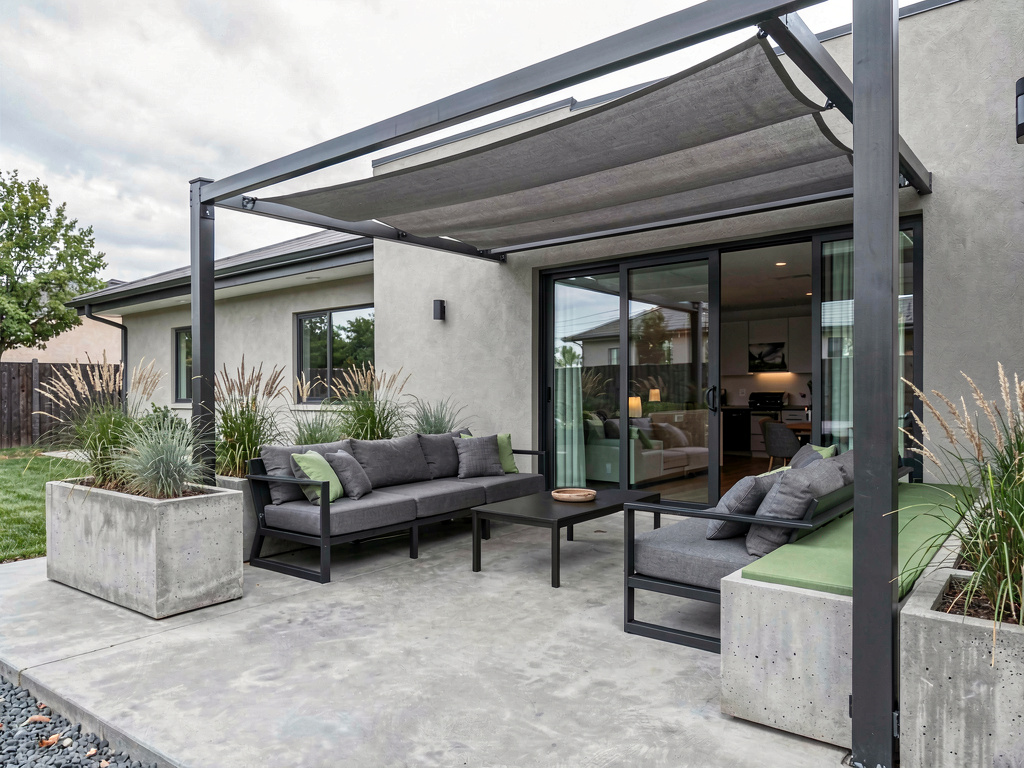
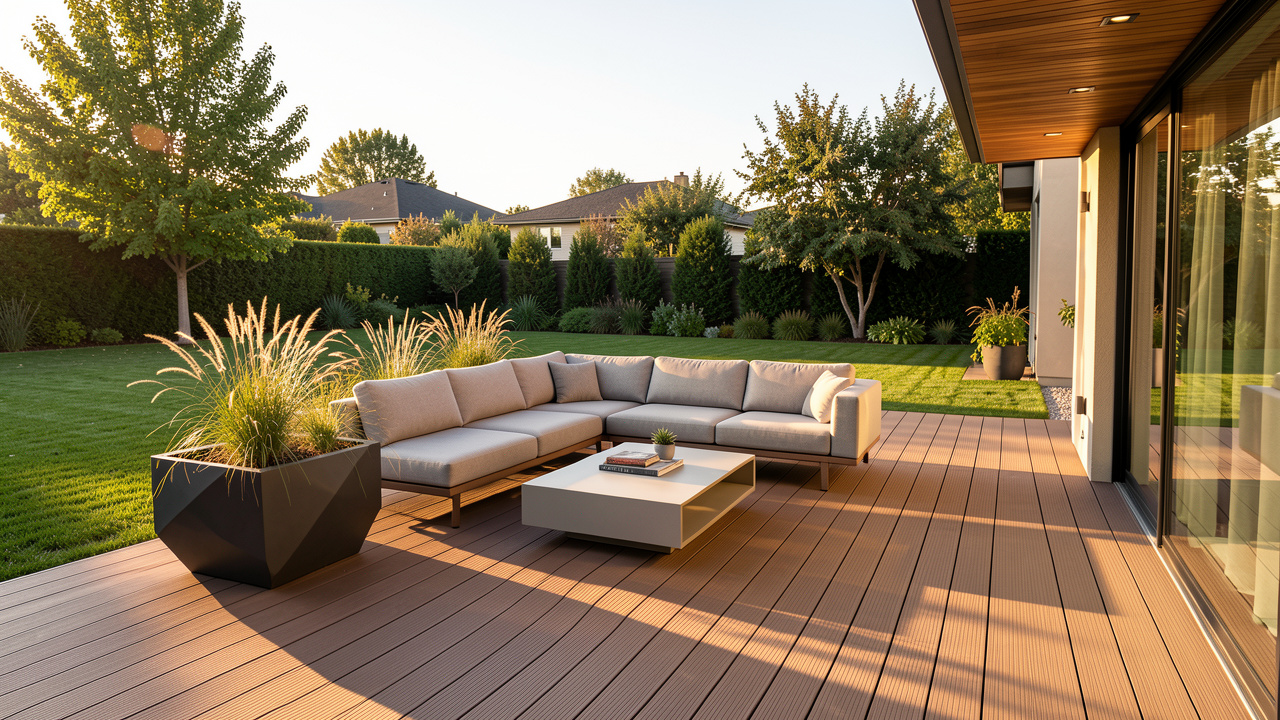
A polished concrete patio extends from the house with clean, sharp edges. Steel-frame outdoor furniture with gray cushions. Large concrete planters hold ornamental grasses. A steel-frame pergola with retractable shade cloth. Built-in concrete bench along one edge. The palette is gray, black, and green. Everything is angular and deliberate. The style matches a modern home with floor-to-ceiling glass doors opening onto the space.
Modern patios work best as extensions of modern homes. The concrete surface ($8-$15 per square foot poured and finished) costs less than stone or pavers and matches a contemporary aesthetic. The steel-frame furniture ($500-$2,000 for a set) ages differently than wood — it develops a patina that suits the industrial feel. Concrete planters ($50-$300 each) are heavy enough to stay put in wind and look better as they weather. This style requires a modern home to work — it would look out of place next to a colonial or craftsman house.
6. Mediterranean terrace
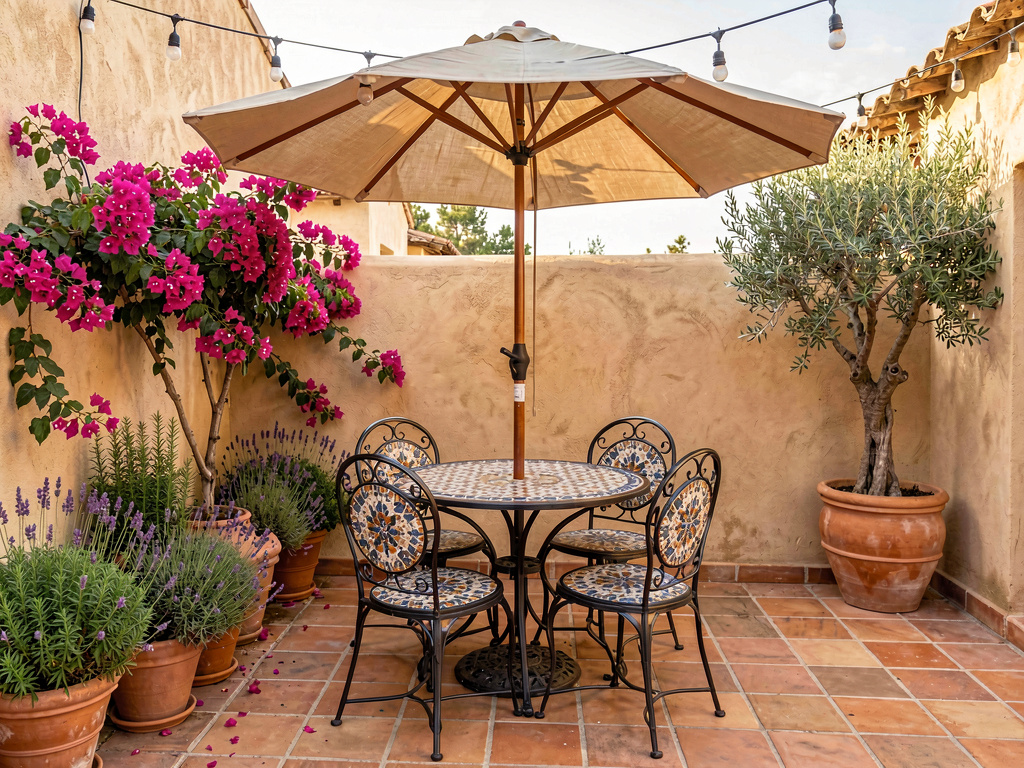
Terracotta tile covers the patio floor. A wrought iron table and four chairs with mosaic tile inlay sit under a canvas market umbrella. Terracotta pots overflow with bougainvillea, lavender, and rosemary. A stucco half-wall separates the patio from the garden below. Warm-toned string lights hang above. An olive tree in a large terracotta pot anchors one corner. The scene could be in southern Spain or a backyard in California.
The Mediterranean patio is about warmth — warm materials, warm colors, warm weather plants. Terracotta tile ($3-$8 per square foot) is the foundation. Wrought iron furniture ($200-$800 for a set) is the tradition. The plants matter as much as the furniture here: lavender, rosemary, bougainvillea, olive trees, and citrus all signal Mediterranean without a word. This style works naturally in warm, dry climates but can be adapted anywhere with the right hardscape and potted plants. According to Better Homes & Gardens, Mediterranean patio styling is the fastest-growing outdoor design trend in 2025.
7. Covered outdoor lounge
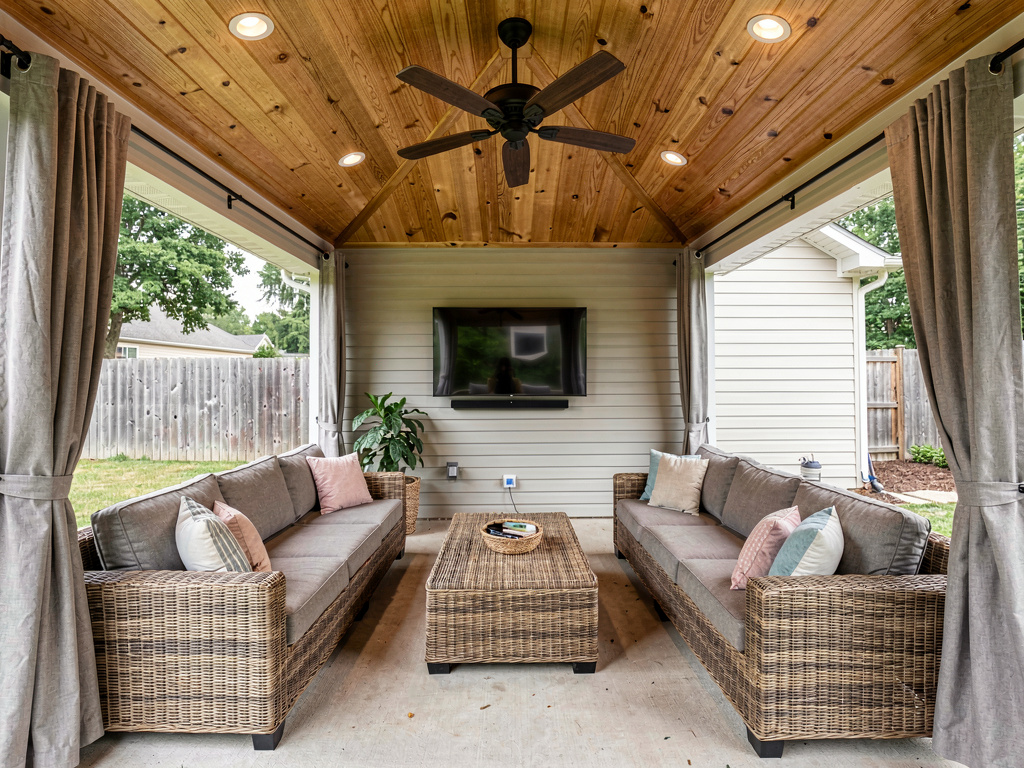
A fully covered patio extends from the house with a vaulted tongue-and-groove ceiling. An outdoor ceiling fan keeps air moving. Two outdoor sofas face each other with a woven coffee table between them. A flat-screen TV mounts on the back wall. All-weather curtains can close off the sides. Recessed lighting in the ceiling. The space functions as a second living room that happens to be outdoors.
A covered patio is the most expensive option here but also the one that gets used in every weather condition. A covered patio addition runs $5,000-$20,000 depending on size, materials, and whether it ties into existing rooflines. The ceiling fan ($150-$400 outdoor rated) makes it usable in summer heat. All-weather curtains ($100-$400 for a set) let you close off wind and rain. This is the patio that replaces a room — families with covered patios consistently report using the indoor living room less during spring through fall.
8. Japanese-inspired garden patio
See Your Room Redesigned
Download Remodel AI and transform any room in 30 seconds. 3 free designs, no signup.


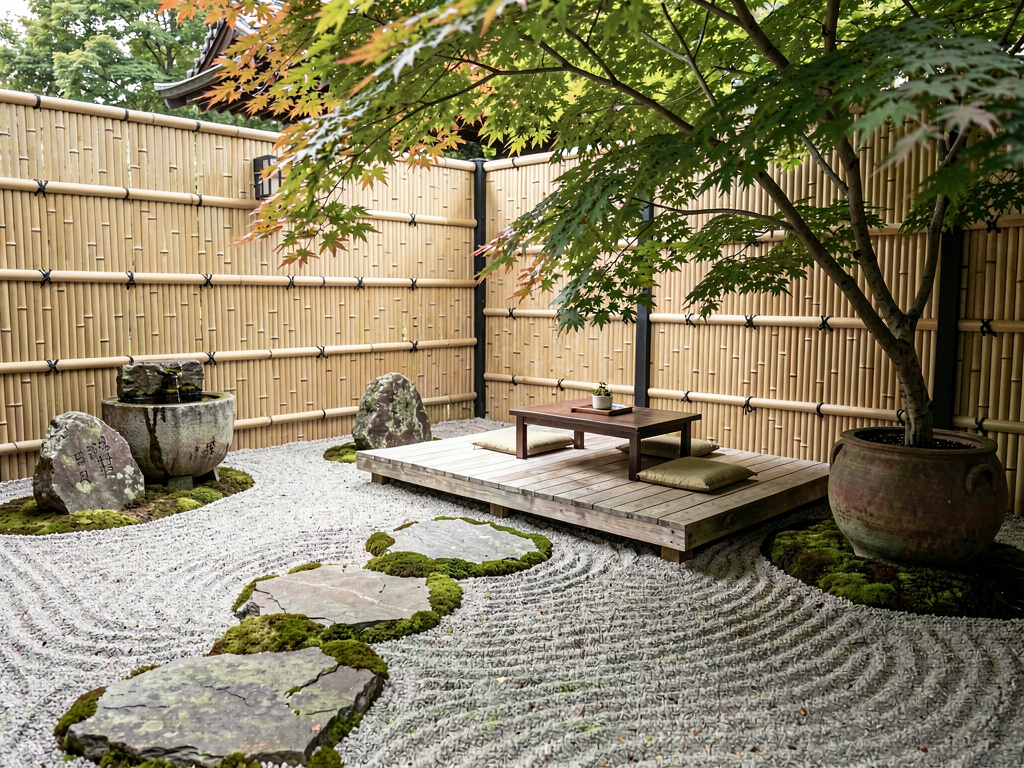
Raked gravel covers the ground. Irregular stepping stones lead from the house to a low wooden platform. Bamboo screening provides privacy on two sides. A stone water basin sits beside the platform. A Japanese maple in a large pot provides filtered shade. Moss grows between the stones. The platform has a low table and floor cushions. The space is quiet and still.
Japanese garden patios work through subtlety. The gravel, the stones, the water feature — each element is placed with intention. A raked gravel base ($3-$6 per square foot) is cheaper than any paver or stone surface. Stepping stones ($5-$20 each) create a path that forces you to slow down. Bamboo screening ($30-$80 per panel) provides privacy without the permanence of a fence. This style pairs well with the same minimalist principles in scandinavian interior design — both are about removing the unnecessary and letting what remains breathe.
9. Rustic stone patio
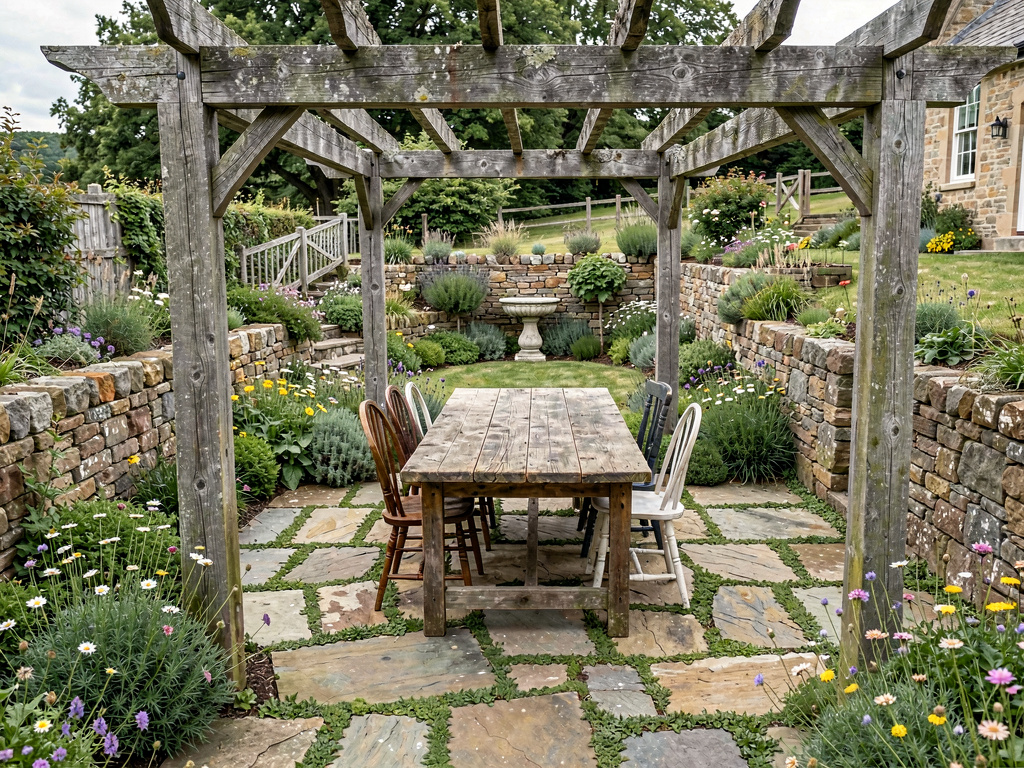
Irregular natural flagstone laid in a random pattern with ground cover growing between the joints. A weathered wooden pergola with thick timber posts. Fieldstone retaining walls step down the slope. Wildflowers grow in the borders. A heavy wooden farm table sits under the pergola. Mismatched vintage chairs surround it. A stone birdbath stands in the garden beyond. The patio looks like it's been there for decades.
Rustic patios embrace imperfection. The irregular flagstone ($10-$25 per square foot installed) looks better with gaps and ground cover than with tight joints. The weathered wood pergola improves with age. Fieldstone walls ($15-$30 per square foot) are the premium element here, but they last essentially forever and give the patio a sense of permanence. This approach works best in houses with exterior designs that lean traditional, craftsman, or cottage — the materials should feel like they belong to the land.
10. Multi-zone entertainment patio
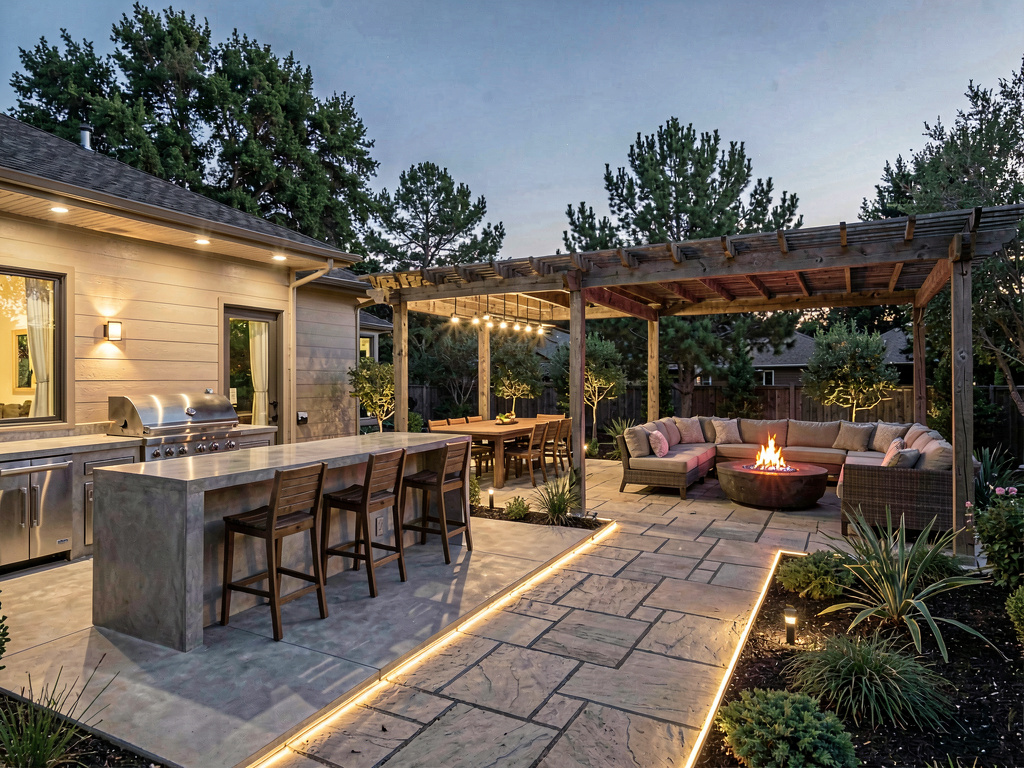
A large patio divided into three zones. The cooking zone has a built-in grill, concrete counter, and bar stools. The dining zone has a long table under a pergola. The lounge zone has a sectional around a gas fire pit. Stone pathways connect the zones. Different surface materials — concrete, pavers, flagstone — define each area. Landscape lighting outlines the paths and highlights plants. The entire space functions as an outdoor house.
The multi-zone patio is for people who entertain regularly and have the yard space (typically 400+ square feet). A built-in outdoor kitchen runs $3,000-$15,000 depending on how much you build in. Combined with a dining area and lounge, the total investment is $10,000-$30,000. But it replaces the need for a larger house — when your outdoor space functions as living, dining, and kitchen, you've effectively added rooms without the cost of an addition. The key is making each zone feel separate but connected, with clear transitions between them.
What makes a patio actually get used
The patios that get daily use share these features:
- Comfortable seating — not decorative seating, genuinely comfortable furniture you'd sit in for two hours
- Shade — a pergola, umbrella, tree canopy, or roof. Direct sun makes patios unusable during peak hours
- Lighting — string lights, lanterns, landscape lighting. Without light, the patio is done at dusk
- Easy access — ideally connected to the kitchen or main living area through a door you'd actually use
- Privacy — screening, fencing, or plantings that make you feel like you're in your own space, not on display
How to visualize your patio design
Before buying furniture or pouring concrete, see what your outdoor space could look like.
Step 1: Take a photo of your current patio, yard, or outdoor area.
Step 2: Upload it to Remodel AI (free on iOS, Android, and web).
Step 3: Select an outdoor design style — modern, rustic, Mediterranean, or any other.
Step 4: Compare different approaches. Try the garden design transformation alongside the patio design to see the full outdoor picture.
3 free designs. No credit card required.
How much does a patio cost to build?
A basic concrete patio runs $1,500-$4,000. Pavers run $3,000-$8,000. Natural stone runs $5,000-$15,000. Add $1,500-$5,000 for a pergola and $1,000-$3,000 for furniture. A complete outdoor living space with a kitchen runs $15,000-$30,000. The surface material is the biggest cost driver, and concrete is the most budget-friendly option that still looks intentional.
What is the best patio material?
It depends on your climate and style. Concrete is the most versatile and affordable. Pavers are more traditional and easy to repair (you can replace individual pavers). Natural flagstone is the most beautiful but the most expensive. Brick ages well in traditional settings. In freeze-thaw climates, pavers handle expansion and contraction better than poured concrete.
How do I make a small patio feel bigger?
Three techniques: use one continuous surface material (no pattern changes), keep furniture low-profile and proportional to the space, and add vertical elements (tall planters, climbing vines, string lights) to draw the eye up. An outdoor rug that's slightly too large for the furniture grouping makes the seating area feel more expansive.
Should I build a patio or a deck?
Patios sit on the ground and work on flat or gently sloping lots. Decks are elevated and work on slopes, around pools, or when you want to be at the same level as the house interior. Patios cost less ($8-$25 per square foot vs. $15-$35 for a deck) and require less maintenance. Decks offer better views and easier indoor-outdoor flow from a raised house. If your yard is flat and level with your house, a patio is usually the better investment.
The best patio is the one you use every day, not the one that looks best in a photo. Start with comfortable seating and shade, then add features based on how you actually spend time outdoors. A simple patio with good furniture and string lights beats an elaborate one that sits empty because nobody wants to sit in the sun on a hard bench.
Try Remodel AI free at www.remodelai.io/app — available on iOS, Android, and web.
Related reading
Ready to Try AI Interior Design?
Upload a photo and redesign any room in seconds. 3 free designs, no signup required.