Organic modern interior design: the complete style guide
Organic modern interior design explained — materials, colors, room-by-room tips, and how to get the look with AI visualization tools.

Ryan H.
Founder of Remodel AI · April 6, 2026 · 11 min read
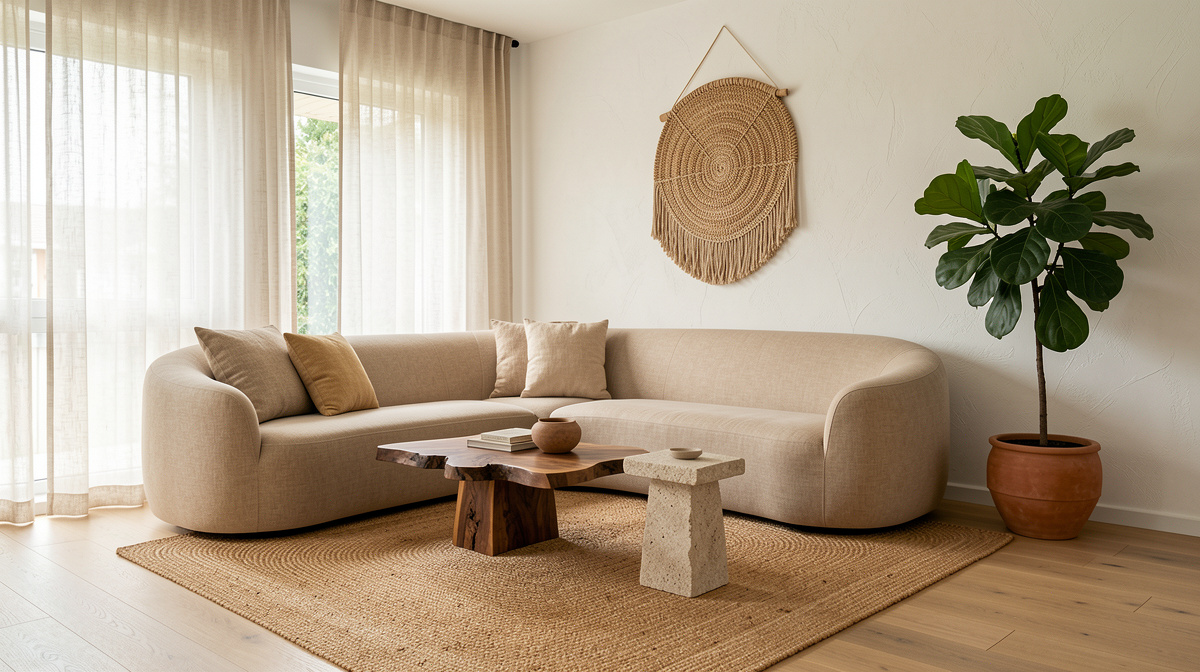
Organic modern interior design is what happens when you take the clean lines and open space of modern design and ground it with raw, natural materials. It's not boho. It's not farmhouse. It's not standard modern with a plant thrown in. It's a specific combination of restraint and warmth that makes a room feel both polished and lived-in at the same time.
The style has been gaining traction for years, but it hit a tipping point around 2024 when designers started moving away from the all-gray, chrome-and-glass modern look that dominated the previous decade. People wanted rooms that felt calm, not clinical. According to the American Society of Interior Designers' 2025 Outlook Report, natural materials and earth tones were the most requested elements in residential projects for the second year running.
Here's what organic modern actually looks like, how it differs from the style it evolved from, and how to get it right in every room.
What makes organic modern different from standard modern
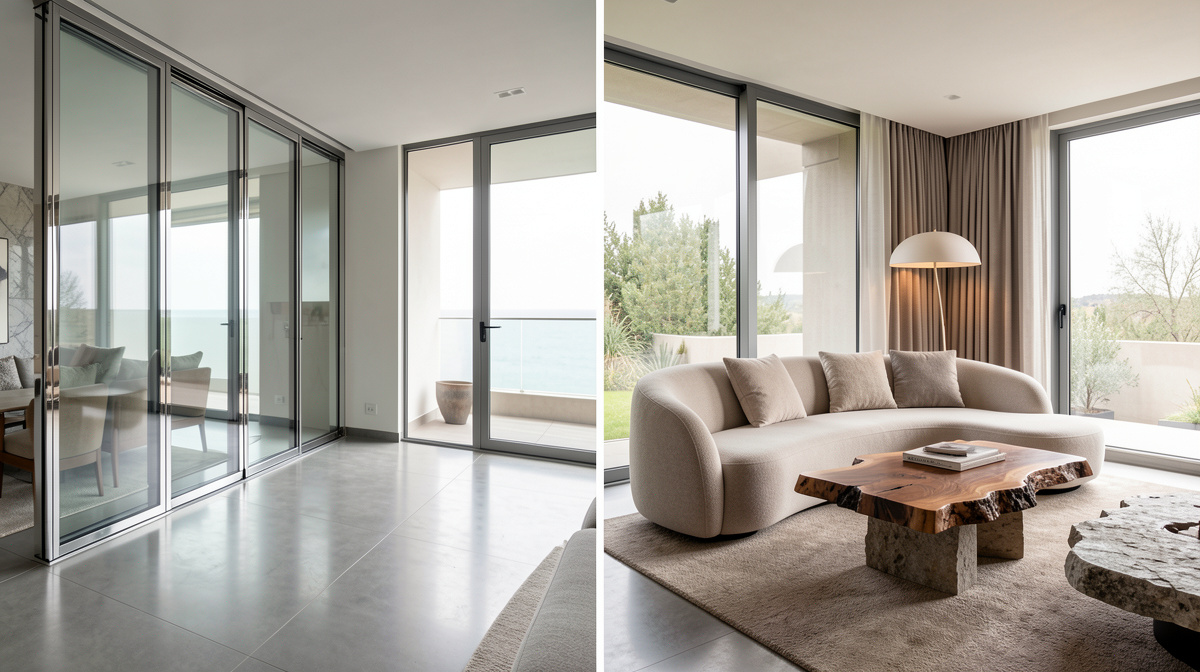
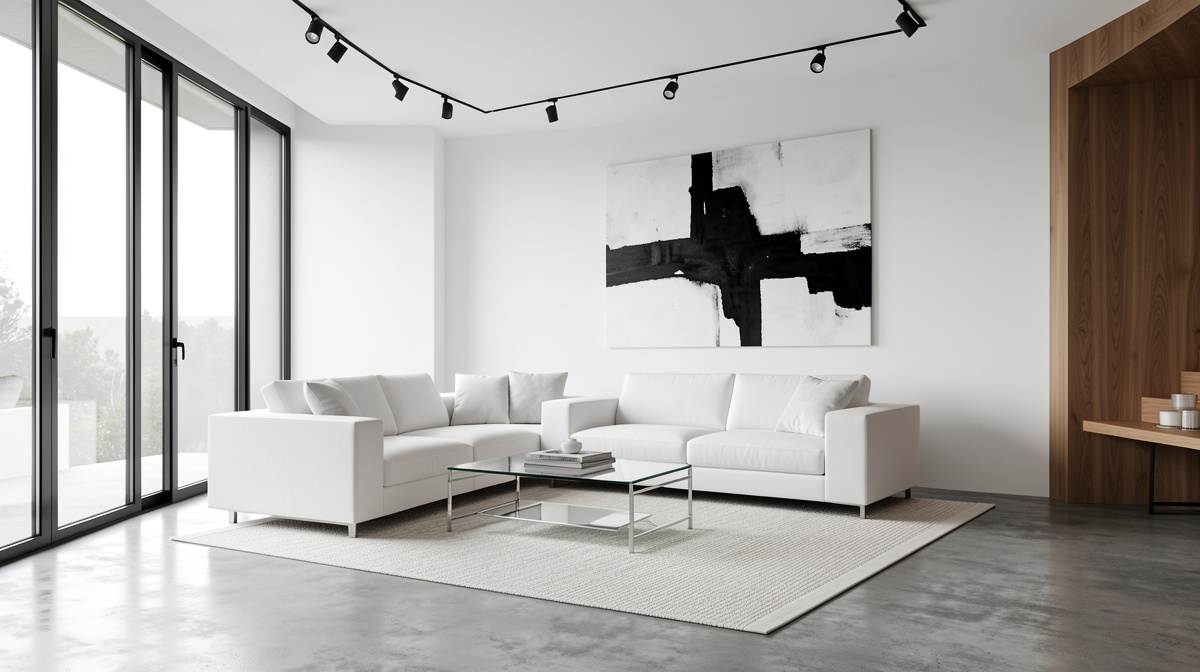
Standard modern design favors manufactured materials: chrome, glass, lacquered surfaces, cool grays, and straight geometric lines. Everything looks deliberate and a little untouchable. Organic modern keeps the deliberate part but swaps the untouchable part for materials you actually want to run your hand across.
The difference shows up in specifics. Where standard modern uses a glass coffee table, organic modern uses a live-edge walnut slab. Where standard modern uses a chrome floor lamp, organic modern uses a sculptural ceramic one. Where standard modern uses a sleek leather sofa, organic modern uses a soft linen or bouclé one in a warm tone. The shapes change too. Standard modern loves sharp right angles. Organic modern rounds things off — curved sofas, arched doorways, oval mirrors, organic-shaped pottery.
The color palette shifts from cool to warm. Standard modern lives in the white-gray-black range. Organic modern lives in warm whites, tans, terracotta, olive, stone, and soft brown. There's still plenty of neutral, but the neutrals have warmth in them.
The material palette
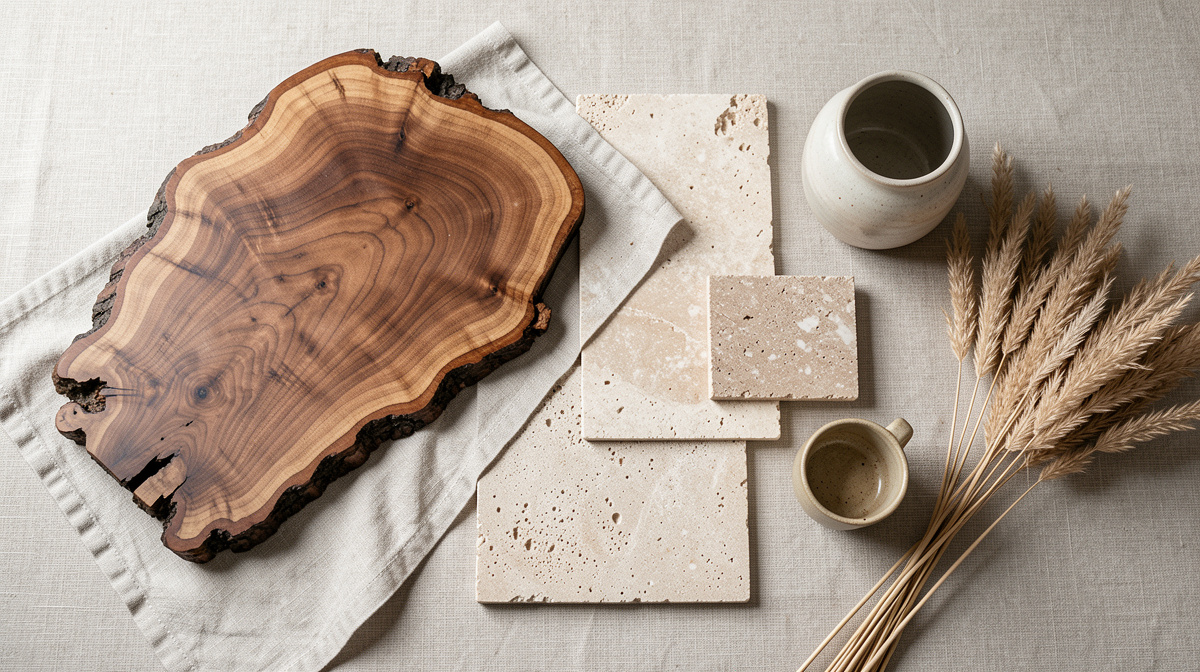
Materials are where organic modern either works or falls apart. The whole style depends on texture and natural variation, so the things you put in the room have to deliver that. Here's what belongs and what doesn't.
Natural wood
Light oak, walnut, teak, and reclaimed wood all work. The wood should show its grain. If it's painted, stained opaque, or given a high-gloss finish, it's not organic modern anymore. The point is seeing the material as it actually is. Live-edge pieces are popular because the irregular edge reminds you this was once a tree. According to Architectural Digest, the demand for natural-finish wood furniture has increased 40% since 2023, driven largely by the organic modern movement.
Natural stone
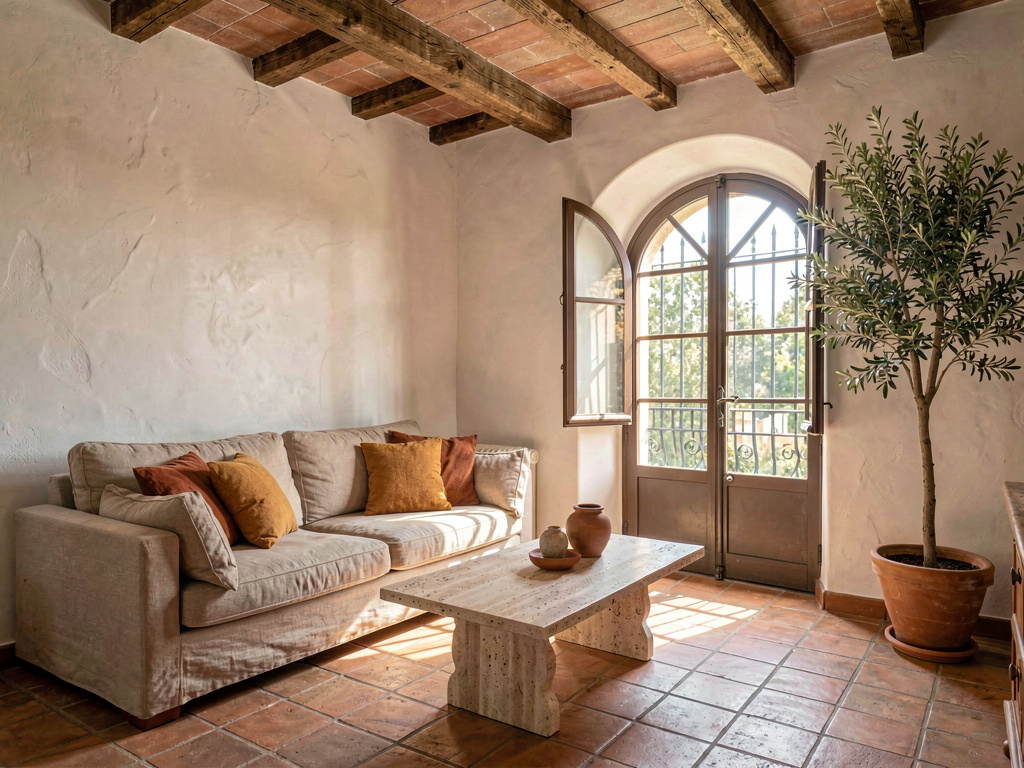
Travertine, marble with visible veining, limestone, soapstone. Stone surfaces add weight and permanence to a room. A travertine coffee table or a marble-topped console table is often the anchor piece in an organic modern space. The key is choosing stone with visible natural patterns rather than uniform engineered surfaces.
Soft textiles
Linen, bouclé, raw cotton, mohair, cashmere, and wool. These fabrics have a softness and slight irregularity that synthetic materials can't replicate. A linen sofa in flax or oatmeal is one of the defining pieces of the style. Bouclé accent chairs have become almost a cliché at this point, but the reason is that the texture works perfectly.
Woven elements
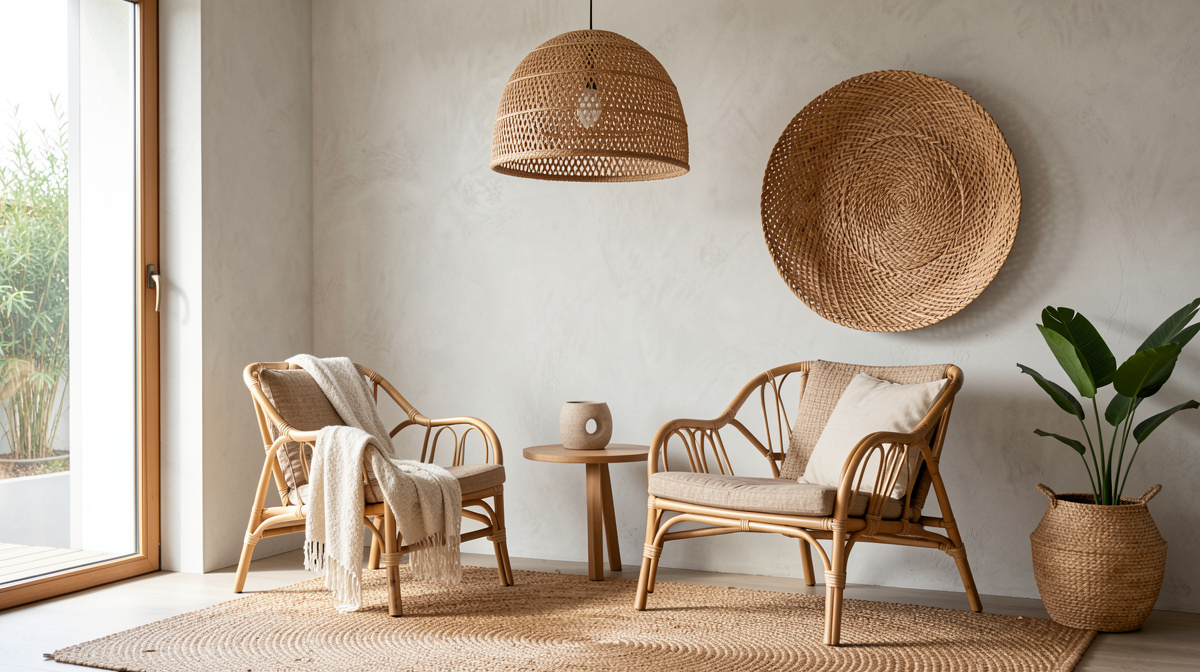
Rattan, jute, seagrass, wicker, and hand-woven baskets. These add visual texture without adding color or competing with the rest of the room. A jute rug, a rattan pendant light, or a set of woven baskets on the wall are easy wins.
Handmade ceramics
Mass-produced pottery feels out of place in this style. Handmade pieces with slight imperfections, uneven glazes, and organic shapes are what you want. A tall ceramic vase with a matte finish, a set of hand-thrown bowls on a shelf, or a sculptural ceramic table lamp all reinforce the idea that these objects were made by hands, not machines.
What to avoid
High-gloss lacquer, chrome, acrylic or lucite, synthetic fabrics, anything with a factory-perfect finish. Mirrored surfaces, glass coffee tables, and high-shine metals work in standard modern but fight against the organic modern feel.
The color palette
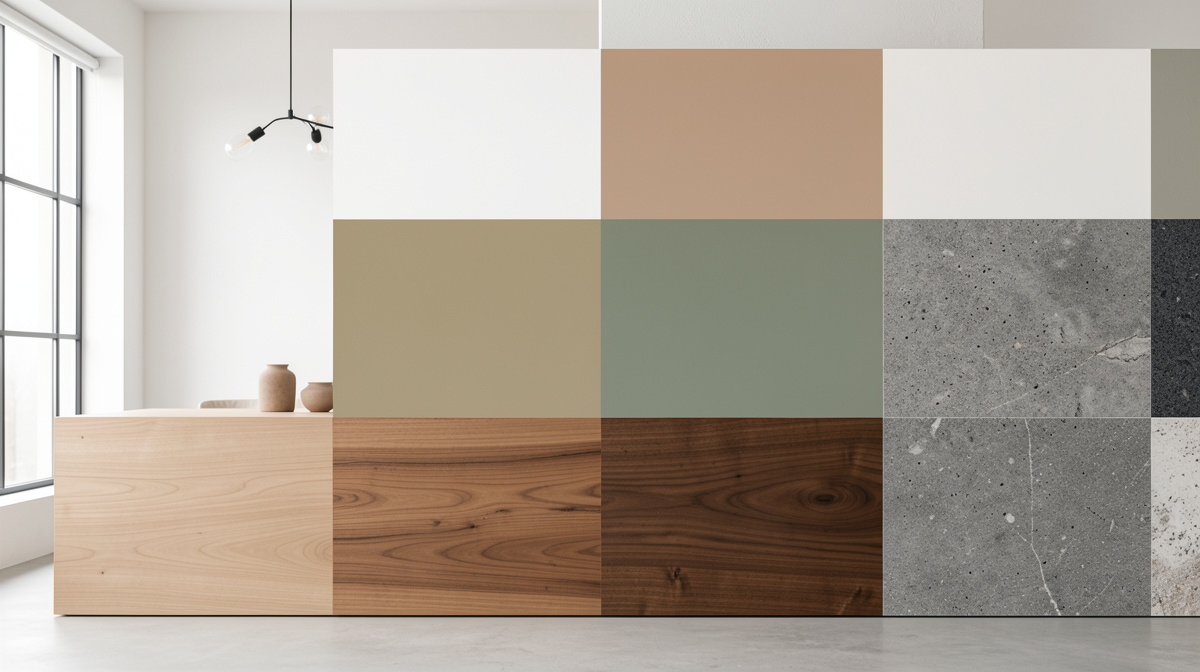
The color palette is earth tones, but that description undersells it. Earth tones can mean a lot of things, and not all of them are right here. Organic modern earth tones are specifically muted, warm, and low-contrast.
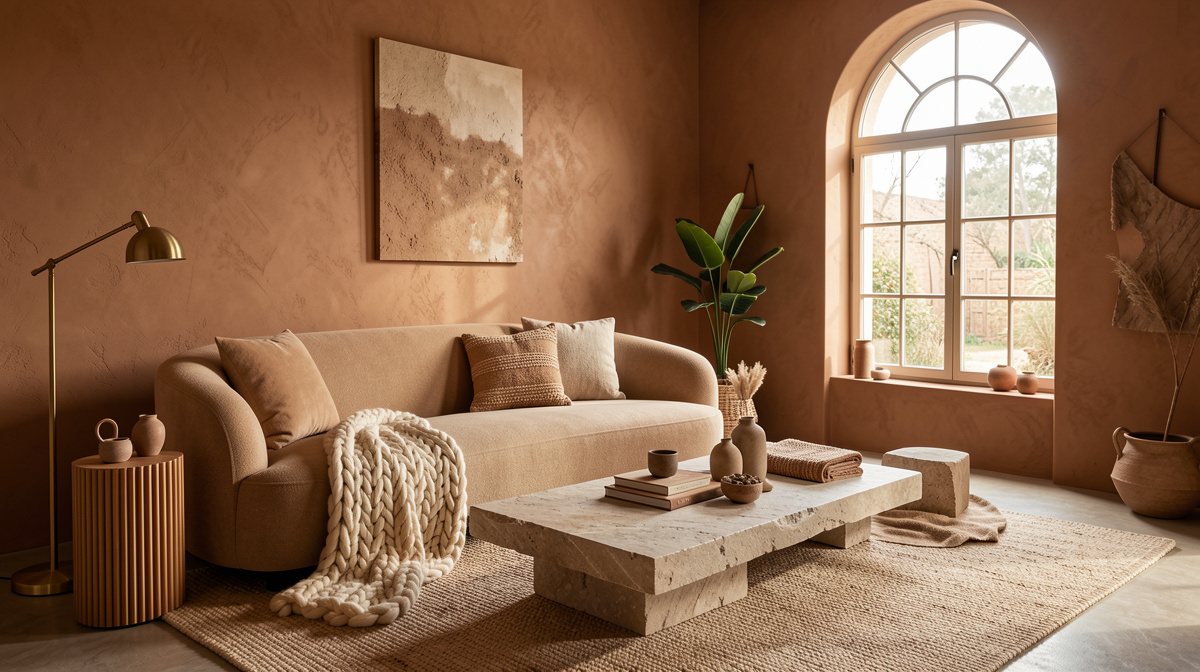
Walls: Warm white (Benjamin Moore White Dove OC-17, Sherwin-Williams Alabaster SW 7008) or soft greige (Sherwin-Williams Accessible Beige SW 7036). Some rooms use a deeper clay or terracotta on an accent wall, but the majority of the room stays light. Dark walls can work in organic modern, but they need to be warm darks — deep olive, charcoal brown, or dark clay — never cool gray or black.
Large furniture: Sand, oatmeal, cream, taupe, soft gray-brown. The sofa is almost always in this range. Leather in cognac or saddle brown is the exception that also works.
Accent colors: Terracotta, rust, olive, sage, deep ochre, warm charcoal. These show up in pillows, pottery, art, and small furniture pieces. The rule is that every color in the room should look like it came from dirt, stone, plants, or wood.
Metals: Brushed brass, aged bronze, matte black. Used sparingly for hardware, light fixtures, and frame details. Never polished, never chrome.
Room-by-room application
Living room
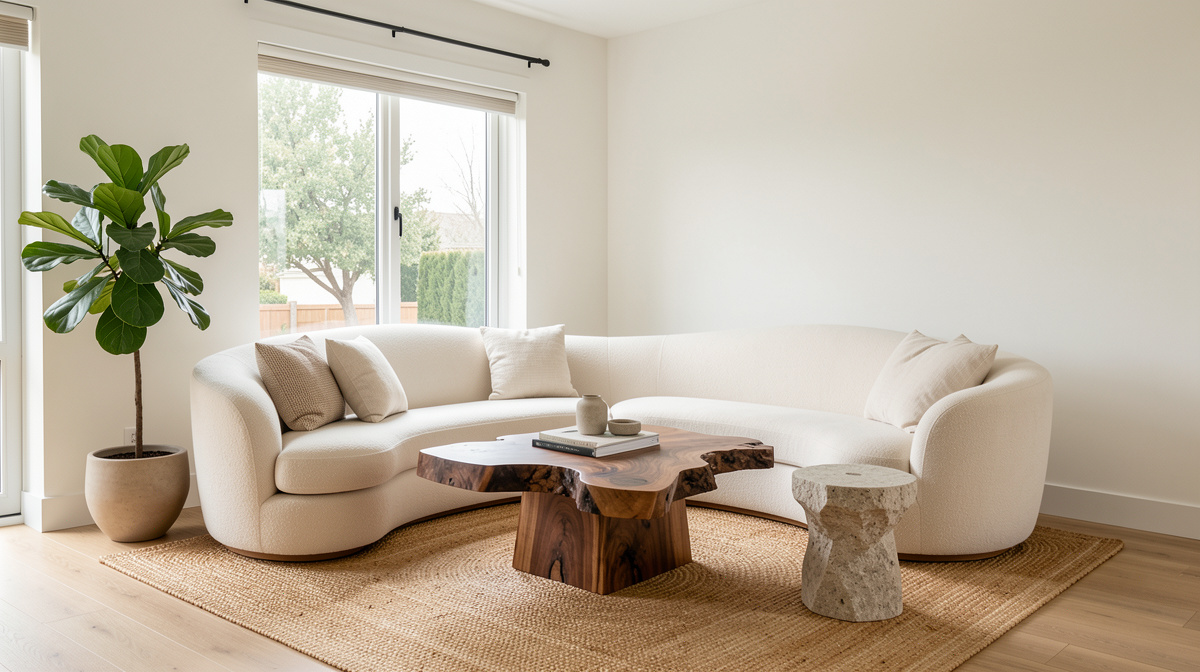
The living room is where organic modern gets the most attention. Start with a sofa in linen or bouclé, cream or oatmeal colored, with rounded arms or a curved shape. Add a live-edge or solid wood coffee table — walnut or light oak depending on whether you want warmth or brightness. Layer a jute or wool rug underneath. Place a few handmade ceramic pieces on the coffee table and shelves. Use a rattan or woven pendant light instead of a metal one. Keep the walls warm white. Add dried grasses or branches in a tall vase rather than a typical houseplant.
The room should feel like there's breathing space between each piece. Organic modern isn't cluttered. Every item has a purpose and a visual relationship with the other items around it.
If you want to see how this style compares to other modern approaches, our modern living room ideas guide breaks down six different variations with cost estimates for each.
See Your Room Redesigned
Download Remodel AI and transform any room in 30 seconds. 3 free designs, no signup.


Kitchen
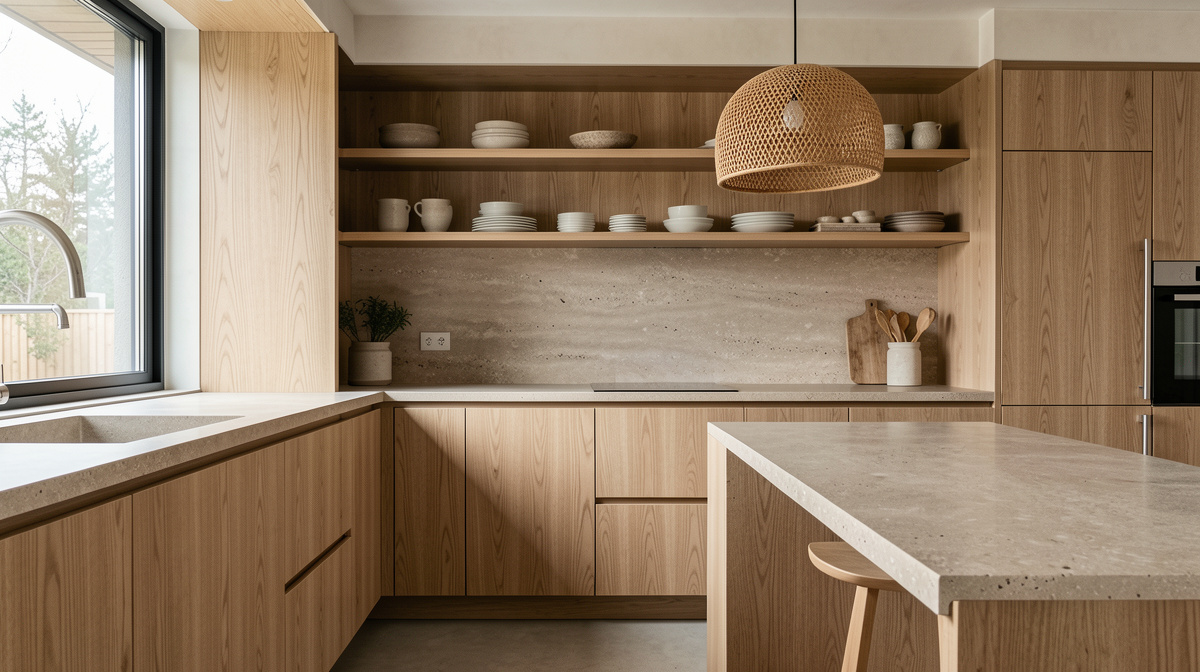
Organic modern kitchens tend to use flat-front cabinets in white oak or light wood with a matte clear coat. The counters are typically a natural stone — quartzite, marble, or soapstone — rather than solid-surface or laminate. Hardware is unlacquered brass or brushed brass, which will develop a patina over time (that's the point). Open shelving in matching wood replaces some of the upper cabinets, with handmade ceramics and stoneware displayed on them.
The backsplash is usually either the counter material carried up the wall, handmade zellige tile with its slightly uneven surface, or simple white plaster. Pendant lights over an island are often sculptural — an organic shape in ceramic or a woven rattan drum.
One detail that separates a good organic modern kitchen from a generic one: the sink. An undermount sink in a farmhouse shape (wider, deeper) with a bridge faucet in brushed brass pulls the whole room together. It's a small thing, but it's the kind of small thing that makes the style feel complete.
Bedroom
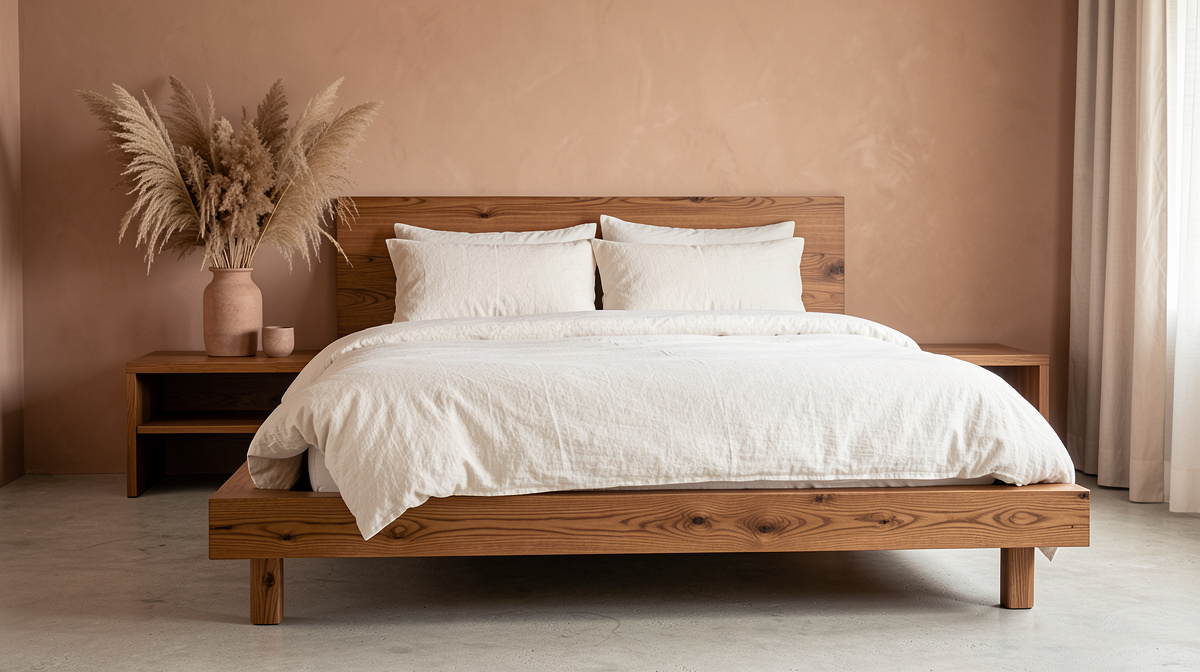
The bed is the centerpiece. An upholstered bed frame in linen or bouclé, usually in a warm neutral — cream, flax, or soft taupe. The bedding is all linen: a linen duvet cover, linen sheets, linen pillowcases, layered with a waffle-knit throw at the foot. Walnut nightstands with soft-close drawers, each with a ceramic table lamp in a sculptural shape.
The floor is either warm-toned hardwood with a wool area rug or wall-to-wall carpet in a natural fiber. A woven pendant light replaces the standard builder-grade ceiling fixture. Curtains are in a natural linen, hung wide and high to make the windows look larger.
Art in the bedroom is usually minimal: one large piece above the bed or a pair of smaller pieces on the opposite wall. Abstract works in earth tones or botanical photographs work well. Skip gallery walls in the bedroom — the organic modern aesthetic favors fewer, larger pieces.
For more bedroom approach ideas, including styles that contrast with organic modern, see our guide to Scandinavian interior design, which shares the emphasis on natural materials but takes a different direction with color and form.
Bathroom
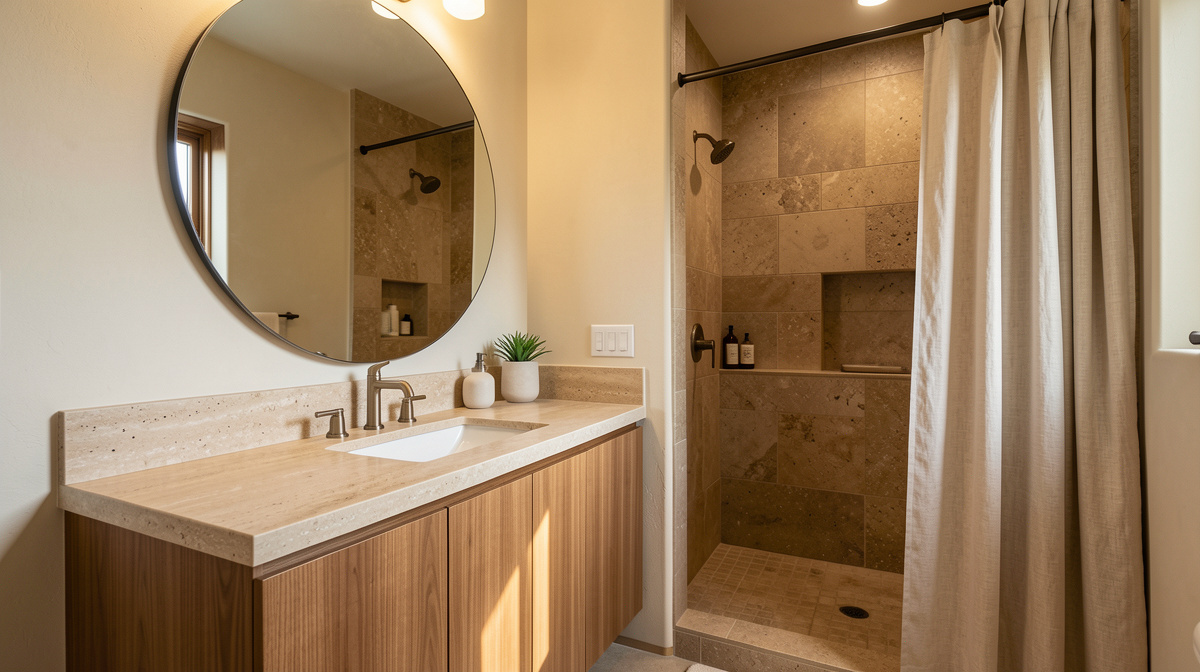
Organic modern bathrooms lean heavily on natural stone and warm wood. A fluted or reeded wood vanity in white oak or teak, topped with a stone counter and a vessel sink in ceramic or stone. Brushed brass or aged bronze fixtures. Zellige tile or natural stone tile on the walls, larger format on the floor. A frameless glass shower enclosure keeps the lines clean while the materials inside the shower do the texture work.
The details: a wooden bath tray, linen hand towels, a stoneware soap dispenser, a live plant in a simple terracotta pot. The room should feel like a spa that happens to be in your house.
Dining room
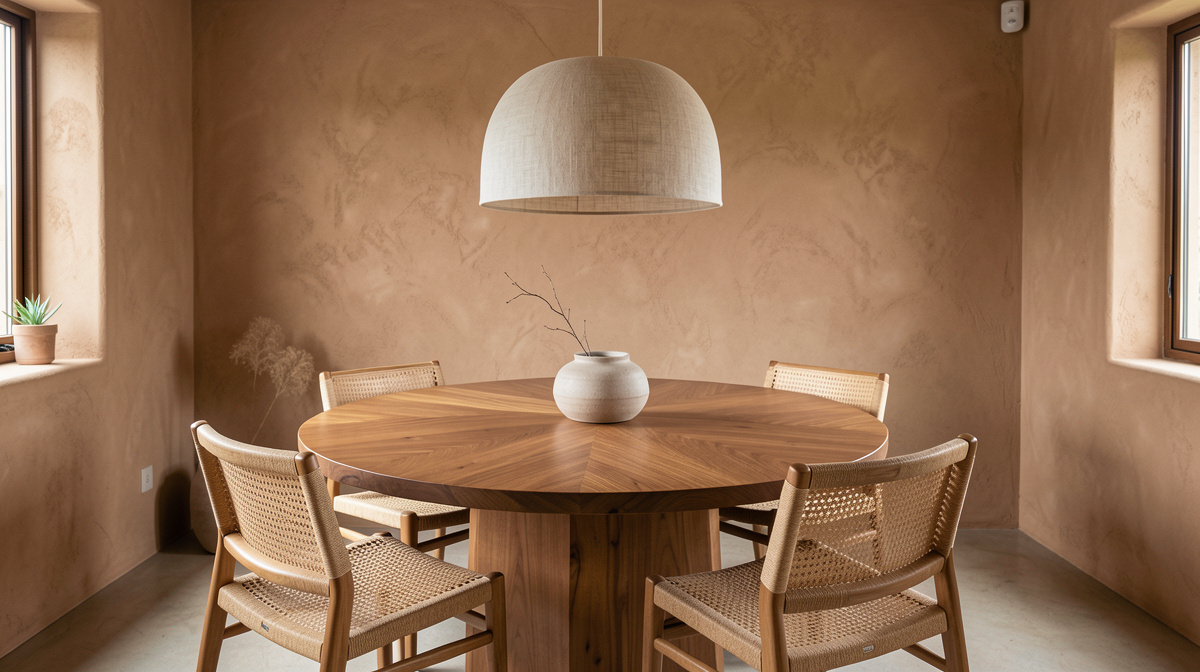
A solid wood dining table — walnut, oak, or reclaimed — is the starting point. The chairs are either fully upholstered in linen or bouclé with a wood frame, or they're a mix of upholstered chairs and a wooden bench on one side. A sculptural pendant light in ceramic or woven material hangs over the center of the table.
The dining room is one of the best rooms for organic modern because the table does so much work on its own. A good solid wood table with visible grain and natural edges commands the space. You don't need much else — a few ceramics on the table, maybe a sideboard against the wall in matching wood, and the right lighting.
Getting the look on a budget
You don't need to spend a fortune. Some organic modern elements are actually cheaper than their standard modern counterparts. A jute rug costs less than a wool one. Handmade ceramics from local potters or Etsy can run $30-$80 per piece. Dried branches and grasses are often free if you live near nature.
The expensive parts are the natural stone surfaces and quality wood furniture. A live-edge walnut coffee table runs $500-$2,000 depending on the source. Natural stone countertops add $3,000-$8,000 to a kitchen renovation versus laminate. But you can start with the affordable elements — textiles, paint color, accessories, lighting — and upgrade the bigger pieces over time.
According to Houzz's 2025 Kitchen Trends Study, the average kitchen renovation incorporating natural materials costs about 15% more than one using standard modern materials, but homeowners report higher satisfaction ratings three years after completion.
How to visualize organic modern in your actual space
The challenge with any design style is imagining it in your specific room, with your specific windows, floor plan, and natural light. What looks warm and inviting in a Pinterest photo taken in a south-facing room with 12-foot ceilings might feel dark and cramped in your north-facing apartment.
This is where AI visualization helps. You can upload a photo of your actual room and see organic modern applied to your walls, your floors, and your layout. It's the difference between looking at someone else's room and seeing your room transformed.
Remodel AI lets you do exactly this. Upload a photo of any room in your home, choose organic modern as the style, and get a realistic rendering of what the style looks like in your space. It takes about 30 seconds and costs nothing to try. You can compare it against other styles to see what fits before you buy a single piece of furniture.
Frequently asked questions
What is the difference between organic modern and Scandinavian design?
Both styles use natural materials and neutral colors, but they come from different places. Scandinavian design emphasizes function, light wood tones (birch, pine, ash), and a cooler color palette with whites, light grays, and pale blues. Organic modern is warmer overall, uses darker woods (walnut, teak), and leans into earth tones like terracotta and olive rather than cool neutrals. Scandinavian spaces tend to feel bright and airy. Organic modern spaces feel grounded and warm.
Is organic modern the same as wabi-sabi?
There's overlap, but they're different. Wabi-sabi is a Japanese philosophy that finds beauty in imperfection and impermanence — chipped pottery, weathered wood, visible repairs. Organic modern borrows from this idea by favoring handmade objects and natural variation, but it's still a polished style. An organic modern room looks intentional and curated. A wabi-sabi room embraces wear and age more openly. You could say organic modern takes the philosophy of wabi-sabi and filters it through a Western design sensibility.
Can organic modern work in a small apartment?
Yes, and in some ways it works better. Because the style depends on materials and color rather than large statement pieces, you can create the organic modern feel in a small space with a few well-chosen elements: a jute rug, a ceramic table lamp, linen throw pillows, warm white walls, and one piece of natural wood furniture. The emphasis on open space and restraint is actually easier to achieve in a small room because you have less space to fill. The danger in a small apartment is overdoing the accessories — stick to three to five natural objects per room.
How much does organic modern cost compared to other styles?
It depends on how far you go. At the accessory level (pillows, pottery, dried flowers, paint), organic modern is one of the cheapest styles to try — you can shift a room's feel for $200-$500. At the furniture level, quality natural wood and stone pieces cost more than their manufactured equivalents. A solid walnut coffee table runs $600-$2,000 versus $200-$400 for a glass-and-metal one. A linen sofa costs about the same as a standard upholstered one. The biggest cost jump is in kitchen and bathroom renovations, where natural stone and solid wood cabinetry add 15-25% over standard materials.
What colors go with organic modern?
Stick to the earth tone family: warm whites, sand, cream, taupe, cognac, terracotta, rust, olive, sage, deep ochre, and charcoal brown. The unifying principle is that every color should feel like it exists in nature — dirt, clay, stone, leaves, bark. Avoid anything that looks synthetic: neon, bright primary colors, or cool pastels. Metallics should be warm (brass, bronze, gold) rather than cool (chrome, silver, nickel).
Ready to Try AI Interior Design?
Upload a photo and redesign any room in seconds. 3 free designs, no signup required.