Modern interior design: what it actually means in 2026
Modern interior design explained — principles, room-by-room application, materials, and how to get the look without making your home feel cold.

Ryan H.
Founder of Remodel AI · April 6, 2026 · 11 min read
Modern interior design is one of the most searched and most misunderstood terms in home decor. People use "modern" to mean everything from a mid-century Eames chair to a farmhouse kitchen with subway tile, and the confusion makes it hard to figure out what you're actually going for. Here's the truth: modern design refers to a specific set of principles that emerged in the early-to-mid 20th century, and those principles are still the foundation of what most people mean when they say they want a "modern" home.
But there's a gap between the academic definition and how people actually use the word. This guide covers both — what modern design means historically, how it's applied in real homes today, and how to get the look in each room of your house without ending up with a space that feels like a furniture showroom.
Modern vs. contemporary: the confusion that won't die
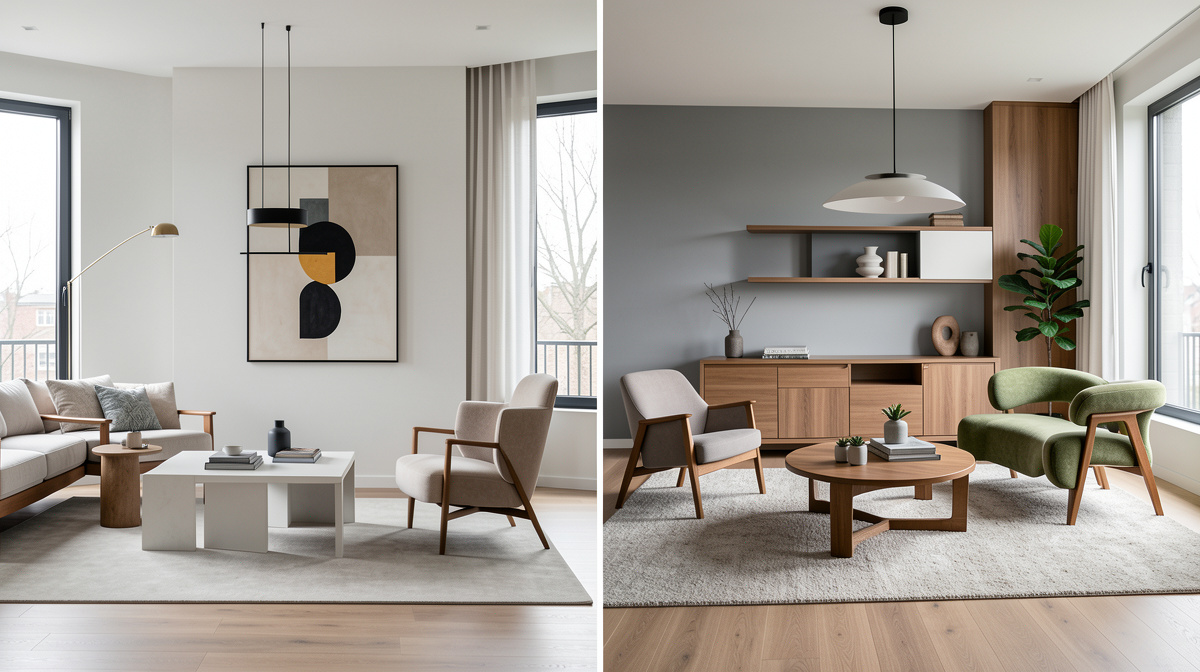
Modern and contemporary are not the same thing, even though most people (including many furniture retailers) use them interchangeably.
Modern design refers to a specific movement that peaked between 1920 and 1970. It's rooted in the idea that form follows function — every element of a room exists because it's useful, not because it's decorative. The Bauhaus school, Le Corbusier, and designers like Charles and Ray Eames defined this aesthetic. Clean lines, organic curves, minimal ornament, and a connection to nature through large windows and natural materials. Modern design is a fixed point in history.
Contemporary design means "of the current moment." It's a moving target. Contemporary rooms borrow from modernism, but they also pull from art deco, industrial, Scandinavian, and whatever else is trending. A contemporary room in 2026 looks different from a contemporary room in 2010.
In practice, what most people want when they search "modern interior design" is something closer to contemporary — clean, current, uncluttered, with a neutral palette and functional furniture. And that's fine. The label matters less than getting a room you want to spend time in.
For a broader look at how modern fits into the full spectrum of design approaches, our interior design styles guide covers everything from traditional to Scandinavian to industrial.
The core principles of modern design
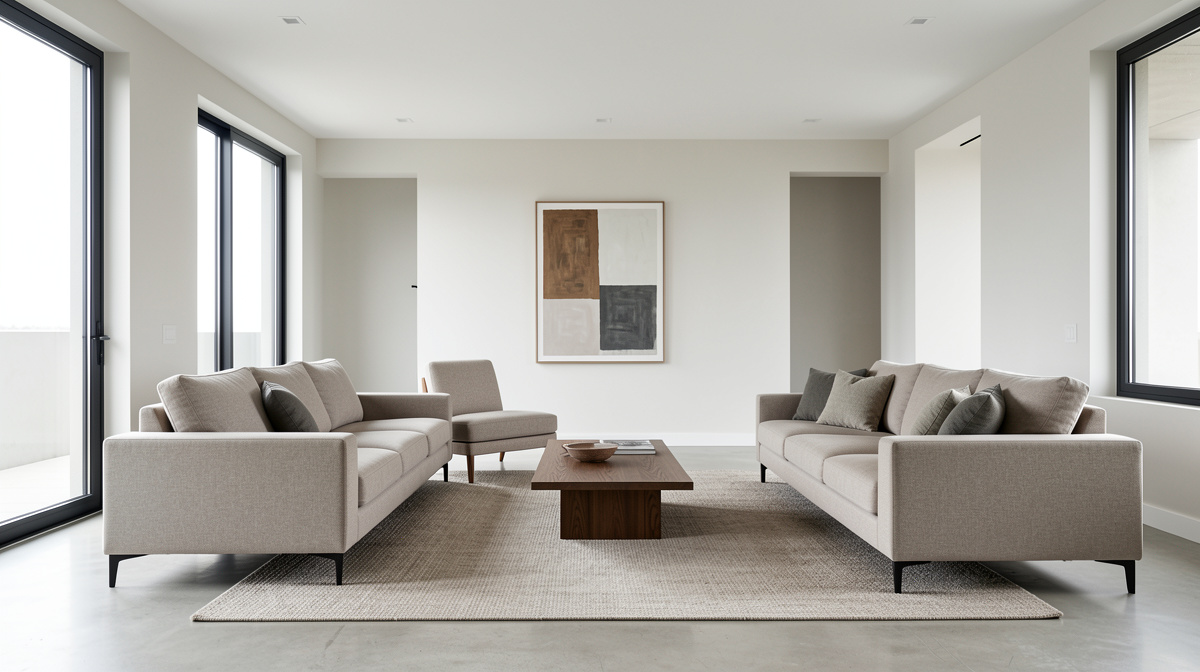
Whether you're working with the historical definition or the current interpretation, modern design comes back to a few consistent principles:
Clean lines. Furniture has straight edges or gentle, intentional curves. No ornate carvings, no decorative molding, no scrollwork. The silhouette of every piece is simple enough to describe in one sentence.
Function over decoration. Every item in the room has a purpose beyond looking nice. A bookshelf holds books. A coffee table holds coffee. If something is purely decorative, it earns its place through artistic merit, not filler.
Neutral palette with strategic color. The base is neutral — whites, grays, beiges, blacks, and natural wood tones. Color enters through one or two accent elements: a bold piece of art, a colored throw pillow, a single statement chair. The color stands out because everything around it is restrained.
Open space. Modern rooms breathe. There's space between furniture. The floor is visible. Negative space is treated as a design element, not wasted area. Overcrowded rooms feel busy regardless of how nice the furniture is.
Natural materials. Wood, leather, stone, glass, metal, and natural fibers. Modern design avoids synthetic materials that mimic other things — no faux marble, no plastic pretending to be wood. The materials are honest about what they are.
Minimal clutter. This doesn't mean bare rooms with nothing in them. It means every surface isn't covered with objects. The coffee table has two things on it, not twelve. The shelves have some open space between books and objects.
Room by room: modern design applied
Modern living room
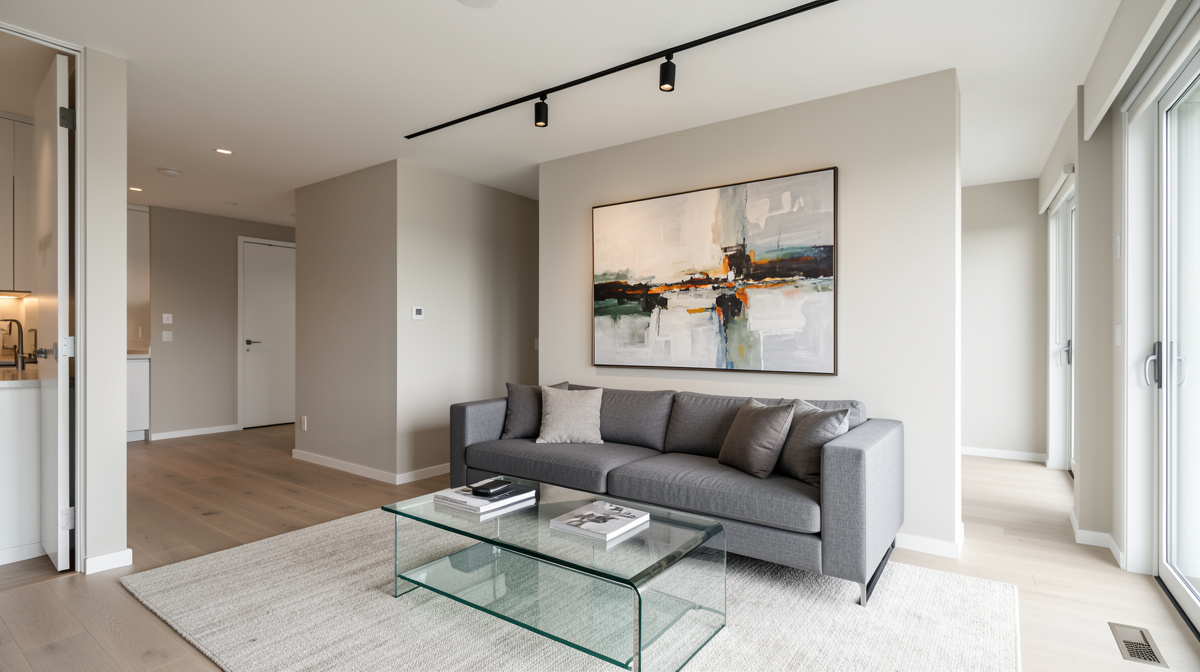
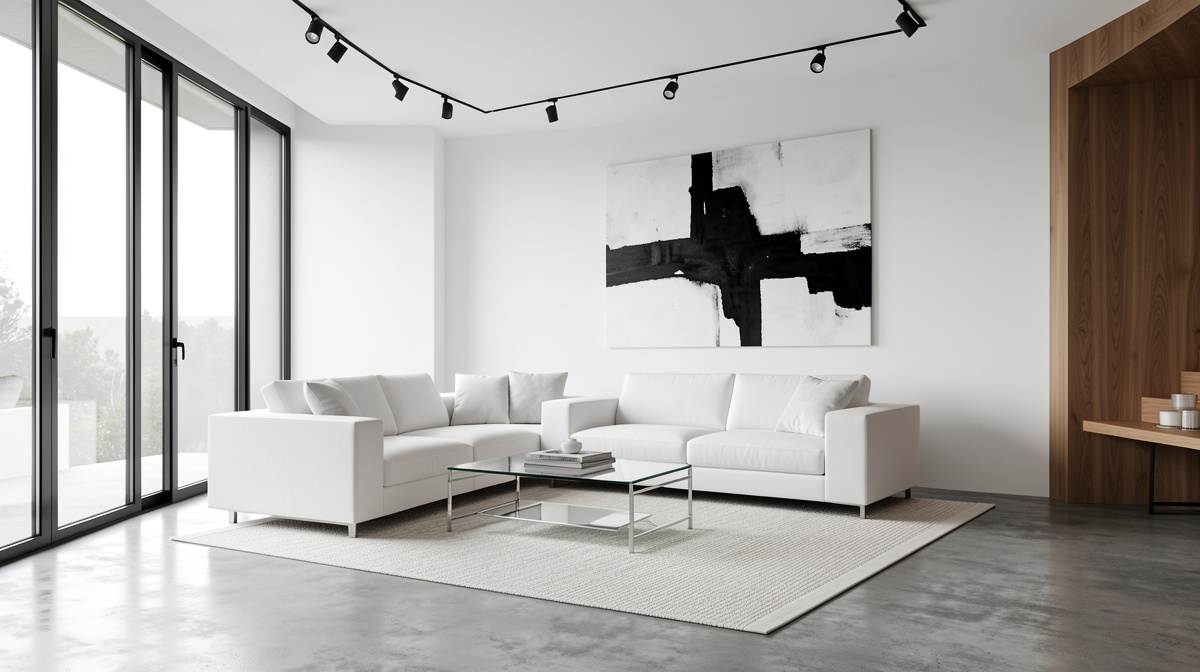
The living room is where most people start with modern design because it's the most visible room in the house. The formula: a clean-lined sofa in a neutral tone (gray, white, camel, charcoal), a coffee table with a simple silhouette (glass, walnut, marble, or concrete), and minimal accessories. The TV goes on a low walnut or white media console, not mounted above a fireplace with a chunky mantel.
Lighting matters here. Modern living rooms use a mix of recessed ceiling lights, a statement floor lamp (an Arco-style lamp or a slim tripod lamp), and perhaps a table lamp. Avoid ceiling fan/light combos if you're going for a modern look — a separate modern ceiling fan and independent light fixtures give you much more control over the aesthetic.
For specific layouts and style variations within the modern living room category, see our modern living room ideas guide, which breaks down six different modern sub-styles with costs.
Modern kitchen
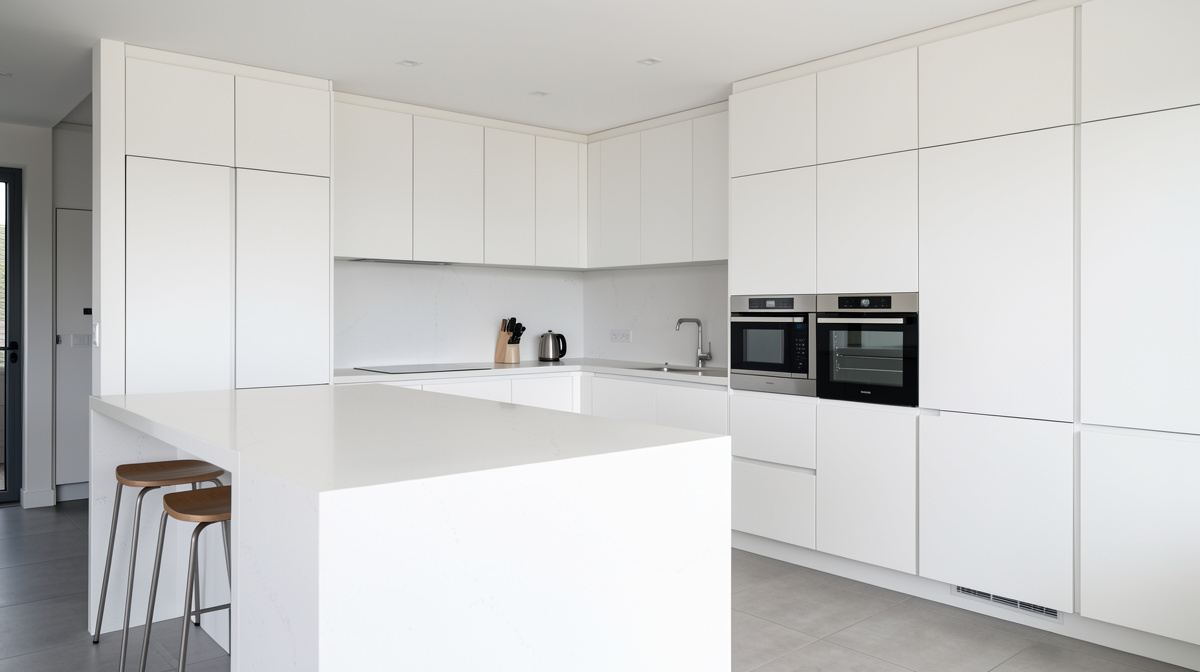
Modern kitchens rely on flat-panel or slab-front cabinets — no raised panels, no shaker style, no glass inserts. The hardware is either minimal (thin bar pulls or edge pulls) or absent (push-to-open mechanisms). Countertops are clean and continuous: quartz, quartzite, or concrete in a solid color or subtle pattern. The island, if there is one, often has a waterfall edge where the countertop material wraps down the side.
Appliances in a modern kitchen are either panel-integrated (hidden behind cabinet fronts) or in stainless steel or matte black. The move toward matte black and charcoal appliance finishes has accelerated in 2025-2026, giving kitchens a cleaner, less commercial-kitchen look than polished stainless.
The color palette for modern cabinets has shifted. From 2015-2022, white dominated. Now, warm wood tones (white oak, walnut) and two-tone combinations (white uppers with wood lowers, or dark charcoal base cabinets with lighter uppers) are taking over. This adds warmth without adding visual noise.
Modern bedroom
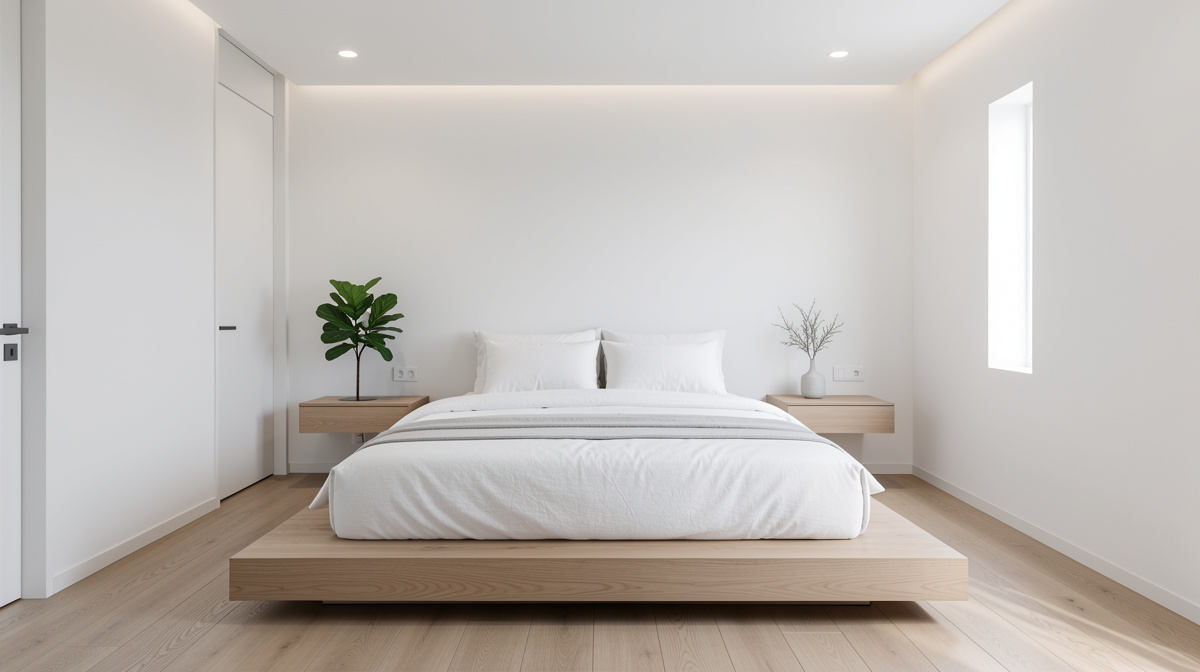
Modern bedrooms are calm. An upholstered platform bed or a simple wood frame with a fabric headboard. Floating nightstands mounted to the wall. A single pendant light or sconce above each nightstand instead of traditional table lamps. Bedding in white, cream, or soft gray with one textured throw. Curtains in a solid color — linen panels in white or warm gray.
The common mistake in modern bedrooms is making them too sparse. A bedroom with a bed and nothing else feels like a hotel. Add warmth with a large area rug (big enough to extend at least 24 inches past each side of the bed), a bench at the foot of the bed, and one or two personal items — a stack of books, a small plant, a framed photograph. These elements make the room feel inhabited without crossing into clutter.
Our modern bedroom ideas guide goes deeper into specific style variations and budget breakdowns for this room.
Modern bathroom
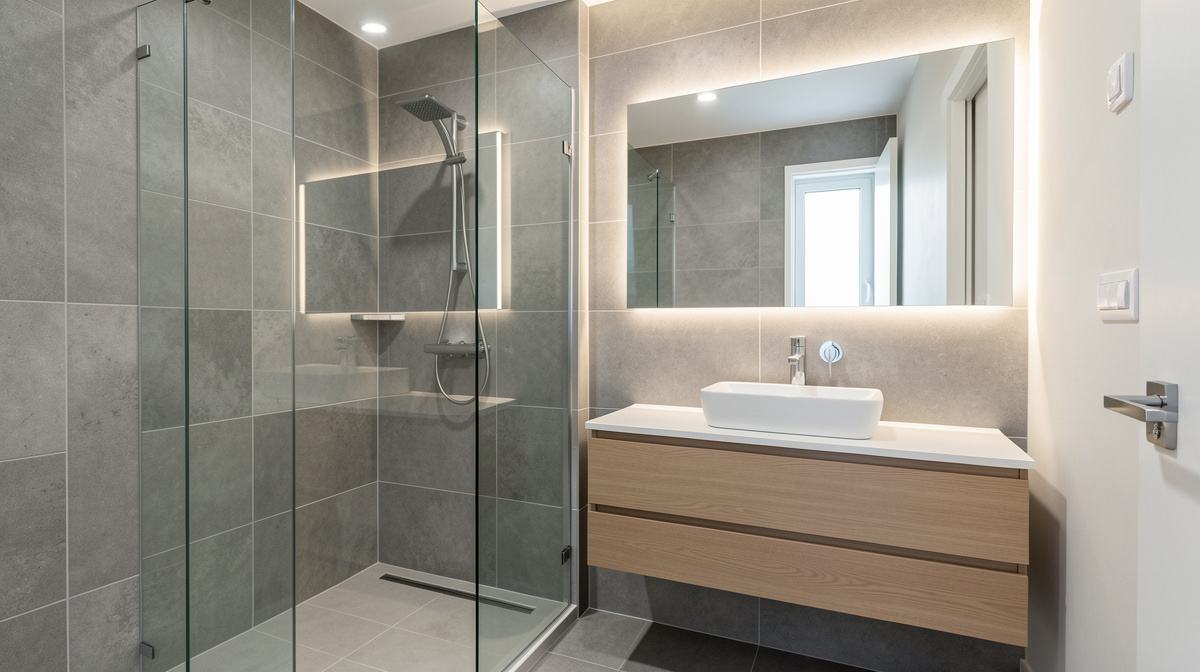
A floating vanity with integrated sink. A frameless glass shower enclosure. Large-format tile (24x48 or larger) on the walls and floor to reduce grout lines. Matte black or brushed nickel fixtures. A frameless mirror or a mirror with a thin black frame. The color palette stays tight: white, warm gray, greige, or black and white.
Modern bathrooms benefit from consistency. Using the same tile on the floor and shower walls creates visual continuity that makes the room feel larger. Heated floors add comfort without adding visual complexity — they're hidden under the tile and controlled by a small thermostat.
See Your Room Redesigned
Download Remodel AI and transform any room in 30 seconds. 3 free designs, no signup.


According to the National Association of Home Builders 2025 survey, curbless showers, floating vanities, and large-format tile ranked in the top five most-requested bathroom features, all of which align with modern design principles.
Materials that define the modern look
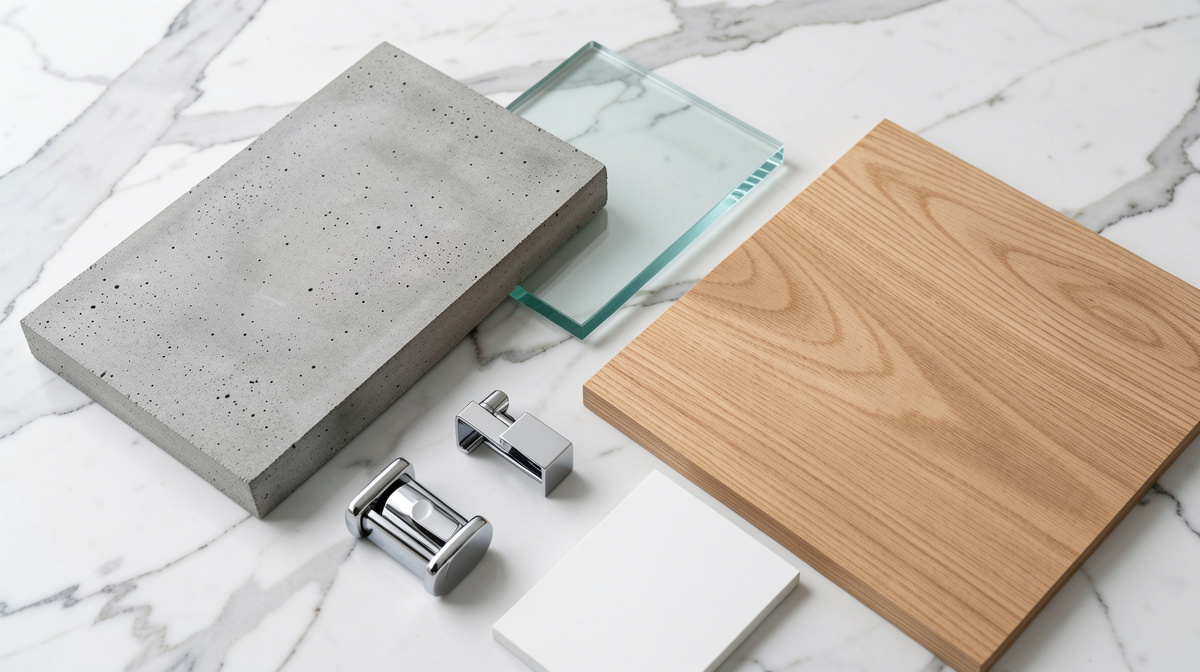
The materials you choose determine whether a room reads as modern or not, sometimes more than the furniture shapes do.
Wood: White oak, walnut, and ash in natural or light finishes. Avoid distressed finishes, heavy stains, or painted wood. The grain should be visible. Wood appears in flooring, furniture, shelving, and accent walls.
Glass: Clear glass on coffee tables, shelving, and shower enclosures. The transparency keeps rooms feeling open. Smoked or tinted glass adds a subtle moody quality without the heaviness of solid materials.
Steel and metal: Matte black steel for shelf frames, table legs, light fixtures, and hardware. Brushed brass or brushed nickel for fixtures and accents. Avoid polished chrome (reads cold) and ornate wrought iron (reads traditional).
Concrete: Polished concrete floors, concrete countertops, or concrete-look tile. The industrial warmth of concrete grounds a room without adding pattern or visual noise.
Natural stone: Marble, quartzite, soapstone, and travertine for countertops, backsplashes, and tabletops. The natural variation in stone brings organic character to an otherwise controlled aesthetic.
Leather: Full-grain leather on sofas, accent chairs, and desk chairs. Leather develops a patina over time that adds warmth. Avoid bonded or faux leather in modern interiors — the quality difference is noticeable.
Textiles: Linen, cotton, bouclé, and wool. These natural fibers add texture and warmth without competing visually. Avoid heavy brocade, floral prints, or heavily patterned fabrics.
How to avoid the "cold and sterile" trap
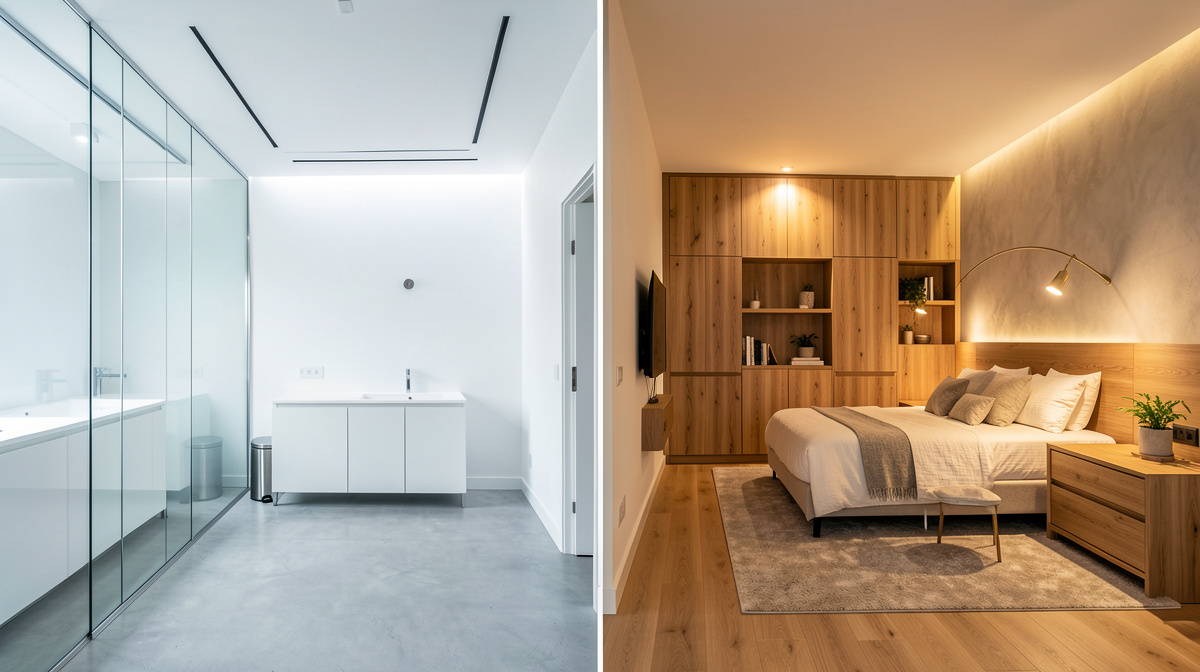
The biggest criticism of modern design is that it feels cold. This is a valid complaint about badly executed modern rooms, but it's not a flaw of the style itself. The coldness comes from specific mistakes:
Too much white. All-white walls, white furniture, white rug, white curtains. The eye has nowhere to rest. Replace some of that white with warm white (Benjamin Moore Simply White or White Dove), add wood tones, and introduce one warm color as an accent.
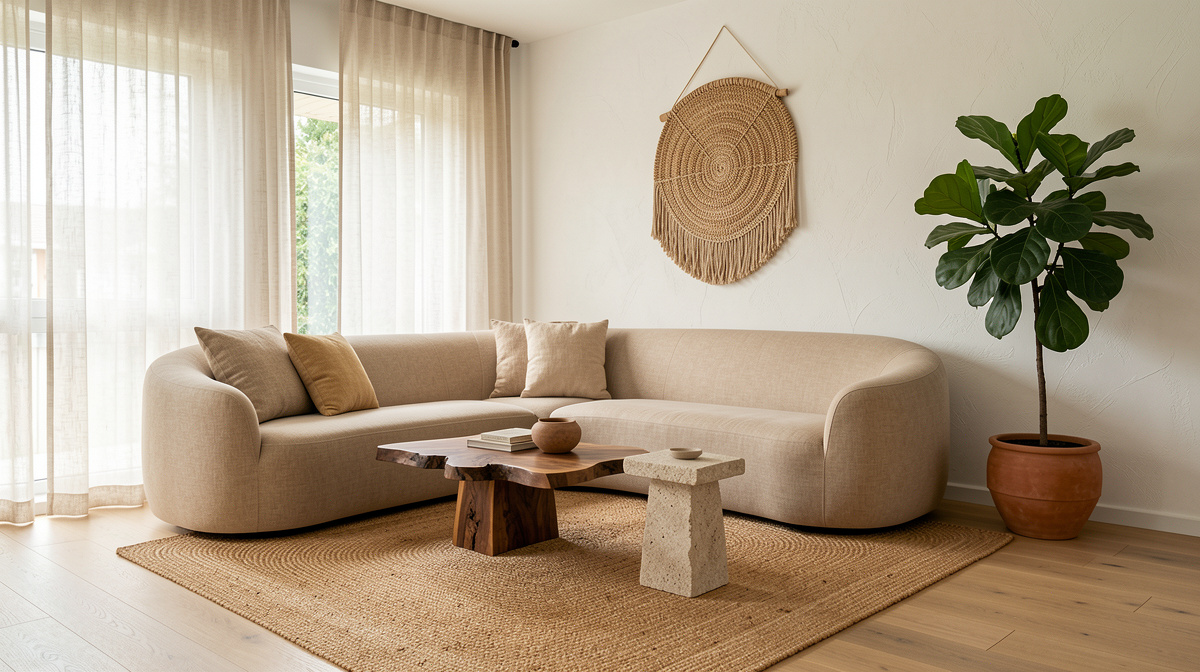
No texture. A room where everything is smooth — glass, polished metal, flat paint, flat fabric — feels clinical. Mix in rough textures: a jute rug, a linen sofa, a knit throw, a ceramic vase with a matte finish, unfinished wood on a shelf.
No personal items. A room designed to be photographed looks different from a room designed to be lived in. Books, a family photo, a bowl of fruit, a blanket draped over a chair arm — these signs of life warm up any space. The key is restraint in quantity, not absence.
Wrong lighting temperature. Daylight bulbs (5000K+) in a living room or bedroom make the space feel like an office. Warm white bulbs (2700K-3000K) create a softer atmosphere. This is the single cheapest fix for a cold-feeling room.
No plants. A few plants — a fiddle leaf fig, a snake plant, a pothos on a shelf — add life and color to a modern room without contradicting the aesthetic. Green is a neutral in modern design.
Modern design on a budget
You don't need to spend designer prices to get a modern look. The principles themselves are budget-friendly because they emphasize fewer, simpler things.
Under $500 for one room refresh: Paint the walls a warm white. Declutter surfaces and remove anything that doesn't earn its spot. Add one quality throw pillow in a rich color. Replace dated light fixtures with simple modern ones ($20-$80 each from Amazon or IKEA). Add a plant.
$1,000-$3,000 for a room makeover: New sofa or sofa slipcover in a clean-lined style ($500-$1,500). Simple coffee table ($100-$400). Area rug in a solid or subtle pattern ($100-$400). New curtains in linen ($50-$150). Updated lighting ($100-$300).
$5,000-$10,000 for a full room: Quality modern sofa ($2,000-$4,000). Statement coffee table in marble, walnut, or glass ($400-$1,500). Professional-quality lighting ($500-$1,500). Area rug ($500-$1,200). Media console or storage ($300-$800). Accessories and art ($300-$800).
According to Modsy's 2025 Interior Design Cost Report, modern and contemporary styles cost 10-15% less than traditional styles on average because the furniture tends to be simpler to manufacture and the accessories budget is lower.
How to see modern design in your own space
Reading about clean lines and neutral palettes is one thing. Seeing them in your actual room is another. Remodel AI lets you upload a photo of any room in your home and apply different modern design styles to it — warm modern, minimalist, industrial modern, or Scandinavian modern — so you can see what works with your existing architecture, lighting, and floor plan before buying anything.
Frequently asked questions
What is the difference between modern and contemporary interior design?
Modern design refers to a historical movement rooted in the early-to-mid 20th century, emphasizing clean lines, function over ornament, and natural materials. Contemporary design means whatever is current right now, and it borrows from multiple styles including modern. In everyday conversation, most people use "modern" when they mean "clean and current," which is technically contemporary. Either way, the result is similar: uncluttered spaces with functional furniture and a neutral palette.
Is modern interior design cold?
Only when it's done poorly. The cold, sterile look comes from too much white, no texture, no plants, and harsh lighting. A well-executed modern room uses warm-toned materials (walnut, brass, leather, linen), warm white bulbs (2700K-3000K), and a few personal items to create a space that feels clean but comfortable. Warm modern and organic modern are the specific sub-styles designed to solve this problem.
What colors are used in modern interior design?
The base palette is neutral: whites, warm grays, beiges, charcoal, and natural wood tones. Color enters as an accent through one or two elements — a bold piece of art, a colored chair, or a vibrant rug. In 2026, the neutral base is shifting warmer (cream, warm white, sand) with earth tone accents (terracotta, olive, rust, ochre) replacing the cooler blues and teals that were popular a few years ago.
How do I make my home look modern on a budget?
Start with decluttering — removing visual noise is free and makes the biggest immediate difference. Paint walls a warm white. Replace dated hardware on cabinets and doors with simple modern pulls ($2-$5 each). Swap ornate light fixtures for simple ones ($20-$80). Add one quality textile (throw, pillow, or rug) in a neutral tone. Hide cables. Add a plant. These changes cost under $200 total and shift the feeling of a room significantly.
Can you mix modern with other design styles?
Yes, and most successful interiors do. Modern paired with rustic elements (reclaimed wood, textured stone) creates a warm contrast. Modern with mid-century pieces is a natural fit since mid-century modern is part of the same family. Modern with Scandinavian influence is so common it's become its own category (organic modern). The key is keeping the modern principles — clean lines, functional pieces, minimal clutter — as the foundation and adding elements from other styles as accents rather than letting them take over.
Ready to Try AI Interior Design?
Upload a photo and redesign any room in seconds. 3 free designs, no signup required.