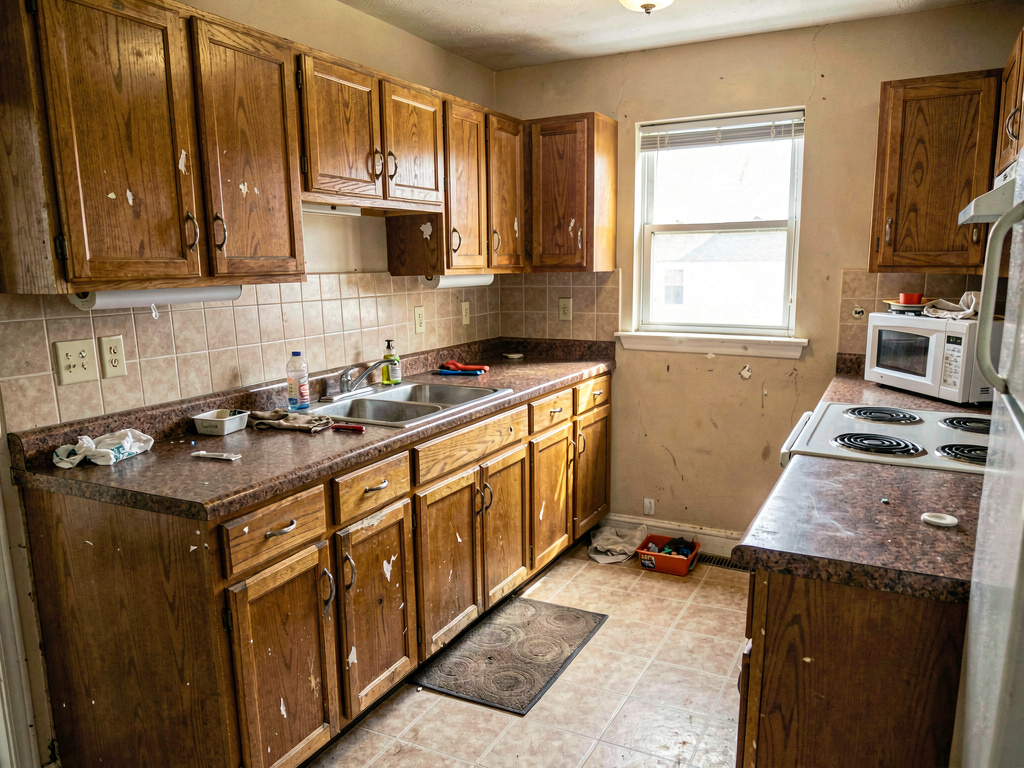
Kitchen trends 2026: the 10 styles taking over this year
Kitchen trends 2026 — the cabinet colors, countertop materials, hardware, backsplashes, and layouts defining kitchens this year, plus what's on the way out.

Ryan H.
Founder of Remodel AI · April 6, 2026 · 11 min read
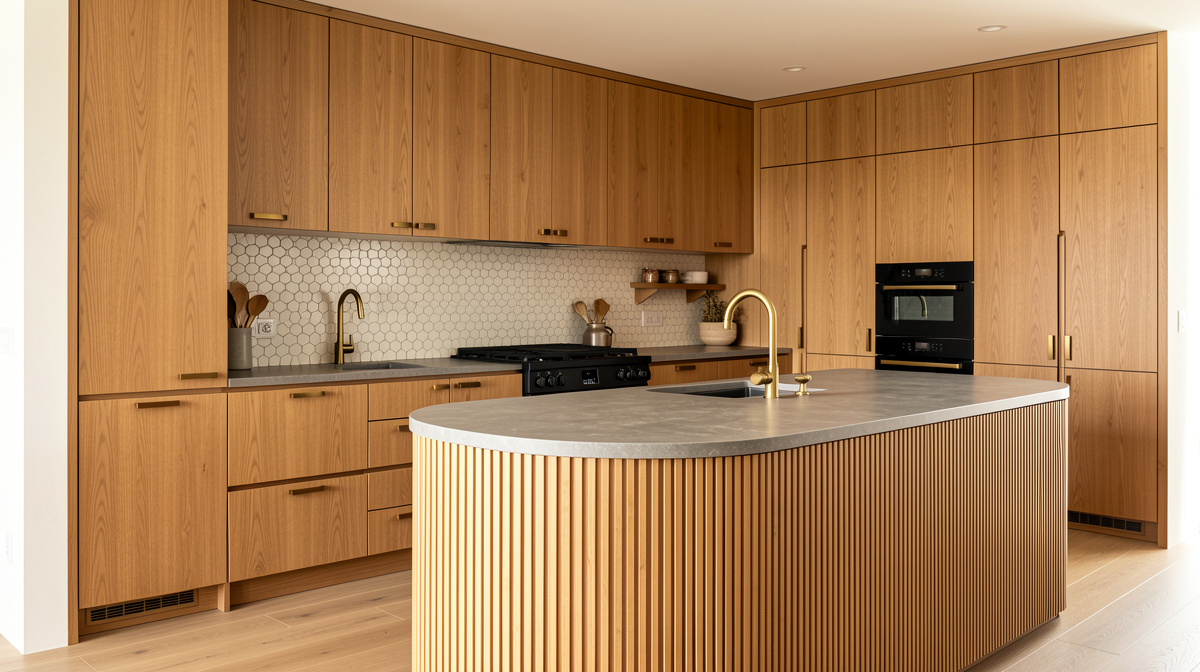
Kitchen trends 2026 are easier to track than trends in other rooms because kitchens cost so much to renovate. People don't redo their kitchen on a whim, so when a trend shows up in actual kitchens (not just Pinterest boards), it has real staying power. This year, the shifts are clear: warm wood is replacing white, natural stone is replacing engineered quartz at the high end, and hardware is getting warmer and less polished. Here are the ten specific trends defining kitchens in 2026, with evidence for each one and honest notes on what's fading.
1. Warm wood cabinets replace all-white
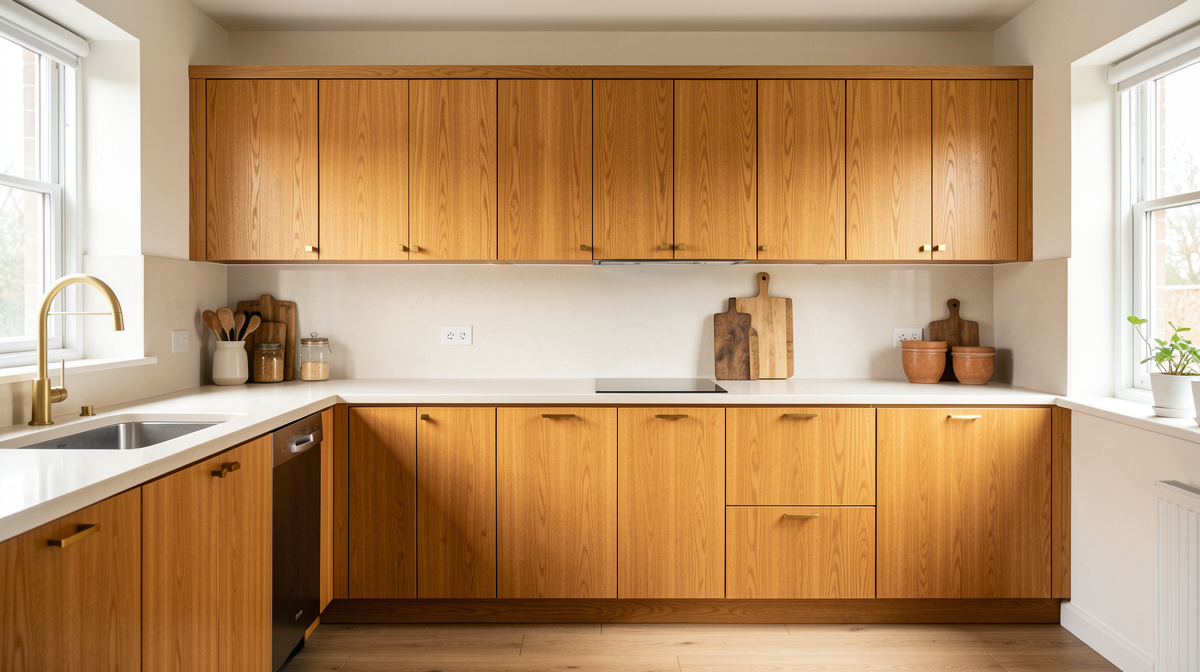
The all-white kitchen dominated for over a decade. It photographed well, it felt safe for resale, and every home renovation show from 2012 to 2022 treated it as the default. That era is ending. White oak, rift-cut oak, and walnut cabinets in natural or light stain finishes are the top request in 2026 kitchen designs. The warmth of wood adds character that white never could, and it hides fingerprints and daily wear far better.
This doesn't mean white cabinets are dead. They still work in small, dark kitchens where the brightness helps. But in kitchens with decent natural light, warm wood tones are the new first choice. According to Houzz's 2025 Kitchen Trends Study, white cabinets dropped from 43% of kitchen renovations in 2020 to 28% in 2025, while natural wood tones rose from 12% to 31% in the same period.
The budget version: If new cabinets aren't in your budget, cabinet refacing with a warm wood veneer ($2,000-$6,000) or even painting existing cabinets in a warm tone like Accessible Beige or Edgecomb Gray ($500-$1,500 DIY) moves in the right direction.
2. Two-tone cabinets become the standard
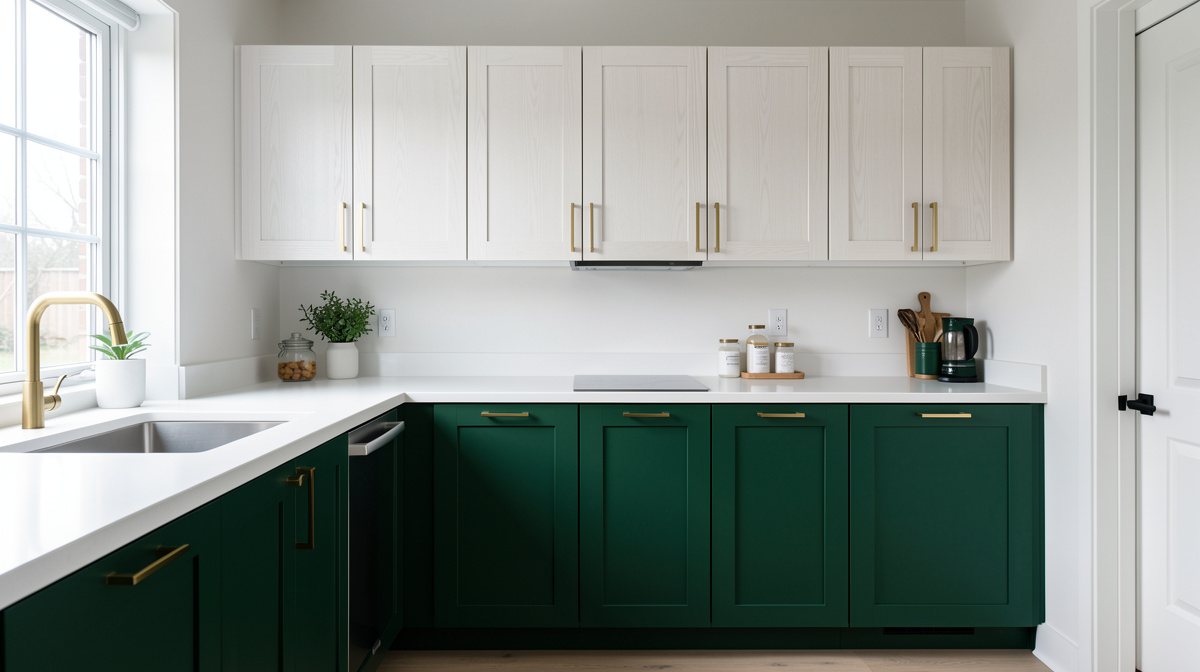
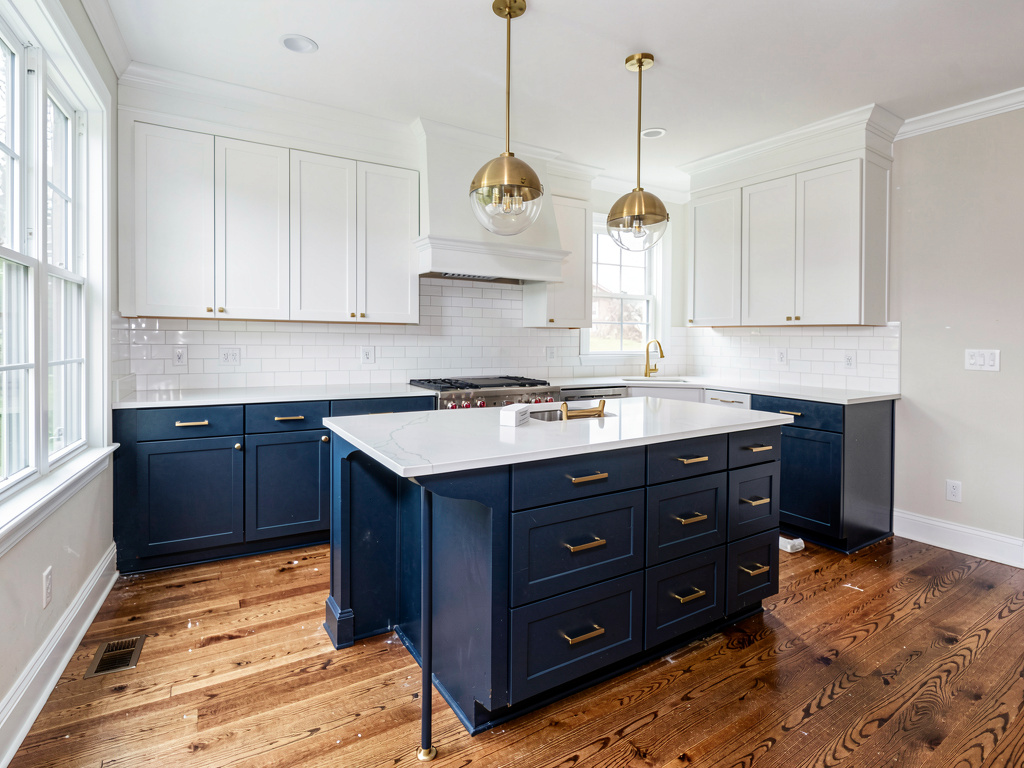
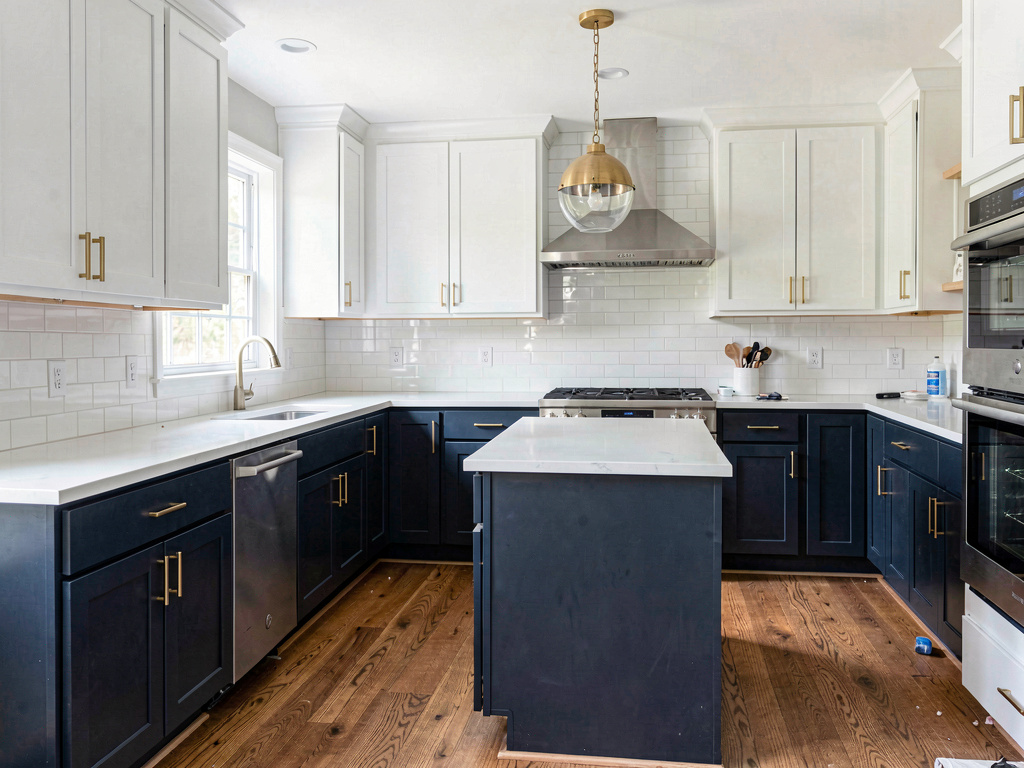
Two-tone kitchens — different colors or materials for upper and lower cabinets — have moved from trend to standard practice. The most popular combinations in 2026: white or cream uppers with warm wood lowers, white uppers with dark green or navy lowers, and all-wood lowers with no upper cabinets at all (just floating shelves or a hood and open wall).
Two-tone works because it breaks up the visual weight of a wall of identical cabinets and gives the room depth. It also lets you introduce a bold color without committing to it on every surface. A dark green lower cabinet is a statement. A dark green kitchen from floor to ceiling is a gamble.
3. Natural stone countertops rise
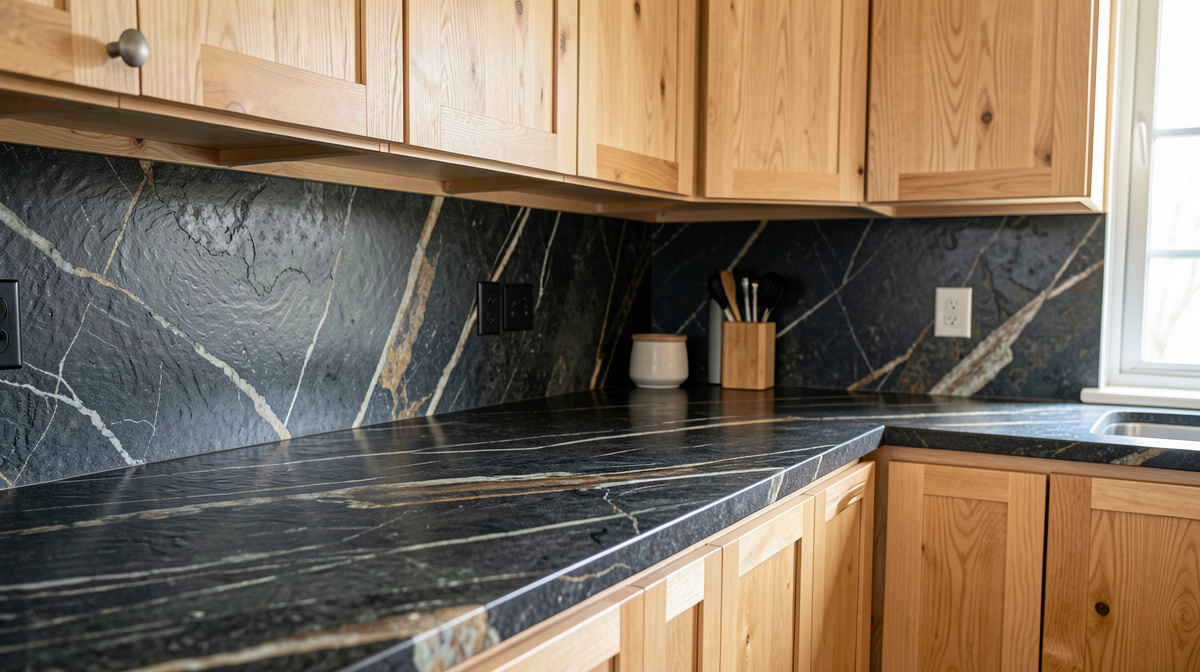
Engineered quartz became the default countertop material in the late 2010s because it was durable, consistent, and low-maintenance. It still holds the largest market share, but the trend line is moving toward natural stone — specifically quartzite, soapstone, and heavily veined marble.
The appeal is uniqueness. Every slab of natural stone has a different pattern, which means your kitchen counter doesn't look like your neighbor's. Quartzite has become the sweet spot: it's natural stone with better durability than marble (it won't etch from lemon juice or vinegar), comparable cost to mid-range quartz ($60-$120 per square foot installed), and the visual depth that engineered surfaces can't match.
Soapstone is the other rising option. It's naturally antibacterial, heat-resistant, and develops a patina over time. The dark gray color works well with warm wood cabinets. It scratches, but the scratches can be buffed out with mineral oil or left to add character.
What's fading: White quartz countertops that imitate marble. These were the "safe" choice for years, but as natural stone becomes more accessible and quartz prices have risen, the gap between imitation and the real thing has narrowed.
4. Unlacquered brass hardware
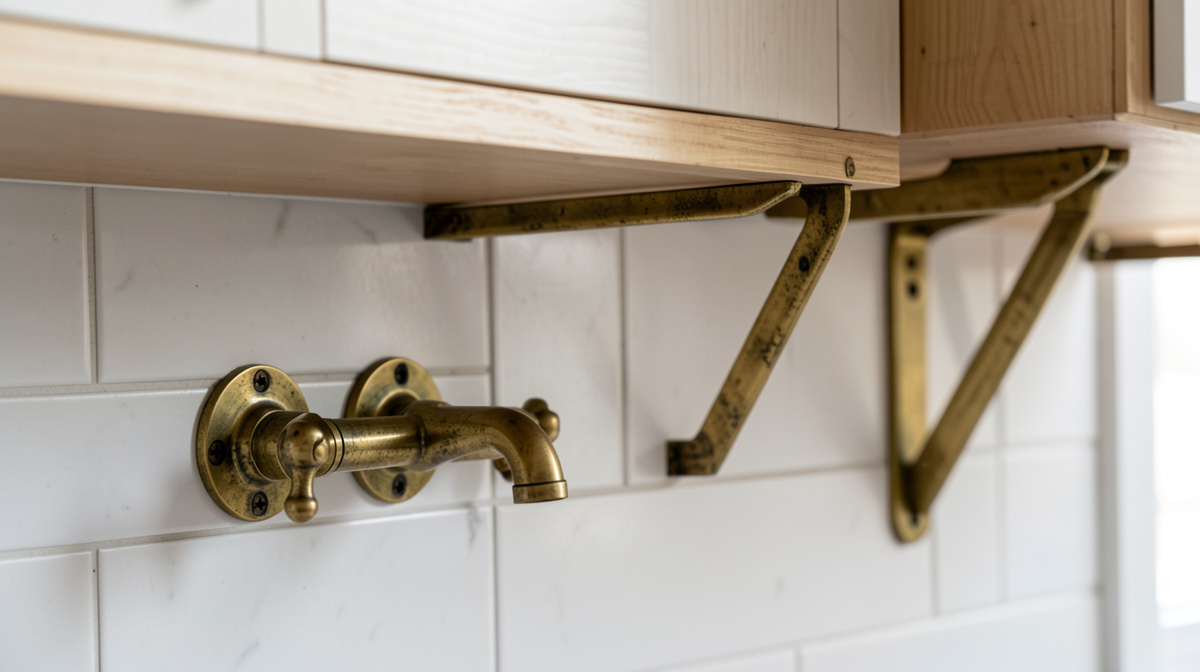
Brushed nickel had its decade. Matte black had its moment. The hardware trend in 2026 is unlacquered brass — raw brass that develops a patina over time rather than staying polished. The lived-in look aligns with the broader move toward natural, imperfect materials. New unlacquered brass is bright and golden. After six months of use, it develops darker tones where hands touch it and stays lighter where they don't. After a year, it has a warm, antique quality that lacquered brass can't replicate.
If patina makes you nervous, aged brass (pre-treated to look already patina'd) gives you a similar look without the evolution. Rejuvenation, Schoolhouse, and CB2 all carry aged brass options.
What's fading: Polished chrome. It reads as dated in most kitchen styles outside of professional or industrial kitchens. Matte black isn't fading exactly, but it's been so widespread that it no longer feels like a distinguishing choice.
5. Full-height stone and zellige backsplashes
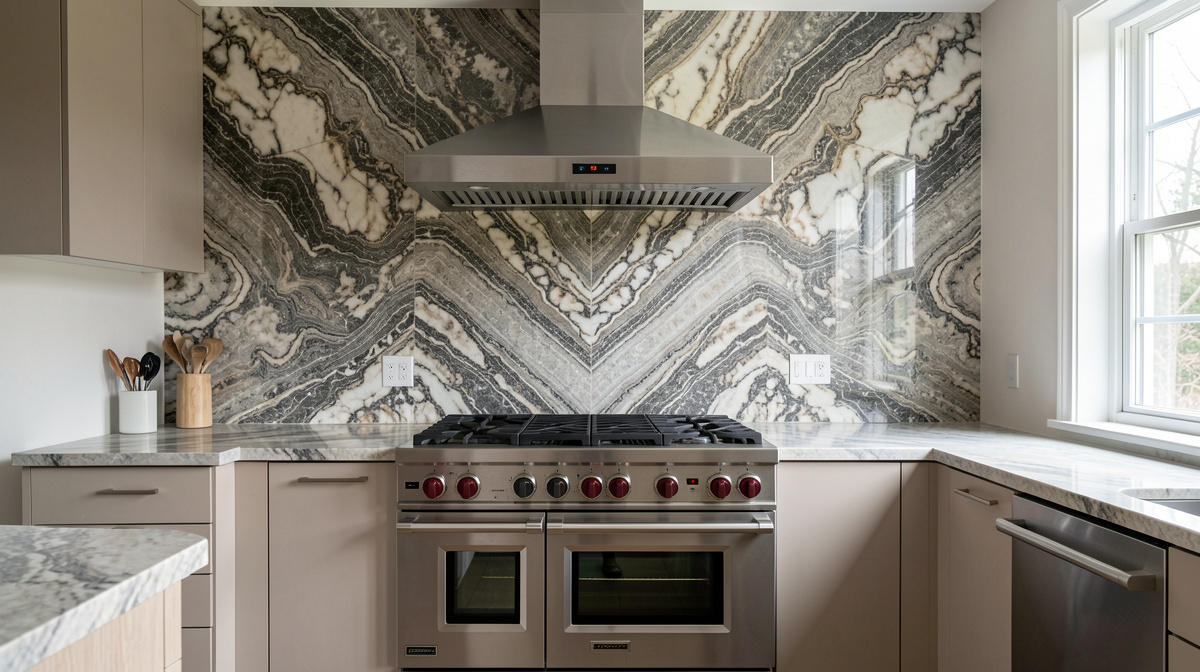
The standard tile backsplash from countertop to the bottom of the upper cabinets (usually 18 inches) is being replaced by two extremes: full-height stone that runs from the counter to the ceiling, and handmade zellige tile that adds texture and color.
Full-height stone backsplashes use the same material as the countertop, creating a continuous look that makes the kitchen feel more designed and less pieced-together. This works especially well in kitchens with open shelving above the counter instead of upper cabinets, where the full wall is visible.
Zellige tile — handmade Moroccan clay tile with an irregular, glossy surface — adds texture and light-catching variation that machine-made tile can't match. The slight imperfections in each tile create a surface that changes with the light throughout the day. Colors range from classic white to deep green, terracotta, and blue.
What's fading: Classic white subway tile as a default. It's not bad — it's just safe to the point of generic. It no longer adds anything to a kitchen. If you already have it, there's no reason to rip it out. But for new kitchens, other options read as more intentional.
For more ideas on how backsplash choices interact with overall kitchen design, our AI kitchen remodel guide covers how to visualize different backsplash options in your existing kitchen.
6. Curved and waterfall islands
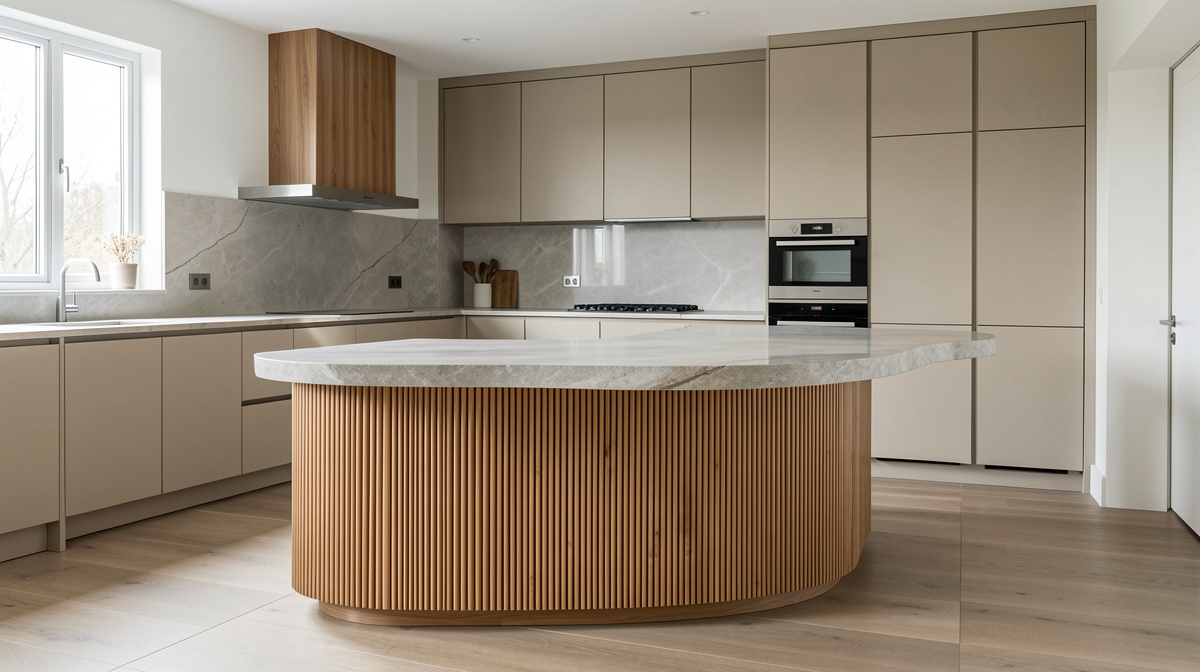
Straight-edged rectangular islands aren't going away, but curved elements are increasingly common in 2026 kitchen design. A rounded end on one side of the island, a full oval or pill-shaped island in larger kitchens, or a waterfall edge where the countertop material cascades down the side to the floor.
Curved islands improve traffic flow — people don't clip their hips on sharp corners — and they soften the overall look of the kitchen, which tends to have a lot of straight lines (cabinet fronts, counter edges, tile grids). The waterfall edge, where the countertop material wraps down the side, hides the internal structure of the island and shows off the stone pattern from a different angle.
According to the National Kitchen and Bath Association's 2026 Design Trends Report, 41% of new kitchen projects in 2026 include a waterfall edge on the island, up from 22% in 2022.
7. Matte black and integrated panel appliances
See Your Room Redesigned
Download Remodel AI and transform any room in 30 seconds. 3 free designs, no signup.


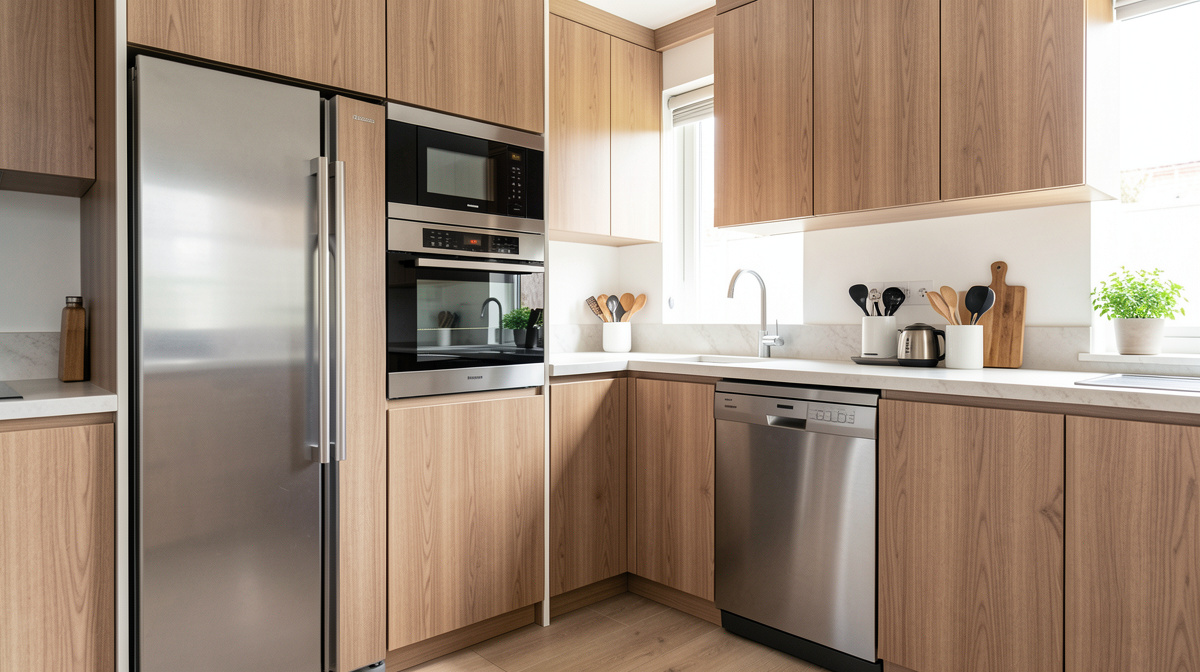
The appliance finish landscape has split into two camps. In modern and contemporary kitchens, panel-ready appliances (where the refrigerator and dishwasher are faced with the same material as your cabinets so they disappear) are the aspiration. In kitchens with more personality, matte black has emerged as the alternative to stainless steel — less commercial-looking, warmer, and better at hiding fingerprints.
Stainless steel isn't over, but it's no longer the automatic choice. Matte black pairs well with warm wood and brass hardware. White appliances have made a small comeback in Scandinavian-influenced kitchens, where they blend with white cabinetry rather than standing out the way stainless does.
What's fading: Smudge-proof stainless as a selling point. All modern finishes are fingerprint-resistant now. Black stainless (the dark gray finish Samsung and LG pushed in 2018-2020) peaked quickly and is losing shelf space to true matte black.
8. The scullery and back kitchen
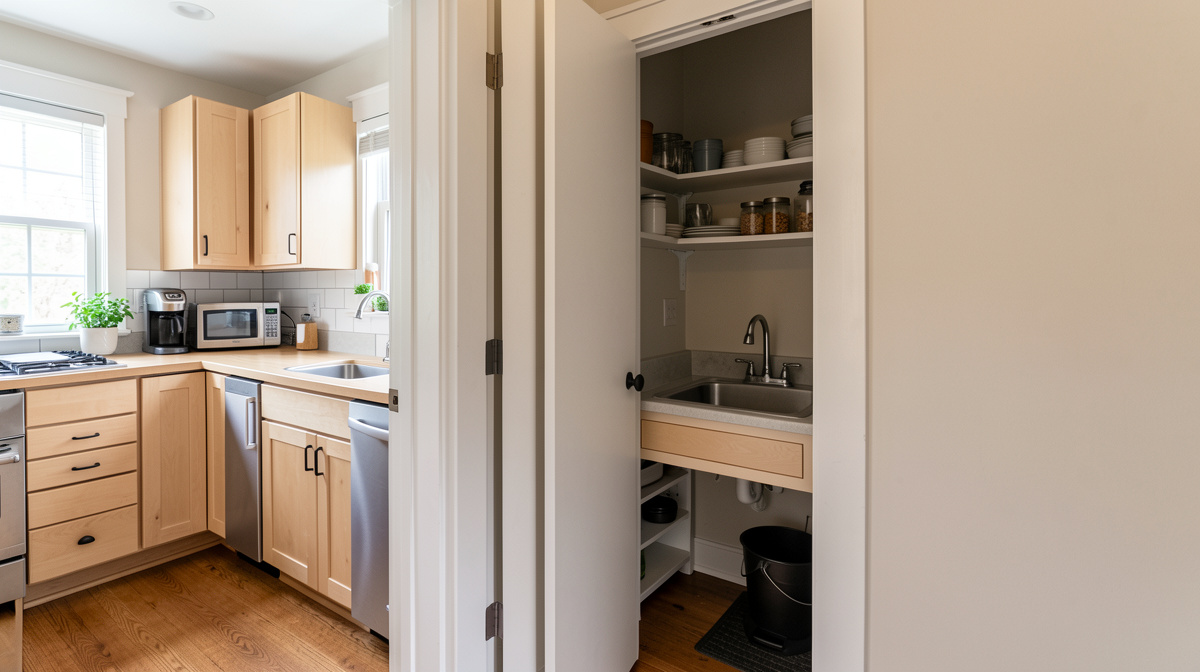
One of the more interesting layout trends in 2026 is the return of the scullery — a secondary prep kitchen or utility kitchen behind the main kitchen. The main kitchen stays clean and designed. The scullery handles the mess: a second sink, extra counter space for prep, small appliances that would clutter the main kitchen (toaster, coffee maker, stand mixer), pantry storage, and trash/recycling.
This isn't realistic for every home — you need the square footage. But in new construction and major renovations, architects are adding sculleries more frequently because they solve the tension between wanting a beautiful kitchen and actually cooking in it. A walk-in pantry with a counter and sink achieves a similar function at a smaller scale.
9. Statement range hoods
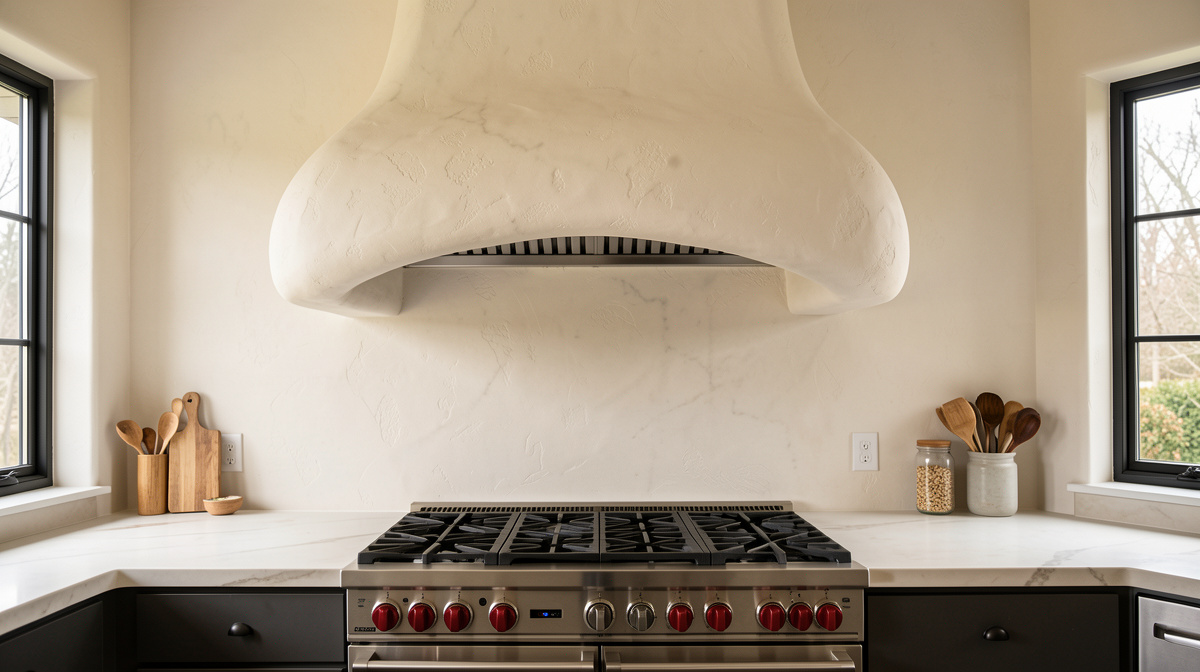
The range hood has become a design focal point in 2026 kitchens. Custom plaster hoods (smooth, arched, sometimes with a slight curve), wood-clad hoods that match the cabinetry, and metal hoods in brass, copper, or black steel are replacing the standard stainless steel chimney hood.
A custom plaster hood runs $2,000-$5,000 installed, which is significant. But the visual impact is proportional — in an open-concept home where the kitchen is visible from the living and dining areas, the hood is often the most prominent element. A well-designed hood draws the eye up, adds architectural interest, and gives the kitchen a personality that standard hoods don't.
The budget version: a basic stainless hood wrapped with drywall and painted to match the wall creates a similar clean, custom look for $200-$500 in materials.
10. Open dining integration
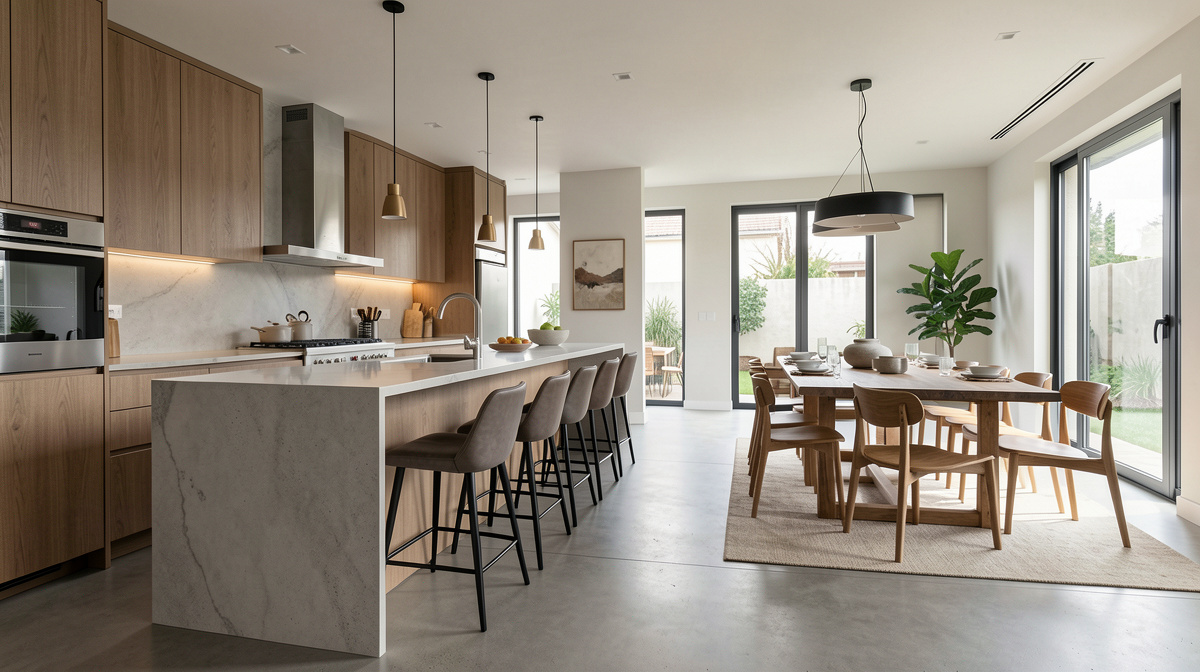
The separation between kitchen and dining room continues to dissolve. In 2026, more kitchens incorporate a dining table as part of the kitchen layout rather than in a separate room. A large farmhouse table at the end of the island, a built-in banquette in a kitchen corner, or an extension of the island that becomes a dining surface.
This reflects how people actually use kitchens — they're the center of the house, the place where homework gets done, conversations happen, and meals are eaten. Separating the cooking area from the eating area felt formal in a way that most households have moved past.
For a deeper look at how farmhouse elements like integrated dining blend with modern kitchen finishes, our modern farmhouse interior guide covers the style's evolution in 2026.
What's definitively out
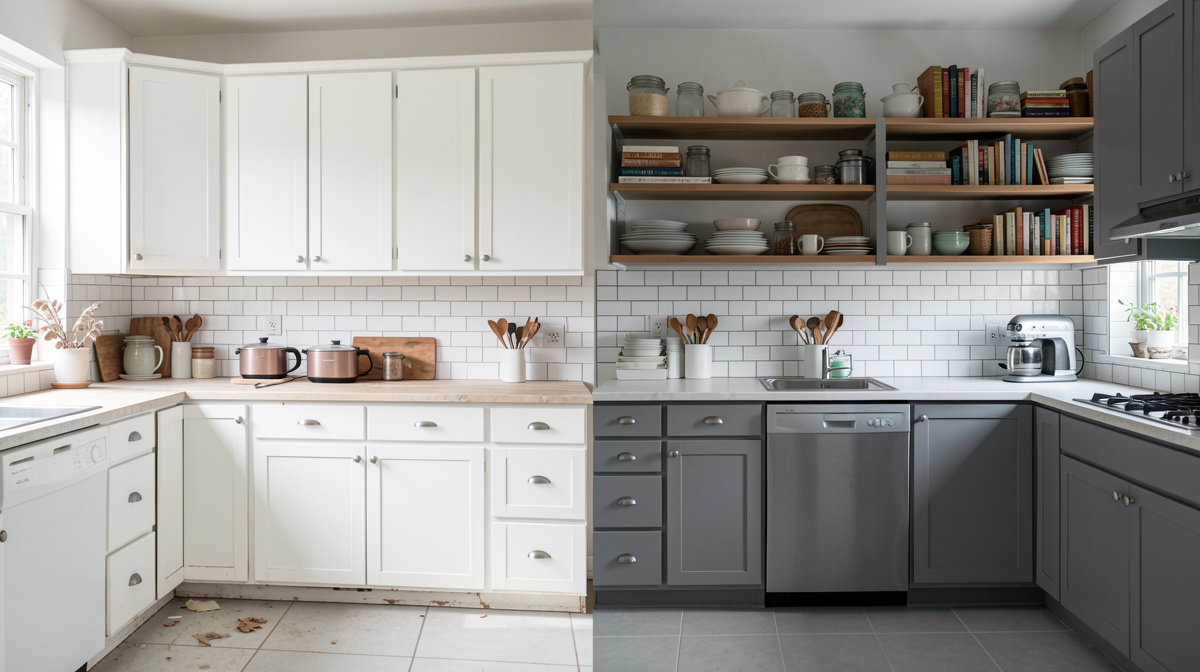
A quick list of what's peaked or declining:
- Open shelving as the primary upper storage. The Instagram aesthetic couldn't survive daily life for most families. Some open shelving mixed with closed cabinets still works, but full walls of open shelves are losing appeal.
- All-gray kitchens. Gray cabinets, gray quartz, gray tile, gray walls. This was the mid-2010s flip-house default and now reads as generic.
- Farmhouse sinks in non-farmhouse kitchens. The apron-front sink in an otherwise modern kitchen was trendy for a few years but the mismatch is becoming more visible.
- Tuscan and Mediterranean kitchen styling with heavy dark wood, wrought iron, and earth-toned granite.
- Ornate cabinet molding and decorative corbels. Clean lines are winning across nearly every style category.
How to see these trends in your own kitchen
Ripping out your kitchen to follow a trend is expensive and rarely necessary. But if you're already planning a renovation or just curious how warm wood cabinets or a zellige backsplash would look in your space, Remodel AI lets you upload a photo of your kitchen and try different styles, materials, and color combinations before spending a dollar.
Frequently asked questions
Are white kitchens going out of style in 2026?
All-white kitchens are declining in popularity but aren't gone. The shift is toward warm white combined with wood accents, two-tone cabinets, or white uppers with warm-toned lowers. A white kitchen with warm hardware, natural stone countertops, and wood elements reads as current. A white kitchen with chrome hardware and white quartz countertops reads as 2018.
What is the most popular kitchen countertop in 2026?
Engineered quartz still has the largest market share for its combination of durability and consistency. But the trend is moving toward natural stone — quartzite and soapstone in particular. Quartzite offers natural stone beauty with better durability than marble. For budget-conscious renovations, butcher block and concrete are gaining ground as statement materials for islands while quartz or laminate handles the perimeter counters.
What color kitchen cabinets are in style for 2026?
Warm wood tones (white oak, rift-cut oak, walnut) are the top choice. Two-tone combinations with white or cream uppers and wood or colored lowers are second. Among paint colors, warm whites, sage green, dark green, navy, and warm gray are all performing well. Cool grays and stark white are declining.
How much does a kitchen renovation cost in 2026?
According to industry data, a mid-range kitchen renovation runs $25,000-$50,000 and a high-end renovation runs $50,000-$150,000+. The biggest cost drivers are cabinets (30-40% of the total), countertops (10-15%), appliances (10-20%), and labor (20-35%). You can update the look of a kitchen for much less — new hardware ($100-$500), a painted backsplash or peel-and-stick tile ($50-$300), and new lighting ($100-$500) cost under $1,500 total and shift the style noticeably.
Should I follow kitchen trends or play it safe for resale?
If you're selling within two years, lean toward timeless choices — white or warm wood cabinets, quartz or quartzite counters, neutral hardware. If you're staying for five-plus years, design for what you want to live with. Trends that align with your taste will keep your kitchen feeling current. The worst outcome is a kitchen designed to appeal to a hypothetical buyer that you don't enjoy using every day.
Ready to Try AI Interior Design?
Upload a photo and redesign any room in seconds. 3 free designs, no signup required.