How to pick a front door color (the easy way with AI)
Picking a front door color is stressful. Here are the 10 most popular colors in 2026, which ones work with your siding, and how to preview them with AI for free.

Ryan H.
Founder of Remodel AI · April 27, 2026 · 9 min read
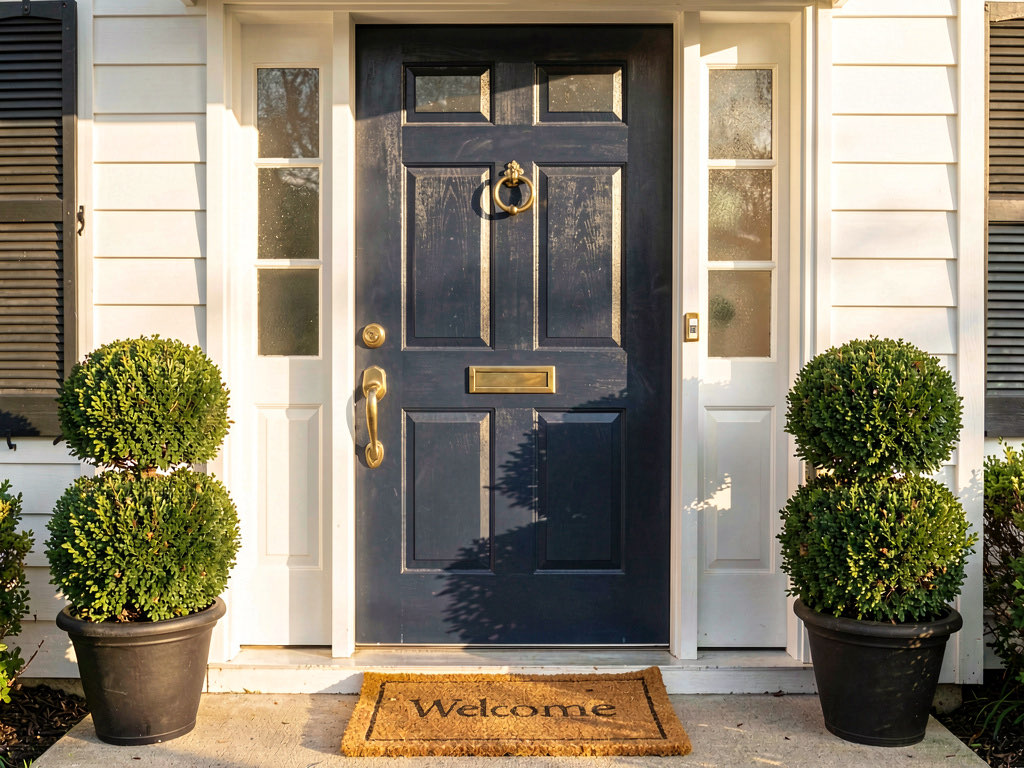
The fastest way to pick a front door color: upload a photo of your house to Remodel AI and see your front door in any color in 10 seconds. No more buying $5 sample cans and painting cardboard swatches. The 10 most popular front door colors in 2026 are black, navy, sage green, red, yellow, teal, charcoal, white, wood stain, and burgundy.
How to pick a front door color is one of those questions that sounds simple until you're actually standing in the paint aisle staring at 47 shades of blue. The door is the first thing people see. It sets the tone for the entire house. And unlike interior paint — which you can redo in an afternoon if you hate it — the front door is visible to every neighbor, every delivery driver, and every potential buyer for years.
The good news: there are clear rules for what works. The color of your siding, trim, and roof narrows the field dramatically. And once you understand those rules, AI visualization tools let you test options on your actual house in seconds instead of weeks.
The 10 most popular front door colors in 2026
These are the colors that appear most frequently in real estate listings, design magazines, and paint company best-seller reports in 2026. They're popular because they work on the widest range of house styles.
1. Black
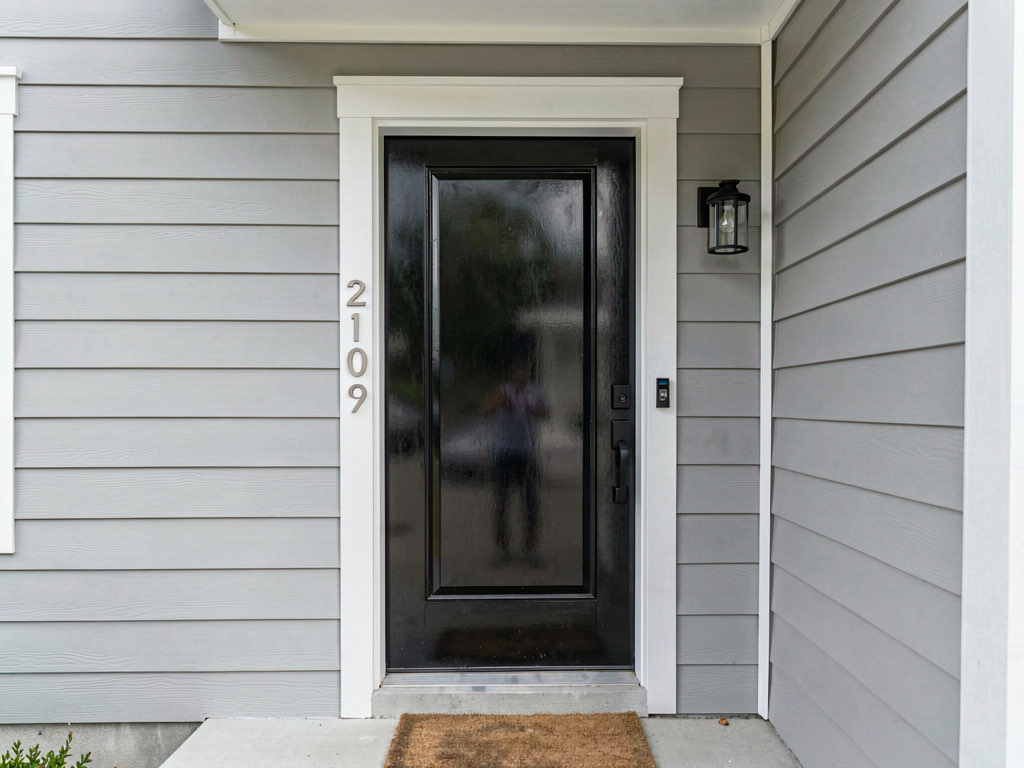
Glossy black is the most popular front door color in the country, and it has been for several years running. Black works on every house style — colonial, craftsman, modern, farmhouse, ranch. It creates instant contrast against any light-colored siding. A high-gloss finish makes the door look expensive. Matte black reads more modern. Black doors pair with every hardware finish: brass, nickel, black, chrome.
Black is also the highest-value front door color. According to Zillow's paint color analysis, homes with black or charcoal front doors sell for a premium compared to homes with other door colors. If you're painting to sell, black is the safest choice.
2. Navy blue
Navy is the second most popular door color and the one that gets the most compliments. It's bold without being loud. Navy works especially well on white, cream, and light gray houses. The key is choosing a true navy — not royal blue, not periwinkle, not teal. Think Benjamin Moore Hale Navy or Sherwin-Williams Naval. Pair with brass or gold hardware for a classic look, or matte black hardware for a modern one.
3. Sage green
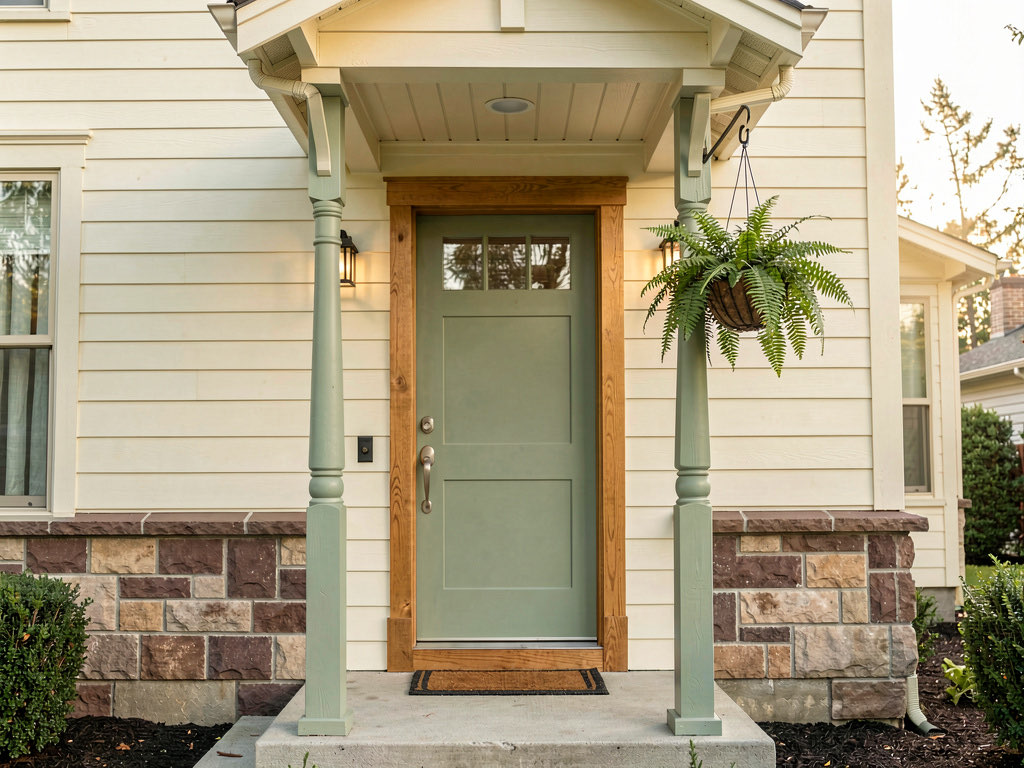
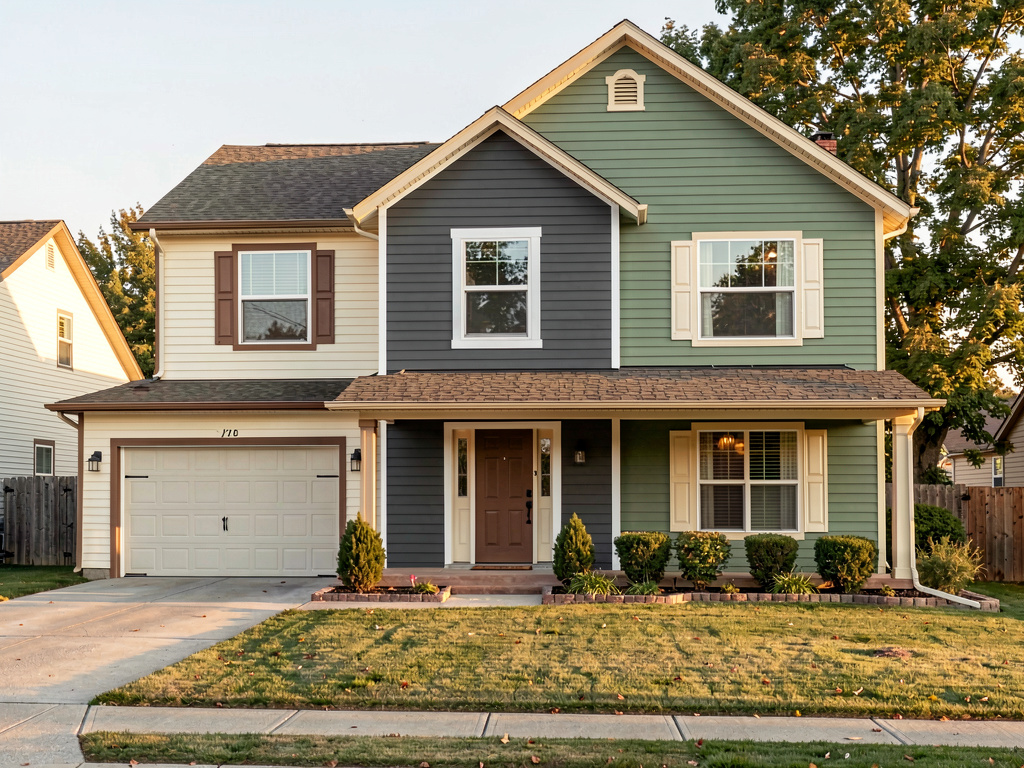
Sage green is the fastest-growing front door color in 2026. It's earthy, calming, and works on a surprising range of house styles. Sage pairs well with cream, warm white, tan, and brown siding. It's particularly strong on craftsman bungalows and cottage-style homes. Avoid pairing sage with cool gray siding — the warm green clashes with cool undertones.
4. Red
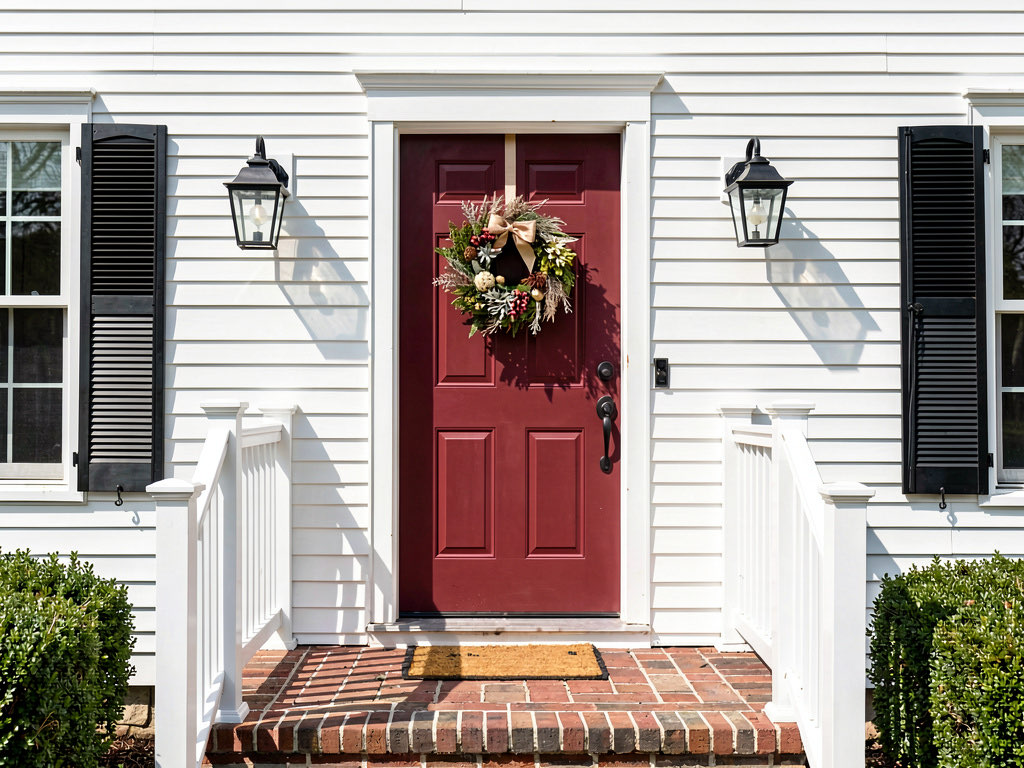
Red front doors have cultural significance in multiple traditions — in feng shui, a red door invites positive energy; in early American history, a red door signaled welcome to travelers. Beyond symbolism, red simply looks striking against white, cream, gray, and brick exteriors. The best reds for front doors are deep and slightly muted: cranberry, barn red, or Moroccan red. Avoid bright fire-engine red unless the house has a very contemporary style.
5. Teal
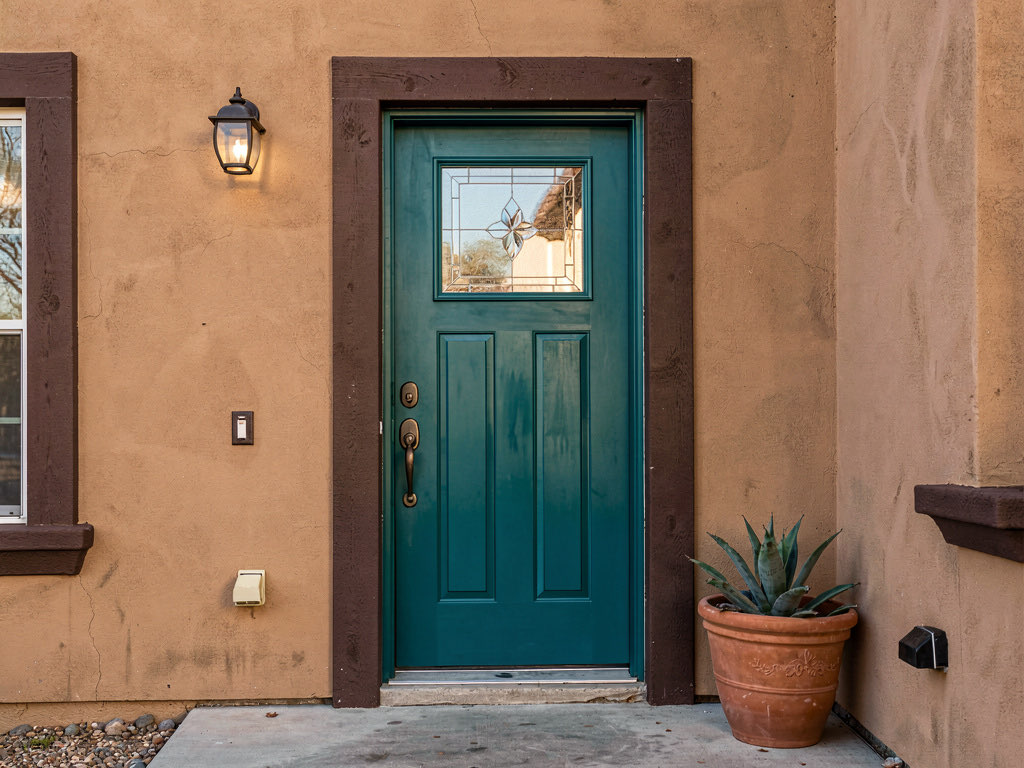
Teal splits the difference between blue and green, and it works on houses where pure blue feels too cold and pure green feels too earthy. Teal is strong on tan, beige, and warm gray exteriors. It's a popular choice in coastal and southwestern regions. The deeper the teal, the more versatile it is — very bright teal can look cartoonish on the wrong house.
6. Yellow
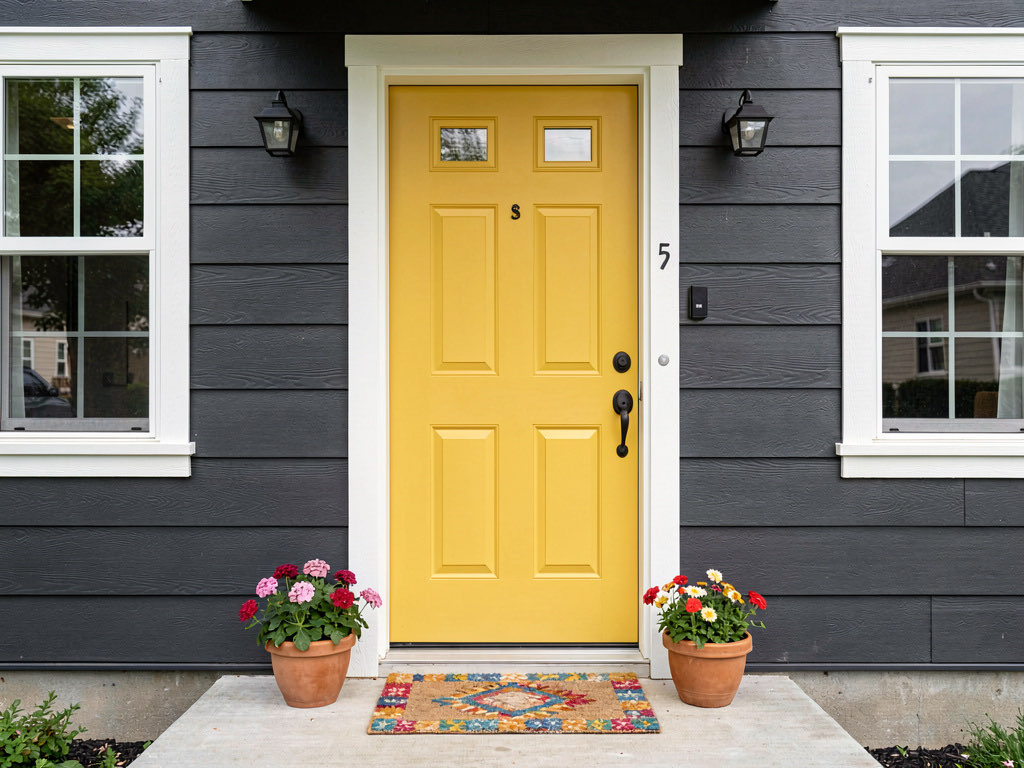
A yellow front door is a confidence pick. It says the homeowner has personality. Golden, mustard, and sunflower yellows work best — they're warm and inviting. Pale yellows wash out, and neon yellows look cheap. Yellow doors work best on dark exteriors (charcoal, dark gray, dark green) where the contrast is dramatic. On white houses, yellow doors can look washed out unless the yellow is deep enough.
7. Charcoal gray
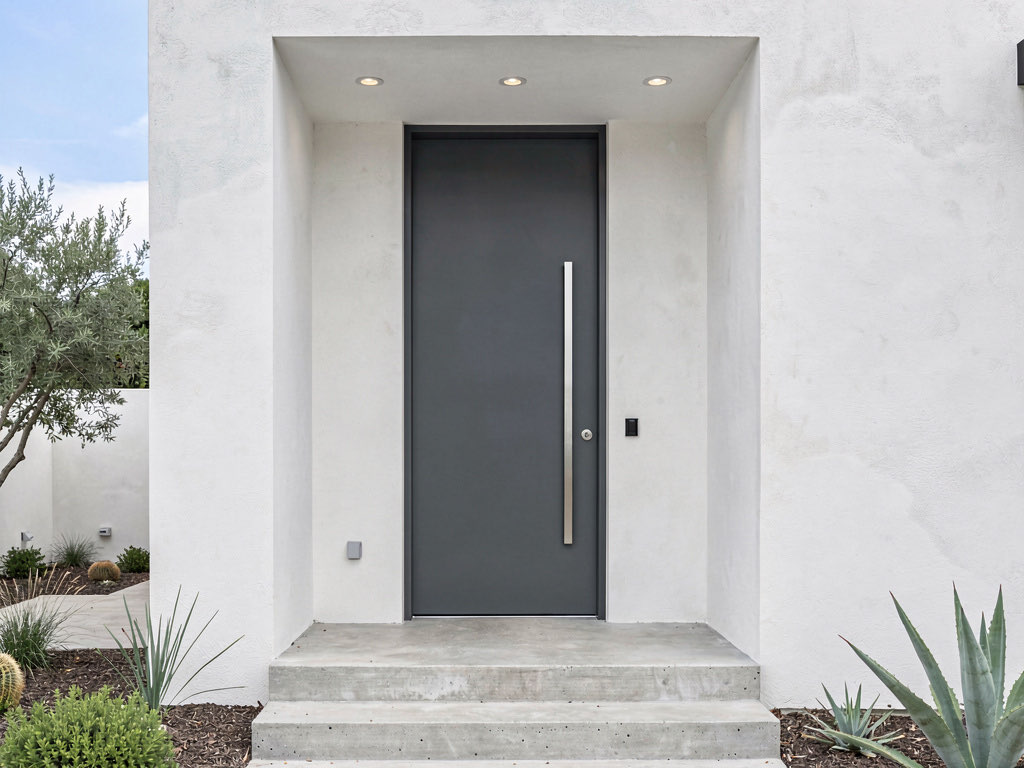
Charcoal is black's subtler cousin. It gives you the contrast and sophistication of a dark door without the starkness of true black. Charcoal works especially well on lighter gray houses where black would be too much contrast. It also pairs well with natural wood and stone accents. Matte charcoal reads as modern; satin charcoal reads as classic.
8. White
A white front door on a non-white house creates a fresh, clean focal point. White works particularly well on dark-colored houses — navy, charcoal, forest green — where it provides the same pop that a colored door provides on a white house. On white houses, a white door disappears, so skip it unless the trim and siding are a different shade.
9. Natural wood stain
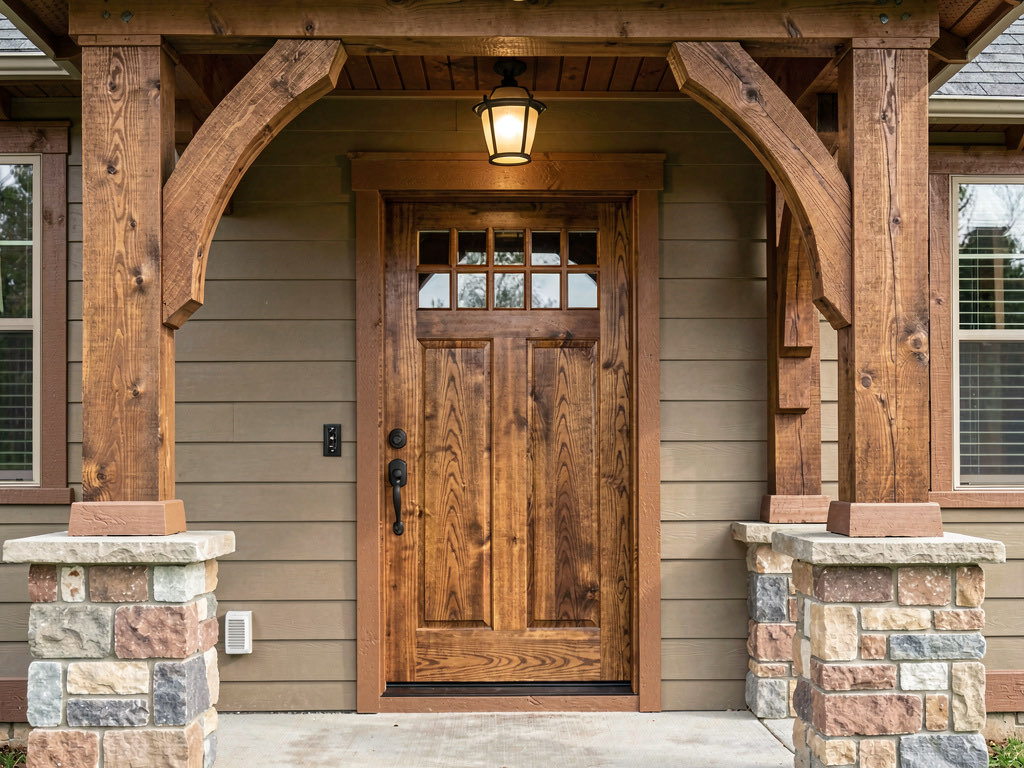
A stained wood door works when the house has natural materials — stone, wood shingles, timber accents. The wood grain adds warmth and texture that painted doors can't match. Walnut, mahogany, and dark oak stains are the most popular. The door needs to be real wood (not fiberglass) for a stain to look authentic. Maintenance is higher than paint — stained doors need re-coating every 2-3 years.
10. Burgundy
Burgundy is red's more sophisticated relative. It reads as elegant rather than bold. Burgundy works on brick homes, stone facades, and traditional colonial architecture. It pairs well with cream, gold, and dark bronze hardware. It's a less common choice, which means your house stands out from the navy-and-black crowd.
See Your Room Redesigned
Download Remodel AI and transform any room in 30 seconds. 3 free designs, no signup.


Rules for matching door color to your house
The door doesn't exist in isolation — it has to work with the siding, trim, roof, and hardscape. Here are the rules that designers follow:
The door should contrast with the siding. If your siding is light, pick a dark or saturated door color. If your siding is dark, a bright or light door works. A door that blends with the siding gets lost.
The door should coordinate with the trim. The door doesn't need to match the trim, but it shouldn't clash. If your trim is warm (cream, ivory, tan), pick a warm-toned door color. If your trim is cool (bright white, gray), cool-toned doors work better.
Consider the roof. A red door on a house with a brown roof looks natural. A red door on a house with a blue-gray roof fights for attention. The roof is the largest color surface on the exterior — the door should complement it, not compete.
Look at the fixed elements. Brick, stone, and concrete can't be changed easily. Pick a door color that works with whatever is already permanent.
What front door colors increase resale value?
According to Redfin's home feature analysis and Zillow's research, these colors are associated with higher sale prices:
- Black — the strongest association with premium pricing
- Dark navy/slate blue — sells well in suburban and urban markets
- Charcoal gray — associated with modern, move-in-ready homes
- Deep red/burgundy — traditional markets and historic neighborhoods
Colors to avoid if selling: bright purple, bright orange, and lime green. These are personal taste colors that narrow the buyer pool. If you love neon green and plan to live in the house for years, go for it. If you're painting to sell, stick to the safe list.
How to test front door colors with AI
The old method: buy four $5 sample cans, paint large swatches on cardboard, tape them to the door, and squint from the curb. Repeat three times because the first round of samples all looked different in store lighting than in daylight.
The new method:
- Take a photo of your front entrance from the street
- Upload it to Remodel AI
- Type "paint the front door navy blue" (or any color)
- See a photorealistic rendering in 10 seconds
- Try 2-3 more colors with your remaining free designs
This works better than sample cans because you see the color in context — with your actual siding, trim, roof, and landscaping. A navy door next to your actual cream siding and brown roof looks different than a navy door next to someone else's white siding on Pinterest.
Also try AI Designer for another AI-powered approach. And if you're considering broader exterior changes beyond just the door, check out our best AI exterior design apps roundup.
How to paint a front door (the right way)
Once you've chosen the color, the actual painting takes 2-4 hours:
- Remove hardware. Take off the knob, deadbolt, and knocker. Tape over hinges or remove the door entirely and lay it flat on sawhorses (this gives the best finish).
- Sand lightly. 220-grit sandpaper. You're scuffing the old finish for adhesion, not stripping it.
- Prime if needed. If going from dark to light, or if the existing finish is glossy, prime with a quality exterior primer.
- Paint with exterior-grade paint. Two thin coats, not one thick coat. Semi-gloss or high-gloss sheen — it highlights the door and makes it easy to clean. Let each coat dry fully (check the can for recoat time).
- Reinstall hardware. Consider upgrading the hardware while the door is off — new hardware is $20-$80 and makes the new paint look even better.
Total cost: $30-$60 for paint and supplies. A gallon of exterior paint is more than enough for one door — you'll have leftover for touch-ups.
What front door color sells a house fastest?
Black. According to multiple real estate data sources, black front doors are associated with both higher sale prices and faster time-on-market. Black works on virtually every exterior color scheme, looks polished in listing photos, and signals to buyers that the home is well-maintained.
Should a front door match shutters?
Not necessarily. Matching the door and shutters in the same color is a traditional look that works on colonial and Cape Cod homes. A contrasting door (different color from the shutters) creates a more modern, dynamic look. Both approaches are valid. The rule is that the door and shutters should be in the same color family or clearly intentionally different — a door that almost matches the shutters but is one shade off just looks like a mistake.
Does a red front door increase home value?
Red doors have a modest positive association with sale price in traditional and historic neighborhoods, but the effect is smaller than black or navy. Where red really helps is curb appeal — it makes a home memorable and photographable. If you're in a neighborhood where every house has a white or beige door, a red door makes yours the one people remember.
How often should you repaint a front door?
Painted front doors typically need repainting every 2-5 years depending on sun exposure, climate, and paint quality. South-facing doors in hot climates fade fastest. Dark colors fade more visibly than light colors. High-quality exterior paint (Benjamin Moore Aura, Sherwin-Williams Emerald) lasts longer. Wood stained doors need re-coating every 1-3 years. Fiberglass and steel doors hold paint longer than wood.
Can I preview different door colors without painting?
Yes. AI visualizers like Remodel AI let you upload a photo of your house and see the door in any color. You can also use the AI paint visualizer approach to test multiple options. The AI rendering accounts for shadows and lighting, so it's more realistic than taping paint swatches to cardboard.
Picking a front door color comes down to three decisions: what contrasts with your siding, what coordinates with your trim and roof, and what makes you happy when you pull into the driveway. Use the rules above to narrow the field, then test your top 2-3 picks with Remodel AI before buying paint.
Try Remodel AI free — available on iOS, Android, and web.
Ready to Try AI Interior Design?
Upload a photo and redesign any room in seconds. 3 free designs, no signup required.