Exterior paint visualizer: see your house in any color before you paint
Upload a photo of your house and preview any exterior paint color in seconds. Free tools tested — AI visualizers vs brand-locked apps (Sherwin-Williams, Benjamin Moore).

Ryan H.
Founder of Remodel AI · April 27, 2026 · 11 min read
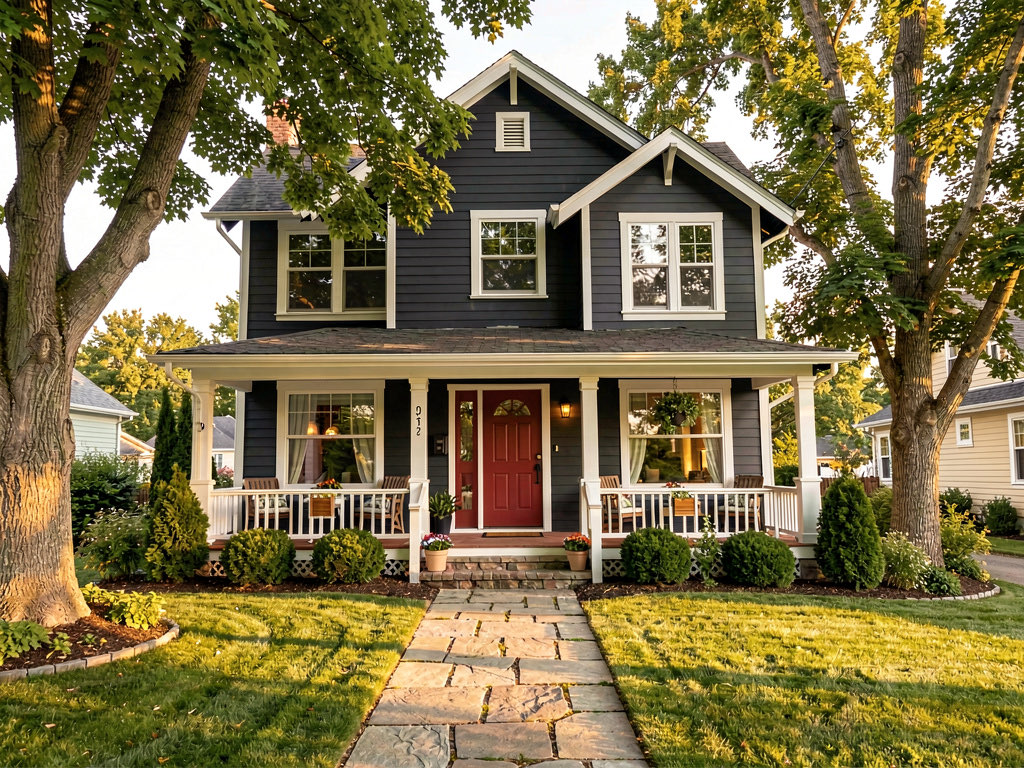
An exterior paint visualizer lets you upload a photo of your house and see it in any color before you buy a single gallon. Remodel AI is the best exterior paint visualizer in 2026 — it works on your actual home photo, previews any color (not just one brand), and generates a photorealistic result in about 10 seconds. You get 3 free tries with no credit card required. Unlike Sherwin-Williams ColorSnap or Benjamin Moore Color Portfolio, which only show their own paint lines, Remodel AI is brand-neutral and handles full exterior redesigns — not just wall color.
Painting the exterior of a house is one of the most visible decisions a homeowner makes. It is also one of the hardest to reverse. The average exterior paint job costs between $3,000 and $8,000 according to HomeAdvisor, and the wrong color choice means living with that mistake for a decade — or paying to do it all over again.
That is why exterior paint visualizers have become so popular. They let you test drive colors on your own house, in your own neighborhood context, before committing thousands of dollars.
How an exterior paint visualizer works
The basic idea is simple: you provide a photo of your house, select a color, and the tool shows you what your house would look like in that color.
But the quality varies enormously depending on which tool you use.
Brand paint apps (Sherwin-Williams ColorSnap, Benjamin Moore Color Portfolio, Behr Color Smart) use a basic color overlay approach. You take a photo, tap the walls, and the app replaces that area with a flat color swatch. The results look like someone filled in areas with the paint bucket tool in Microsoft Paint. They are useful for comparing color swatches against each other, but they do not look realistic — the lighting, shadow, and texture of the original surface disappear.
AI-powered visualizers like Remodel AI use image-to-image generation models that understand architecture. Instead of overlaying a flat color, the AI rebuilds the scene with the new color applied naturally. It preserves shadow gradients, surface texture, trim lines, and architectural detail. The result looks like an actual photo of your house in the new color, not a digital mockup.
The difference matters because your brain responds to flat color swatches and photorealistic previews very differently. A flat overlay might tell you whether you prefer blue over gray in the abstract. A photorealistic render shows you whether that specific shade of blue works on your specific house, with your roof color, your landscaping, and your neighborhood context all visible.
Step-by-step: how to visualize exterior paint with Remodel AI
Here is the exact process for using Remodel AI as your exterior paint visualizer:
1. Get the app or open the web tool. Remodel AI is available on iOS, Android, and on the web. All three work the same way.
2. Upload a photo of your house. Walk across the street and take a photo that shows the full front facade. Overcast days produce the best results because even lighting avoids harsh shadows that confuse the AI. Make sure the photo is level and includes the roofline.
3. Select the Exterior Design tool. From the home screen, choose Exterior Design. This tool is trained specifically on building exteriors and understands architectural elements like trim, shutters, doors, and rooflines.
4. Describe the color you want or pick a style. You can request a specific color ("dark charcoal gray with white trim") or choose one of the 11 exterior styles available. Either way, the AI generates a result in about 10 seconds.
5. Compare and iterate. Run multiple variations side by side. Try your house in white, gray, blue, sage, and black before making a decision. Each generation takes seconds, so you can test a dozen options in a few minutes.
You get 3 free designs to start. Pro is $29/month and Premium is $49/month if you want to run more.
5 popular exterior paint colors visualized
To show you what the tool can do, here are five of the most popular exterior house colors applied to similar homes.
Classic white with black accents
White exteriors have dominated real estate listings for the past five years, and for good reason. A crisp white exterior with black shutters, black door, and dark roof creates maximum contrast and photographs beautifully. It works on nearly every architectural style.
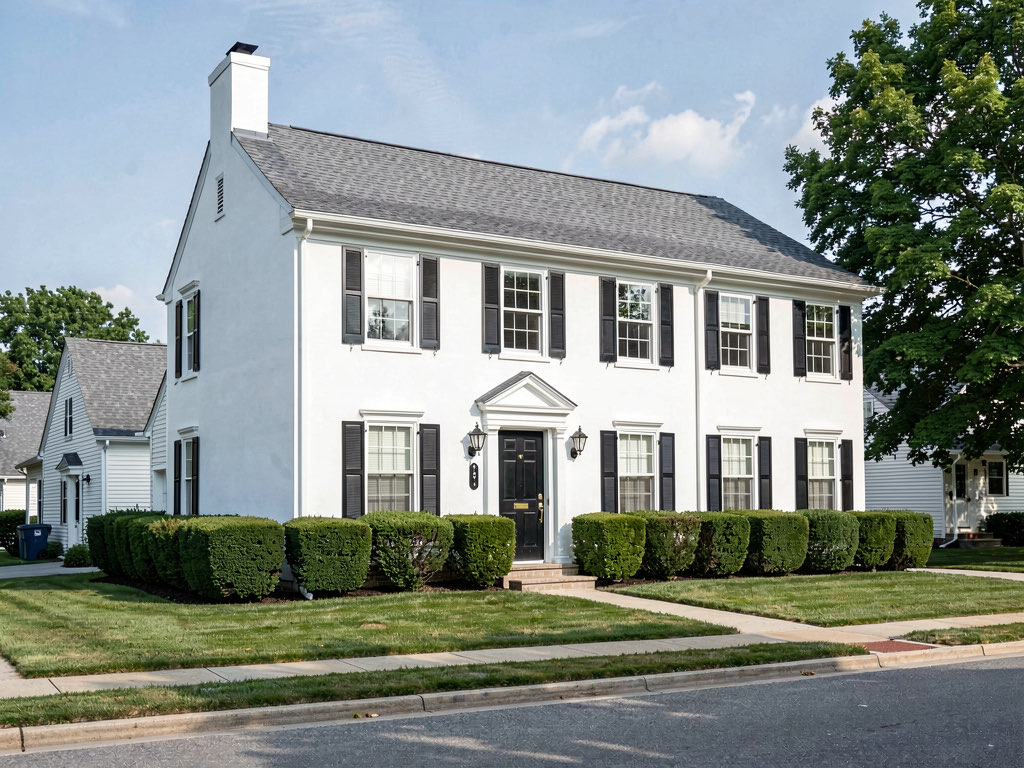
White is forgiving on imperfect surfaces but shows dirt easily. Plan to pressure wash annually if you go this route.
Medium gray with white trim
Gray is the single most popular exterior paint color in America, according to Zillow's 2025 paint color analysis. It splits the difference between warm and cool, modern and traditional, and pairs well with nearly any roof color.
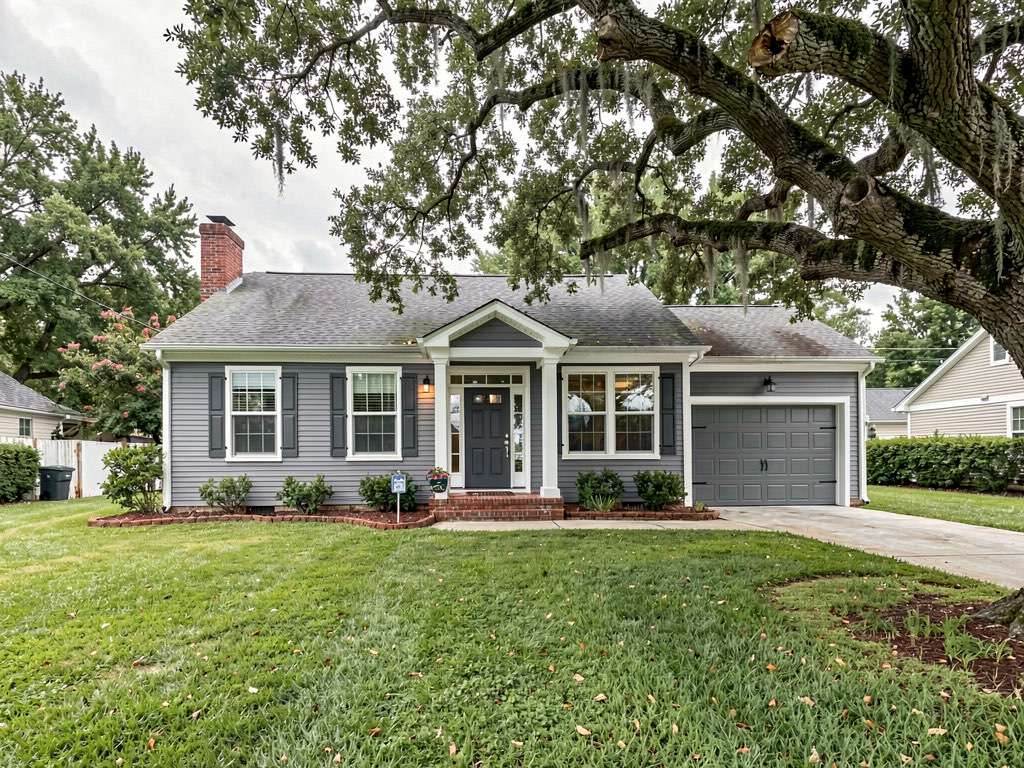
The key with gray is choosing the right undertone for your fixed elements. A gray with blue undertones clashes with warm-toned brick or stone. A gray with green undertones fights a red roof. Use the visualizer to test several grays before committing.
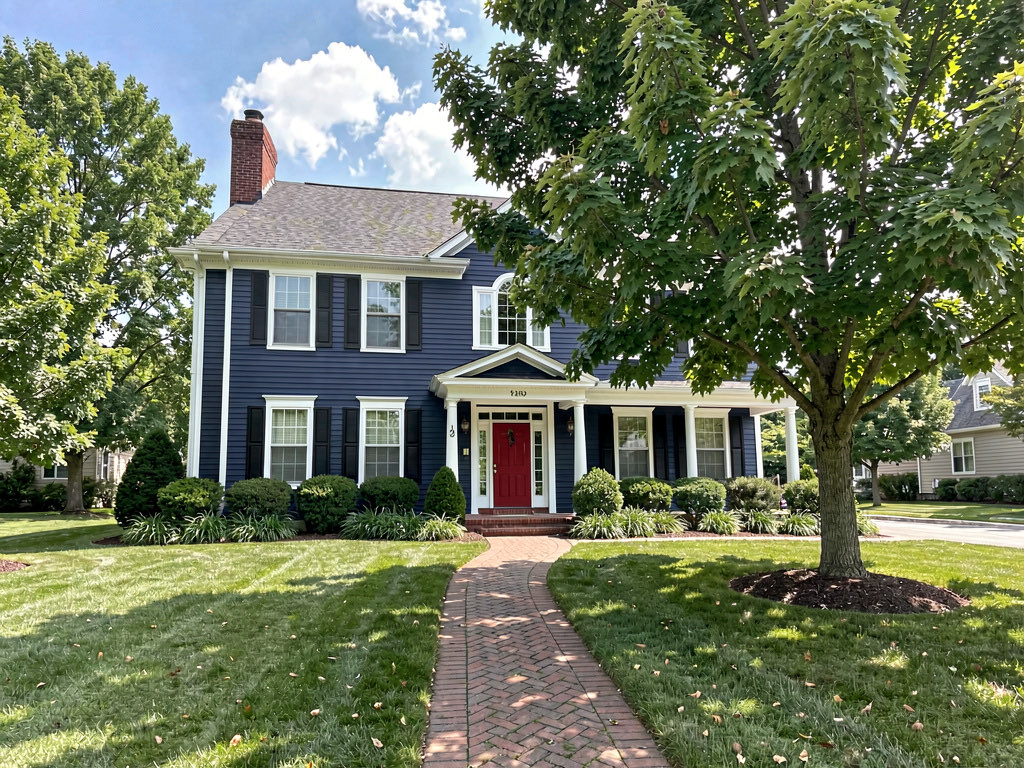
Navy blue with white trim
Navy blue exteriors have surged in popularity over the past two years. The color reads as sophisticated without being trendy, and it pairs especially well with brass hardware, warm wood doors, and white trim.
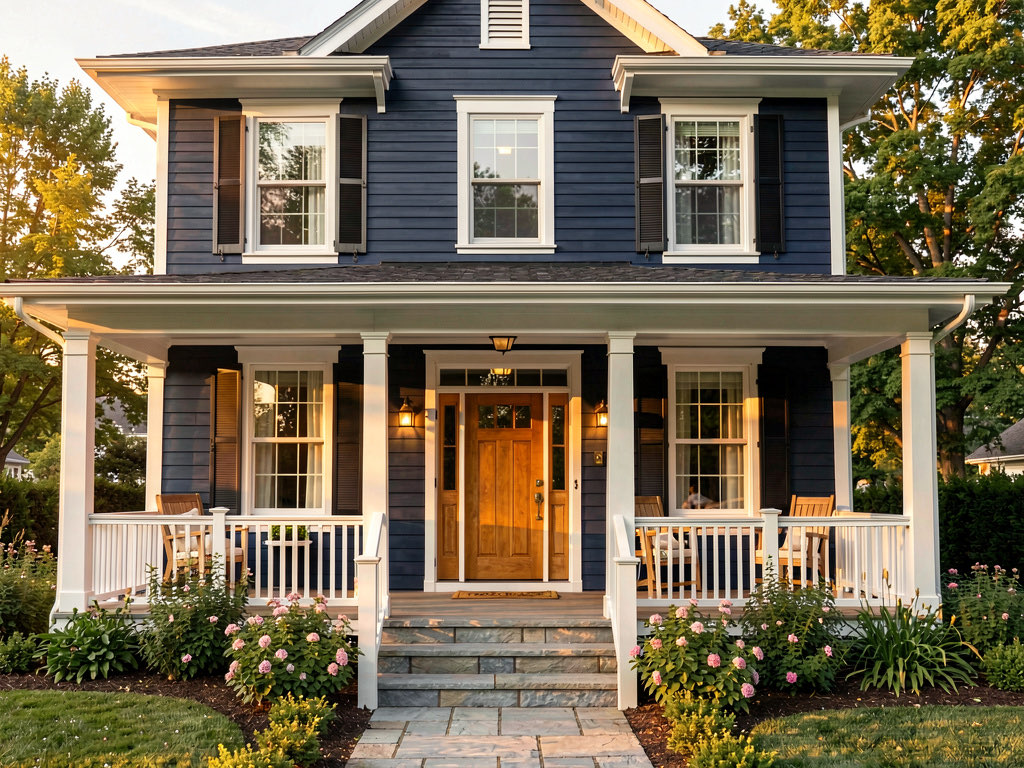
Navy works best on homes with strong architectural detail — the dark color makes trim, columns, and millwork stand out. On a plain box of a house, it can look heavy.
Sage green
Sage green connects a house to its landscape in a way that few other colors manage. It reads as natural and calming, works in both traditional and modern contexts, and ages gracefully.
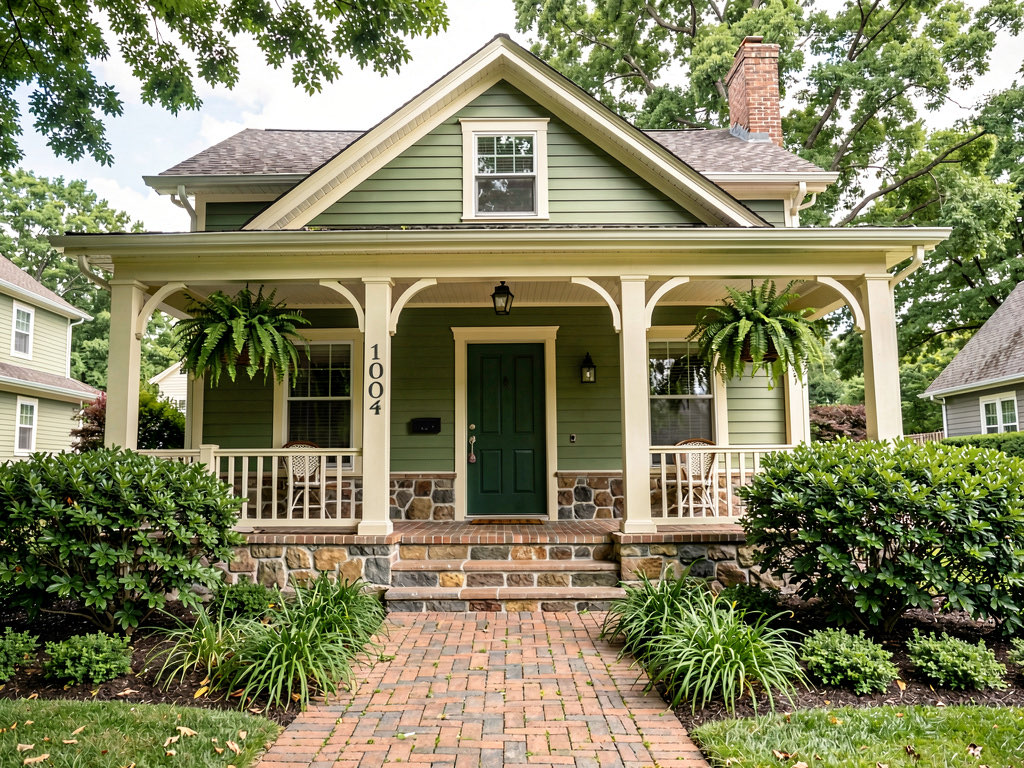
Sage green pairs especially well with stone foundations and natural wood accents. It is also one of the most forgiving exterior colors — minor dirt and pollen blend in rather than standing out.
Black
Matte black exteriors are the boldest choice on this list and the fastest-growing trend in exterior design. When done well — typically on modern farmhouse or contemporary architecture — a black exterior is stunning.
See Your Room Redesigned
Download Remodel AI and transform any room in 30 seconds. 3 free designs, no signup.


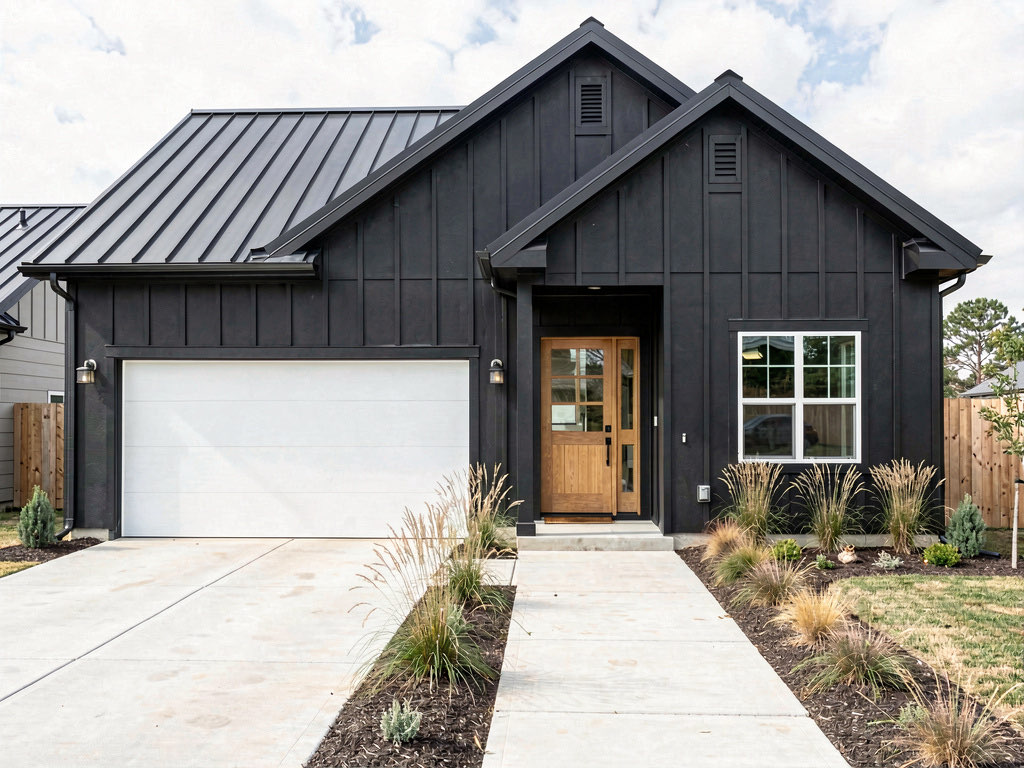
Fair warning: black absorbs more heat, which matters in southern climates. It also shows every imperfection in your siding. But in the right setting, nothing else makes the same impact.
AI visualizer vs brand paint apps: a direct comparison
Here is how AI-powered exterior paint visualizers compare with the free tools offered by paint brands:
| Feature | Remodel AI | Sherwin-Williams ColorSnap | Benjamin Moore Color Portfolio | Behr Color Smart |
|---|---|---|---|---|
| Uses your photo | Yes | Yes | Yes | Yes |
| Photorealistic result | Yes | No (flat overlay) | No (flat overlay) | No (flat overlay) |
| Any color/brand | Yes | Sherwin-Williams only | Benjamin Moore only | Behr only |
| Full exterior redesign | Yes | Paint color only | Paint color only | Paint color only |
| Trim, door, accents | Yes | Limited | Limited | Limited |
| Free tier | 3 designs | Unlimited | Unlimited | Unlimited |
| Speed | ~10 seconds | Instant | Instant | Instant |
The brand apps are useful if you have already narrowed your choice to a specific brand and just want to compare swatches. But if you are still deciding on a direction — or if you want to see a realistic preview of how a color will actually look on your house — an AI visualizer gives you better information.
Does AI paint visualizer work on brick houses?
Yes. This is one of the most common questions, because painted brick is a controversial and irreversible decision. Once you paint brick, you cannot unpaint it — the paint seeps into the porous surface permanently.
That makes an AI visualizer especially useful for brick houses. You can see exactly how your house will look with painted brick before committing to something you cannot undo.
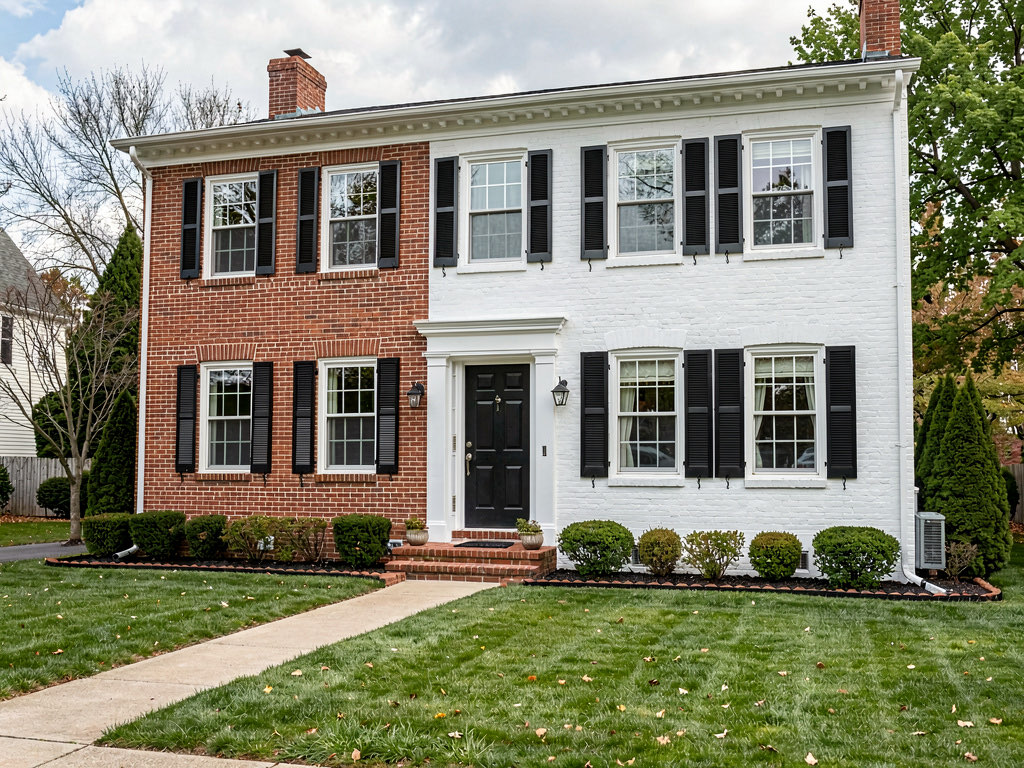
The AI does a good job preserving the texture of brick under paint, which is something flat color overlay tools cannot do. You can see the mortar lines, the slight irregularity of the surface, and the way light interacts with painted masonry differently than smooth siding.
If you are considering painting your brick, run the visualization first. Many homeowners find that seeing their brick house painted — even in a color they thought they would love — changes their mind. Better to discover that in an app than after the painters have finished.
What about matching a specific paint brand color?
AI visualizers like Remodel AI work with color descriptions rather than specific brand codes. If you type "Benjamin Moore Hale Navy" in the style prompt, the AI will generate something very close to that color — but it is not color-matched to the exact formulation the way a brand-specific app would be.
For most people, this is fine. The purpose of a visualizer is to help you choose a direction and see how it feels at scale. Once you have narrowed your choice to a general color family using the AI preview, you can take that image to a paint store and find the exact brand match.
Think of it as two steps: AI visualizer to choose the direction, brand app to choose the exact SKU.
How accurate is AI compared to real paint?
AI exterior paint visualization is accurate enough to make confident decisions, but it is not a perfect color match. A few things to keep in mind:
Lighting changes everything. Your house looks different at 8 AM, noon, and sunset. The AI generates one lighting condition. Real paint shifts throughout the day.
Screen color varies. The blue you see on your phone screen is not identical to the blue on your laptop, which is not identical to a physical paint chip. Calibrate your expectations.
Texture matters. Paint on smooth siding looks different than paint on stucco, which looks different than paint on wood shingles. The AI approximates this, but a physical sample on your actual surface is always the final check.
The overall impression is reliable. While exact color matching has these caveats, the AI is very reliable for answering the bigger questions: Does this house look better in dark or light colors? Does blue work with this roof? Should the trim match or contrast? Those directional decisions are what matter most, and AI handles them well.
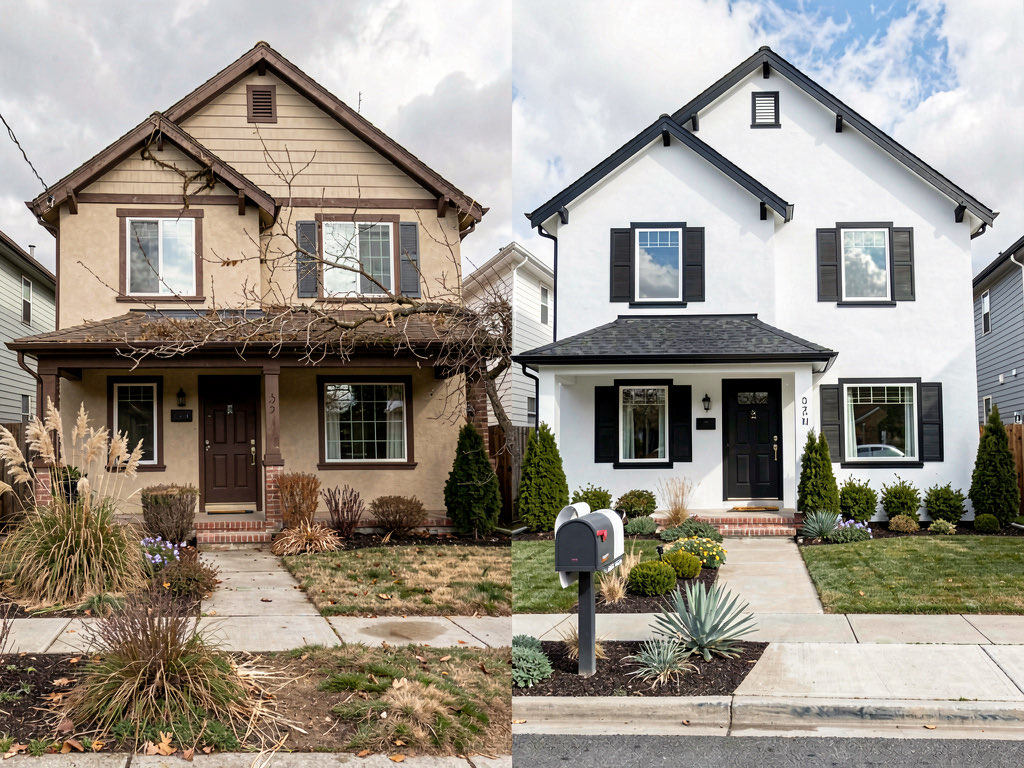
The real cost of getting exterior paint wrong
According to Angi, the average cost to paint the exterior of a 2,500-square-foot house ranges from $4,000 to $7,000 for professional work. If you do not like the result and want to repaint, you are looking at the same cost again — plus the wasted time and the psychological toll of living with a color you regret.
Even doing it yourself, exterior paint and supplies for a full house run $500 to $1,500 in materials alone, plus multiple weekends of labor. Getting it wrong hurts no matter how you approach it.
Spending 10 minutes with an exterior paint visualizer before you start saves thousands in potential do-overs. It is the highest-ROI step in any exterior painting project.
If you want to go beyond paint and see a complete exterior redesign — new siding materials, door styles, landscaping changes — check out our guide to AI exterior design. And if you are working on the interior too, our AI paint visualizer guide covers room-by-room color planning.
Frequently asked questions
Can I see my exact Sherwin-Williams color on my house?
AI visualizers work with color descriptions, not brand-specific formulations. You can describe "Sherwin-Williams Naval" or "dark navy blue" and get a very close result, but it will not be an exact spectral match. For precise brand matching, use the brand's own app after you have chosen a direction with the AI visualizer.
Does AI paint visualizer work on brick houses?
Yes. AI visualizers handle brick surfaces well and preserve the texture of the masonry under the new color. This is especially useful because painting brick is irreversible — previewing the result before committing is worth the 10 seconds it takes to generate.
How accurate is AI compared to real paint?
The directional accuracy is high — you can confidently decide between light vs dark, warm vs cool, contrasting vs matching trim. Exact color fidelity depends on your screen calibration and lighting conditions. Use the AI to choose the direction, then confirm with physical samples.
Is there a completely free exterior paint visualizer?
Remodel AI gives you 3 free exterior paint visualizations with no credit card required. Brand apps like Sherwin-Williams ColorSnap are unlimited but free but only show flat color overlays of their own paint lines. For a more advanced option, AI Designer also offers exterior visualization features.
Should I paint my house the same color as my neighbors?
Not necessarily, but you should consider the neighborhood context. An AI visualizer is helpful here because your landscaping and adjacent houses are visible in the photo — so you can see how your color choice reads in context, not in isolation. Most neighborhoods benefit from variety within a cohesive palette.
Ready to Try AI Interior Design?
Upload a photo and redesign any room in seconds. 3 free designs, no signup required.