Bathroom remodel cost: what to expect + AI planning
A realistic breakdown of bathroom remodel cost by scope — from $1K cosmetic refreshes to $50K gut renovations. Line-item pricing, what drives costs up, and how AI tools help you plan.

Ryan H.
Founder of Remodel AI · April 6, 2026 · 11 min read
A bathroom remodel cost depends almost entirely on scope. A fresh coat of paint and new fixtures runs $1,000-$5,000. Moving plumbing and ripping out tile pushes you into $25,000-$50,000 territory fast. Most homeowners land somewhere in the middle — spending $10,000-$25,000 on a mid-range remodel that replaces surfaces and fixtures without changing the floor plan. According to HomeAdvisor, the national average in 2025 was $11,500 for a standard bathroom remodel, with most homeowners spending between $6,600 and $16,700.
The gap between a $3,000 refresh and a $40,000 gut renovation is enormous, and most of that gap comes down to three things: whether you move plumbing, what materials you pick, and how much labor your area charges per hour. Here is what each level actually looks like, line by line.
Cosmetic refresh: $1,000-$5,000
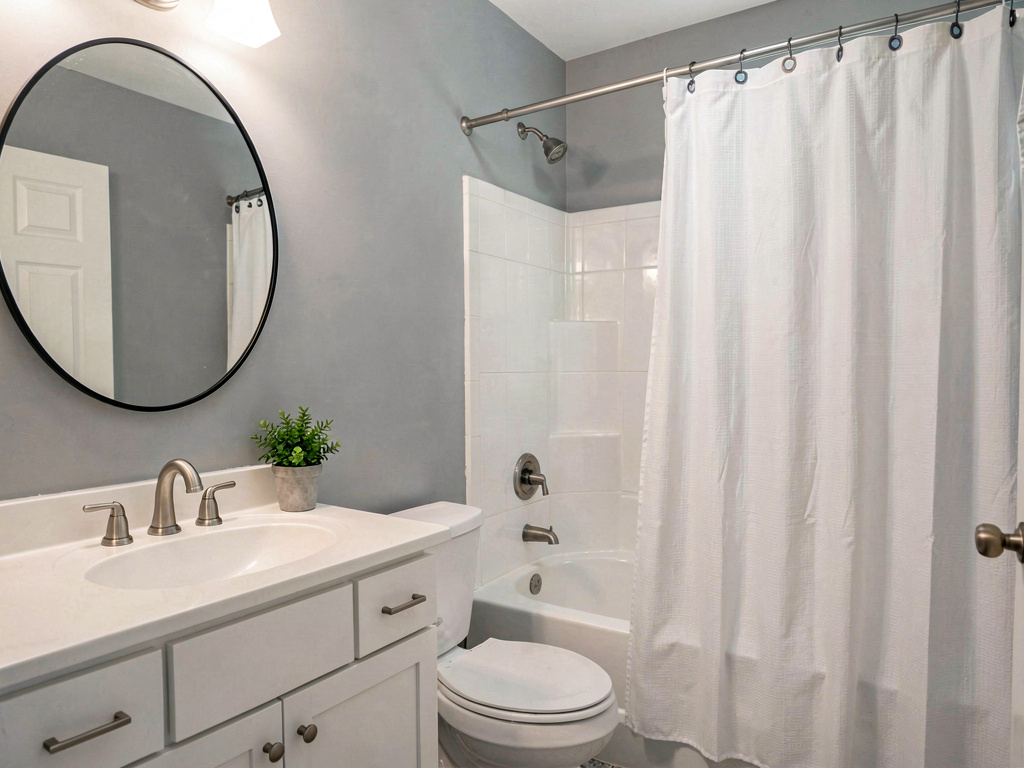
Freshly painted gray walls brighten the room immediately. A new brushed nickel faucet replaces the old brass one on the existing vanity. An updated oval mirror with a thin black frame replaces the dated frameless one. A fresh white shower curtain with modern rings cleans up the tub area. New caulk around the bathtub seals everything tight.
A cosmetic refresh keeps the existing layout, plumbing, tile, and vanity in place. You are upgrading what you see without touching what is behind the walls. This is the right move if your bathroom is structurally sound but looks dated.
Typical line items: - Paint: $50-$150 (DIY) or $300-$600 (professional) - New faucet: $100-$400 - Mirror: $50-$300 - Light fixture: $75-$250 - Hardware (towel bars, toilet paper holder): $50-$150 - Shower curtain and rod: $30-$100 - New caulk and grout refresh: $20-$75 (DIY)
The total sits between $400 and $1,500 if you do the labor yourself. Add $1,000-$3,000 for professional painters and a plumber to swap the faucet.
Mid-range remodel: $10,000-$25,000
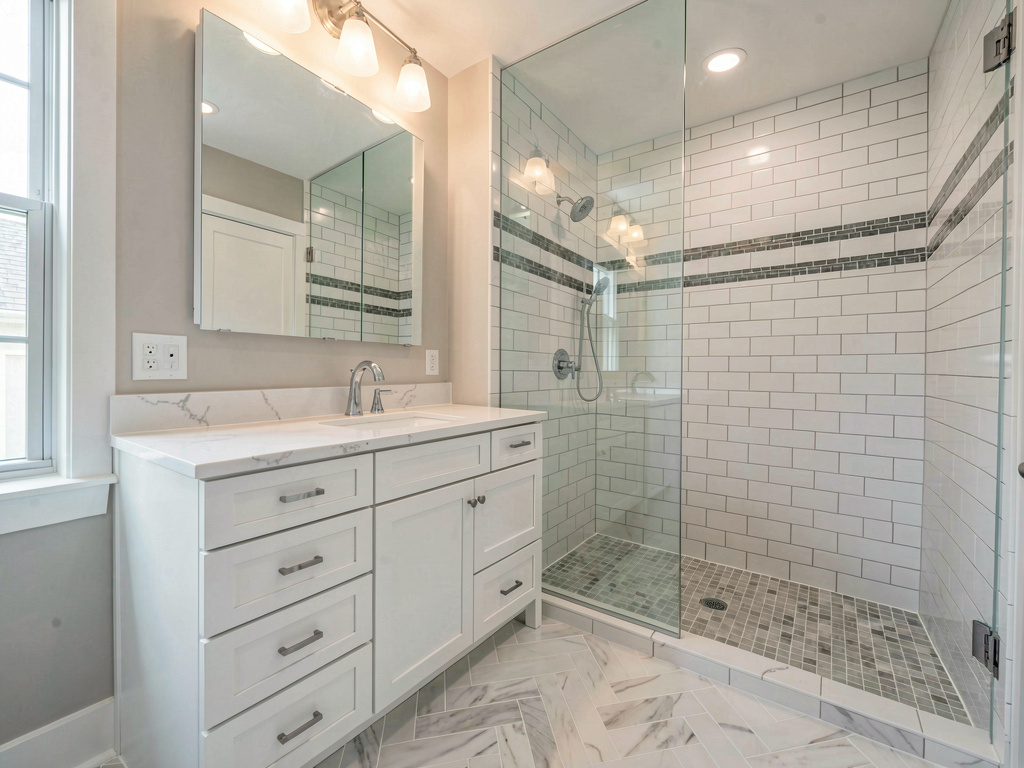
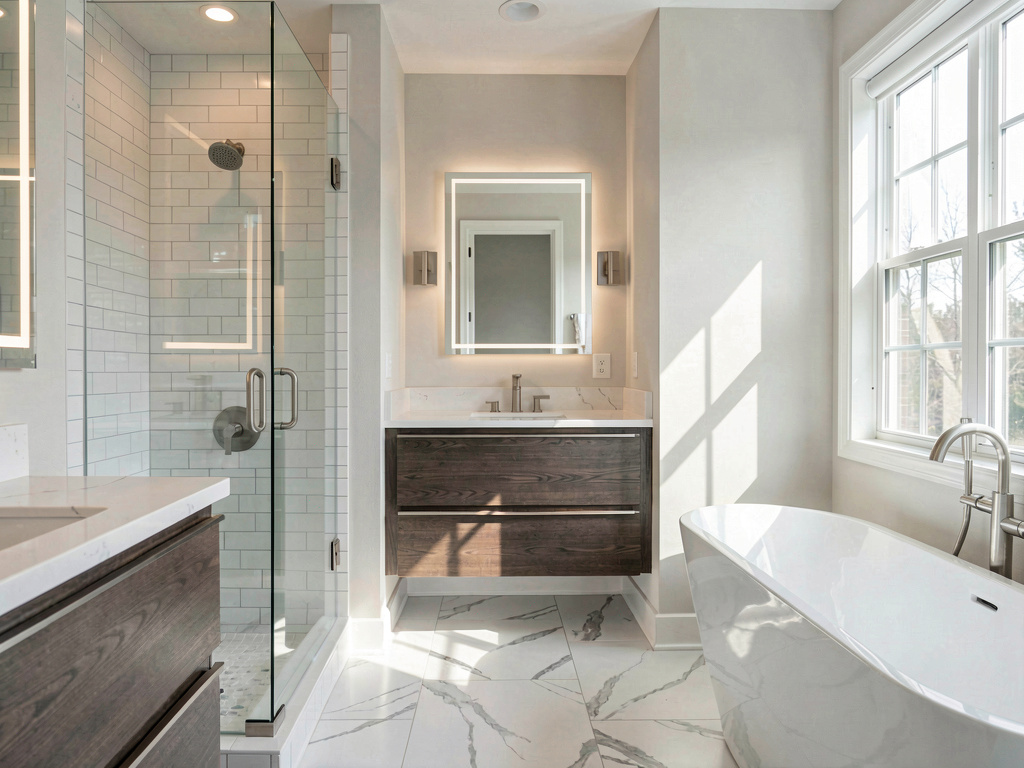
New porcelain tile in a herringbone pattern covers the floor. A 36-inch single vanity with soft-close drawers and a quartz countertop replaces the old builder-grade cabinet. Subway tile runs floor to ceiling in the shower. A recessed medicine cabinet adds hidden storage. A chrome rain showerhead upgrades the daily experience. Recessed lighting brightens everything evenly.
This is where most bathroom remodels land. You are replacing all surfaces — floor tile, shower surround, vanity, countertop, fixtures — but keeping plumbing in its current location. No walls move. No pipes get rerouted. That constraint saves thousands.
Typical line items: - Demolition: $500-$1,500 - Floor tile (material + labor): $800-$2,500 - Shower tile (material + labor): $1,200-$3,500 - Vanity with countertop: $500-$2,500 - Toilet: $200-$600 - Fixtures (faucet, showerhead, towel bars): $300-$800 - Mirror/medicine cabinet: $100-$500 - Lighting: $200-$600 - Paint: $200-$400 - Labor (plumber, electrician, tile installer): $3,000-$8,000 - Permit: $200-$500
Angi reports that tile work is the single largest line item in most mid-range remodels, averaging 25-35% of the total budget. Choosing large-format porcelain tile ($3-$8/sq ft) over natural stone ($15-$50/sq ft) is the easiest way to control costs without sacrificing the look.
Full gut renovation: $25,000-$50,000+
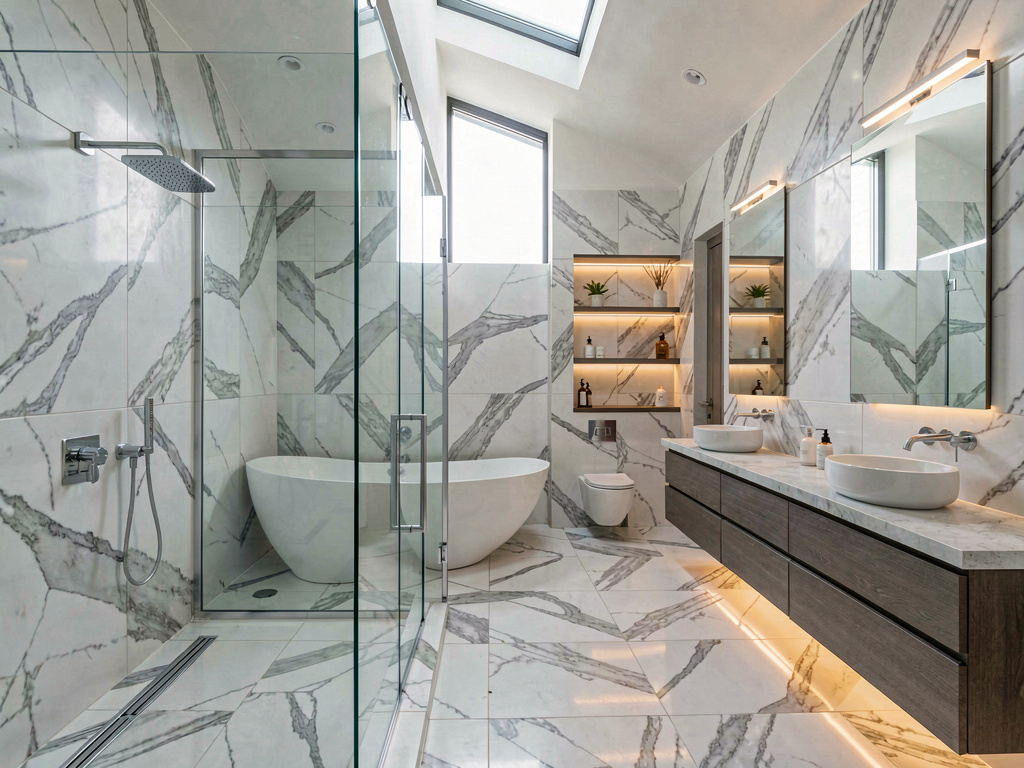
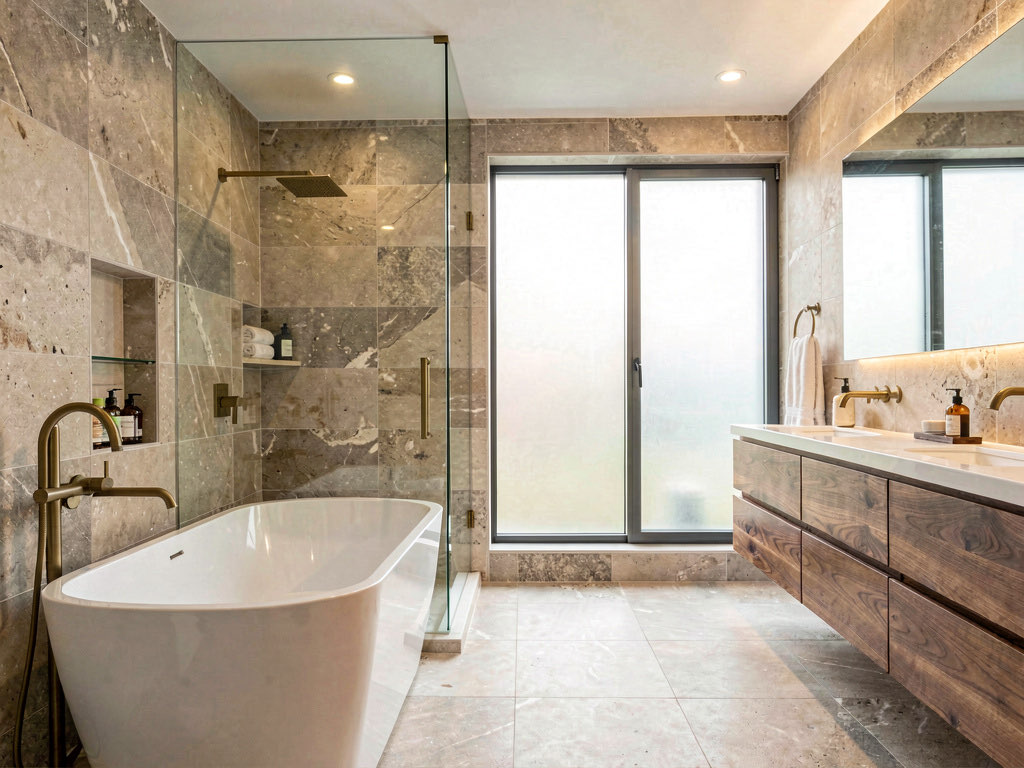
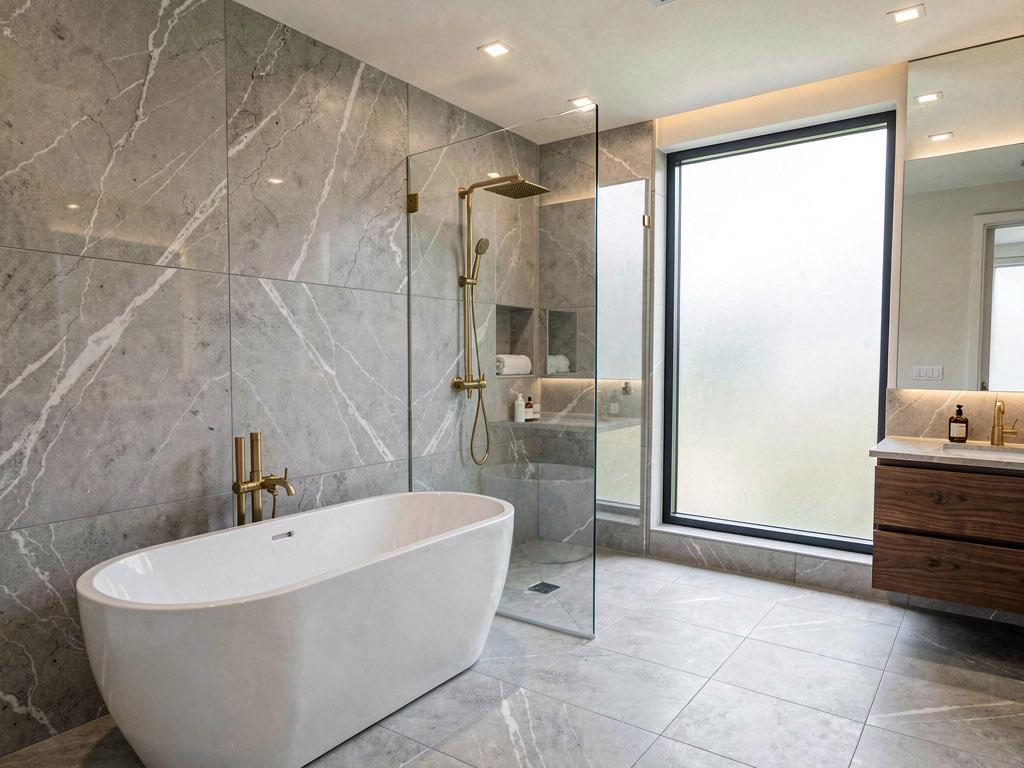
A large walk-in shower with a frameless glass enclosure fills one end of the room. Floor-to-ceiling marble tile covers every wall. Heated marble floors warm your feet on cold mornings. A freestanding sculptural bathtub sits near the window. A custom double vanity with vessel sinks spans the opposite wall. A wall-mounted toilet saves floor space. A linear drain keeps the shower floor seamless. Niche shelving with LED lighting stores everything you need.
A gut renovation strips the bathroom to studs and subfloor. Everything gets replaced — plumbing, electrical, waterproofing membrane, insulation, drywall, and all finishes. This is the level where you can change the layout, add a window, move the shower, or expand into an adjacent closet.
What drives costs above $25K: - Moving plumbing (relocating the shower, tub, or toilet): $1,500-$5,000+ - Structural changes (removing a wall, adding a window): $2,000-$8,000 - Custom cabinetry: $2,000-$6,000 - Natural stone tile throughout: $5,000-$15,000 - Heated floors: $800-$2,500 - Frameless glass shower enclosure: $1,200-$3,500 - Waterproofing and structural repair: $1,000-$3,000
The National Kitchen & Bath Association (NKBA) recommends budgeting 5-10% of your home's value for a primary bathroom remodel. For a $400,000 home, that is $20,000-$40,000.
What tile actually costs
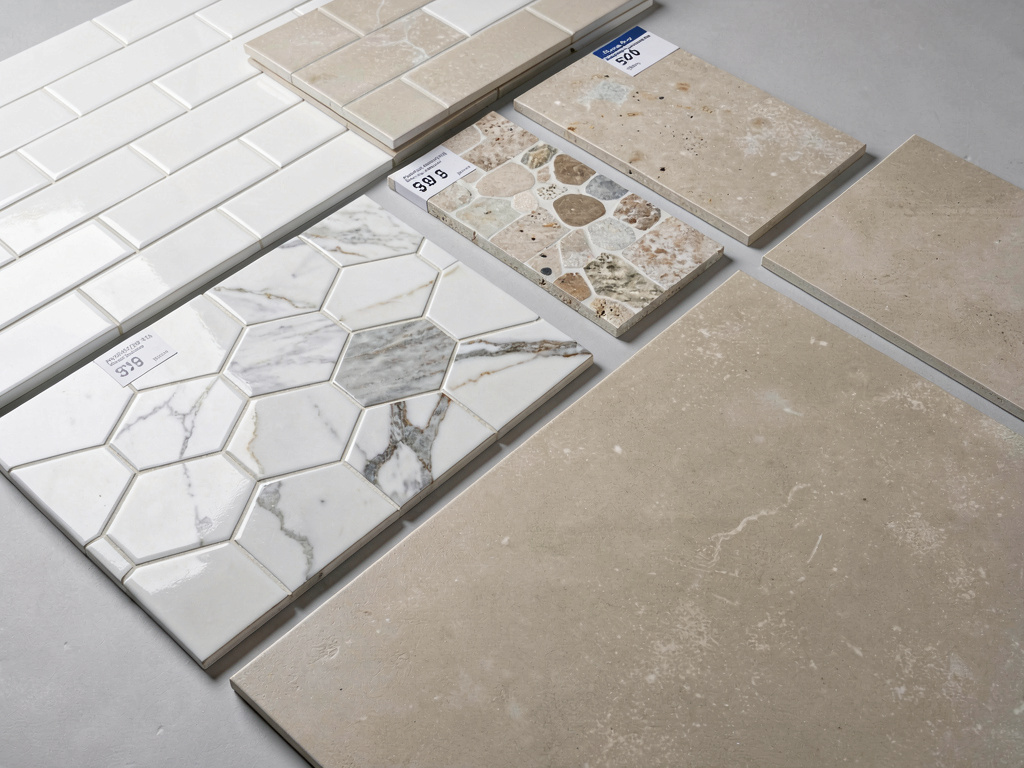
Ceramic subway tiles in white. Porcelain hexagonal floor tiles in a marble look. Natural stone mosaic tiles in warm tones. Large-format rectified tiles in beige. Each material represents a different price point and maintenance commitment.
Tile is the line item with the widest price range, and it is the one that trips up most budgets. Here are the real numbers per square foot, installed:
- Ceramic tile: $5-$12/sq ft installed. The workhorse. Durable, water-resistant, available in hundreds of styles.
- Porcelain tile: $7-$18/sq ft installed. Denser than ceramic, better for floors and showers.
- Natural stone (marble, travertine, slate): $15-$50/sq ft installed. Beautiful but requires sealing and more maintenance.
- Glass mosaic: $20-$40/sq ft installed. Best as an accent strip, not full wall coverage.
A typical shower surround is 60-80 square feet. A bathroom floor is 35-50 square feet for a standard 5x8 bathroom. Multiply those areas by your tile price and you have the material cost. Labor for tile installation adds $4-$10 per square foot depending on pattern complexity and your region.
Vanity: the second biggest decision
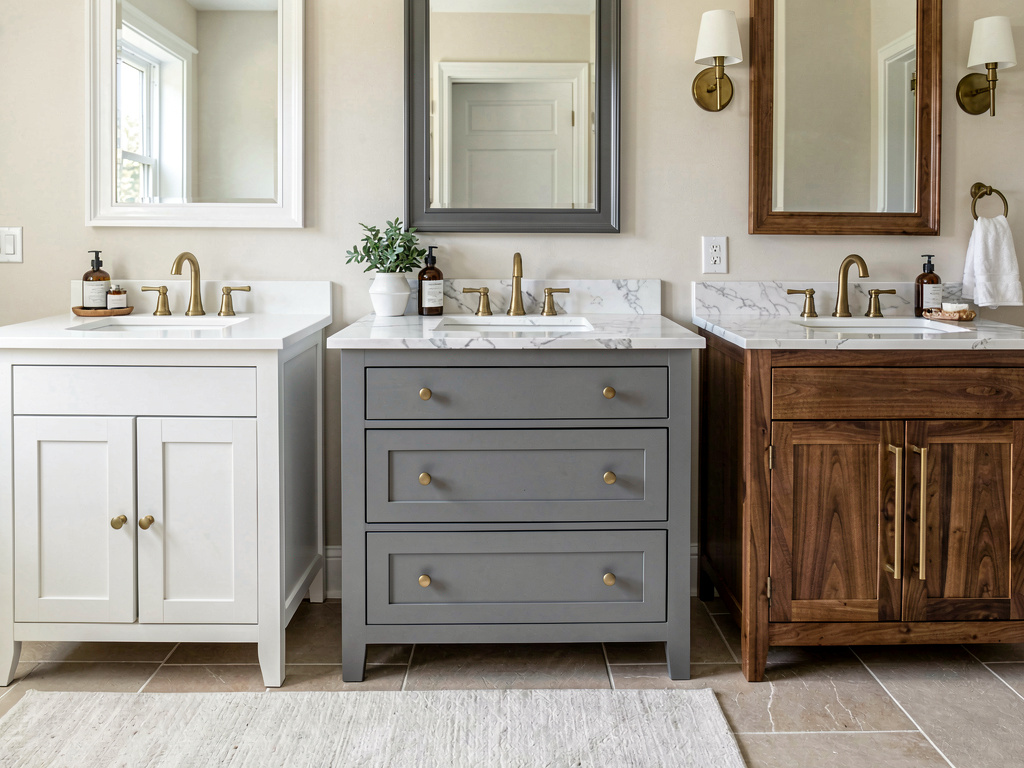
Three vanities side by side tell the cost story. A basic 24-inch white painted vanity with laminate top on the left. A 36-inch shaker-style vanity in gray with quartz countertop and undermount sink in the center. A 60-inch custom double vanity in walnut with marble countertop and brass hardware on the right. Budget, mid-range, and premium.
The vanity sets the tone for the whole room. Here is what each tier runs:
- Stock vanity (big box store): $200-$600. Pre-assembled, limited sizes (24", 30", 36"), laminate or cultured marble tops.
- Semi-custom vanity: $600-$2,000. Better materials, more size options, quartz or stone countertops, soft-close hardware.
- Custom vanity: $2,000-$6,000+. Built to your exact dimensions, premium wood species, stone countertop, custom hardware.
If you are working with a tight budget, the vanity and mirror together have the highest visual impact per dollar. A $400 semi-custom vanity with a $100 statement mirror transforms a bathroom faster than anything else.
Fixture costs add up quickly
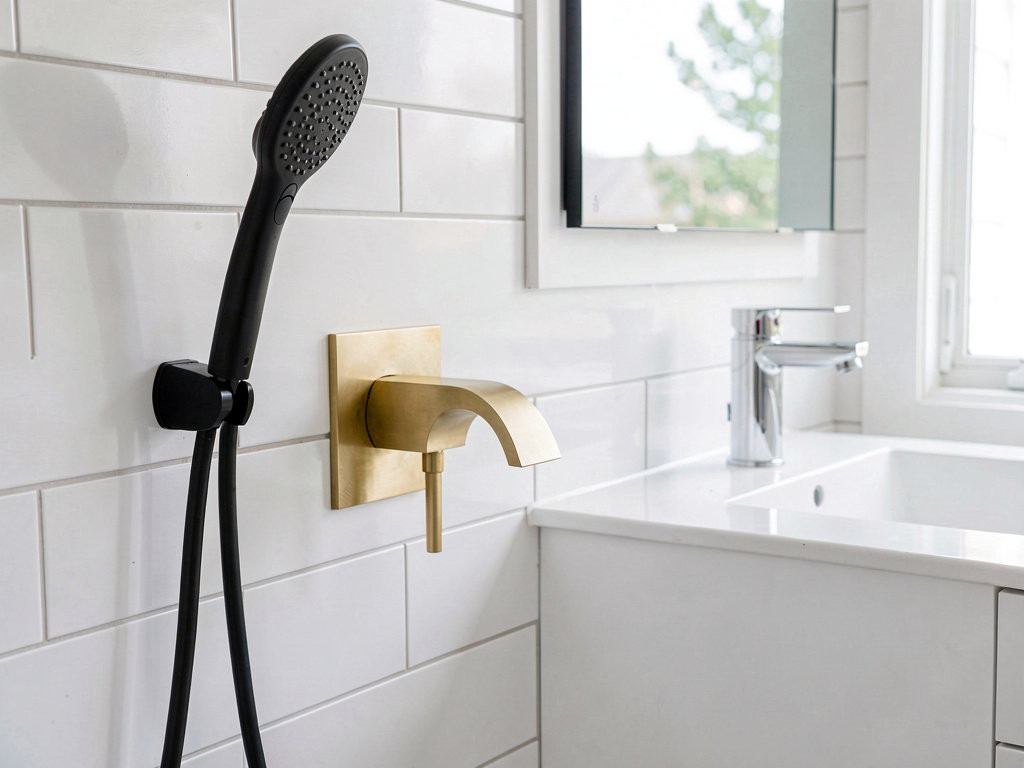
A matte black rain showerhead with a handheld wand. A wall-mounted waterfall faucet in brushed gold. A touchless chrome faucet on a white undermount sink. Each fixture style carries a different price tag, and the finishes you choose affect the total.
Fixtures seem small until you add them all up:
- Faucet: $75-$500 (standard chrome to designer matte black)
- Showerhead: $30-$400 (basic to rain/body spray system)
- Toilet: $150-$800 (standard to comfort-height elongated)
- Towel bars and accessories: $50-$300 for a full set
- Shower valve and trim: $150-$500
Chrome is the least expensive finish. Brushed nickel adds 10-20%. Matte black and brushed gold add 20-40%. If you are over budget, switching from matte black fixtures to chrome on the same models can save $200-$500 total.
See Your Room Redesigned
Download Remodel AI and transform any room in 30 seconds. 3 free designs, no signup.


Small bathroom remodel: 5x8 foot space
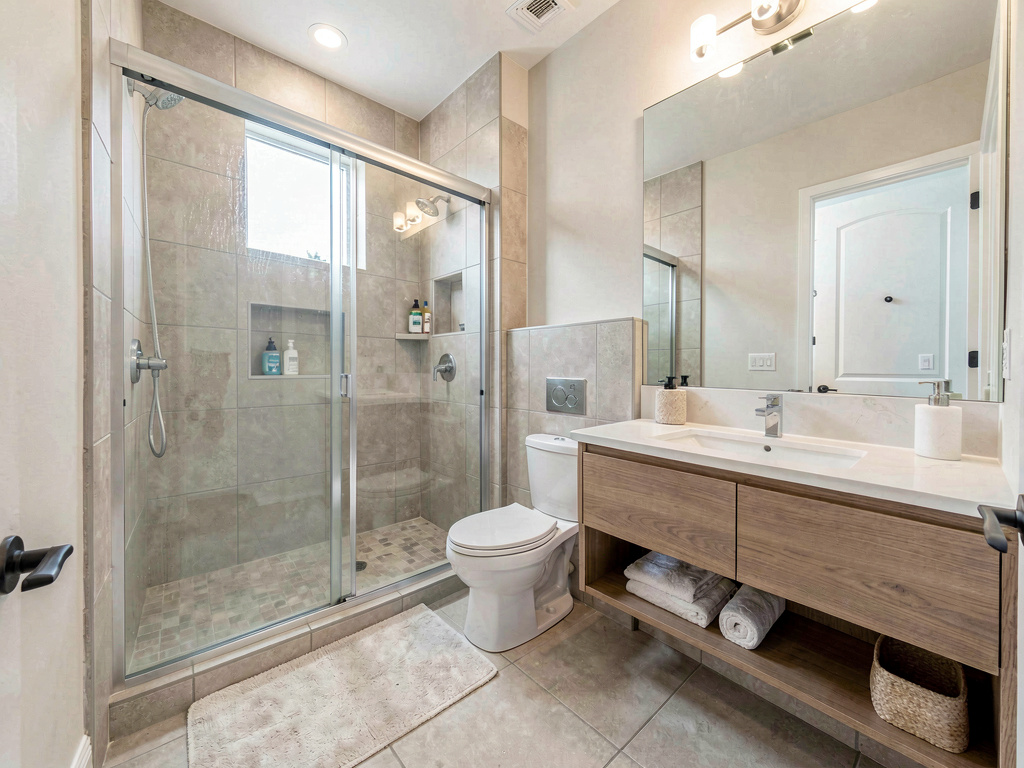
A renovated small bathroom makes the most of every inch. A corner shower with a sliding glass door saves swing clearance. A wall-mounted toilet frees up floor space. A floating vanity with storage underneath keeps things accessible. A large mirror makes the room feel twice its size. Light-colored tiles throughout keep it bright. A recessed niche in the shower wall eliminates the need for a caddy.
Small bathrooms (40 square feet) are cheaper to remodel because there is simply less surface area. But the per-square-foot cost is often higher because the labor time is similar — a plumber still needs the same number of hours to connect a toilet whether the room is 40 or 80 square feet.
Budget for a small bathroom mid-range remodel: $6,000-$15,000. HomeAdvisor puts the average small bathroom remodel at $7,000-$10,000 nationally.
Master bathroom remodel
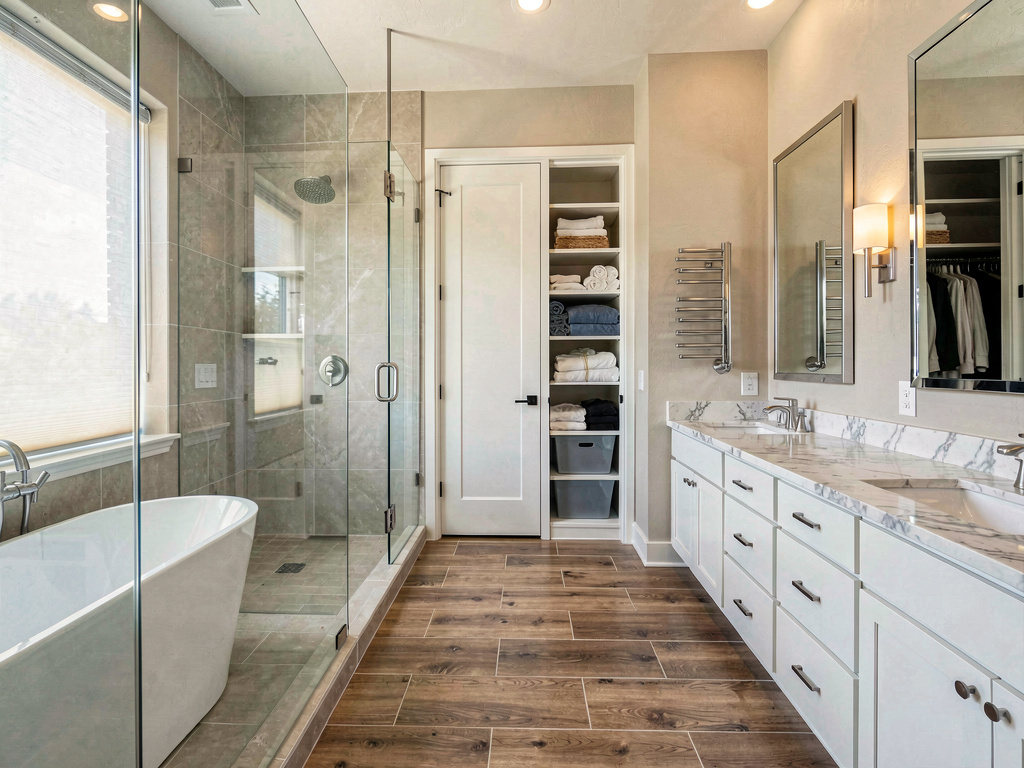
A spacious master bathroom with separate shower and freestanding tub. Double vanity with marble countertop and his-and-hers mirrors. A heated towel rack on the wall. A large window with privacy glass brings in natural light. A built-in linen closet with glass doors keeps towels organized. Warm wood-look porcelain floor tile runs wall to wall.
Master bathrooms run bigger budgets because the rooms are larger (80-120+ square feet) and expectations are higher. The separate shower and tub alone adds $3,000-$8,000 compared to a single shower-tub combo.
Average master bathroom remodel: $15,000-$35,000 mid-range, $35,000-$75,000 for high-end. The jump comes from double vanities, larger tile areas, and the separate shower/tub configuration that most homeowners want.
The hidden costs: what people forget
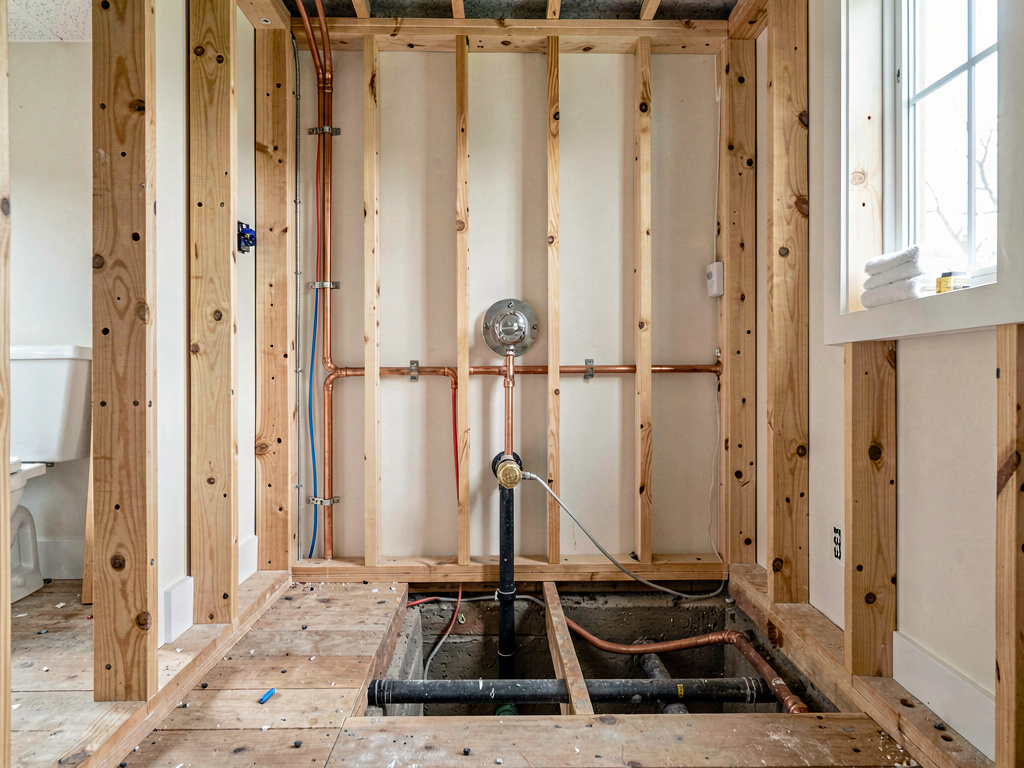
Copper and PEX pipes exposed in the wall framing reveal the infrastructure behind a bathroom remodel. The subfloor is visible. A shower valve body is installed in the wall studs. Drain pipes run through the floor. This is the construction phase that most cost estimates underestimate.
Once walls open up, surprises appear. Budget 10-20% above your target number for these common extras:
- Water damage and mold remediation: $500-$5,000. Old showers leak. You will not know until the tile comes off.
- Subfloor replacement: $300-$800. Rotted plywood under the toilet or tub is common in older homes.
- Electrical upgrades: $500-$2,000. Older homes may need GFCI outlets, updated wiring, or a dedicated circuit for heated floors.
- Permit fees: $200-$800 depending on your municipality.
- Dumpster rental: $300-$600 for a 10-yard dumpster.
- Temporary bathroom accommodations: Budget for inconvenience. A bathroom remodel takes 3-6 weeks for mid-range and 6-12 weeks for gut renovations.
Plan your bathroom remodel with AI
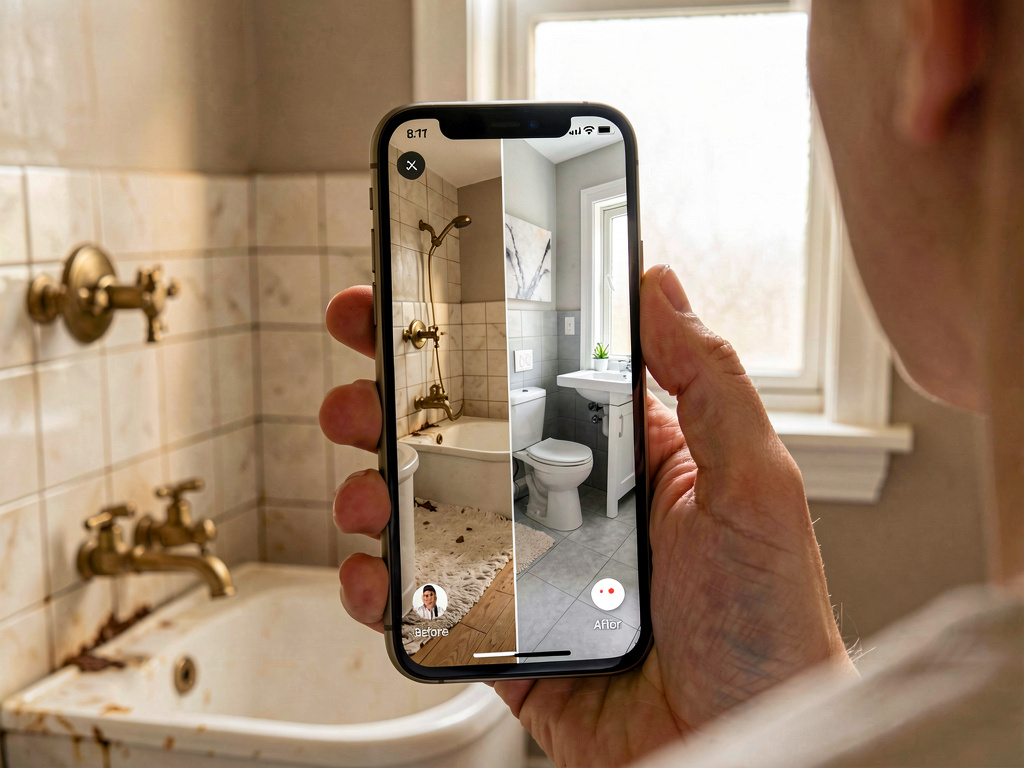
A smartphone screen shows a split before-and-after view of a bathroom. The left side displays the current outdated space with old tile and brass fixtures. The right side shows the same room digitally redesigned with modern finishes — exactly how it would look after a mid-range remodel.
Before you spend a dollar on demolition, see what your bathroom could look like with different styles and finishes.
Step 1: Take a photo of your current bathroom.
Step 2: Upload it to Remodel AI (free on iOS, Android, and web).
Step 3: Pick a style — modern, traditional, farmhouse, or any of 30+ options.
Step 4: Get a photorealistic rendering of your actual bathroom in about 30 seconds.
Use the results to communicate with contractors, compare styles before committing, and avoid the $5,000 mistake of choosing a tile or layout you end up hating. If you are also remodeling the kitchen, check out our AI kitchen remodel guide for a similar planning approach.
3 free designs. No credit card required.
How much does a bathroom remodel cost per square foot?
Expect $70-$250 per square foot for a mid-range remodel and $250-$500+ per square foot for high-end. A standard 5x8 bathroom (40 sq ft) at $150/sq ft comes to $6,000 in materials and labor. A 10x12 master bath (120 sq ft) at the same rate hits $18,000. These numbers shift significantly by region — remodeling in San Francisco costs 40-60% more than the national average, while markets in the Midwest and South run 10-20% below.
Is it cheaper to remodel a bathroom yourself?
DIY saves 40-60% on labor, which is roughly half the total budget for a mid-range remodel. That means a $15,000 project might cost $7,000-$9,000 in materials alone. But bathroom work involves plumbing, electrical, and waterproofing — three areas where mistakes are expensive to fix. A failed shower waterproofing membrane can cause $10,000+ in water damage to floors and framing below. Most pros recommend DIY for cosmetic work (paint, hardware, mirrors) and hiring licensed tradespeople for plumbing, electrical, and tile.
What is the most expensive part of a bathroom remodel?
Labor is the largest single category, typically 40-50% of the total. Within materials, tile (floor + shower) is usually the biggest line item, followed by the vanity and countertop. If you are moving plumbing, that relocation alone can add $3,000-$8,000. According to NKBA survey data, the average bathroom remodel spends 20% on cabinetry and hardware, 16% on fixtures and faucets, 15% on flooring, and 49% on installation labor and other costs.
How long does a bathroom remodel take?
A cosmetic refresh takes 1-3 days. A mid-range remodel with new tile, vanity, and fixtures takes 3-6 weeks. A full gut renovation with layout changes runs 6-12 weeks. The timeline depends on permit requirements, material lead times, and contractor availability. Order tile and vanities 4-6 weeks before your start date — backordered materials are the number one cause of bathroom remodel delays.
Should I remodel the bathroom or kitchen first?
If you can only do one, the kitchen typically has a higher return on investment at resale — 60-80% ROI compared to 50-70% for bathrooms, according to Remodeling Magazine's Cost vs. Value report. But if your bathroom has water damage, mold, or functional problems, fix those first. Health and safety beat resale math every time. For kitchen planning ideas, our AI kitchen remodel guide covers a similar cost breakdown.
A bathroom remodel is one of the most common home improvement projects, and the cost range is one of the widest. The best approach is to decide your scope first — cosmetic, mid-range, or gut — and then price each line item for your specific market. Get three quotes minimum. And before you commit to a style or layout, try it in Remodel AI to see exactly what your finished bathroom will look like. Check our interior design styles guide to explore different directions, or browse best AI interior design apps to compare your options.
Try Remodel AI free at www.remodelai.io/app — available on iOS, Android, and web.
Ready to Try AI Interior Design?
Upload a photo and redesign any room in seconds. 3 free designs, no signup required.