Traditional Interior Design Ideas
Classic elegance. Rich wood, symmetrical arrangements, timeless patterns.
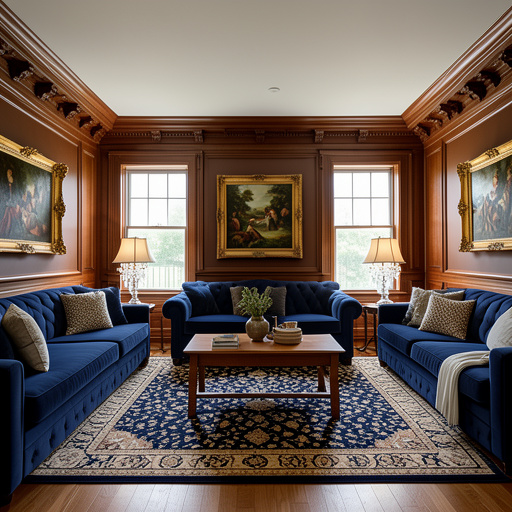
Traditional interior design is rooted in 18th and 19th century European aesthetics — English, French, and Italian influences that defined what 'a beautiful home' looked like for centuries. Symmetry is the organizing principle: matching lamps on either side of a sofa, identical end tables, balanced window treatments. Furniture is substantial — wingback chairs, rolled-arm sofas, pedestal tables — with curved lines, carved details, and dark wood finishes. Fabrics are rich: damask, toile, silk, chenille. Colors tend toward warm and muted: burgundy, navy, forest green, gold, cream. Traditional style gets a bad reputation for feeling stuffy, but done well it's one of the most comfortable and inviting styles. The rooms feel lived-in and settled, like they've been that way for decades. It's the opposite of trendy — and that's the point. Traditional furniture also has the best secondhand value — estate sales and consignment shops overflow with quality pieces at a fraction of retail.
Traditional design in every room
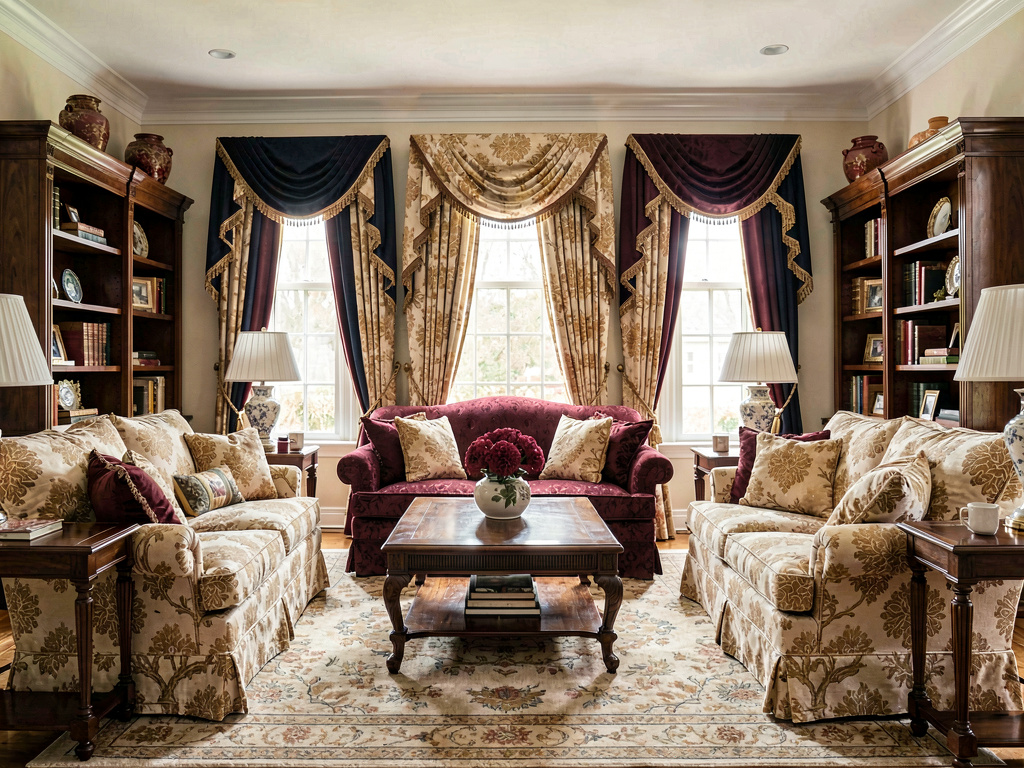
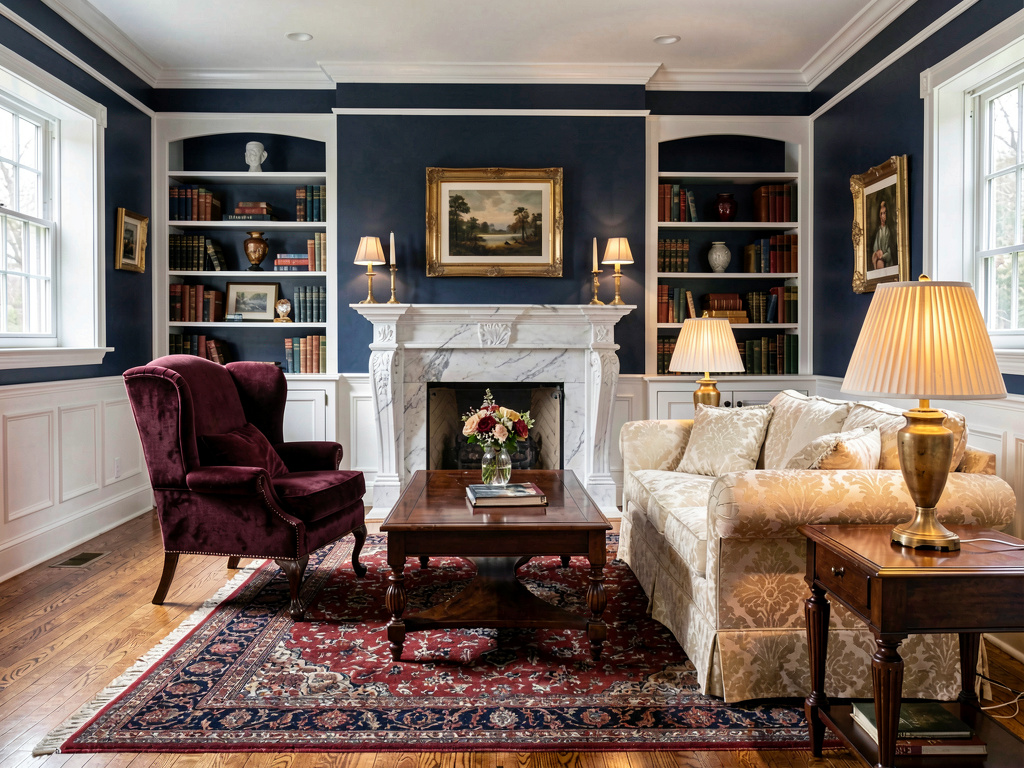
Traditional living room
Matching wingback chairs flank a marble fireplace, a Persian rug centers the room, and silk drapes frame every window. Symmetry, warmth, and permanence.
View design ideas →
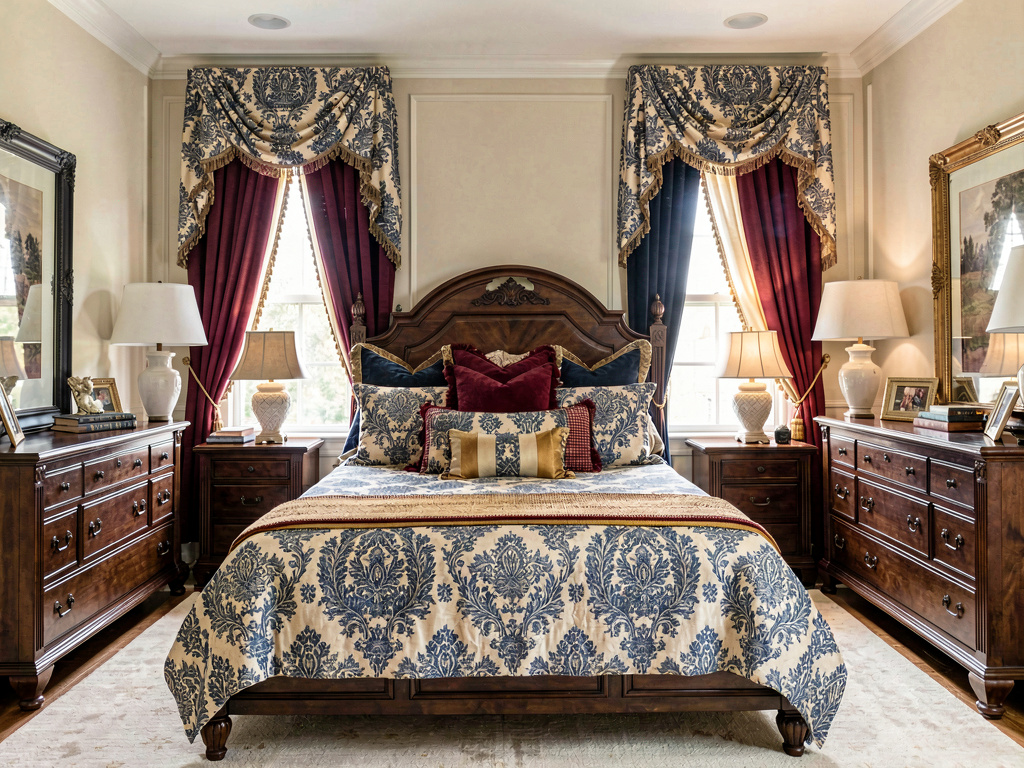
Traditional bedroom
A four-poster bed with damask drapes, matching mahogany nightstands, and layered window treatments. The bedroom has the settled comfort of a heritage estate.
View design ideas →
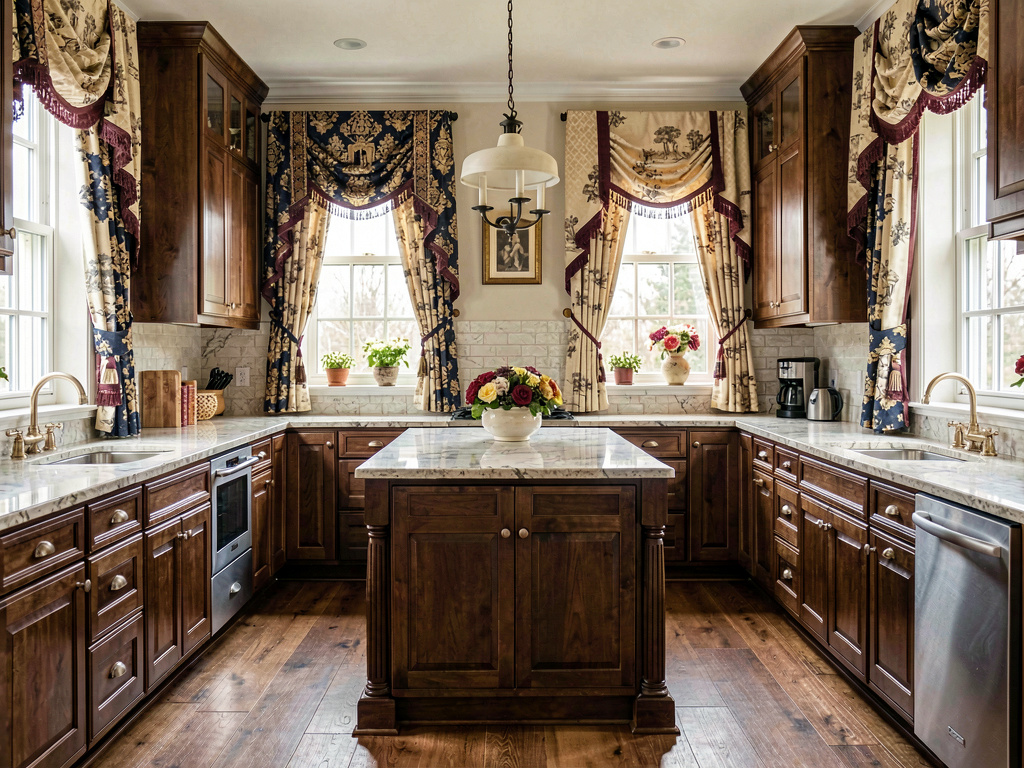
Traditional kitchen
Raised-panel cabinets in cherry or cream, granite countertops, and a decorative range hood. Crown molding above the cabinets completes the classic look.
View design ideas →
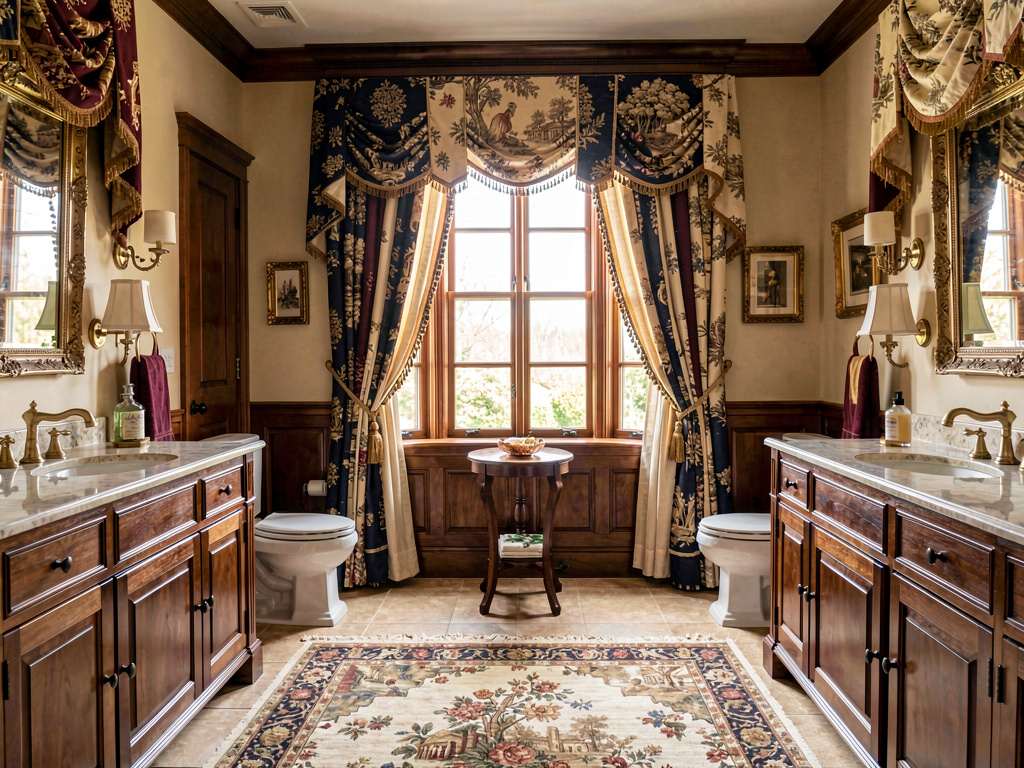
Traditional bathroom
A pedestal sink or furniture-style vanity, marble floor tile, and traditional sconces flanking a framed mirror. The bathroom has old-world elegance.
View design ideas →
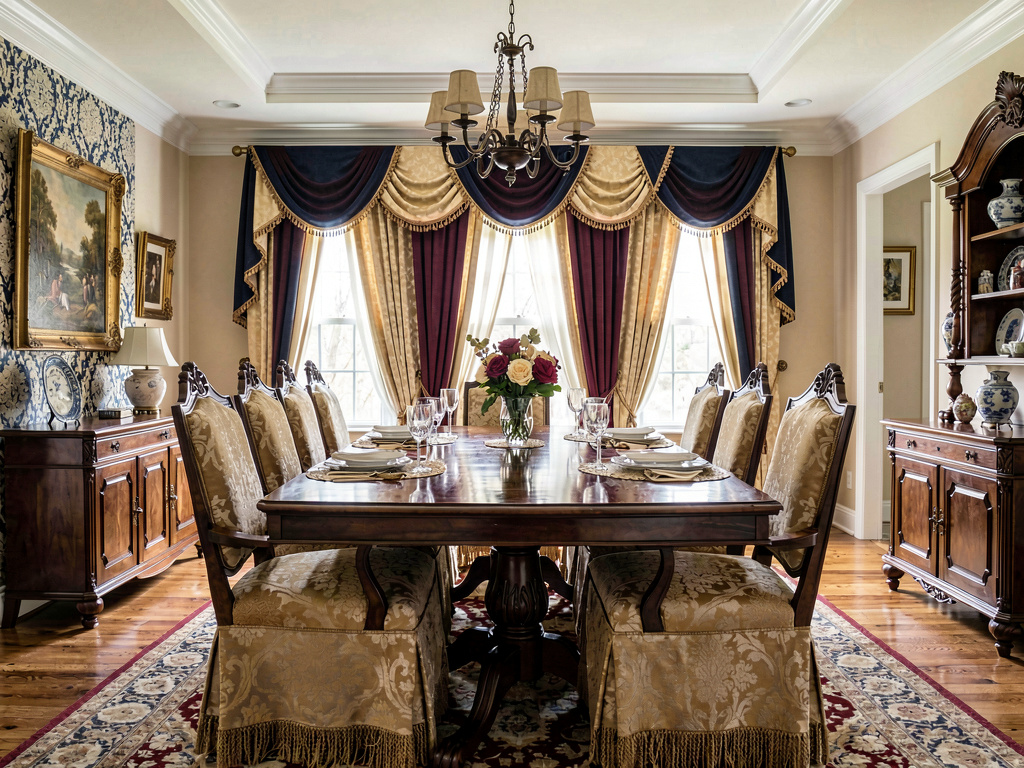
Traditional dining room
A mahogany pedestal table set with china under a crystal chandelier. Wainscoting on the walls and a Persian rug below. Formal dinners belong here.
View design ideas →
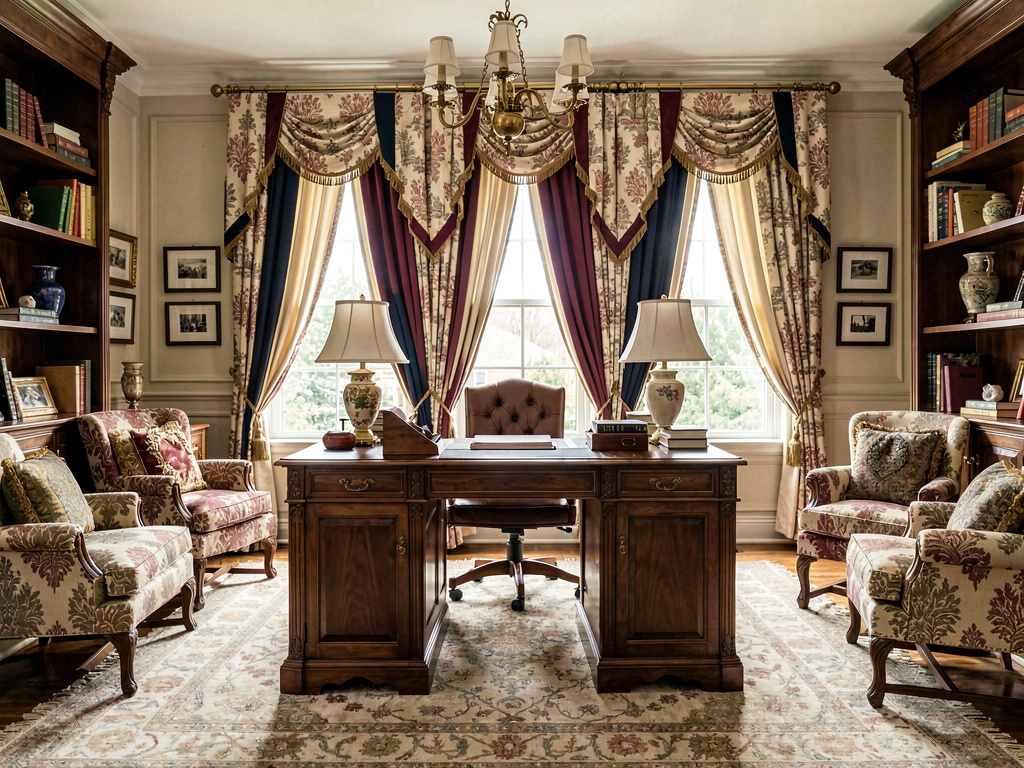
Traditional home office
A partners desk in dark wood, built-in bookshelves with glass doors, and a leather desk chair. The office commands respect and focus.
View design ideas →
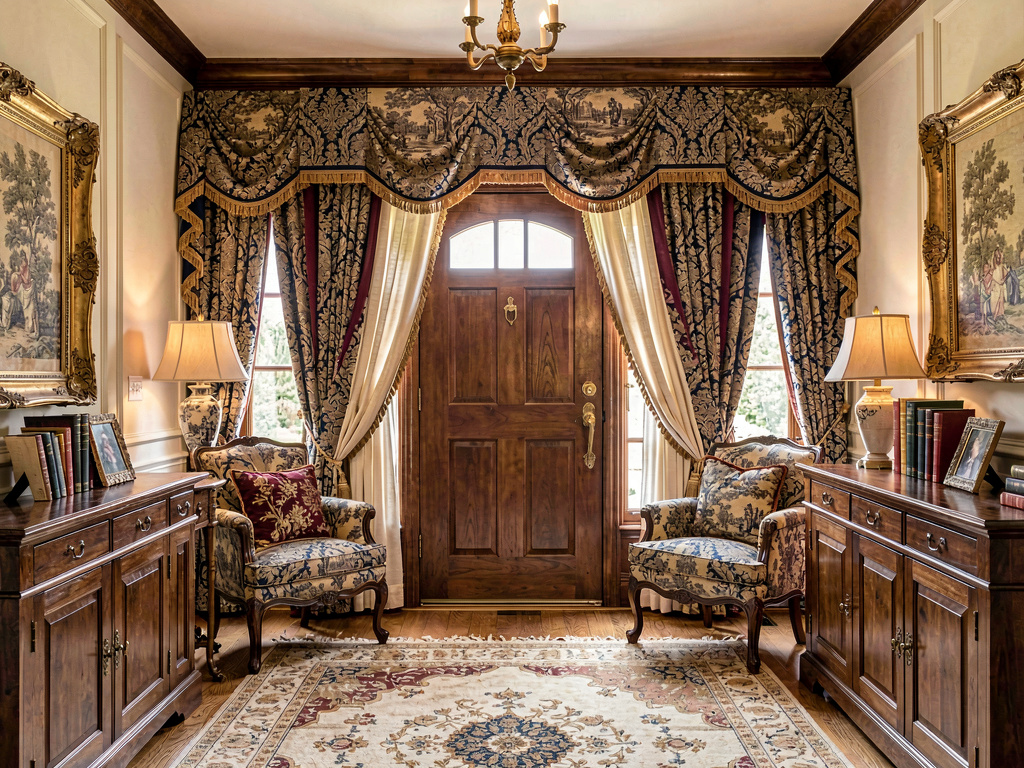
Traditional entryway
A round pedestal table with fresh flowers in the center, a chandelier above, and a Persian runner leading to the staircase. A proper entrance.
View design ideas →
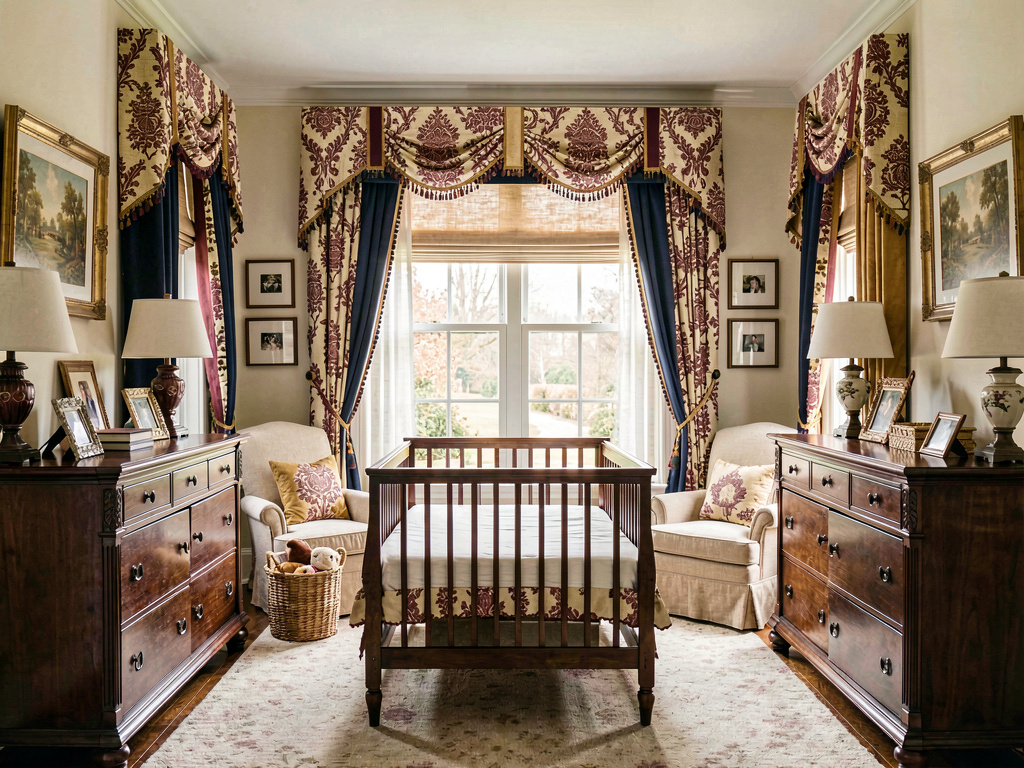
Traditional nursery
A carved white crib with a canopy, soft damask curtains, and a tufted glider. The nursery has the classic elegance of a family home passed through generations.
View design ideas →
Key characteristics of traditional design
- Symmetrical furniture arrangements
- Rich, dark wood furniture with carved details
- Patterned fabrics: damask, toile, plaid, stripes
- Layered window treatments with valances or drapes
- Warm color palette: burgundy, navy, gold, cream
Common materials
How much does a traditional makeover cost?
$8,000 – $40,000
Typical living room makeover
Traditional is pricier because it demands more furniture and more decorative elements than minimalist styles. A wingback chair ($800-$3,000), silk drapes ($500-$2,000 per window), and an Oriental rug ($1,000-$10,000) add up. The upside: traditional furniture holds its value and never goes out of style, so you're buying pieces that last decades.
See your room remodeled with traditional style — AI does it in seconds
Upload a photo and get your room remodeled with AI in traditional style — takes about 10 seconds, no design skills needed.
Try It FreeFrequently asked questions
How do I modernize traditional design?
Keep the symmetry and quality materials but lighten the palette. Swap dark walls for warm whites, use lighter wood tones, and mix in a few contemporary pieces (a modern coffee table, contemporary art). This hybrid is called 'transitional' design.
Is traditional design expensive?
It can be, but it doesn't have to be. Traditional furniture holds value at estate sales and consignment shops. A $5,000 wingback chair sells for $500 secondhand. Antique stores, Facebook Marketplace, and estate sales are gold mines for traditional pieces at a fraction of retail.
Does traditional work in small spaces?
It's challenging because traditional furniture tends to be large and the style calls for more pieces. Scale down: choose smaller-scale traditional furniture, use lighter colors, and skip heavy drapes in favor of simpler curtains. Traditional details (molding, hardware, fabrics) can work in any size room.
Related styles
Related articles
Your next renovation starts
with a photo
Upload a room. See it transformed. 3 free designs, no credit card.

